
Côte d’Ivoire Opens New Coastal Eco-Tourism Route
Côte d’Ivoire Opens New Coastal Eco-Tourism Route

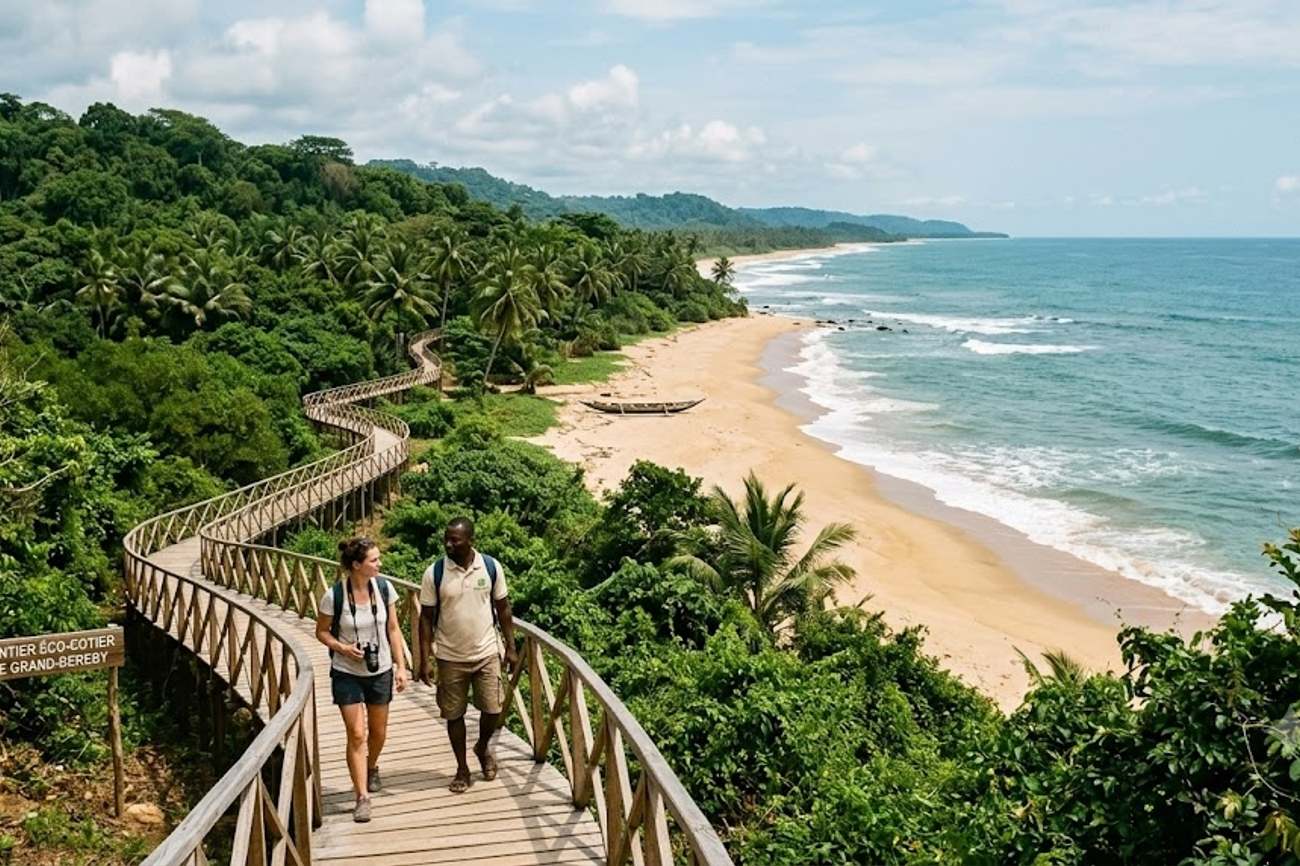
Image generated by AI
The western chimpanzee is one of the few primates on earth that allows humans to enter its dense, humid world, provided you follow strict habituation protocols. While most travelers to West Africa stick to the urban sprawl of Abidjan, a new strategic corridor is opening that allows you to transition from the salty air of the Gulf of Guinea to the prehistoric canopy of the rainforest in a single journey.
The San Pédro to Taï Connection
For years, the southwestern corner of Côte d’Ivoire felt like a distant frontier, accessible only to the most intrepid researchers or those with deep local connections. That is changing. Starting in September 2026, a formalized tourism link between the port city of San Pédro and Taï National Park will officially launch. This development is not a random tourism project; it is a direct byproduct of the massive infrastructure overhaul undertaken for the Africa Cup of Nations (AFCON).
The result is a "road-to-sea" connectivity shift. Instead of the typical circuit that revolves around the economic hub of Abidjan, visitors can now use San Pédro as a primary gateway. This creates a seamless transition from the Atlantic coast to the deep interior, allowing for a multi-day itinerary that bundles coastal leisure with hardcore conservation travel. By utilizing the improved road networks, the journey transforms from a grueling expedition into a curated circuit of the southwest.
What Makes the Southwest Different
The allure of this region lies in its extreme geographical contrast. San Pédro is a city of contradictions—it is one of the most vital commercial ports on the Gulf of Guinea, yet it is draped in tropical vegetation and flanked by pristine beaches. It doesn't feel like a sterile port town; it feels like a coastal outpost where the industrial energy of the shipping docks meets the slow rhythm of the Atlantic.
As you move inland toward Taï National Park, the environment shifts violently. You leave the seafood markets and salt spray behind and enter one of the last remaining primary tropical rainforests in West Africa. This is not a savannah safari where you spot lions from the safety of a 4x4. This is an immersive, humid, and sensory experience.
Taï is a UNESCO World Heritage site for a reason. It is a biodiversity fortress. While the western chimpanzee is the star attraction, the forest is also a sanctuary for forest elephants and the elusive pygmy hippopotamus. The experience here is defined by patience. You don't "find" the wildlife; you track it through dense foliage with expert guides, listening for the alarm calls of birds or the crashing of underbrush. It is a specialist's paradise, catering to those who value ecological complexity over the convenience of a traditional game drive.
Visitor Insider Tips
Navigating the southwest requires a different mindset than visiting the coast. To make the most of the San Pédro-Taï corridor, keep these local nuances in mind:
Timing and Logistics To avoid the heaviest rains that can make forest trails treacherous, plan your visit during the drier windows. If you are basing yourself in San Pédro, spend your first two days exploring the coastline and the port's unique industrial architecture before heading inland. Use official Côte d'Ivoire tourism resources to verify the current status of road conditions between the coast and the park.
The Rainforest Protocol When visiting the western chimpanzees, silence is your primary currency. The habituation programs are delicate; loud noises or sudden movements can stress the primates and jeopardize years of conservation work. Always hire a certified local guide—not just for safety, but because the forest is a wall of green where it is nearly impossible to spot a chimpanzee without a trained eye.
Where to Stay Avoid the temptation to return to the city every night. The real magic of the southwest happens in the conservation-oriented eco-lodges located on the periphery of Taï National Park. These lodges are designed to minimize environmental impact and place you within walking distance of the forest edge, which is essential for early morning wildlife excursions when animals are most active.
Regional Flavors In San Pédro, prioritize the fresh Atlantic seafood, which is far superior to what you find in the interior. As you move toward Taï, look for local agricultural products. This region is the heart of the country's cocoa and coffee production; visiting a local farm provides a necessary cultural bridge between the coast and the forest.
The new coastal eco-tourism route emphasizes sustainable development and the preservation of biodiversity along the Gulf of Guinea. Travelers can find comprehensive guides and official destination updates through the Côte d'Ivoire Ministry of Tourism, which oversees the strategic expansion of green travel corridors.
Cultural and Environmental Context
The development of the San Pédro-Taï corridor represents a delicate balancing act between economic growth and ecological preservation. For decades, the rainforests of the southwest have faced pressure from agricultural expansion. By pivoting toward high-value, low-impact nature tourism, the region is creating a financial incentive to keep the forest standing.
The shift toward eco-lodges is particularly significant. Rather than building large-scale hotels that would fragment the habitat, the focus is on smaller, conservation-based accommodations. This model distributes the economic benefits of tourism directly into the hands of local communities. Guides, cooks, and transport operators from nearby villages are now stakeholders in the protection of the western chimpanzee and the pygmy hippopotamus.
However, the increased accessibility brought by AFCON infrastructure is a double-edged sword. While it opens the region to the world, it also increases the risk of "over-tourism" in sensitive zones. The success of this corridor depends entirely on the strict adherence to wildlife protocols and the continued support of the research programs that have spent decades studying primate social structures.
FAQ: Visiting Côte d’Ivoire 2026
What is the best time to visit the San Pédro-Taï corridor? The ideal window is during the drier months to ensure the rainforest trails are navigable and wildlife spotting is more consistent. Check local weather patterns for the southwestern region specifically, as they differ from Abidjan.
Do I need a visa to enter Côte d’Ivoire? Yes, most international travelers require a visa. You can apply for an e-visa through the official government portal before your arrival to streamline the process at the airport.
How do I get to San Pédro from Abidjan? While Abidjan remains the primary international hub, you can reach San Pédro via domestic flights or the newly improved road networks. The drive offers a great look at the country's agricultural heartland.
Is the rainforest safe for solo travelers? While the region is welcoming, you should never enter Taï National Park alone. Always travel with a certified guide and stay in registered eco-lodges to ensure your safety and the protection of the wildlife.
Trade the concrete jungle of the city for the emerald canopy of the west—just remember to leave no trace behind.
Related Travel Guides
Disclaimer
This article is for informational and educational purposes only. It does not constitute legal, financial, or professional advice. While we strive to provide accurate and up-to-date information, travel policies, regulations, and conditions change rapidly. Always verify information with official sources before making travel decisions. Nomad Lawyer makes no representations about the accuracy, reliability, completeness, or suitability of the information provided. Readers should consult qualified professionals for advice specific to their circumstances. The views expressed in this article are those of the author and do not necessarily reflect the views of Nomad Lawyer.
Kunal K Choudhary
Co-Founder & Contributor
A passionate traveller and tech enthusiast. Kunal contributes to the vision and growth of Nomad Lawyer, bringing fresh perspectives and driving the community forward.
Learn more about our team →