
Cape Verde Expands Slow Travel Beyond Sal
Cape Verde Expands Slow Travel Beyond Sal

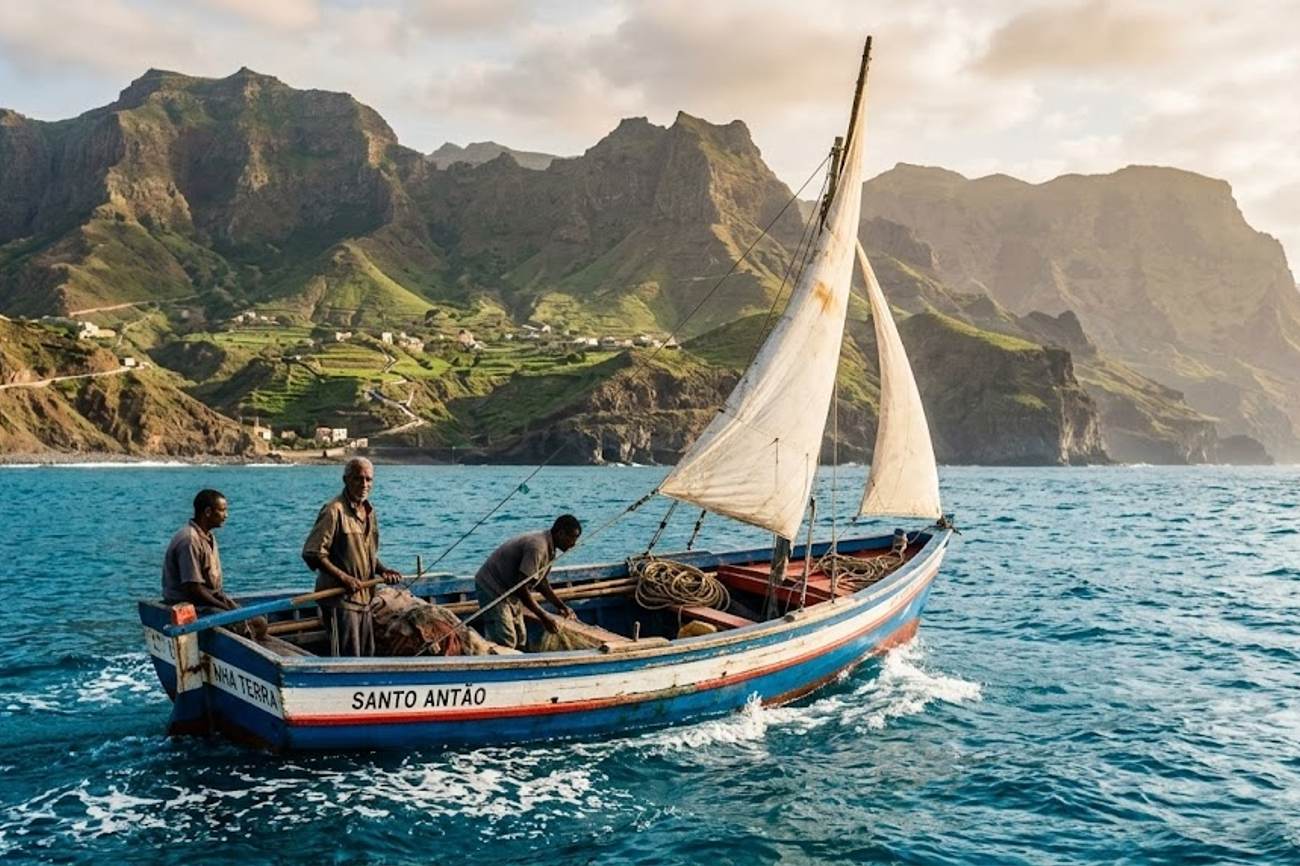
Image generated by AI
Cape Verde's tourism distribution has historically leaned heavily toward the resort-centric islands of Sal and Boa Vista, but the introduction of the September 2026 nature-based policy signals a strategic pivot toward the Windward Islands. By offering free inter-island ferry passage and conservation pass waivers for qualified tourists, the government is attempting to decouple the national tourism brand from all-inclusive beach models and redistribute passenger flow toward the volcanic highlands of Santo Antão and the cultural hub of São Vicente.
The Windward Shift in Numbers
The September 2026 policy is not merely a promotional campaign but a structural attempt to alter the "resort-to-rural" ratio of visitor arrivals. The core of this strategy relies on two specific levers: the removal of ferry costs for qualified travelers and the elimination of regional protected-area conservation passes for those utilizing multi-island routes.
Data from the World Tourism Organization (UNWTO) suggests that diversifying tourism products—moving from "Sun and Sea" to "Nature and Culture"—typically increases the average length of stay (ALOS) per visitor. In the case of Santo Antão, the product is built on multi-day walking holidays through the Ribeira Grande valley and other ribeiras (valleys). Unlike the static nature of a resort stay in Sal, the Santo Antão model requires overnight stays in various village guesthouses, which mathematically increases the distribution of tourism spend per capita across local SMEs rather than concentrating it within international hotel conglomerates.
The logistical anchor of this trend is Mindelo on the island of São Vicente. As the primary gateway to the Windward Islands, Mindelo serves as the transit node where urban cultural consumption (restaurants, music, and maritime heritage) meets the rural trekking requirements of Santo Antão. This creates a dual-revenue stream for the region: high-density urban spending in São Vicente followed by distributed rural spending in Santo Antão.
Comparative Regional Benchmarks
Historically, Cape Verde's tourism has been bifurcated between the "Resort Islands" (Sal and Boa Vista) and the "Experience Islands" (Santo Antão, São Vicente, and others). The new policy aims to close the gap in visitor volume between these two segments.
| Metric | Resort Model (Sal/Boa Vista) | Slow Travel Model (Santo Antão/São Vicente) | Policy Impact (Post-Sept 2026) |
|---|---|---|---|
| Primary Activity | Beach/All-inclusive | Hiking/Cultural Exploration | Shift toward multi-activity itineraries |
| Transport Mode | International Flight $\rightarrow$ Resort | Flight $\rightarrow$ Ferry $\rightarrow$ Trekking | Free inter-island ferry for qualified users |
| Spending Pattern | Concentrated (Large Resorts) | Distributed (Village Guesthouses) | Increased SME revenue in rural valleys |
| Entry Costs | Standard Resort Fees | Conservation Pass Requirements | Waivers for multi-island ferry users |
| Visitor Pace | Static/Fixed Schedule | Fluid/Slow Travel | Increased Average Length of Stay (ALOS) |
When comparing this to broader trends in the World Travel & Tourism Council (WTTC) data, Cape Verde is mirroring a global shift toward "regenerative tourism." By linking ferry travel to conservation pass waivers, the government is using a financial incentive to drive visitors toward protected volcanic ecosystems, effectively turning the act of transport into a conservation-supporting behavior.
Practical Traveler Advisory and Strategic Insights
For the individual traveler, the September 2026 policy changes the cost-benefit analysis of visiting the Windward Islands. The removal of ferry costs and conservation fees significantly lowers the barrier to entry for "slow travel" itineraries.
If you are planning a trip for late 2026 or 2027, the following data-driven adjustments are recommended:
- Itinerary Sequencing: Start in Mindelo (São Vicente) to acclimate to the cultural environment before transitioning to the physical demands of Santo Antão. Because the ferry becomes a subsidized part of the journey, there is no longer a financial penalty for adding a multi-island leg to your trip.
- Booking Windows: As the "slow travel" model encourages stays in small village guesthouses rather than large hotels, inventory is naturally limited. Booking rural accommodation 12-16 weeks in advance is now essential, as these properties cannot scale capacity like the resorts in Sal.
- Timing: September marks the start of the autumn travel window. Data suggests this is the optimal period to balance the weather requirements for high-altitude trekking in Santo Antão with the cultural event calendar in Mindelo.
- Qualification Verification: Travelers must ensure they meet the "qualified tourist" criteria to trigger the free ferry passage and conservation waivers. This likely involves proving a multi-island itinerary.
Forward Projection: The Decoupling of the Brand
Based on current trajectories and the IATA trends regarding regional connectivity, Cape Verde is moving toward a "hub-and-spoke" tourism model. Mindelo is being positioned as the "hub" for the northern islands, while the volcanic valleys of Santo Antão act as the "spokes" of nature-based attraction.
The long-term projection suggests a shift in the archipelago's market share. While Sal and Boa Vista will continue to capture the mass-market "sun-seeker" demographic, the Windward Islands are targeting a higher-yield, lower-impact traveler. This demographic typically spends more on local services (guides, artisanal products, regional food) than the all-inclusive traveler.
We can expect a year-over-year increase in the demand for specialized trekking gear and local guiding services. As the "slow travel" model matures, the reliance on traditional resort infrastructure will decrease, and the valuation of "agricultural tourism"—specifically around the sugar cane and banana terraces of Santo Antão—will rise.
FAQ: Cape Verde Slow Travel 2026
Will the cost of visiting Santo Antão decrease after September 2026? Yes, for qualified tourists. The introduction of free inter-island ferry passage and the waiver of regional protected-area conservation passes directly reduce the overhead costs of visiting the Windward Islands compared to previous years.
Is it better to book a resort in Sal or a guesthouse in Santo Antão? This depends on your goals. Sal is for static relaxation. Santo Antão is for active, nature-based exploration. The 2026 policy specifically incentivizes the latter by rewarding movement between islands.
Which islands are most affected by the new nature-based policy? The primary beneficiaries are Santo Antão and São Vicente. The policy is designed to divert traffic away from the saturated markets of Sal and Boa Vista and toward the volcanic and cultural landscapes of the north.
How does the conservation pass waiver work? Travelers who use qualifying multi-island ferry routes to reach Santo Antão are eligible for waivers on regional protected-area passes, linking the act of island-hopping with environmental support.
The shift from sandy shores to volcanic peaks represents more than a change in scenery—it is a calculated economic pivot toward sustainable, distributed growth.
Related Travel Guides
Disclaimer
This article is for informational and educational purposes only. It does not constitute legal, financial, or professional advice. While we strive to provide accurate and up-to-date information, travel policies, regulations, and conditions change rapidly. Always verify information with official sources before making travel decisions. Nomad Lawyer makes no representations about the accuracy, reliability, completeness, or suitability of the information provided. Readers should consult qualified professionals for advice specific to their circumstances. The views expressed in this article are those of the author and do not necessarily reflect the views of Nomad Lawyer.
Raushan Kumar
Founder & Lead Developer
Full-stack developer with 11+ years of experience and a passionate traveller. Raushan built Nomad Lawyer from the ground up with a vision to create the best travel and law experience on the web.
Learn more about our team →