Italy–Peru Direct Flight Talks: Unlocking Rome, Milan, and High-Speed Rail Two-City Itineraries

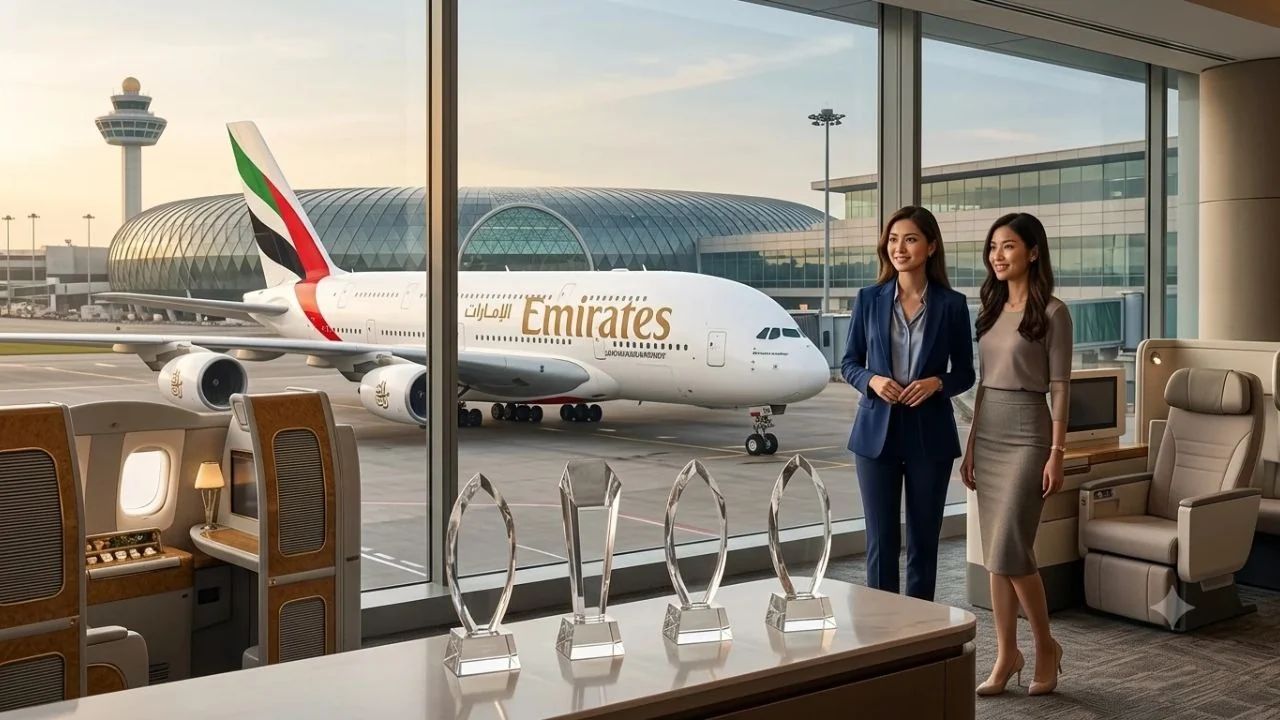
Bilateral air talks between Italy and Peru explore direct Rome and Milan services to Lima, creating potential for open-jaw itineraries supported by Frecciarossa rail.
ROME, November 3, 2026 — Bilateral aviation negotiations between the governments of Italy and Peru have sparked renewed interest across the South American and European travel industries, evaluating direct air links connecting Lima with Rome and Milan to unlock seamless two-city Italian travel itineraries. Official documentation released by Peru's Ministry of Transport and Communications (MTC) confirms that authorities are assessing two distinct transcontinental propositions: a direct non-stop service between Rome Fiumicino and Lima Jorge Chávez International Airport operated by an Italian carrier, alongside a separate fifth-freedom service originating in the United Arab Emirates routed through Milan Malpensa to Lima. While commercial aviation analysts emphasize that neither route has reached scheduled ticket sales or inaugural launch dates, the prospect of dual-gateway air connectivity paired with Italy's high-speed Frecciarossa rail network promises to transform Peruvian travel to Europe into an efficient, open-jaw cultural journey.
[!NOTE] Key Operational and Diplomatic Summary of Italy–Peru Connectivity Talks: As of November 3, 2026, Peru's Ministry of Transport and Communications (MTC) is actively evaluating two air routes connecting Italy and Lima: a direct Rome–Lima route under negotiation with an Italian carrier, and a UAE-originating service operating via Milan to Lima. No commercial launch dates, flight numbers, or bookable fares have been finalized, and national carrier ITA Airways has not yet added Lima to its operated intercontinental network. The potential tourism benefit centers on an 'open-jaw' travel model, allowing visitors to arrive in Rome, traverse central Italy via high-speed Frecciarossa rail, and depart via Milan without backtracking.
ITALY–PERU AIR CONNECTIVITY & TWO-CITY TOURISM ARCHITECTURE
| [ SOUTH AMERICAN GATEWAY: JORGE CHAVEZ INTERNATIONAL AIRPORT, LIMA (LIM) ] |
|---|
| * Profile: Peru's primary international hub; undergoing $2B+ terminal & runway expansion. |
| * Strategic Goal: Secure direct non-stop passenger air bridges to Southern Europe. |
| [ PROPOSED AIR ROUTE 1: DIRECT ROME (FCO) <==> LIMA (LIM) ] |
| * Status: Bilateral government negotiations; Italian carrier proposed (widely linked to ITA). |
| * Reality Check: Feasibility study ongoing; no active ticket inventory or published dates. |
| [ PROPOSED AIR ROUTE 2: UAE <==> MILAN (MXP) <==> LIMA (LIM) ] |
| * Status: Fifth Freedom evaluation; potential multi-sector route operated by a Gulf carrier. |
| * Reality Check: Independent of the Rome proposal; requires complex multi-lateral traffic rights. |
| [ DOMESTIC RAIL BRIDGE: TRENITALIA FRECCIAROSSA HIGH-SPEED ARTERY ] |
| * Route: Roma Termini <==> Milano Centrale non-stop high-speed rail corridor. |
| * Transit Duration: Approximately 2 hours and 50 minutes (speeds up to 300 km/h). |
| * Itinerary Transformation: Enables seamless 'Open-Jaw' tourism (Arrive Rome, Depart Milan). |
| [ CULTURAL & POLICY CATALYST: 'TURISMO DELLE RADICI' (ROOTS TOURISM) ] |
| * Bilateral Context: Thousands of Peruvian citizens of Italian ancestry tracing heritage. |
| * Diplomatic Driver: Italian Embassy in Lima actively promoting ancestral visits to Italy. |
Diplomatic Bilateralism: What Peru's Transport Ministry Has Formally Confirmed
The prospect of direct air connectivity between Italy and Peru entered formal diplomatic channels through an official declaration published by Diario Oficial El Peruano on September 10, 2026. The announcement, released by Peru's Ministry of Transport and Communications (Ministerio de Transportes y Comunicaciones - MTC), detailed high-level bilateral discussions aimed at modernizing air transport agreements and expanding intercontinental passenger links between the two republics.
The official governmental communique detailed two separate, independent aviation initiatives currently under evaluation:
- A Direct Rome–Lima Route: Bilateral discussions are underway regarding a direct, non-stop passenger service connecting Rome Leonardo da Vinci–Fiumicino Airport (FCO) with Lima Jorge Chávez International Airport (LIM), proposed to be operated by an Italian airline.
- A Milan–Lima Fifth-Freedom Service: Peruvian transport authorities are separately evaluating a commercial route originating in the United Arab Emirates, transiting through Milan Malpensa Airport (MXP), and continuing across the Atlantic to Lima.
For aviation analysts, travel management companies, and prospective passengers, understanding the exact legal and commercial status of these discussions is essential. An official government press release announcing market evaluation and bilateral talks does not constitute a confirmed route launch. Commercial airlines operate under strict economic return thresholds; establishing an ultra-long-haul intercontinental route spanning more than 10,500 kilometers requires extensive fleet allocation planning, passenger yield modeling, aircraft maintenance slot arrangements, and bilateral traffic right ratifications.
Significantly, the official Peruvian government release did not name ITA Airways as a committed operator for both gateways. A forensic review of ITA Airways' published international network confirms that Lima is not listed among its active, scheduled, or bookable long-haul destinations. While ITA Airways has expanded its South American network to include São Paulo, Rio de Janeiro, and Buenos Aires following its integration into the Lufthansa Group alliance structure, the carrier has made no formal commercial announcement committing aircraft to Lima. Until airline executives file formal flight schedules, acquire airport take-off and landing slots, and load fares into global distribution systems, the proposed services remain diplomatic ambitions rather than operational realities.
Central to these governmental discussions is the ongoing negotiation of an updated bilateral Open Skies memorandum of understanding. The existing air service framework between Italy and Peru dates back decades, containing restrictive capacity caps and route designations that do not reflect contemporary commercial aviation realities. Modernizing this agreement is a prerequisite for any international carrier seeking to establish sustainable, high-frequency services between the two nations.
The legal mechanics governing the proposed Milan–Lima service highlight the critical role of Fifth Freedom air traffic rights established under the 1944 Chicago Convention on International Civil Aviation. Under a Fifth Freedom authorization, an airline registered in a third country—such as the United Arab Emirates—is granted the legal right to land in an intermediate foreign territory (Milan Malpensa), disembark inbound passengers, embark new revenue-paying travelers, and continue onward across the Atlantic to its final destination in Lima. For an international network carrier like Emirates, which already operates successful Fifth Freedom transatlantic flights from Milan to New York JFK, adding a Milan–Lima tag flight would unlock tremendous commercial synergies. The route would capture both direct point-to-point passenger flows between Italy and Peru as well as high-yield connecting traffic originating across the Middle East, India, and East Asia, ensuring high load factors across both flight sectors.
The Open-Jaw Advantage: Redefining Italian Itineraries for Latin American Visitors
While the aviation negotiations progress through regulatory channels, the travel industry has focused intensely on the transformative tourism potential of linking Rome and Milan directly to Lima. The primary commercial value of this dual-gateway concept lies in the creation of seamless 'open-jaw' holiday itineraries.
In travel industry terminology, an open-jaw itinerary allows a passenger to arrive in one international gateway city and depart from another, traversing the geographical distance between the two points via surface transportation such as high-speed rail, regional coaches, or rental cars. For international visitors traveling from distant continents like South America, traditional out-and-back flight tickets introduce severe logistical friction. Under conventional ticketing, a Peruvian traveler arriving in Rome must eventually retrace their steps back to Rome at the conclusion of their vacation simply to board their return flight to Lima.
TRADITIONAL OUT-AND-BACK VS. DUAL-GATEWAY OPEN-JAW ITINERARY
| Entity / Route | Metrics | Operational Status |
|---|---|---|
| Itinerary Parameter | Traditional Round-Trip Ticket | Dual-Gateway Open-Jaw Model |
| :--- | :--- | :--- |
| Arrival Point | Rome Fiumicino Airport (FCO) | Rome Fiumicino Airport (FCO) |
| Departure Point | Rome Fiumicino Airport (FCO) | Milan Malpensa Airport (MXP) |
| Inter-City Domestic Leg | Rome ==> Milan ==> Back to Rome | Rome ==> Florence ==> Milan |
| Travel Redundancy | High; requires 3-hour return trip | Zero; continuous forward progress |
| Wasted Travel Time | 1 full vacation day lost in transit | 100% of vacation time utilized |
| Hotel & Transport Costs | Extra hotel night & return train fare | Single transit fare; no backtrack |
| Itinerary Scope | Restricted to central Italy | Spans central, regional, & north |
This backtracking requirement imposes tangible financial and time penalties. Retracing a three-hundred-mile journey across Italy consumes a full day of vacation time, requires additional domestic rail tickets or rental car fuel expenses, and often forces travelers to pay for an unnecessary final hotel night in Rome before an early morning departure.
By contrast, an open-jaw route structure perfectly mirrors the natural geographic flow of Italian tourism. A traveler departing Lima could land in Rome, dedicate three or four days to exploring the Colosseum, the Vatican Museums, and historic piazzas, and then board a high-speed train traveling northward through Tuscany and Emilia-Romagna. After stopping in Florence to view Renaissance masterpieces and visiting Bologna for world-class culinary experiences, the traveler concludes their journey in Milan. In the northern metropolis, they can explore the historic Duomo, shop in the Quadrilatero della Moda fashion district, or take a day excursion to Lake Como, before heading directly to Milan Malpensa Airport for their non-stop flight home to Lima.
However, travel advisors caution that the practical viability of this open-jaw dream depends entirely on airline fare structures. For travelers to embrace this itinerary, operating carriers must offer combinable one-way fares or multi-city pricing that matches standard round-trip ticket costs. If booking an arrival into Rome and a departure out of Milan requires purchasing two expensive one-way tickets, price-sensitive leisure travelers will continue booking connecting flights through established European megahubs like Madrid or Paris.
The macroeconomic appeal of open-jaw itineraries extends far beyond passenger convenience; it actively promotes geographic dispersal across regional Italy. In an era where iconic urban destinations like Rome, Venice, and Florence face severe overcrowding and municipal visitor management caps, encouraging travelers to journey overland along the central rail corridor distributes tourism revenues directly into intermediate regional economies. International fliers traveling by train between Rome and Milan naturally make overnight stops in secondary cultural capitals such as Orvieto, Perugia, Siena, and Bologna. In culinary powerhouses like Emilia-Romagna, travelers spend significant discretionary budgets visiting artisanal Parmigiano Reggiano dairies, traditional balsamic vinegar cellars in Modena, and high-performance automotive museums in the Motor Valley, spreading the economic benefits of international tourism far beyond overcrowded landmark monuments.
High-Speed Rail Synergy: The Frecciarossa Backbone Between Rome and Milan
A critical dimension of the Italy–Peru tourism equation is that the domestic transport infrastructure connecting Rome and Milan already exists at the highest level of European technological excellence. Travelers do not need to wait for airline route developments to experience the seamless overland link between the two cities; Italy's high-speed rail network already provides world-class connectivity.
Trenitalia, Italy's national railway operator, runs high-frequency Frecciarossa high-speed train services that connect the nation's capital with its northern financial hub. Operating along the dedicated Direttissima railway corridor at commercial speeds reaching 300 kilometers per hour, the fastest non-stop Frecciarossa services travel between Roma Termini and Milano Centrale in just two hours and fifty minutes. Throughout the business week, departures operate multiple times per hour, offering passengers unparalleled flexibility.
TRENITALIA FRECCIAROSSA ROME–MILAN HIGH-SPEED TRANSIT CORRIDOR
| Column 1 |
|---|
| [ ORIGIN CITY CENTER: ROMA TERMINI STATION ] |
| * Location: Central Rome; direct metro & bus integration. |
| * Airport Feeder Link: Leonardo Express from Rome FCO Airport (32-minute dedicated train). |
| [ HIGH-SPEED RAIL ARTERY: DIRETTISSIMA RAIL CORRIDOR ] |
| * Service Brand: Trenitalia Frecciarossa 1000 / Italo EVO high-speed trainsets. |
| * Maximum Operating Speed: 300 km/h (186 mph) along electrified high-speed tracks. |
| * Non-Stop Journey Time: Approximately 2 hours and 50 minutes station-to-station. |
| * Service Levels: Standard, Premium, Business, & Executive Class with onboard dining. |
| [ DESTINATION CITY CENTER: MILANO CENTRALE STATION ] |
| * Location: Central Milan; historic architectural terminal with nationwide rail connections. |
| * Airport Feeder Link: Malpensa Express to Milan MXP Airport (51-minute direct train). |
| [ CRITICAL TIMING BUFFER ADVISORY ] |
| * Station-to-station rail time (2h 50m) excludes airport transfers & international check-in. |
| * Travelers must allow at least 5 hours total buffer between rail arrival and flight departure. |
For international travelers, traveling between Rome and Milan by high-speed rail offers decisive advantages over short-haul domestic flights. Stations like Roma Termini and Milano Centrale are situated directly in the urban core, adjacent to major hotel districts, cultural attractions, and municipal metro lines. Rail passengers avoid the tedious logistical friction of airport travel: there are no sixty-minute advance bag-drop cutoffs, no invasive airport security queues where liquids and laptops must be removed, and no runway taxiway delays. Passengers simply step aboard, stow their luggage in generous overhead racks, and relax in climate-controlled comfort with free high-speed Wi-Fi and power outlets at every seat.
However, seasoned travel planners emphasize that visitors must distinguish between station-to-station rail timings and airport-to-airport transit logistics. A common travel error is assuming that a 2-hour-and-50-minute train journey allows travelers to catch a flight departing Milan on the same afternoon. In reality, international departures at Milan Malpensa require arriving at the terminal three hours before take-off to complete baggage check, security screening, and Schengen border passport control.
In addition, reaching the airports requires dedicated ground transfers. In Rome, travelers must take the Leonardo Express train from Rome Fiumicino Airport to Roma Termini, a thirty-two-minute journey. In Milan, passengers traveling from Milano Centrale to Milan Malpensa Airport must board the Malpensa Express, which takes fifty-one minutes. When combined with ticket collection, platform navigation, and check-in buffers, international travelers transiting between the two cities on departure day must factor in at least five to six hours of total transit time to ensure a stress-free departure.
The consumer experience aboard Italian high-speed rail is elevated by robust open-access market competition. Italy stands as one of the few European nations where state-owned rail operator Trenitalia competes directly on the high-speed network against a private open-access operator, Italo (NTV). This healthy commercial competition has driven down passenger ticket prices, increased hourly departure frequencies, and spurred remarkable investments in onboard comfort. Aboard the flagship Frecciarossa 1000 trainsets, international fliers can choose from four distinct service tiers: Standard, Premium, Business, and Executive. In Executive Class, passengers enjoy single rotating leather armchairs, dedicated meeting tables, private attendant service, and gourmet meals paired with regional Italian wines, providing a luxurious overland travel experience that matches or exceeds airline business-class standards.
Ancestral Bridges: "Turismo delle Radici" and the Italian-Peruvian Diaspora
Beyond conventional leisure tourism and corporate commerce, the push for direct air connectivity between Italy and Peru is propelled by profound cultural and demographic ties. For tens of thousands of travelers in both countries, transatlantic journeys are motivated by ancestry, family reunification, and heritage discovery, a market segment officially recognized by the Italian government as Turismo delle Radici (Roots Tourism).
The historical ties between Italy and Peru are deep and multifaceted. Beginning in the mid-nineteenth century and continuing through the aftermath of the Second World War, waves of Italian emigrants crossed the Atlantic to build new lives in Peru. The vast majority of these immigrants originated from northern and northwestern Italy, particularly the maritime region of Liguria around Genoa, alongside communities from Piedmont, Lombardy, and Veneto. Settling primarily in the capital city of Lima and its adjacent Pacific port of Callao, Italian immigrants exerted an outsized influence on Peruvian society, establishing merchant houses, founding manufacturing enterprises, and shaping Peruvian cuisine through dishes like tallarines verdes (a local adaptation of Genoese pesto) and the ubiquitous celebration of panettone during the holiday season.
'TURISMO DELLE RADICI': ANCESTRAL TRAVEL ECOSYSTEM (ITALY–PERU)
| Column 1 |
|---|
| [ DIPLOMATIC & INSTITUTIONAL CATALYSTS ] |
| * Ministry of Foreign Affairs (Farnesina): Nationwide initiative promoting heritage tourism. |
| * Italian Embassy in Lima: Cultural outreach, citizenship verification, & diaspora engagement. |
| * Historic Symbol: Goodwill visit of naval training ship Amerigo Vespucci to Callao in July 2024. |
| [ DEMOGRAPHIC CORRIDORS & ANCESTRAL ROOTS ] |
| * Primary Italian Origins: Liguria (Genoa), Piedmont, Lombardy, & Veneto. |
| * Peruvian Settlement Centers: Lima metropolitan area, Callao port, & coastal agricultural valleys |
| * Traveler Profile: Multi-generational families seeking ancestral records & birthplaces. |
| [ DUAL-GATEWAY TRAVEL UTILITY ] |
| * Rome Entry: National archives, Vatican records, & Italian cultural immersion. |
| * Rail Connection: High-speed transit to regional northern villages in Liguria & Piedmont. |
| * Milan Departure: Proximity to northern ancestral towns without backtracking to Rome. |
Today, hundreds of thousands of Peruvian citizens claim Italian heritage, with many holding dual Italian-Peruvian citizenship or actively tracing their ancestral family trees. In July 2024, this shared heritage was highlighted during the historic visit of the Amerigo Vespucci, the legendary tall ship of the Italian Navy, which docked in Callao as part of a global goodwill tour. The Italian Embassy in Lima utilized the milestone to promote roots tourism, hosting cultural exhibitions and seminars encouraging Peruvian descendants to visit their ancestral villages in Italy.
For ancestral travelers, dual-gateway flight flexibility is invaluable. Many Italian-Peruvians tracing family heritage need to visit provincial records offices, historic parish churches, and small rural communes scattered across northern Italy. Arriving in Rome allows these travelers to visit national archives and historical monuments in the capital before taking high-speed trains directly into the northern provinces where their ancestors lived. Departing via Milan Malpensa—located conveniently in the north near the Ligurian and Piedmontese borders—spares elderly travelers and multi-generational families an exhausting, expensive return trip to Rome at the end of an emotionally demanding heritage journey.
The legal and administrative journey of roots tourism is closely intertwined with Italian nationality law and the principle of jure sanguinis (right of blood). Under Italian law, individuals of verified Italian descent can apply for the formal recognition of Italian citizenship, granting them European Union passports and unrestricted rights to live, work, and study across Europe. For thousands of Peruvian citizens, journeys to Italy represent legal pilgrimages to retrieve certified historical birth, marriage, and baptismal certificates from local municipal town halls (comuni) in Liguria, Piedmont, or Lombardy. By facilitating direct access to both Rome's national civil archives and northern municipal registries, direct dual-gateway flights empower the diaspora to formalize legal ties with their ancestral homeland while contributing significantly to regional tourism economies.
Market Economics: Transatlantic Air Demand and Terminal Infrastructure Realities
Evaluating the commercial feasibility of new intercontinental routes requires examining the macroeconomic air traffic flows connecting the Americas with the European Union. While bilateral optimism remains high, airlines evaluate route proposals against rigorous commercial benchmarks, aircraft availability constraints, and seasonal passenger volume patterns.
Macroeconomic tourism statistics demonstrate the expanding scale of transatlantic travel. According to official data released by Eurostat on October 16, 2026, visitors from the Americas spent an astonishing 155.5 million accommodation nights across European Union member states in 2025. Travelers originating in North, Central, and South America accounted for nearly five percent of all tourist nights registered across the EU, with total accommodation nights by visitors from the Americas more than doubling over the preceding decade. While this data encompasses the entire Western Hemisphere and cannot be interpreted as isolated demand for Peru, it demonstrates a massive, structural growth trajectory in transatlantic travel to Europe.
TRANSATLANTIC AIRLINE ROUTE FEASIBILITY & AIRPORT INFRASTRUCTURE
| Infrastructure Hub | Operational Readiness | Airline Commercial Factor |
|---|---|---|
| :--- | :--- | :--- |
| Lima Jorge Chavez (LIM) | New $2B passenger terminal opening; dual | Hub for LATAM; extensive |
| independent runways; 30M passenger capacity | domestic feeder connectivity | |
| Rome Fiumicino (FCO) | World-renowned Terminal 3 pier; ACI Best | Primary hub for ITA Airways; |
| European Airport; extensive European feeder | SkyTeam alliance network | |
| Milan Malpensa (MXP) | Dedicated long-haul Terminal 1; cargo | Northern industrial engine; |
| command center; high-yield corporate base | Fifth-freedom gateway hub | |
| Fleet Equipment Scope | Ultra-long-haul widebodies (A350 / A330neo) | High fuel burn; 12+ hour |
| or Boeing 787-9 Dreamliner variants | non-stop stage lengths |
On the infrastructure front, both ends of the proposed air bridge are undergoing generational modernization. In Peru, the impending opening of the brand-new passenger terminal at Jorge Chávez International Airport (LIM), executed by private concessionaire Lima Airport Partners (LAP), transforms the capital's aviation capabilities. Representing a multi-billion-dollar private investment, the new terminal complex features expanded international departure gates, state-of-the-art inline baggage screening systems, and dual independent runways, eliminating the chronic runway slot constraints that long restricted international widebody growth in Lima.
In Italy, Rome Fiumicino Airport (FCO) stands as one of the most awarded passenger hubs in the world, having repeatedly captured the Best Airport in Europe distinction from Airports Council International (ACI) for its seamless security screening, high-end retail boulevards, and premium passenger lounges. In the north, Milan Malpensa Airport (MXP) provides an advanced intercontinental terminal infrastructure, functioning as the premier freight and corporate gateway for Italy's most prosperous industrial region.
However, the primary hurdle facing the launch of direct flights remains fleet availability. Ultra-long-haul flights between Southern Europe and South America require advanced widebody aircraft like the Airbus A350-900, Airbus A330-900neo, or Boeing 787 Dreamliner. Worldwide supply chain bottlenecks, delivery delays from aerospace manufacturers, and high aircraft leasing rates mean that airlines must carefully weigh where to deploy their limited long-haul airframes. For ITA Airways or international partners to commit an aircraft to Lima, forward bookings and business-class corporate yields must compete favorably against established lucrative routes to North America and East Asia.
Comprehensive Italy–Peru Air Connectivity Verification Matrix
The following analytical matrix summarizes the technical parameters, diplomatic agreements, ground transport links, and commercial status of the Italy–Peru air proposals:
| Dimension | Policy Specification | Diplomatic Status | Practical Passenger Reality |
|---|---|---|---|
| Direct Rome Route | Rome Fiumicino (FCO) to Lima (LIM) | Bilateral discussions announced Sept 2026 | No flights operating; feasibility evaluation ongoing. |
| Milan Route Proposal | UAE–Milan (MXP)–Lima (LIM) | Fifth Freedom traffic right evaluation | Complex multi-lateral regulatory approvals required. |
| Proposed Operators | Italian carrier (ITA linked) / Gulf carrier | Neither carrier has confirmed launch | Network schedules do not feature Lima inventory. |
| Regulatory Framework | Bilateral Open Skies Memorandum | In negotiation between MTC and ENAC | Intended to remove restrictive capacity caps. |
| High-Speed Rail Link | Trenitalia Frecciarossa High-Speed | Fully active, daily commercial operation | Rome to Milan in 2h 50m; bookable via trenitalia.com. |
| Airport Rail Links | Leonardo Express (FCO) / Malpensa Express (MXP) | Operating 365 days a year | Dedicated airport shuttles connecting city centers. |
| Itinerary Concept | Open-Jaw / Multi-City (FCO in, MXP out) | Commercial concept dependent on fares | Requires flexible airline ticket pricing rules. |
| Heritage Tourism | 'Turismo delle Radici' Ancestral Travel | Promoted by Italian Embassy in Lima | Ideal for Peruvian families tracing Italian roots. |
| Macro Demand Trend | 155.5M EU guest nights from Americas (2025) | Eurostat published data (Oct 2026) | Demonstrates strong growth in transatlantic tourism. |
Essential Planning Guidance for Travelers Considering Two-City Italy Itineraries
Travelers planning journeys across Italy should observe several vital practical recommendations to navigate airline announcements and design seamless two-city vacations:
- Do Not Make Non-Refundable Bookings Around Unconfirmed Routes: Bilateral government announcements regarding route evaluations do not guarantee that commercial flights will operate. Travelers should never purchase non-refundable hotel accommodations, domestic tour packages, or cruise reservations based on unconfirmed airline route talks. Wait until flights are officially loaded into global booking engines with confirmed flight numbers and published ticket prices.
- Utilize Existing European Gateways for Open-Jaw Travel: Travelers wishing to experience an open-jaw Italian holiday today can easily do so using established European carriers. Major airlines such as Iberia, Air Europa, Air France, and KLM allow passengers to book multi-city tickets departing Lima, flying into Rome via an intermediate European hub (like Madrid or Paris), and returning to Lima directly from Milan, completely eliminating domestic backtracking.
- Book High-Speed Frecciarossa Rail Tickets in Advance: High-speed rail travel in Italy operates under dynamic yield pricing similar to commercial airlines. Passengers booking Frecciarossa tickets weeks in advance through Trenitalia's official website can secure substantial discounts on Business and Standard class seats. Last-minute tickets purchased at station kiosks on departure day are significantly more expensive.
- Factor in Generous Departure Day Airport Transfer Buffers: When traveling from central Milan to Milan Malpensa Airport on departure day, always allow ample time. The Malpensa Express train from Milano Centrale takes fifty-one minutes, and international long-haul check-in desks close sixty minutes prior to departure. To comfortably clear baggage drop, security, and Schengen passport control, plan to arrive at Malpensa terminal at least three hours before your scheduled take-off time.
- Understand Schengen Visa and Border Control Protocols: Peruvian citizens traveling to Italy for short-term tourism (up to 90 days within any 180-day period) benefit from visa-free entry into the Schengen Area. However, travelers must possess a valid biometric passport with at least three months' validity beyond the intended departure date, proof of sufficient financial funds, confirmed accommodation bookings, and comprehensive travel medical insurance.
Frequently Asked Questions About Italy–Peru Flight Negotiations and Two-City Travel
Are direct flights between Italy and Peru officially operating?
No. As of November 3, 2026, there are no direct non-stop commercial flights operating between Italy and Peru. Transport authorities from both nations are evaluating proposed direct routes connecting Rome and Milan with Lima, but no launch dates or ticket sales have been announced.
Has ITA Airways announced flights from Rome and Milan to Lima?
No. ITA Airways has not officially added Lima to its operated intercontinental route network. While official bilateral talks noted interest in an Italian carrier operating the Rome–Lima sector, ITA Airways has made no formal commercial announcement regarding Peruvian services.
What is the proposed Milan to Lima flight mentioned by authorities?
Peruvian transport authorities confirmed they are evaluating a multi-sector international route originating in the United Arab Emirates, stopping in Milan, and continuing to Lima under Fifth Freedom traffic rights, a framework typically operated by international carriers like Emirates.
How do travelers currently travel between Rome and Milan?
Travelers can easily journey between the two cities using Trenitalia's high-speed Frecciarossa trains. Non-stop services run directly between Roma Termini and Milano Centrale in approximately two hours and fifty minutes, traveling at speeds up to 300 kilometers per hour.
What is an 'open-jaw' flight ticket?
An open-jaw flight ticket allows a traveler to fly into one city (such as Rome) and depart from a different city (such as Milan), allowing them to travel overland across the country without wasting time and money returning to their original arrival airport.
Related Travel Guides
- Emirates Dominates Singapore Travel Awards 2026: Inside the Four-Class Cabin Overhaul and Starlink Integration
- Sun PhuQuoc Airways Launches Daily Hanoi to Shanghai Flights: Expanding Vietnam's Aviation Bridge to China
- Solomon Airlines Overhauls Flight Schedules from December 2026: Inside the Brisbane, Honiara, and Munda Network Restructuring
- Wizz Air Flight Diverts to Budapest After Mid-Flight Bomb Threat: Inside the NATO Gripen Intercept and Security Response
This article is for informational purposes. Flight routes, passenger regulations, visa rules, and transit advisories are subject to change by airlines and aviation authorities. Readers are advised to verify schedules and travel documentation with relevant carriers and border agencies before departure.
Related Stories

Canada Inbound Travel from India Falls 7.8% in 2026: Gateway Analysis for Toronto, Vancouver, and Montréal

Miami Leads Colombia Tourism as US Inbound Arrivals Fall 9.3% in 2026: Florida Gateways Face Shifting Demand