
Vietnam Elevates Luxury Rail Travel with SJourney’s Stunning Hanoi to Ho Chi Minh City Adventure
Vietnam Elevates Luxury Rail Travel with SJourney’s Stunning Hanoi to Ho Chi Minh City Adventure

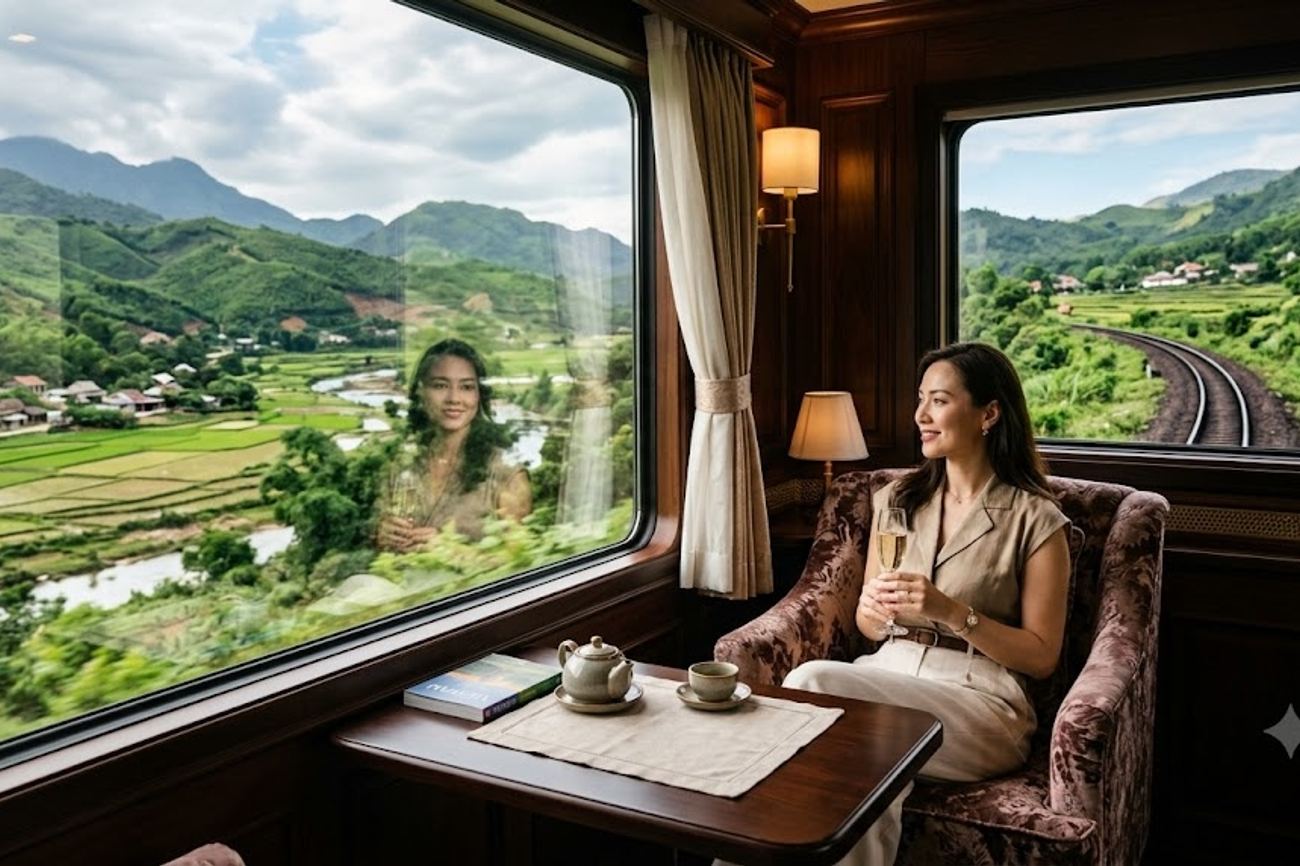
Image generated by AI
title: "Vietnam's Luxury Rail Pivot: Analyzing the SJourney Market Entry" date: "2025-05-22" category: "Market Analysis" tags: ["Vietnam-Rail-Growth-2025", "SJourney-Luxury-Sleeper", "Indochine-Tourism-Pivot", "Southeast-Asia-High-Net-Worth-Travel"]
While traditional rail transit in Vietnam has historically served as a utilitarian link between urban hubs, the introduction of SJourney marks a pivot toward high-yield tourism, shifting the focus from passenger volume to per-capita spend. The launch of this service on 18 December 2024 represents a strategic move to capture the "slow travel" segment, moving away from the rapid transit models that dominate the region's infrastructure.
The Luxury Rail Pivot in Numbers
The entry of SJourney into the Vietnamese market is not merely an addition of new carriages but a complete reconfiguration of the rail value proposition. The service operates as a "moving hotel," fundamentally changing the logistics of north-south transit. The flagship itinerary spans eight days and seven nights, connecting Hanoi and Ho Chi Minh City.
The physical infrastructure of the train is designed for exclusivity over capacity. The consist comprises 13 carriages, broken down as follows:
- 8 sleeping cars
- 2 bistro cars
- 1 open kitchen
- 1 lounge carriage
- 1 staff carriage
The most striking data point is the capacity constraint. While older documentation suggested a capacity of 70 passengers across 14 saloons, current operational data confirms a strict limit of 40 guests. This 43% reduction in passenger density is a calculated move to increase the service-to-guest ratio, aligning the product with global luxury standards seen in the World Tourism Organization reports on high-end experiential travel.
The accommodation tiers are categorized by square footage, creating a clear pricing hierarchy based on space:
- Standard Cabin: ~10 square metres (Double or Twin beds)
- Suite: 17 square metres (King-size bed, daybed, massage chair, bathtub)
- Imperial Suite: Up to 51 square metres (Private carriage, lounge area, bathtub)
Comparative Context: Utility vs. Experience
To understand the significance of SJourney, one must compare it to the existing rail landscape in Vietnam. For decades, the North-South Railway has functioned as a transport corridor. SJourney transforms this corridor into the destination itself.
The following table illustrates the shift in service delivery between standard rail transit and the SJourney luxury model:
| Feature | Standard Rail Transit | SJourney Luxury Sleeper |
|---|---|---|
| Primary Objective | Point-to-Point Transport | Immersive Holiday Experience |
| Guest Capacity | High-Volume / Mass Market | Capped at 40 Guests |
| Accommodation | Basic Berths / Shared Cabins | 10sqm to 51sqm Private Suites |
| Dining Model | On-board Snacks / Station Food | Regional Menus / Local Sourcing |
| Itinerary Focus | Transit Time Minimization | 8-Day Curated Sightseeing |
| Design Aesthetic | Functional / Industrial | 1920s Indochine Heritage |
This shift mirrors a broader trend in Southeast Asia where countries are leveraging colonial-era infrastructure to attract High Net Worth Individuals (HNWIs). By utilizing a design language inspired by the 1920s Indochine period—mixing French and Vietnamese aesthetics—SJourney is positioning itself not as a transport company, but as a heritage curator. This aligns with data from IATA suggesting that luxury travelers are increasingly seeking "authentic" heritage experiences over standardized luxury.
What This Means for Travelers
The introduction of a premium rail product changes the strategic planning for those visiting Vietnam. For the luxury traveler, the "flight-and-hotel" model is no longer the only viable option for crossing the country.
1. Logistics Simplification: The "moving hotel" concept eliminates the need for daily packing and unpacking. For travelers planning a trip between Hanoi and Ho Chi Minh City, this removes the friction of multiple hotel check-ins and airport transfers.
2. Itinerary Integration: The current southbound route integrates several key hubs into one ticket:
- Northern Sector: Hanoi and Ninh Binh (Trang An and Hoa Lu)
- Central Sector: Quang Binh (Phong Nha Cave), Hue (Imperial Citadel), and Hoi An
- Southern Sector: Phu Yen, Phan Thiet, and Ho Chi Minh City
3. Booking Strategy: Because the train is capped at 40 guests, availability will be extremely tight. Travelers should treat these bookings like boutique hotel reservations rather than train tickets. If planning for the 2025/2026 season, booking 4-6 months in advance is recommended due to the limited number of Imperial and Suite options.
Forward Projection: The "Slow Travel" Trajectory
Based on current market movements, the success of SJourney will likely trigger a ripple effect across Vietnam's tourism infrastructure. We are seeing a transition from "checklist tourism" (visiting the most sites in the shortest time) to "deep tourism" (experiencing a region through a single, high-quality lens).
If the 40-guest capacity model proves profitable, we can expect to see:
- Increased Boutique Rail Partnerships: Other operators may introduce "luxury pods" or refurbished heritage carriages to compete.
- Regional Hub Development: Stops like Phu Yen and Phan Thiet may see an increase in high-end shore-side infrastructure to support the needs of luxury rail passengers.
- Diversification of Routes: While the Hanoi-HCM City line is the flagship, there is potential for shorter, high-yield "loop" tours focusing specifically on the Central Highlands or the coastal heritage sites.
The integration of regional culinary experiences—where the menu shifts to reflect the geography outside the window—suggests that the future of luxury travel in the region is "hyper-local." According to Statista, the demand for experiential luxury is growing faster than the demand for traditional luxury, suggesting that SJourney's model is timed perfectly with global consumer shifts.
FAQ: SJourney Luxury Rail 2025
Will luxury rail tickets be more expensive than flying? Yes, significantly. Unlike a flight, the fare includes 7 nights of luxury accommodation, all meals, guided excursions, and ground transfers. It is priced as a comprehensive tour package rather than a transport fare.
Is this a good time to book a rail journey in Vietnam? Yes. With the launch of the SJourney service on 18 December 2024, the luxury rail segment is now active. Booking early is essential due to the strict 40-guest capacity limit per journey.
Which cabin type offers the best value? For those prioritizing space, the Imperial Suite (51sqm) is the gold standard. However, the Suite (17sqm) provides the best balance of luxury amenities—including a bathtub and massage chair—without the cost of a full private carriage.
Can the itinerary be customized? The flagship route is a curated 8-day experience. While the core stops (Hanoi, Hue, Hoi An, etc.) are fixed, travelers should confirm specific daily activities and dietary requirements with the operator during the booking process.
The transition from the airport terminal to the luxury rail carriage signals a new era of Vietnamese tourism where the journey is the destination.
Related Travel Guides
- Nepal’s Dungmagadhi Fort Set To Become a Major Heritage Tourism Attraction With New Tourism Development Plans
- Italy Follows United Kingdom And More In US Travel Advisory Updates As Tourist Safety And Passport Validity Requirements Take Centre Stage
- Greece Links Chora and Skala Through Patmos Half Marathon as Sports Travel Drives Tourism Beyond Pilgrimage
Disclaimer
This article is for informational and educational purposes only. It does not constitute legal, financial, or professional advice. While we strive to provide accurate and up-to-date information, travel policies, regulations, and conditions change rapidly. Always verify information with official sources before making travel decisions. Nomad Lawyer makes no representations about the accuracy, reliability, completeness, or suitability of the information provided. Readers should consult qualified professionals for advice specific to their circumstances. The views expressed in this article are those of the author and do not necessarily reflect the views of Nomad Lawyer.
Preeti Gunjan
Contributor & Community Manager
A passionate traveller and community builder. Preeti helps grow the Nomad Lawyer community, fostering engagement and bringing the reader experience to life.
Learn more about our team →