
Dubai Airports and Emirates Sync Infrastructure for Winter Surge with 260M Passenger Capacity Goal
Dubai is dismantling traditional aviation silos by integrating airport slots with tourism marketing to accelerate travel links and prepare for a massive winter traffic spike.

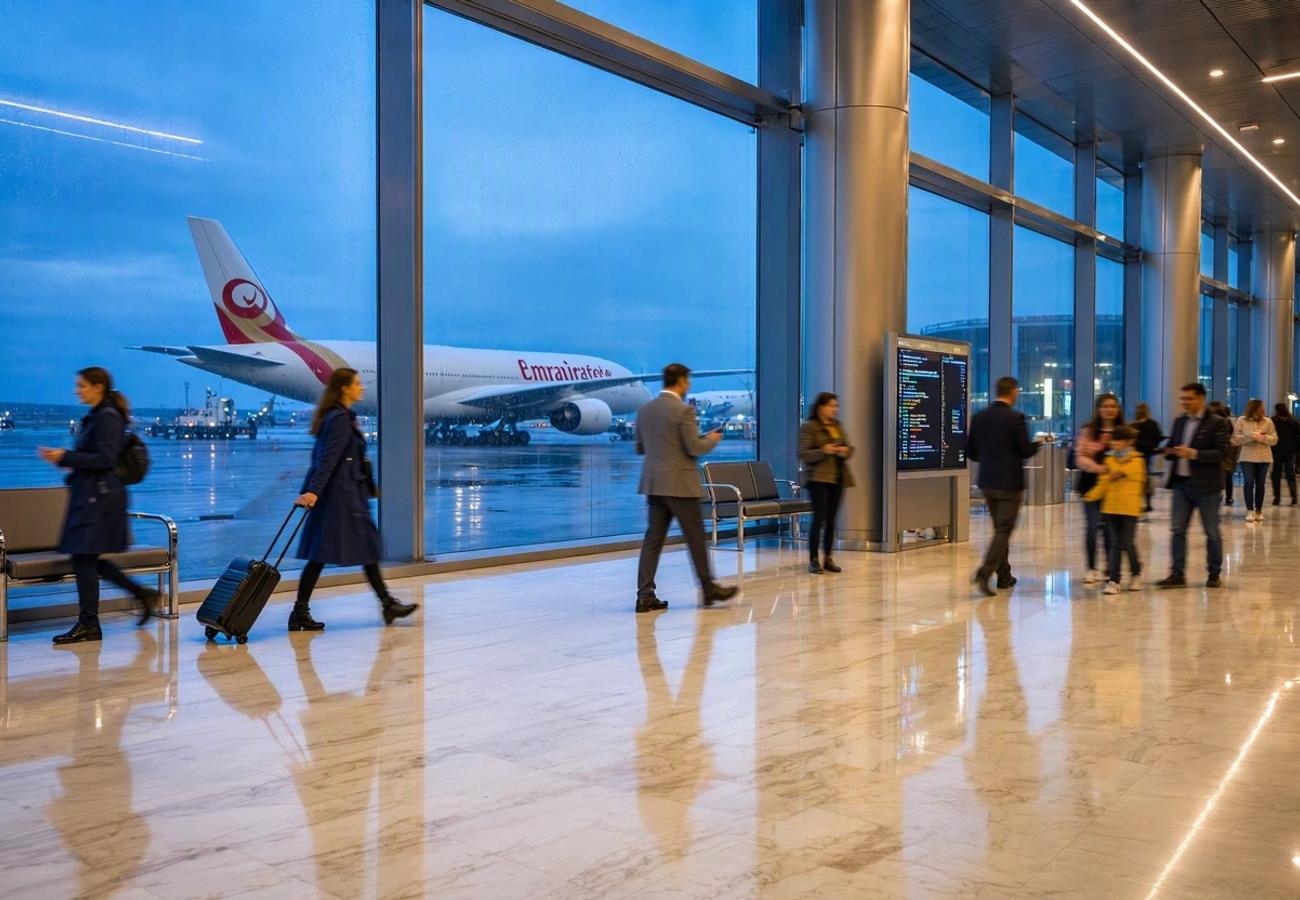
Image generated by AI
Dubai has officially abandoned the fragmented model where airports negotiate slots and tourism boards market hotels in separate silos. Instead, the city is now deploying an integrated "commercial pitch" that bundles route profitability modeling, ground handling, and direct promotional support into a single package for international carriers.
The Integrated Destination Framework
The traditional divide between aviation logistics and city marketing is disappearing. At the 29th Routes World Conference in Frankfurt, Dubai Airports and the Dubai Department of Economy and Tourism (DubaiDET) presented a unified front to global airline executives. This shift is designed to lower the risk for foreign carriers launching new routes by synchronizing terminal operations directly with hotel inventory and municipal campaigns.
By utilizing real-time traveler data, Dubai is targeting unmet demand in secondary markets across Central Asia, Africa, and Europe. This strategy ensures that when a new flight lands at Dubai International (DXB), the city's hospitality ecosystem is already primed to absorb those specific passenger demographics.
Operational Momentum and the Summer Peak
The resilience of DXB has been tested by regional airspace volatility, yet the numbers show a steady climb. In the first half of the year, the hub processed 31.5 million guests. The growth trajectory peaked during the summer months, with July and August each welcoming over 6.0 million visitors.
Currently, nearly 50 international airlines operate from DXB, providing direct access to 217 destinations across 99 countries. This connectivity is bolstered by Emirates, which has now restored 91% of its pre-disruption network capacity. This restoration is critical for the upcoming winter season, as the carrier re-establishes high-frequency feeder banks that allow passengers to transit between continents within two- to four-hour windows.
Hub Evolution: DXB vs. DWC
While DXB remains the primary engine for current traffic, the long-term strategy relies on the transition toward Al Maktoum International (DWC). The scale of the future megahub is designed to eliminate the slot caps that currently limit foreign airline expansion.
Aviation Infrastructure Comparison
| Infrastructure Benchmark | Dubai International (DXB) | Al Maktoum International (DWC) | Strategic Impact |
|---|---|---|---|
| Annual Passenger Capacity | ~90 to 100 Million | 260 Million (Ultimate Phase) | Removes slot restrictions for foreign carriers |
| Airfield Configuration | 2 Parallel Runways | 5 Parallel Runways | Ends airspace queuing; enables simultaneous ops |
| Aircraft Contact Gates | 150+ Dedicated Gates | 400+ Contact Gates | Reduces remote stands; faster turnaround |
| Annual Cargo Throughput | ~2.5 Million Tonnes | 12 Million Tonnes | Sea-air multimodal link via Jebel Ali Port |
| Urban Transit | Dubai Metro Red Line | Integrated Express Rail/Metro | Direct links to high-density business hubs |
Visitor Insider Tips
For those traveling through Dubai during the winter surge, the experience is increasingly biometric. To move through the hub efficiently, keep these local nuances in mind:
- The 10-Second Transit: If you are a registered traveler or UAE resident, use the Smart Gates. Biometric facial and iris recognition allows you to clear passport control in under ten seconds.
- Timing the Flow: DXB maintains a 50/50 split between transit and point-to-point visitors. To avoid the heaviest crowds, schedule your arrivals outside the primary Emirates "wave" windows (typically early morning and late night).
- Baggage Expectations: The automated system is high-velocity; over 90% of luggage arrives at the carousel within 45 minutes of landing. If you are transferring, utilize the internal shuttle systems to move between terminals.
- Transit Logistics: For those using Dubai Metro, the Red Line is the primary artery for Terminals 1 and 3. Always carry a Nol card to avoid ticket machine queues during peak winter hours.
Cultural and Environmental Context
Dubai's aggressive aviation expansion is not merely about volume; it is an economic survival strategy. The city views connectivity as the primary driver of foreign direct investment. However, this growth places immense pressure on urban infrastructure.
The shift toward DWC is a strategic move to move heavy aviation traffic away from the densely populated urban center of DXB, reducing noise pollution and traffic congestion in the city's core. Furthermore, by integrating the airport with the Jebel Ali Port corridor, Dubai is attempting to create a multimodal logistics hub that reduces the carbon footprint of fragmented shipping and flying. This alignment is part of a broader effort to maintain leadership in a region where airspace restrictions can shift overnight, requiring a flexible and diversified network of flight paths.
FAQ: Visiting Dubai 2026
What is the best time to visit Dubai? The window from November to March is ideal due to cooler weather. However, this coincides with the "winter surge," so booking flights and hotels at least three months in advance is recommended to avoid peak pricing.
How do I get from the airport to the city center? The Dubai Metro Red Line is the most efficient way to reach the city from DXB Terminals 1 and 3. For those heading to the newer DWC hub, integrated express rail links are the primary transport method.
Is Dubai safe for solo travelers? Yes, Dubai is consistently ranked as one of the safest cities globally for solo travelers. The city has a heavy security presence and a well-regulated tourism sector, making it accessible for all demographics.
Do I need a visa to enter the UAE? Visa requirements vary by nationality. Many passports receive a visa-on-arrival, while others must apply via their airline (like Emirates) or the official government portal. Check current regulations before departure.
The sky is no longer the limit for Dubai; it is the blueprint.
Related Travel Guides
Disclaimer
This article is for informational and educational purposes only. It does not constitute legal, financial, or professional advice. While we strive to provide accurate and up-to-date information, travel policies, regulations, and conditions change rapidly. Always verify information with official sources before making travel decisions. Nomad Lawyer makes no representations about the accuracy, reliability, completeness, or suitability of the information provided. Readers should consult qualified professionals for advice specific to their circumstances. The views expressed in this article are those of the author and do not necessarily reflect the views of Nomad Lawyer.
Raushan Kumar
Founder & Lead Developer
Full-stack developer with 11+ years of experience and a passionate traveller. Raushan built Nomad Lawyer from the ground up with a vision to create the best travel and law experience on the web.
Learn more about our team →