
USA Travel Breakthrough as Frontier Opens First Orlando Routes to South America and Colombia
USA Travel Breakthrough as Frontier Opens First Orlando Routes to South America and Colombia

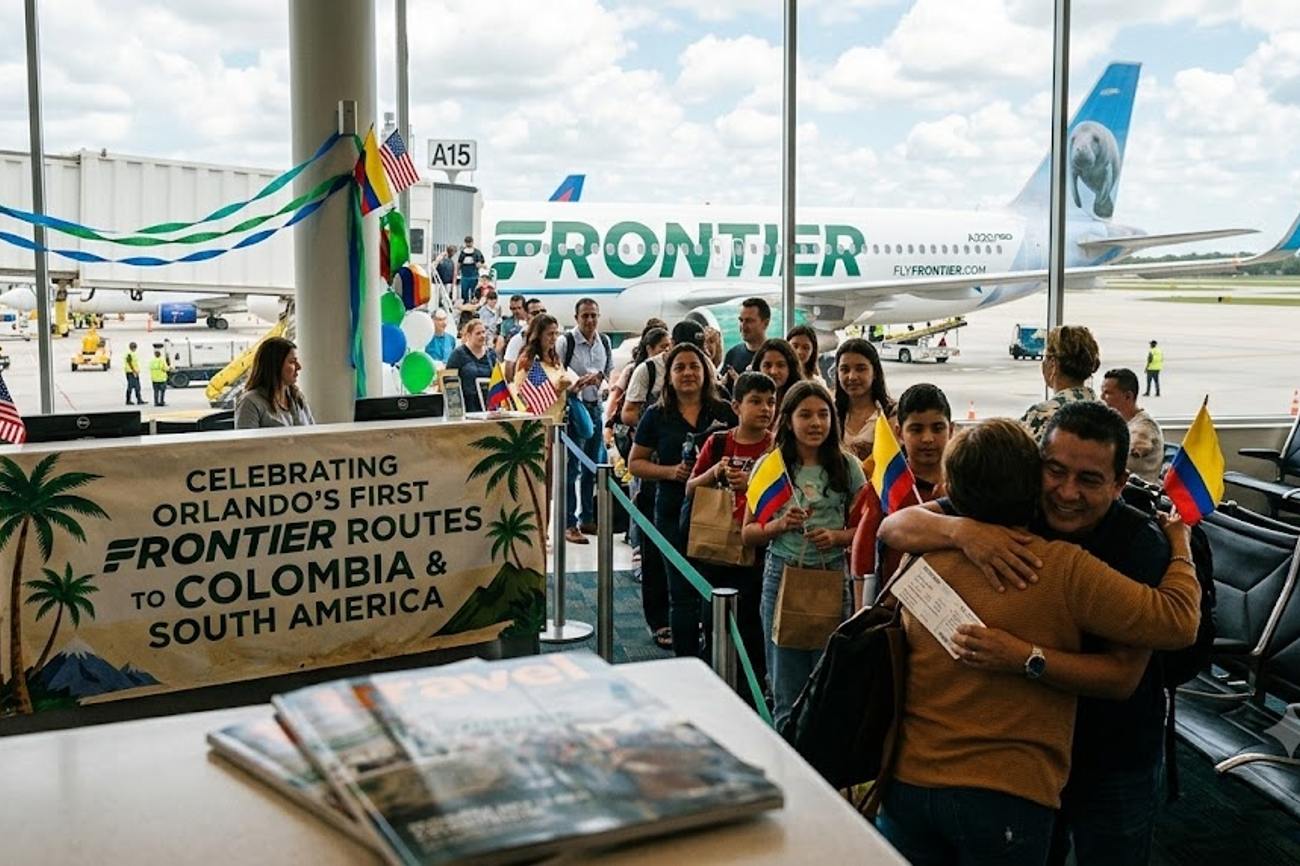
Image generated by AI
Starting December 10, 2026, the traditional travel corridor between Florida and South America will shift as Frontier Airlines launches its first-ever South American operations. While Orlando is globally synonymous with theme parks, it is rapidly evolving into a primary transit hub for Latin America, with new direct low-cost connections to Medellín, Bogotá, and Cartagena.
The New Corridor: Orlando to Colombia
For years, budget travel from Central Florida to the Andean region was dominated by a few carriers, but the landscape is changing. Frontier Airlines is stepping into a market gap—specifically one left by Spirit Airlines—to provide a low-cost bridge between Orlando International Airport and three of Colombia's most vital urban centers. This isn't just about adding flight numbers; it is a strategic pivot that transforms Orlando from a final destination into a jumping-off point for South American exploration.
The rollout is timed precisely for the peak winter travel window. The first connection opens on December 10, 2026, linking Orlando with Medellín’s José María Córdova International Airport via daily flights. Shortly after, on December 14, 2026, service to Bogotá begins with six weekly flights, a frequency that will scale up to daily service starting March 6, 2027. The final piece of the puzzle arrives on December 19, 2026, with a weekly flight to the Caribbean port of Cartagena.
These routes are currently awaiting final government approvals, but their intent is clear: to democratize access to Colombia. By removing the need for expensive connections in Miami or Panama City, Frontier is making the "Eternal Spring" of Medellín and the colonial walls of Cartagena accessible to a demographic of travelers who previously found the price point of South American travel prohibitive.
What Makes Colombia’s Trio Different
To understand why these three specific cities were chosen, one must understand that Bogotá, Medellín, and Cartagena represent three entirely different versions of the Colombian identity. They are not interchangeable stops; they are distinct cultural ecosystems.
Bogotá is the intellectual and political heartbeat of the nation. Situated high in the Andes, it is a city of contrast where the colonial cobblestones of the La Candelaria district meet modern skyscrapers. For the visitor, the draw here is the Gold Museum—one of the most significant collections of pre-Hispanic goldwork in the world—and the mountain viewpoints that offer a panoramic look at a city sprawling across a high plateau. It is a destination for those who seek art galleries, high-altitude coffee culture, and the fast-paced energy of a major business hub.
Medellín, by contrast, is a masterclass in urban transformation. Once avoided by international tourists, it is now a global model for social urbanism. The city is famous for its innovative cable car systems that connect hillside barrios to the city center, and its year-round mild climate. It has become a magnet for digital nomads and leisure travelers who prefer the lush, green valleys of Antioquia over the coastal heat.
Then there is Cartagena, which feels less like a Colombian city and more like a Caribbean dream. This is the land of bougainvillea-draped balconies and massive stone walls built to keep out pirates. It offers a blend of luxury boutique hotels and gritty street markets. The appeal here is the proximity to the Caribbean coastline and the island excursions that allow travelers to escape the city's humidity for white sand beaches. For more information on navigating these regions, the Colombia Official Tourism portal provides updated regional guides.
Visitor Insider Tips
Navigating Colombia requires a different rhythm than navigating Florida. To move like a local and avoid the common pitfalls of first-time visitors, keep these insights in mind:
Timing and Logistics: If you are flying into Bogotá, prepare for the altitude. The city sits at over 2,600 meters; give yourself 24 hours to acclimate before attempting any strenuous hiking. When visiting Medellín, the "Metro" is a point of immense civic pride—keep it clean and follow the rules strictly to avoid local ire.
Neighborhood Bases: In Bogotá, stay in or near La Candelaria for history, but move toward Chapinero for the best dining and nightlife. In Medellín, El Poblado is the tourist epicenter, but for a more authentic experience, explore Laureles, where the streets are flatter and the cafes are more local. In Cartagena, stay within the Walled City (Centro Histórico) to be within walking distance of the main sites, but venture into Getsemaní for the best street art and authentic plazas.
Local Etiquette and Customs: Colombians are exceptionally polite. Start every interaction—whether with a taxi driver or a shopkeeper—with a "Buenos días" or "Buenas tardes." Using "por favor" and "gracias" is not just polite; it is expected. When it comes to dining, do not miss the Ajiaco (a hearty potato and corn soup) in Bogotá or a fresh Arepa in Medellín.
Transport Hacks: While ride-sharing apps are available in the major cities, always agree on a price with taxi drivers before starting the trip if the meter isn't running. For inter-city travel, while these new flights are great for arriving, consider domestic carriers or luxury buses for shorter hops between cities.
Cultural and Environmental Context
The surge in low-cost connectivity brings a complex set of challenges and opportunities to Colombia. For decades, the country struggled with a narrative of instability. The current influx of tourism, bolstered by easier air access from hubs like Orlando, is a key pillar of the national economic strategy. It shifts the economy away from reliance on raw exports and toward a service-based model that celebrates cultural heritage.
However, this growth puts pressure on historic centers. In Cartagena, the "Disneyfication" of the Walled City is a real concern, as luxury hotels push out long-term residents. Similarly, in Medellín, the rise of the digital nomad community has led to gentrification in neighborhoods like El Poblado, driving up rents for locals.
Environmentally, the expansion of tourism into the Caribbean coast and the Andean highlands requires a careful balance. The Colombian government and local NGOs are increasingly focusing on sustainable tourism to protect the biodiversity of the region. Visitors are encouraged to support community-led tours that keep revenue within the local neighborhoods rather than flowing to international operators. For those interested in the ecological preservation of the region, the UNESCO World Heritage Centre lists several Colombian sites that require mindful visitation to ensure their survival for future generations.
FAQ: Visiting Colombia 2026-2027
What is the best time to visit Colombia? Colombia is a year-round destination due to its equatorial location. However, December to March is the dry season for much of the country, making it the ideal window for visiting the Caribbean coast or exploring Bogotá without constant rain.
Do I need a visa for Colombia? Citizens of the United States, Canada, and the UK generally do not need a visa for short-term tourism stays. Always check the latest requirements via the official Colombian consulate or the U.S. Department of State before booking.
How do I get from Orlando to Colombia? Starting December 2026, you can fly nonstop from Orlando International Airport (MCO) via Frontier Airlines to Medellín (MDE), Bogotá (BOG), or Cartagena (CTG). Flight frequencies vary by destination, with Medellín and Bogotá offering the most frequent service.
Is it safe for solo travelers? Yes, provided you follow basic urban safety rules. Stick to registered transport, avoid displaying expensive jewelry in public, and stay in well-lit, populated areas. Medellín and Bogotá are very welcoming to solo travelers, especially in established tourist zones.
The map of the Americas is shrinking, and the distance between the theme parks of Florida and the peaks of the Andes has never been shorter.
#OrlandoToColombia #FrontierAirlines #ColombiaTravel2026 #VisitMedellin #BogotaTravel #CartagenaCaribbean
Related Travel Guides
Disclaimer
This article is for informational and educational purposes only. It does not constitute legal, financial, or professional advice. While we strive to provide accurate and up-to-date information, travel policies, regulations, and conditions change rapidly. Always verify information with official sources before making travel decisions. Nomad Lawyer makes no representations about the accuracy, reliability, completeness, or suitability of the information provided. Readers should consult qualified professionals for advice specific to their circumstances. The views expressed in this article are those of the author and do not necessarily reflect the views of Nomad Lawyer.
Naina Thakur
Contributor & Travel Specialist
Travel enthusiast and legal writer covering visa regulations, responsible tourism, and cultural journeys across global destinations.
Learn more about our team →