
Virgin Atlantic Reshapes Long-Haul Strategy: Five Heathrow Routes Scaled Back Amid Fleet Reallocation

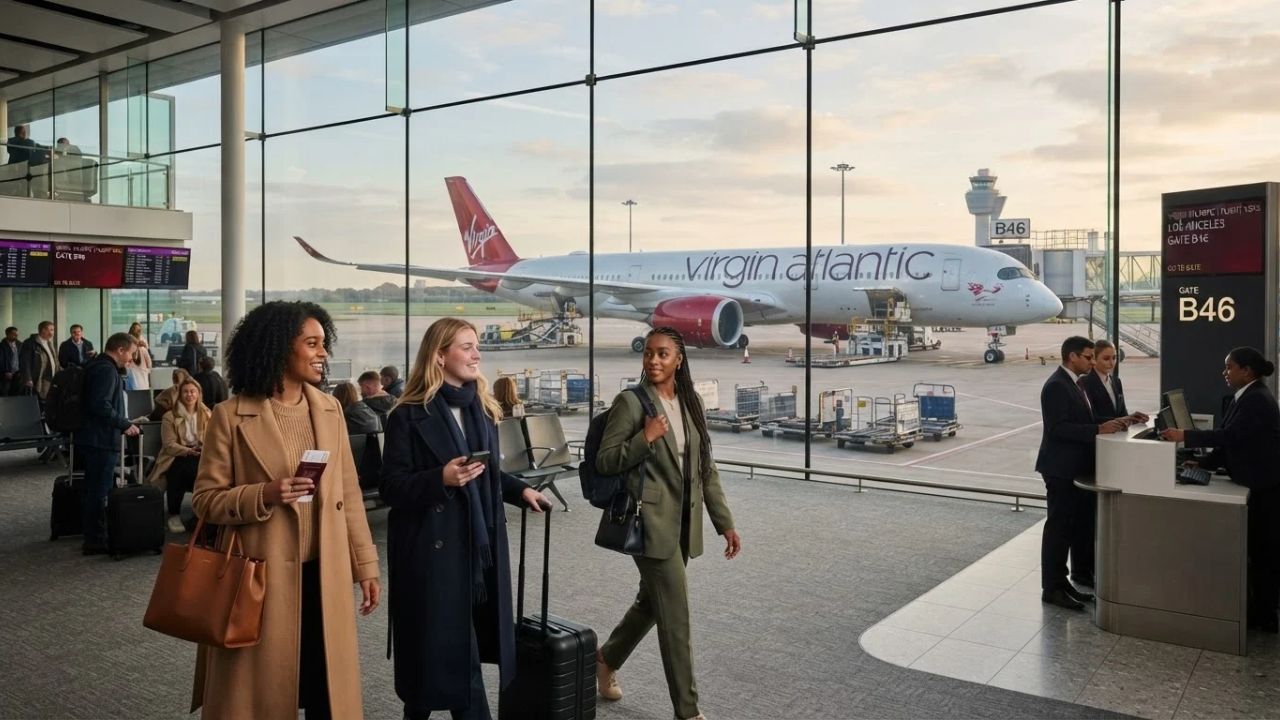
In a strategic recalibration designed to maximize aircraft utilization and protect long-haul profitability, Virgin Atlantic has announced the reduction of five international routes operating from its primary global hub at London Heathrow Airport (LHR). Released on September 13, 2026, the scheduling overhaul shifts widebody capacity away from marginal long-distance sectors to bolster high-demand transatlantic corridors, key Caribbean leisure routes, and commercial trunk services linking the United Kingdom with North America, India, and Africa.
The network realignment highlights a broader transition sweeping long-haul commercial aviation. Facing persistent supply chain delays for widebody deliveries, elevated jet fuel expenses, and intense competition at slot-constrained European hubs, premier international carriers are abandoning prestige routes in favor of disciplined network density. While trimming five services, Virgin Atlantic maintains its strategic stronghold at Heathrow Terminal 3, leaning into joint-venture partnerships with Delta Air Lines, Air France, and KLM to preserve global booking reach.
The Local Trend Revealed: Network Discipline and Fleet Reallocation at Heathrow
The decision to scale back five long-haul services signals a calculated operational pivot rather than a retreat from London Heathrow.
London Heathrow remains one of the world’s most slot-restricted and operationally expensive aviation gateways. Every takeoff and landing pair carries immense financial value, demanding that airlines generate optimal yields from every scheduled airframe. Rather than spreading its modern fleet thinly across underperforming routes, Virgin Atlantic is concentrating its widebody capacity on international markets that demonstrate resilient year-round demand and premium cabin passenger traffic.
Central to this strategy is the careful deployment of Virgin Atlantic’s advanced twin-engine long-haul fleet, comprising the Airbus A350-1000, Airbus A330-900neo, and Boeing 787-9 Dreamliner:
- Airbus A350-1000: The flagship workhorse of the transatlantic network, configured with 44 Upper Class suites, 56 Premium seats, and 235 Economy seats, providing high cargo capacity and exceptional fuel economics on premier business routes like New York (JFK) and Los Angeles (LAX).
- Airbus A330neo: Designed for mid-range long-haul routes to the Caribbean, the US East Coast, and South Asia, featuring the innovative Retreat Suite and advanced Rolls-Royce Trent 7000 engines that burn 11 percent less fuel per seat compared to previous-generation aircraft.
- Boeing 787-9 Dreamliner: Providing operational flexibility on specialized long-range routes requiring superior high-altitude performance and lower cabin altitude pressurization for passenger comfort.
By consolidating operations around these fuel-efficient airframes, the airline optimizes pilot and crew scheduling while shielding its bottom line from rising airport landing fees and maintenance expenditures.
Strategic Dimensions of Virgin Atlantic's Heathrow Network Realignment
| Strategic Area | Operational Adjustment | Core Fleet Asset | Commercial & Passenger Impact |
|---|---|---|---|
| Transatlantic Trunk Corridors | Frequency increases on premier US business gateways | Airbus A350-1000 & Boeing 787-9 | Defends corporate market share alongside Delta Air Lines joint venture |
| Secondary Route Reductions | Trimming five underperforming long-haul routes | Reallocating A330neo capacity | Protects operating margins by exiting low-yield, seasonally volatile markets |
| Alliance Code-Share Expansion | Routing passengers through SkyTeam European hubs | Air France & KLM feeder links | Preserves passenger connectivity via Paris (CDG) and Amsterdam (AMS) |
| Terminal 3 Passenger Focus | Enhancing Upper Class Wing and Clubhouse ground hospitality | Dedicated T3 private check-in | Strengthens loyalty retention among high-yield corporate and leisure flyers |
| Cargo Network Optimization | Maximizing belly-hold freight yields on resilient trade paths | High-density belly hold on A350-1000 | Sustains commercial freight revenues connecting the UK, India, and the Americas |
Partner Synergies: How Delta, Air France, and KLM Soften Route Reductions
For travelers who regularly relied on the five trimmed Heathrow services, Virgin Atlantic’s extensive commercial alliances provide alternative booking paths.
Through its expanded joint venture with Delta Air Lines, Virgin Atlantic coordinates coordinated schedules, shared terminal facilities, and reciprocal frequent-flyer recognition across the North Atlantic. Passengers traveling from regional UK centers or secondary US cities can easily connect through major alliance fortresses such as Atlanta (ATL), Boston (BOS), Detroit (DTW), or Minneapolis (MSP).
Furthermore, as a full member of the global SkyTeam alliance, Virgin Atlantic works in close coordination with European partners Air France and KLM. Travelers originating in London or regional British airports can connect through Paris Charles de Gaulle (CDG) or Amsterdam Schiphol (AMS) to reach international destinations across South America, Central Africa, and East Asia that are no longer served directly by Virgin Atlantic aircraft out of Heathrow.
Cultural & Environmental Value: Fleet Modernization and Sustainable Aviation
Aviation realignment directly intersects with environmental sustainability, as airlines face mounting regulatory pressure to lower lifecycle carbon footprints.
Fuel Efficiency and Noise Reduction Over London
London Heathrow is surrounded by dense urban boroughs in West London and Berkshire, where strict noise abatement ordinances and carbon emissions targets penalize older, noisier aircraft.
Virgin Atlantic’s transition to an all-next-generation fleet represents an effective environmental initiative. The Airbus A350-1000 and A330neo generate a 50 percent smaller acoustic noise footprint compared to legacy four-engine aircraft like the Boeing 747-400 and Airbus A340-600 that previously dominated Heathrow runways. Moreover, modern aerodynamic winglets and carbon-composite airframes deliver a 25 percent reduction in carbon emissions per seat, reducing the environmental impact of transoceanic departures.
Sustainable Aviation Fuel (SAF) Advancements
Building on its pioneering milestone of operating the world's first 100 percent Sustainable Aviation Fuel (SAF) flight across the Atlantic (Flight100), Virgin Atlantic continues to integrate SAF blends into its daily fuel bunkering at Heathrow. By reallocating flights to modern twin-engine aircraft capable of handling higher SAF blends, the carrier accelerates its roadmap toward net-zero aviation targets while supporting the development of regional biofuel refineries across the UK.
Visitor Insider Tips: Navigating Heathrow Terminal 3, Clubhouse Access, and London Secrets
For passengers departing London or transiting Heathrow with Virgin Atlantic, these local insider strategies ensure an elevated, seamless airport journey:
- The Upper Class Wing Private Entry: If traveling in Upper Class or holding top-tier Flying Club Gold status, skip the main Terminal 3 departures hall entirely. Instruct your private car or taxi to take the private elevated ramp directly into the Virgin Atlantic Upper Class Wing. A dedicated concierge greets you at the curb, prints your boarding pass and luggage tags, and escorts you through a private private security screening lane that empties directly into the duty-free lounge corridor in less than five minutes.
- Mastering the Virgin Atlantic Clubhouse: Widely recognized as one of the finest business class lounges in global aviation, the Terminal 3 Clubhouse offers exceptional amenities.
- Rooftop Terrace: Head up to the outdoor viewing terrace to watch widebody jets take off on runway 27R against the afternoon sky.
- A La Carte Dining: Avoid buffet trays and order scratch-made culinary specialties directly to your table via QR code, including the signature Virgin Atlantic burger, plant-based Asian salads, and freshly shaken cocktails crafted by resident mixologists.
- Heathrow Transit Tactics:
- The Elizabeth Line: Skip the expensive Heathrow Express (£25+ one-way) and take the Elizabeth Line. For under £13, the high-speed subterranean train connects Terminal 3 directly with central London stops—including Paddington, Bond Street, Tottenham Court Road, and Liverpool Street—in approximately 30 to 35 minutes without changing trains.
- Maximizing Flying Club Points on Re-Routed Journeys: If your historical route was among the five trimmed services, utilize Virgin Atlantic Flying Club Virgin Points on partner carriers. Redemptions on Delta, Air France, and KLM frequently require fewer points when booked via multi-carrier alliance routing tools.
- Under-the-Radar West London Escapes Near Heathrow: If facing a long layover between long-haul connections:
- Kew Gardens & Richmond Green: Take a short taxi ride to the Royal Botanic Gardens, Kew (a UNESCO World Heritage Site), or stroll the cobblestone alleyways of Richmond along the River Thames.
- Authentic British Sunday Roast: Stop by a traditional historic riverside pub like The White Cross in Richmond or The London Apprentice in Isleworth to savor slow-roasted British beef with giant Yorkshire puddings, crisp roast potatoes, and rich onion gravy.
Tourism Outlook: Strengthening Long-Haul Integrity in British Aviation
Virgin Atlantic’s decision to prune five underperforming routes from London Heathrow reflects strategic commercial pragmatism. In an era where global travel demand is highly dynamic and operational overhead remains high, successful airlines prioritize financial resilience and operational excellence over unchecked geographic expansion.
By deploying its most advanced Airbus A350-1000 and A330neo aircraft to high-performing international corridors and leaning into SkyTeam alliance partnerships, Virgin Atlantic protects its market standing as Britain's premier boutique long-haul carrier.
For international business executives, high-end leisure voyagers, and global tourism boards, the airline’s focused strategy delivers consistent flight schedules, dependable hub connections, and industry-leading passenger hospitality through one of the world's most vital aviation crossroads.
Related Travel Guides
Qatar Airways Expands Winter 2026 Flights: Frequency Surges for London, Maldives, and Australia
Emirates Wins Historic Berlin Approval: Germany Opens Fifth Hub with Daily Dubai Flights
Disclaimer
This article is for informational and educational purposes only. It does not constitute legal, financial, or professional advice. While we strive to provide accurate and up-to-date information, travel policies, regulations, and conditions change rapidly. Always verify information with official sources before making travel decisions. Nomad Lawyer makes no representations about the accuracy, reliability, completeness, or suitability of the information provided. Readers should consult qualified professionals for advice specific to their circumstances. The views expressed in this article are those of the author and do not necessarily reflect the views of Nomad Lawyer.
Raushan Kumar
Founder & Lead Developer
Full-stack developer with 11+ years of experience and a passionate traveller. Raushan built Nomad Lawyer from the ground up with a vision to create the best travel and law experience on the web.
Learn more about our team →