
US Airline Baggage Reliability Rankings and Lost Luggage Mitigation Guide
Baggage reliability varies widely across US carriers. Learn which airlines misplace the most bags and how to protect your checked luggage.

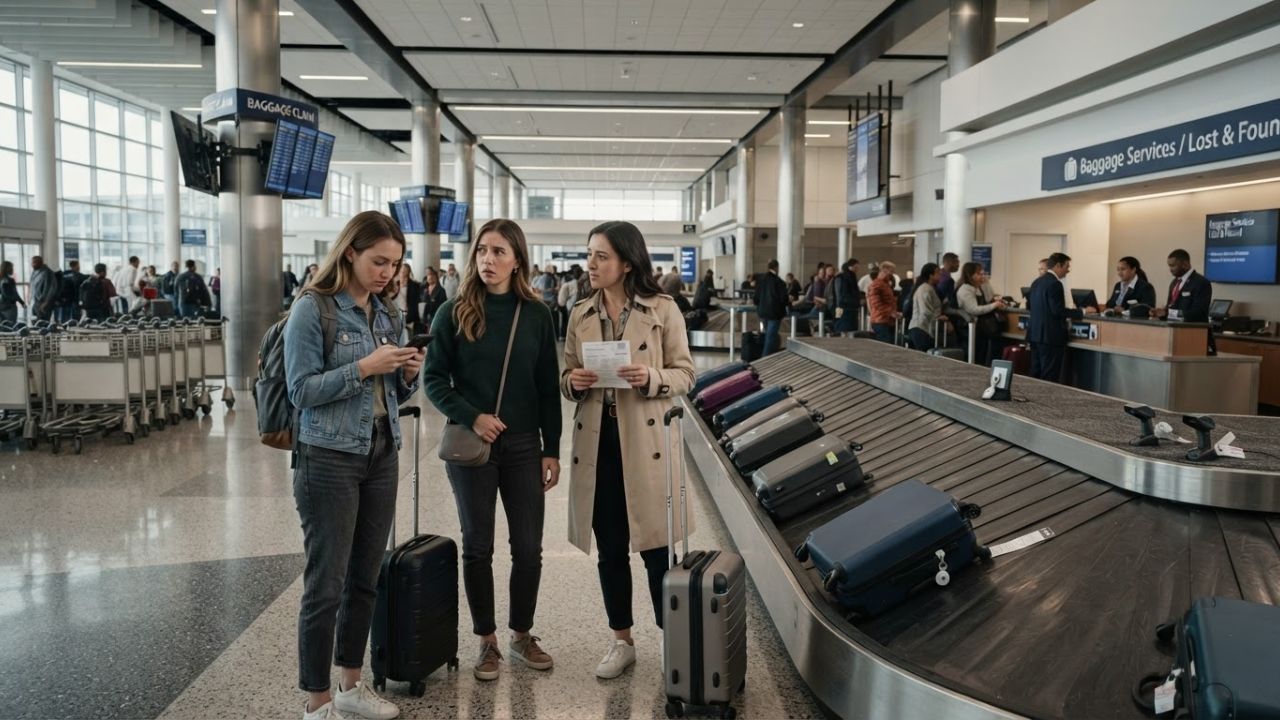
Image generated by AI
According to recent US Department of Transportation (DOT) consumer reports, baggage mishandling rates vary significantly by carrier, with American Airlines and United Airlines recording the highest volume of complaints.
Complex Hub Networks Drive Luggage Disruption
For millions of air travelers, the journey does not end when the aircraft touches down. The final hurdle is waiting at the baggage carousel, hoping their checked suitcase appears. Mishandled luggage remains a significant source of traveler frustration, driven by airport congestion, complex flight networks, and tight connection windows.
Recent performance data from the DOT’s Air Travel Consumer Reports indicates that baggage reliability is heavily influenced by airline operational models. Large network airlines, which manage millions of bags annually across complex hub-and-spoke networks, present more points of failure compared to point-to-point regional carriers. When storm systems trigger ground stops, these baggage networks can experience severe backlogs, causing similar issues as weather-induced travel delays.
Baggage Reliability Rankings Across Major US Carriers
Baggage mishandling rates are calculated based on complaints per passenger bag handled, providing a comparative look at reliability across the industry:
- American Airlines: Ranks among the weakest baggage performers among major US carriers. Its massive network and busy hub operations—including Dallas/Fort Worth (DFW), Charlotte (CLT), Miami (MIA), Chicago O’Hare (ORD), and Phoenix (PHX)—create significant transfer complexity, increasing the risk of delayed bags during tight connections.
- United Airlines: Frequently records above-average baggage complaints. Its extensive international network and major hubs—such as Chicago O’Hare, Denver (DEN), Houston (IAH), Newark (EWR), San Francisco (SFO), and Washington Dulles (IAD)—create bottlenecks, especially during international-to-domestic transfers.
- Frontier Airlines: Low-cost carriers face distinct baggage challenges due to limited staffing and strict baggage policies, occasionally leading to longer customer-service resolution times.
- Spirit Airlines: Receives complaints linked to high aircraft utilization and simplified airport staffing models.
- JetBlue Airways: Delivers mixed baggage performance, influenced by operational congestion at its primary East Coast bases.
- Southwest Airlines: Maintains a generally strong operational record, though its point-to-point network and generous checked-bag policies can create handling bottlenecks during peak holiday seasons.
- Alaska Airlines: Performs better than several larger network carriers, managing regional complexity with moderate baggage risk.
- Delta Air Lines: Ranks as one of the stronger major carriers for baggage reliability, supported by significant investments in automated RFID tracking systems.
- Hawaiian Airlines: Historically delivers strong baggage performance, benefiting from simple island network logistics.
The Logistics of Transfer Baggage: Why Bags Go Missing
Large network carriers face unique challenges because their systems are designed around connecting flights. A suitcase checked on a multi-stop itinerary must pass through check-in, regional sorting, hub transfer, and international loading. Each transfer stage requires accurate scanning, sorting, and manual handling.
International transfers add further complications. Bags transiting through major hubs often require customs inspection and agricultural screening before they can be re-routed. A single flight delay or late aircraft arrival can cause a suitcase to miss its connection, even if the passenger successfully boards the next flight, a disruption that mirrors issues highlighted in our guide on Middle East flight cancellations.
Practical Advice to Reduce the Risk of Lost Luggage
While airlines are investing in digital tracking technologies, travelers can take several steps to protect their checked luggage and minimize the impact of a lost bag:
Before Leaving for the Airport
- Use Digital Trackers: Place a GPS-enabled tracking device, such as an AirTag or smart tracker, inside your suitcase. This allows you to monitor your bag's location independently from airline tracking systems.
- Photograph Your Bag: Take a photo of the exterior of your suitcase and the printed baggage claim tag. If your bag goes missing, this visual record helps customer service agents identify it faster.
- Pack Essentials in Carry-on: Always keep prescription medications, electronics, travel documents, and a change of clothes in your cabin baggage.
- Remove Old Tags: Remove all barcode stickers from previous flights to prevent automated airport scanners from misrouting your luggage.
At the Airport and During Connections
- Verify the Tag Destination: Ensure the check-in agent prints the correct three-letter airport code for your final destination on the baggage tag.
- Allow Sufficient Connection Time: Avoid booking itineraries with connection windows under 60 minutes, especially at busy hubs like O'Hare or Charlotte.
- Document Lost Bags Immediately: If your bag fails to arrive, file a Property Irregularity Report (PIR) at the airport baggage service desk before leaving the terminal. Keep your baggage claim receipts and request a copy of the report.
The Future of Airport Baggage Systems
Aviation infrastructure is gradually adopting automated solutions to improve baggage handling. Real-time digital bag tracking, automated scanning belts, and improved ground-handling logistics are helping airlines recover delayed bags faster.
However, technology cannot entirely eliminate operational challenges. Severe weather, air traffic control restrictions, and staffing shortages will continue to test airport baggage networks. For travelers, choosing direct routes and leaving sufficient buffer times between connecting flights remains the most effective protection against mishandled luggage, a principle that applies to all forms of transport, as outlined in our UK railway suspensions alert.
FAQ: US Airline Baggage Reliability
Which US airlines lose the most bags?
According to DOT reports, American Airlines and United Airlines frequently record the highest volume of baggage complaints due to their massive hub operations and complex connecting flights.
What are my rights if an airline loses my luggage?
Under DOT regulations, airlines are liable for passenger baggage. If your bag is delayed or lost, you are entitled to reimbursement for reasonable expenses incurred for essential items, up to a maximum liability limit set by federal guidelines.
Should I put a tracker in my checked bag?
Yes. Placing a digital tracker in your bag allows you to locate it in real-time, helping customer service teams recover it faster if it is misrouted.
Related Travel Guides
US Flight Delays and Cancellations: Storms and Ground Stops
UK Railway Suspensions and Commuter Disruption Amidst Extreme Heatwave
Middle East Flight Cancellations and Delays Amidst Regional Instability
Disclaimer
This article is for informational and educational purposes only. It does not constitute legal, financial, or professional advice. While we strive to provide accurate and up-to-date information, travel policies, regulations, and conditions change rapidly. Always verify information with official sources before making travel decisions. Nomad Lawyer makes no representations about the accuracy, reliability, completeness, or suitability of the information provided. Readers should consult qualified professionals for advice specific to their circumstances. The views expressed in this article are those of the author and do not necessarily reflect the views of Nomad Lawyer.
Raushan Kumar
Founder & Lead Developer
Full-stack developer with 11+ years of experience and a passionate traveller. Raushan built Nomad Lawyer from the ground up with a vision to create the best travel and law experience on the web.
Learn more about our team →