
easyJet Passenger Removed from London Luton to Glasgow Flight After Smoking in Aircraft Lavatory Triggers Emergency Delay

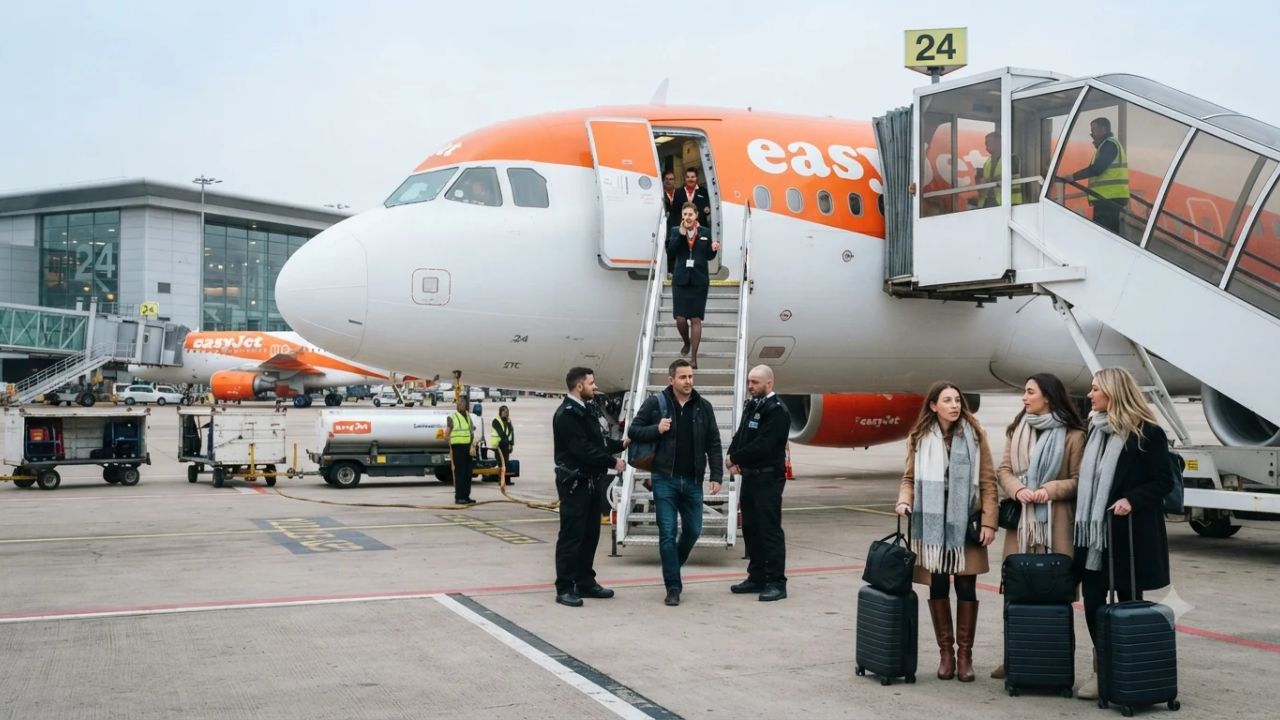
An easyJet scheduled commercial service from London Luton Airport (LTN) to Glasgow Airport (GLA) was thrown into disarray after a disruptive passenger allegedly lit a cigarette inside an aircraft lavatory while preparing for departure, triggering automated cockpit and cabin smoke alarms and forcing the captain to halt the flight. The incident, which unfolded aboard flight U2404 on Monday, November 16, 2026, required an immediate intervention by cabin crew and local airport security to remove the individual, offload baggage, and conduct mandatory cabin safety verifications. Although the Airbus A320-214 subsequently departed and landed safely in Scotland, the security breach delayed the flight’s departure by an hour and generated an arrival delay of 42 minutes, highlighting the severe operational and legal repercussions of violating international in-flight smoking bans.
Under United Kingdom civil aviation regulations and international air transport agreements, smoking and vaping are strictly prohibited aboard all commercial flights, whether parked at an airport boarding gate, taxiing along active runways, or cruising at altitude. Far from being a minor administrative infraction, tampering with or activating an aircraft’s lavatory smoke detection system is classified as a severe safety breach under the Air Navigation Order 2016. The incident underlines the compounding pressure that disruptive passenger conduct exerts on short-haul airline operations, where tightly optimized aircraft turnaround schedules can transform a single individual's reckless behavior into cascading schedule delays across multiple European regional airports.
========================================================================================
EASYJET FLIGHT U2404 SAFETY INCIDENT: FACTUAL PROFILE
========================================================================================
Operational Dimension           Official Incident Detail
----------------------------------------------------------------------------------------
Airline Carrier                 easyJet (British Low-Cost Commercial Airline)
Flight Number                   U2404 (Callsign: EZY404)
Incident Date                   Monday, November 16, 2026
Origin Airport                  London Luton Airport (LTN / EGGW), United Kingdom
Destination Airport             Glasgow Airport (GLA / EGPF), Scotland
Aircraft Equipment              Airbus A320-214 (Twin-Engine Narrowbody Jet)
Aircraft Registration           G-EZTN (Delivered to easyJet Fleet)
Scheduled Departure Time        1:00 PM GMT
Actual Gate Departure Delay     Approximately 60 Minutes (Security & Offloading Delay)
Scheduled Arrival Time          2:15 PM GMT
Actual Touchdown Time           2:57 PM GMT (Glasgow Airport)
Net Passenger Arrival Delay     42 Minutes
Incident Trigger                Passenger lit a cigarette inside aircraft lavatory at gate
Safety System Activated         Automated optical/ionization lavatory smoke detector
Enforcement Action Taken        Passenger deboarded, baggage offloaded, police notified
========================================================================================
Source: Official Flight Operations Tracking, easyJet Airline Disclosures, and AIRLIVE Reports.
========================================================================================
The London Luton Incident: How a Lavatory Cigarette Paralyzed Flight U2404
On the afternoon of November 16, 2026, easyJet flight U2404 was preparing to operate a routine domestic rotation connecting London Luton Airport in Bedfordshire with Glasgow Airport in west-central Scotland. The aircraft assigned to the flight, an Airbus A320-214 bearing United Kingdom registration G-EZTN, was carrying a full complement of business and leisure travelers.
As the flight crew finalized departure preparations, verified flight manifests, and prepared for pushback from the Luton terminal gate around 1:00 PM GMT, an alert sounded in the forward galley and on the pilots’ Electronic Centralized Aircraft Monitor (ECAM) display. An automated smoke detector in one of the aft passenger lavatories had detected active combustion particles.
========================================================================================
INCIDENT CHRONOLOGY: EASYJET FLIGHT U2404 DISRUPTION
========================================================================================
Time (GMT)               Operational Sequence of Events
----------------------------------------------------------------------------------------
12:30 – 12:55 PM         Boarding completed at London Luton gate; passenger manifests verified.
12:58 PM                 Passenger enters aft lavatory and allegedly ignites a tobacco cigarette.
12:59 PM                 Lavatory smoke detector activates visual and audible alarms in cabin & flight deck.
1:00 PM                  Cabin crew execute fire response protocol; lavatory accessed and extinguished.
1:05 – 1:35 PM           Captain halts pushback; Luton airport police and ground security board.
                         Disruptive passenger formally removed; checked luggage identified and offloaded.
1:40 – 1:55 PM           Cabin crew conduct physical safety sweeps; revised air traffic slot assigned.
2:00 PM                  Aircraft departs London Luton runway approximately 60 minutes behind schedule.
2:57 PM                  Aircraft touches down safely at Glasgow Airport; 42 minutes behind timetable.
========================================================================================
The Immediate Crew Intervention
Aviation safety protocols mandate that any smoke or fire indication aboard an aircraft must be treated as an active, life-threatening emergency. Cabin crew immediately mobilized with fire-fighting equipment, including portable halon extinguishers and protective breathing apparatus (PBA). Upon inspecting the lavatory, crew members discovered a passenger in possession of a lit cigarette.
Recognizing the intentional violation of federal and international flight rules, the captain suspended all departure procedures and alerted London Luton ground operations. Ground handling personnel, airport security, and local police officers boarded the Airbus A320 to escort the passenger off the aircraft. In accordance with strict Department for Transport (DfT) security directives, the passenger's checked baggage had to be located in the cargo hold and physically removed before the flight could receive clearance to depart.
Anatomy of Aircraft Lavatory Fire Suppression Systems
To understand why airline crews respond with such urgency to lavatory smoke alerts, one must examine the specialized fire suppression engineering embedded within modern commercial jetliners.
========================================================================================
COMMERCIAL AIRCRAFT LAVATORY FIRE DETECTION & SUPPRESSION ARCHITECTURE
========================================================================================
System Component         Engineering Design & Automated Operation
----------------------------------------------------------------------------------------
Smoke Detector           Optical chamber or dual-chamber ionization sensor located in ceiling;
                         detects micro-particles of combustion; triggers audible chime,
                         amber flashing light on exterior lavatory wall, and cockpit master warning.
Waste Chute Spring Door  Spring-loaded flap over the trash bin designed to snap shut automatically,
                         depriving an internal waste container fire of oxygen.
Automatic Fire Bottle    Built-in pressurized cylinder containing Halon 1301 or clean-agent gas;
                         mounted directly above the paper towel waste receptacle.
Fusible Discharge Tip    Heat-sensitive solder plug engineered to melt at approximately 77°C (170°F),
                         automatically discharging fire extinguishing gas directly into the bin.
Placarded Ashtray        Mandatory external ashtray affixed to the door or exterior bulkhead;
                         provides a designated safe containment point if an illicit cigarette is lit.
========================================================================================
Automated Halon Trash-Bin Extinguishers
Every commercial passenger jet flying today—including the Airbus A320 fleet operated by easyJet—is equipped with an automated fire extinguisher installed beneath the lavatory washbasin, positioned directly over the paper towel disposal bin.
This canister does not rely on human intervention or electrical power. It features dual discharge tubes capped with a fusible alloy solder plug. If a passenger illicitly discards a lit cigarette into the paper trash and a fire ignites, the rising ambient heat melts the solder plug at approximately 77°C (170°F), flooding the sealed bin with gaseous fire extinguishing agent (such as Halon 1301 or an eco-compliant alternative) within seconds.
The activation of this system or the presence of uncontained smoke triggers instant warnings on the Flight Attendant Panel (FAP) and sounds master caution tones on the flight deck, requiring pilots to immediately evaluate whether an emergency diversion is necessary.
The Lethal History Behind the Ban: Why In-Flight Smoking Is Treated as a Critical Threat
The zero-tolerance policy enforced by international aviation authorities is not a modern etiquette standard; it is a vital safety regulation forged through catastrophic loss of life in the history of civil aviation.
========================================================================================
HISTORICAL AVIATION DISASTERS LINKED TO IN-FLIGHT SMOKING
========================================================================================
Flight & Date            Aircraft Type    Casualties   Safety Failure & Regulatory Consequence
----------------------------------------------------------------------------------------
Varig Flight 820         Boeing 707-320C  123 Deaths   Cigarette discarded in aft lavatory trash;
(July 11, 1973)                           (11 Survivors)toxic smoke filled cabin; crash-landed
                                                       near Paris Orly; triggered smoke alarms mandate.
Air Canada Flight 797    McDonnell Douglas23 Deaths    Lavatory fire ignited near Cincinnati;
(June 2, 1983)           DC-9-32          (23 Survivors)smoke filled cockpit; prompted automated
                                                       halon extinguishers in trash receptacles.
Olympic Airways Flt 417  Boeing 747-200   1 Passenger  Secondhand smoke triggered fatal allergic
(January 4, 1998)                         Fatality     asthma attack; led to strict bans on non-smoking
                                                       flights across international air carriers.
========================================================================================
The Varig Flight 820 Catastrophe
On July 11, 1973, Varig Flight 820 was approaching Paris Orly Airport on a scheduled flight from Rio de Janeiro. A fire originated in an aft lavatory, almost certainly caused by a discarded cigarette tossed into the paper towel bin.
Within minutes, dense, toxic smoke filled the passenger cabin. Flight attendants attempted to use portable extinguishers, but the fire had migrated behind the interior wall panels. By the time the flight crew made an emergency forced landing in an onion field four kilometers short of the runway, 123 of the 134 people aboard had died from carbon monoxide poisoning and smoke inhalation.
The Air Canada Flight 797 Disaster
Ten years later, on June 2, 1983, Air Canada Flight 797 suffered an in-flight fire that originated in the aft lavatories while cruising at 33,000 feet over Kentucky. The thick smoke disabled flight instruments and filled the passenger cabin.
The pilots successfully executed an emergency landing at Cincinnati/Northern Kentucky International Airport, but ninety seconds after the doors opened on the runway, oxygen rushing into the cabin ignited a flashover fire, killing 23 passengers who were unable to escape.
This disaster led aviation regulatory bodies—including the United States FAA, the UK Civil Aviation Authority (CAA), and the International Civil Aviation Organization (ICAO)—to mandate:
- Smoke detection systems in every commercial aircraft lavatory.
- Automatic built-in fire extinguishers in all waste receptacles.
- Emergency floor-path lighting systems.
- The total phase-out and prohibition of smoking aboard passenger aircraft worldwide.
The Ashtray Paradox: Why Modern Airplanes Still Feature Lavatory Ashtrays
Passengers stepping aboard modern, state-of-the-art commercial aircraft frequently notice an apparent contradiction: while glowing "No Smoking" placards and digital warning signs are prominently displayed throughout the cabin, an official metal ashtray remains affixed to the lavatory door.
========================================================================================
THE MINIMUM EQUIPMENT LIST (MEL) ASHTRAY REQUIREMENT
========================================================================================
Regulatory Code          Governing Rule & Operational Rationale
----------------------------------------------------------------------------------------
FAA 14 CFR § 25.853(g)   Requires that one self-contained, removable ashtray be installed on
                         or near the entrance side of each lavatory door.
EASA CS-25.853           European Union Aviation Safety Agency mandate mirroring the FAA rule.
UK CAA CAP 393           Civil Aviation Authority airworthiness directive requiring door ashtrays.
Minimum Equipment List   If a lavatory ashtray is broken or missing, regulations require it
(MEL) Designation        to be replaced within 10 calendar days; otherwise the lavatory is grounded.
Safety Philosophy        Regulators recognize that despite absolute legal bans, an illicit smoker
                         who panics when caught must have a safe place to extinguish the cigarette
                         rather than dropping it into a flammable paper towel disposal bin.
========================================================================================
This requirement is not an oversight. Under the Master Minimum Equipment List (MMEL) enforced by the FAA, EASA, and the UK CAA, an aircraft cannot legally depart if a required lavatory ashtray is missing or damaged, unless a certified temporary deferral is logged.
Aviation safety engineers operate under a pragmatic philosophy: despite stern warnings, safety videos, and severe legal penalties, human beings will occasionally break the law. If an illicit smoker lights a cigarette in a lavatory and the smoke alarm sounds, their immediate instinct is panic. If there is no ashtray, the smoker will almost certainly toss the burning cigarette into the paper towel disposal bin to conceal the evidence—directly triggering a catastrophic internal fire. The ashtray exists as a physical safeguard to prevent an illegal act from turning into an in-flight disaster.
The Legal Repercussions: UK Air Navigation Order 2016 and CAA Enforcement
In the United Kingdom, smoking aboard an aircraft is not treated as a minor breach of contract; it is a statutory criminal offense prosecuted under the Air Navigation Order (ANO) 2016.
========================================================================================
UK CIVIL AVIATION LEGAL FRAMEWORK: DISRUPTIVE PASSENGER OFFENSES
========================================================================================
Statutory Provision      Legal Definition & Scope            Maximum Statutory Penalty
----------------------------------------------------------------------------------------
ANO 2016 Article 242     Acting in a disruptive manner       Level 4 Fine (Up to £2,500)
                         toward crew or fellow passengers    or formal police caution
ANO 2016 Article 244     Smoking in any compartment of an    Level 3 Fine (Up to £2,500)
                         aircraft when instructed not to     upon summary conviction
ANO 2016 Article 241     Endangering the safety of an        Statutory fine and up to
                         aircraft or persons onboard         TWO YEARS IMPRISONMENT
Civil Law Action         Airline civil suit to recover       Tens of thousands of pounds
                         delay, fuel, and handling costs     in civil court restitution
Airline Commercial Ban   Permanent blacklisting from booking Permanent denial of service
                         easyJet or partner airline flights  across European route networks
========================================================================================
Criminal Prosecution and Fines
Under Article 244 of the Air Navigation Order, any passenger who smokes in any compartment of an aircraft registered in the United Kingdom when notices indicate smoking is prohibited commits a criminal offense. A passenger convicted under this provision faces a substantial financial fine.
Additionally, if the circumstances demonstrate that the passenger's actions compromised the airworthiness of the aircraft or created an immediate fire risk, prosecutors can elevate charges to Article 241 (Endangering safety of an aircraft). Conviction on indictment under Article 241 carries a maximum sentence of up to two years in prison, an unlimited fine, or both.
Civil Cost Recovery and Permanent Blacklisting
Beyond criminal courts, airlines possess aggressive civil and commercial remedies:
- Civil Damages for Operational Delay: Under common law, airlines have successfully sued disruptive passengers to recover the thousands of pounds incurred from delayed flight slots, extra fuel burn, airport gate overstay penalties, and ground crew overtime.
- Airline Blacklisting: easyJet maintains a strict, zero-tolerance policy regarding unruly behavior. An individual removed for smoking in an aircraft lavatory is routinely placed on the airline’s internal "No-Fly List," resulting in an indefinite or permanent ban across easyJet’s entire European flight network.
Network Ripple Effects: How Short-Haul Turnarounds Compound 42-Minute Delays
While the passenger aboard flight U2404 may have viewed lighting a cigarette as an individual, victimless act, the operational reality of commercial aviation means that a localized 60-minute gate delay creates extensive disruption across the airline's broader flight schedule.
========================================================================================
EASYJET A320 TYPICAL DAILY UTILIZATION ROTATION (AIRBUS G-EZTN)
========================================================================================
Sector Leg               Scheduled Route                     Turnaround Window Assigned
----------------------------------------------------------------------------------------
Leg 1 (Early Morning)    London Luton (LTN) → Belfast (BFS)  30 Minutes Gate Turnaround
Leg 2 (Mid-Morning)      Belfast (BFS) → London Luton (LTN)  30 Minutes Gate Turnaround
Leg 3 (Mid-Day - U2404)  London Luton (LTN) → Glasgow (GLA)  Delayed by 60 mins at gate
Leg 4 (Afternoon)        Glasgow (GLA) → London Luton (LTN)  Departs 42 mins behind schedule
Leg 5 (Early Evening)    London Luton (LTN) → Geneva (GVA)   Pushed into evening airspace rush
Leg 6 (Night Return)     Geneva (GVA) → London Luton (LTN)   Risks curfew penalties at Luton
========================================================================================
Low-cost carriers achieve profitability through intense asset utilization. Aircraft fly six to eight flight sectors daily, operating with razor-thin 25-to-35-minute gate turnaround windows.
When flight U2404 was delayed by an hour at London Luton to deboard the disruptive passenger and locate their checked luggage in the cargo hold:
- The return flight from Glasgow back to London Luton was delayed from the outset.
- The aircraft’s subsequent evening sectors—frequently involving high-density European business routes like Geneva, Amsterdam, or Paris—inherited this initial delay.
- The flight crew's legal duty hours were compressed, risking mandatory duty-time expirations and forcing easyJet operations managers to scramble standby crews or reassign aircraft.
- Hundreds of downstream passengers who had zero connection to the Luton incident experienced disrupted holiday plans, missed regional train connections, and extended airport waits.
The E-Cigarette and Vaping Dilemma: Modern Smoke Detectors and Lithium Risks
A frequent question arising from in-flight smoking incidents involves the legal and technical status of electronic cigarettes, vape pens, and advanced nicotine delivery devices.
========================================================================================
VAPING VS. TRADITIONAL CIGARETTES ABOARD COMMERCIAL AIRCRAFT
========================================================================================
Parameter / Risk Factor  Traditional Tobacco Cigarettes      Electronic Cigarettes / Vapes
----------------------------------------------------------------------------------------
Onboard Usage Status     Strictly Banned Everywhere          Strictly Banned Everywhere
Lavatory Detector Action Triggers both optical & ionization  Triggers optical refraction sensors
                         smoke detection sensors             via heavy vapor particle density
Primary Safety Hazard    Open flame; smoldering ash in       Lithium-ion battery thermal runaway;
                         flammable paper towel trash bins    uncontrolled electrical fire in cabin
Baggage Allowance Policy Permitted in carry-on bags;         MANDATORY IN CARRY-ON ONLY;
                         matches restricted to 1 safety box  Strictly banned from checked cargo
Charging Permitted       N/A                                 STRICTLY PROHIBITED TO CHARGE ONBOARD
========================================================================================
Optical Smoke Detectors Readily Detect Vapor
A persistent myth among travelers is that modern vaping devices or e-cigarettes produce "harmless water vapor" that aircraft smoke detectors cannot recognize. This assumption is completely false.
Modern aircraft lavatories are equipped with optical (photoelectric) smoke detectors. These sensors operate by projecting an infrared light beam inside a sensing chamber. When any dense aerosol—whether combustion smoke from a tobacco cigarette or a dense glycerin vapor cloud from an e-cigarette—enters the chamber, it scatters the infrared light onto a photosensitive diode, instantly triggering the master alarm.
The Thermal Runaway Fire Risk
Beyond aerosol detection, electronic cigarettes introduce a separate, severe fire hazard: lithium-ion battery failure. Vaping devices contain rechargeable lithium cells that can undergo explosive thermal runaway if damaged, short-circuited, or overheated.
For this reason, international civil aviation regulations strictly mandate that all e-cigarettes and spare lithium batteries must remain in passenger carry-on luggage where any thermal event can be immediately extinguished by the cabin crew. Packing electronic smoking devices in checked luggage or charging them using aircraft USB ports is a direct violation of international flight rules.
Rights and Compensation: How UK261 Handles Disruptive Passenger Delays
When flight U2404 touched down in Glasgow 42 minutes behind schedule, affected passengers wondered whether they were entitled to financial compensation under United Kingdom passenger rights regulations (UK261, retained following the UK’s withdrawal from the European Union).
========================================================================================
UK261 COMPENSATION FRAMEWORK: DELAYS CAUSED BY UNRULY PASSENGERS
========================================================================================
Statutory Criteria       Regulatory Standard Under UK261 Guidelines
----------------------------------------------------------------------------------------
Delay Threshold for Pay  A flight must arrive at its final destination THREE HOURS or more
                         behind the scheduled arrival time to qualify for statutory cash payout.
Flight U2404 Delay Time  42 minutes arrival delay (Does not meet the 3-hour minimum threshold).
"Extraordinary Event"    Under UK CAA and European Court of Justice (ECJ) precedent, delays
Classification           caused by unruly or disruptive passenger removal are classified as
                         "extraordinary circumstances" outside the carrier's reasonable control.
Airline Defense          If an airline demonstrates that it took all reasonable measures to
                         resolve the disruption promptly, it is exempt from statutory cash claims.
Duty of Care Obligation  If a disruption exceeds two hours for short-haul flights, airlines must
                         provide food, refreshments, and communication access regardless of cause.
========================================================================================
Under UK261, statutory compensation (ranging from £220 to £520 per passenger) is payable only when an arrival delay reaches or exceeds three full hours. Because easyJet flight U2404 arrived 42 minutes late, the delay threshold was not met.
Even if cascading disruptions later in the day caused a downstream flight to exceed the three-hour delay mark, easyJet would likely be exempt from paying cash compensation under the "extraordinary circumstances" clause. Established legal precedents affirm that an airline cannot foresee or control the unlawful actions of an individual passenger who chooses to smoke in a lavatory. As long as the airline acted swiftly to remove the individual and resume flight operations, it is relieved of statutory delay liabilities.
Passenger Guidelines: Safety Expectations and Zero-Tolerance In-Flight Codes
To prevent disruptive incidents and protect international air travelers, airlines and regulatory agencies emphasize core behavioral expectations that every passenger must observe:
========================================================================================
PASSENGER SAFETY COMPLIANCE CHECKLIST
========================================================================================
Action Area              Mandatory Passenger Protocol
----------------------------------------------------------------------------------------
Smoking & Vaping Rules   Never smoke, ignite, or use any electronic cigarette, vape, or
                         tobacco product inside an aircraft cabin, lavatory, or boarding jetway.
Obey Crew Directives     Immediately follow all visual placards, illuminated signs, and verbal
                         instructions delivered by uniformed cabin crew and flight deck pilots.
Battery Management       Keep all electronic smoking devices and power banks in carry-on baggage;
                         never charge vaping devices via aircraft power sockets or seat USB ports.
Report Safety Concerns   If you observe smoke, burning odors, or illicit behavior in an aircraft
                         lavatory, notify a flight attendant immediately without confronting the person.
Zero-Tolerance Warning   Recognize that disruptive behavior, aggressive language, or safety breaches
                         result in immediate flight offloading, police arrest, and permanent flight bans.
========================================================================================
- Total Prohibition from Gate to Gate: The ban on smoking and vaping applies from the exact moment you step onto the boarding jetway at the departure airport until you exit the terminal at your final destination.
- Never Attempt to Disable Smoke Detectors: Tampering with, covering, or removing an aircraft smoke detector is a severe federal offense that carries immediate criminal prosecution and heavy financial penalties.
- Respect Cabin Crew Authority: Flight attendants are licensed safety professionals responsible for preserving human life aboard the aircraft. Disobeying crew instructions during boarding or flight is an explicit offense under civil aviation law.
Comprehensive Frequently Asked Questions
What happened on easyJet flight U2404 at London Luton Airport?
On Monday, November 16, 2026, an easyJet passenger aboard flight U2404 from London Luton to Glasgow lit a cigarette inside an aircraft lavatory while preparing for departure, activating automated smoke alarms and forcing the captain to halt the flight so police could remove the passenger.
Did the flight to Glasgow eventually take off?
Yes. After the passenger was removed, their checked luggage offloaded, and cabin safety checks completed, the Airbus A320 departed London Luton approximately one hour late and landed safely at Glasgow Airport with a 42-minute arrival delay.
Why do modern airplanes still have ashtrays in the lavatories if smoking is banned?
Civil aviation regulations (enforced by the FAA, EASA, and UK CAA) mandate that an ashtray be installed on or near every lavatory door. If an illicit smoker panics when the smoke alarm sounds, the ashtray provides a safe place to extinguish the cigarette rather than discarding it into a flammable paper towel disposal bin.
What legal penalties does a passenger face for smoking on a UK commercial flight?
Under the UK Air Navigation Order 2016, smoking on an aircraft carries a fine of up to £2,500 under Article 244. If the act endangers the safety of the aircraft under Article 241, the offender can face up to two years in prison and unlimited fines, alongside civil lawsuits from the airline.
Can aircraft lavatory smoke detectors detect electronic cigarettes and vaping?
Yes. Aircraft lavatories use optical (photoelectric) smoke detectors that sense the scattering of infrared light caused by airborne particulate matter. Dense vapor clouds from e-cigarettes scatter light identically to tobacco smoke, triggering the alarms immediately.
Are passengers on flight U2404 entitled to delay compensation under UK261?
No. UK261 statutory delay compensation requires an arrival delay of at least three hours, whereas flight U2404 arrived 42 minutes late. In addition, unruly passenger incidents are classified as "extraordinary circumstances," exempting airlines from statutory compensation payouts.
Can an airline ban a passenger permanently for smoking in an aircraft lavatory?
Yes. Airlines operate under strict zero-tolerance policies for disruptive behavior. Passengers removed for in-flight smoking violations are routinely placed on permanent or long-term internal "No-Fly" blacklists, barring them from future travel on that airline.
Why is in-flight smoking considered a major aviation safety hazard?
Discarded smoking materials have historically caused catastrophic in-flight fires, most notably Varig Flight 820 in 1973 (123 fatalities) and Air Canada Flight 797 in 1983 (23 fatalities), proving that lavatory fires can rapidly spread behind cabin wall panels and generate lethal toxic fumes.
What happens to a passenger's checked baggage when they are removed from a flight?
Under international aviation security regulations, if a passenger is deboarded for disruptive behavior, their checked baggage cannot travel on the aircraft. Ground handlers must physically open the cargo hold, locate the passenger's luggage, and offload it before the plane is cleared for departure.
Where should electronic cigarettes be packed when flying?
International aviation safety rules require that all electronic cigarettes, vape pens, and spare lithium-ion batteries must be carried exclusively in passenger carry-on baggage. They are strictly prohibited from checked luggage due to fire risks, and charging them onboard is forbidden.
Strategic Outlook: Preserving Airborne Safety and Cabin Discipline
The disruption of easyJet flight U2404 serves as a timely reminder of the delicate balance governing modern commercial aviation. A single passenger’s willful disregard for basic safety regulations not only jeopardized an Airbus A320 with over 150 people aboard, but also delayed dozens of travelers and triggered complex emergency responses from airline staff and airport police.
Commercial aviation remains the safest mode of mass transportation in human history precisely because safety standards are uncompromising. From automated halon fire suppression canisters to strict criminal statutes under the Air Navigation Order, the systems safeguarding passenger cabins are designed to protect human life at all costs. For travelers across the globe, the message remains clear and absolute: the rules governing in-flight discipline and smoking prohibitions exist for everyone’s safety, and compliance is non-negotiable.
Related Travel Guides
- Avelo Airlines Expands Florida Network with Six Nonstop Routes to North Dallas, Charlotte, and Puerto Rico
- United States December Shutdown Warning Sparks Flight Delay Fears Ahead of 2026 Christmas and New Year Travel Rush
- Haiti Strengthens US Air Corridor as Sunrise Airways Launches Nonstop Cap-Haïtien to New York JFK Flights
- Southern Europe Airport Transfers Cost Comparison: How Athens, Rome, Barcelona, Lisbon, and Malta Reshape Holiday Budgets in 2026
This article is for informational purposes. Flight routes, passenger regulations, visa rules, and transit advisories are subject to change by airlines and aviation authorities. Readers are advised to verify schedules and travel documentation with relevant carriers and border agencies before departure.
Related Stories
easyJet Launches Direct Liverpool to Reykjavik Flights: Inside the North West's New Winter Gateway to Iceland
Singapore Airlines and Scoot Expand Asia-Pacific Holiday Capacity with Supplementary Japan Flights and Regional Network Surge
