Singapore Airlines and Scoot Expand Asia-Pacific Holiday Capacity with Supplementary Japan Flights and Regional Network Surge

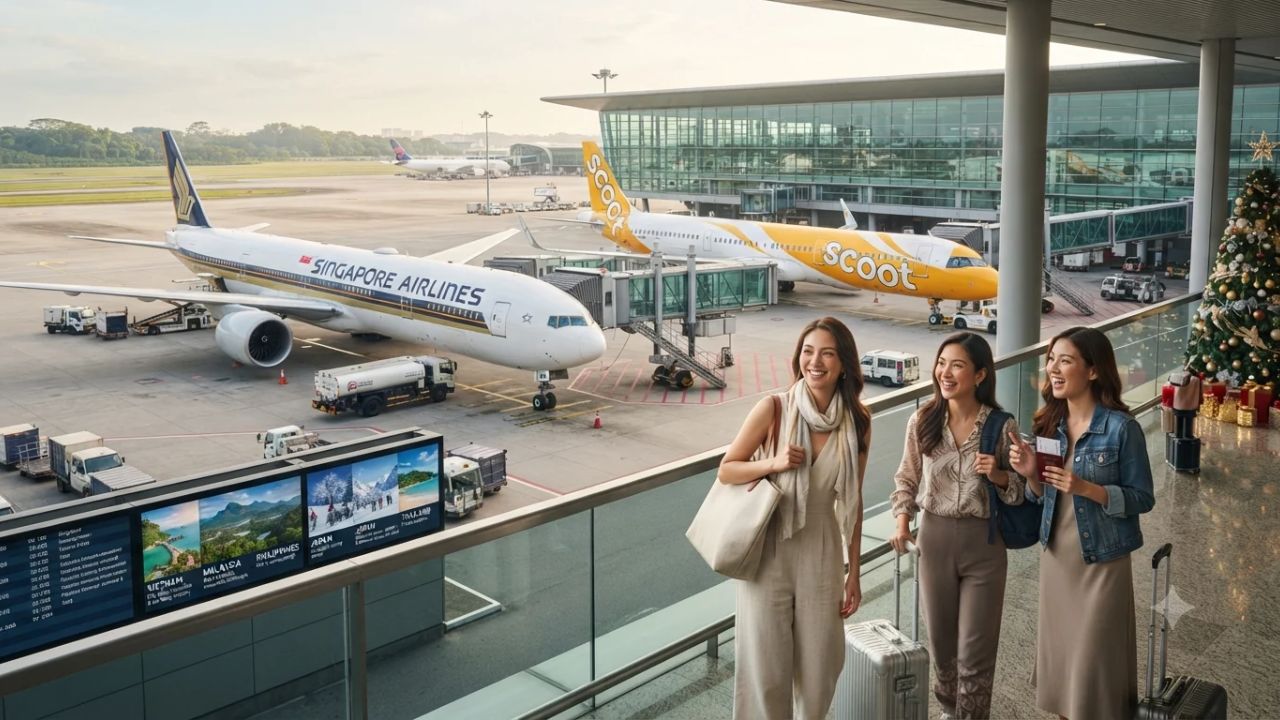
The Singapore Airlines (SIA) Group is implementing a substantial Asia-Pacific flight capacity expansion between October 2026 and January 2027, deploying a coordinated dual-airline network strategy to capture surging year-end holiday demand across Japan, Vietnam, Malaysia, the Philippines, and Thailand. Under the seasonal program, low-cost subsidiary Scoot is scaling up frequencies to high-demand leisure gateways including Phu Quoc, Kota Kinabalu, Clark, Okinawa, Phuket, and Hat Yai, while flagship carrier Singapore Airlines is injecting additional frequencies into Ho Chi Minh City and Da Nang, alongside dedicated seasonal supplementary widebody flights to Sapporo, Hokkaido. The coordinated capacity surge builds upon robust operating results for October 2026, which saw the two carriers transport 3.74 million passengers with group passenger traffic expanding 3.5% year-on-year, reinforcing Singapore Changi Airport's pivotal role as Southeast Asia's primary intercontinental transfer hub.
The joint expansion showcases the mature structural differentiation of the SIA Group's two-brand commercial architecture. While Singapore Airlines concentrates on high-yield corporate travelers and premium long-haul transit connections across 79 global destinations, Scoot serves 85 destinations—including 58 points operated exclusively by the low-cost carrier—providing accessible regional connectivity with high aircraft utilization. Operating figures released in the group’s November 2026 financial disclosures reveal that Scoot achieved an extraordinary passenger load factor of 91.6% in October, marking its fourth consecutive month exceeding the 90% threshold, while Singapore Airlines maintained a solid 86.8% load factor. By coordinating flight banks and matching specific airframes—ranging from ultra-efficient Embraer E190-E2 regional jets to long-range Airbus A350 and Boeing 787 widebodies—the group addresses divergent consumer spending profiles while defending market share against aggressive regional budget competitors like AirAsia and Cebu Pacific.
========================================================================================
SINGAPORE AIRLINES GROUP: DUAL-CARRIER OPERATIONAL SCORECARD (OCTOBER 2026)
========================================================================================
Operational Dimension           Singapore Airlines (FSC)  Scoot (LCC)          Combined Group Total
----------------------------------------------------------------------------------------
October 2026 Passengers Carried 2,440,000 Passengers     1,300,000 Passengers 3,740,000 Passengers
Year-on-Year Passenger Growth   +3.5% YoY Expansion       +6.4% YoY Expansion  +4.5% Group Volume
October Passenger Load Factor   86.8% Load Factor         91.6% Load Factor    88.5% Blended Average
Consecutive Months >90% Load    N/A                       4 Consecutive Months Sustained Peak Efficiency
Destinations at 31 October 2026 79 Global Destinations    85 Regional/Int'l    138 Unique Points
Exclusive Brand Destinations    21 Mainline Only          58 Scoot Exclusive   Group Network Reach
H1 FY2026/27 Group Revenue      S$11.3 Billion (Consolidated Revenue for 6 Months Ending 30 Sep 2026)
Core Strategic Fleet Deployed   Airbus A350-900 / A350-1000Airbus A320neo / A321neoMulti-tier Airframe
                                Boeing 777-300ER, B787-10 Boeing 787-8/9, E190-E2Optimization
========================================================================================
Source: Singapore Airlines Group Half-Year Financial Disclosures & October 2026 Operating Statistics.
========================================================================================
The Two-Airline Strategy: Segmenting Premium Intercontinental and Low-Cost Regional Networks
The core strength of the Singapore Airlines Group lies in its deliberate operational separation between full-service premium travel and low-cost unbundled aviation. Rather than forcing a single airline brand to serve mutually incompatible market segments, the group utilizes Singapore Airlines and Scoot as complementary commercial instruments.
Singapore Airlines functions as the premium flagship carrier, delivering a four-cabin travel experience (First Class suites, Business Class lie-flat beds, Premium Economy, and standard Economy) backed by complimentary dining, seatback entertainment, and reciprocal frequent flyer privileges across the global Star Alliance network. This product architecture targets corporate mobility managers, affluent long-haul vacationers, and high-yield transit passengers connecting from Europe, North America, and Australia into Southeast Asia.
========================================================================================
COMMERCIAL & FLEET SEGMENTATION: SINGAPORE AIRLINES VS. SCOOT
========================================================================================
Commercial Variable      Singapore Airlines (Full-Service)    Scoot (Low-Cost Carrier)
----------------------------------------------------------------------------------------
Target Market Segment    Corporate executives, premium leisure,Budget-conscious holidaymakers, VFR
                         intercontinental transit passengers  traffic, independent regional tourists
Cabin Configuration      First Class, Business Class,         Single-class high-density Economy;
                         Premium Economy, Economy             ScootPlus premium cabin on Boeing 787s
Baggage & In-Flight Meal Standard checked baggage included;   Unbundled; baggage, seat selection,
Services                 complimentary hot meals and drinks   and hot meals purchased as ancillaries
Distribution & Alliances Star Alliance member; extensive      Direct digital distribution; interline
                         codeshare and interline agreements   connectivity with Singapore Airlines
Fleet Composition        Airbus A350-900/1000, Boeing 787-10, Airbus A320ceo/neo, A321neo,
                         Boeing 777-300ER (All Widebodies)    Boeing 787-8/9 Dreamliner, Embraer E190-E2
Route Selection Focus    Primary international metropolises   Secondary resort hubs, regional capitals,
                         and intercontinental trunk routes    and high-density short-haul holiday runs
========================================================================================
Conversely, Scoot operates on an agile, low-cost model tailored for price-sensitive leisure travelers who prioritize affordable base fares and prefer to purchase checked baggage, reserved seating, and onboard catering as optional ancillaries. By deploying single-class narrowbody aircraft alongside widebody Boeing 787 Dreamliners configured for maximum seating density, Scoot achieves significantly lower unit operating costs (CASM).
Importantly, the group's network planning prevents commercial cannibalization. Out of the 138 total destinations served by the group as of October 31, 2026, 58 destinations are served exclusively by Scoot. These exclusive markets comprise secondary regional cities—such as Hat Yai in Thailand, Clark in the Philippines, and Kota Kinabalu in Malaysia—where passenger yields cannot support a widebody full-service flight, but where Scoot’s lower-cost airframes can operate profitably with high load factors.
Japan’s Winter Contrasts: SIA’s Hokkaido Ski Flights and Scoot’s Okinawa Subtropical Surge
The expansion into Japan encapsulates the seasonal and experiential diversity of the group's winter strategy, establishing a sharp contrast between northern powder-snow sports and southern subtropical island retreats.
========================================================================================
JAPAN HOLIDAY CAPACITY EXPANSION PROFILE: WINTER 2026–2027
========================================================================================
Destination Gateway      Operating Airline & Aircraft         Seasonal Tourism Proposition
----------------------------------------------------------------------------------------
Sapporo, Hokkaido        Singapore Airlines (Mainline)        Peak winter snow and ski season;
(New Chitose - CTS)      Airbus A350-900 Widebody             Niseko alpine resorts, Sapporo Snow
                         Supplementary seasonal frequencies   Festival; premium winter family travel
                         (30 Nov 2026 through 24 Jan 2027)
Okinawa (Naha - OKA)     Scoot (Low-Cost Carrier)             Subtropical winter escape; temperate coastal
                         Airbus A321neo / Boeing 787          beaches, diving, cultural Ryukyu heritage;
                         Additional holiday frequencies       affordable warm-weather island breaks
========================================================================================
Singapore Airlines' Supplementary Hokkaido Services
To cater to surging demand for winter sports in northern Japan, Singapore Airlines is operating dedicated supplementary flights connecting Singapore Changi directly with Sapporo’s New Chitose Airport (CTS) in Hokkaido. Running from November 30, 2026, through January 24, 2027, these seasonal flights supplement regular scheduled services, providing travelers with direct access to world-renowned ski resorts including Niseko, Rusutsu, and Furano.
Hokkaido represents one of the highest-yielding seasonal leisure markets in Asia. By deploying long-range Airbus A350-900 aircraft featuring lie-flat Business Class seats and substantial underfloor cargo space to accommodate passenger ski and snowboard equipment, Singapore Airlines captures premium travelers from Southeast Asia and Australia who are willing to pay significant fare premiums for direct alpine access.
Scoot’s Subtropical Expansion in Okinawa
Simultaneously, Scoot is scaling up flight frequencies to Naha Airport (OKA) in Okinawa. Situated in Japan’s southernmost prefecture, Okinawa offers a subtropical marine climate, coastal resorts, and coral reef diving that contrast completely with the snow-covered slopes of Hokkaido.
Scoot’s expanded schedule provides budget-conscious vacationers with an affordable pathway to experience Japanese culture and island landscapes without enduring freezing winter temperatures. The route appeals heavily to young travelers, couples, and multi-generational families seeking short four-to-five-day tropical holidays.
Japan’s Shifting Tourism Dynamics
The SIA Group’s targeted capacity deployment aligns with broader macroeconomic shifts in Japanese tourism. Official data from the Japan National Tourism Organization (JNTO) recorded a historic monthly high of 3.91 million international visitors in October 2026. However, cumulative arrivals for the first ten months reached 34.64 million, trailing the 35.55 million recorded during the same period in 2025.
A closer inspection of visitor source markets reveals that while South Korean arrivals expanded rapidly, mainland Chinese inbound travel contracted noticeably. By targeting Southeast Asian holidaymakers departing from Singapore, Malaysia, and Indonesia, the SIA Group is actively compensating for shifting international demand patterns, channeling high-spending outbound travelers into Japanese regional airports.
Vietnam’s Dual-Gateway Expansion: Phu Quoc Resort Feeder and Central Vietnam Trunk Routes
Vietnam provides the clearest demonstration of how the SIA Group applies its two brands simultaneously to penetrate a single high-growth national tourism economy.
According to official data from the Vietnam National Authority of Tourism, Vietnam welcomed approximately 19.54 million international visitors between January and October 2026, up substantially from 17.15 million during the corresponding period in 2025. Air transportation accounted for 16.25 million arrivals, underscoring the absolute reliance of the country’s tourism economy on international airline connectivity.
========================================================================================
VIETNAM DUAL-BRAND CAPACITY EXPANSION (OCTOBER 2026 – JANUARY 2027)
========================================================================================
Destination Market       Airline Brand & Development          Target Tourism Demand
----------------------------------------------------------------------------------------
Phu Quoc Island (PQC)    Scoot Additional Services            Island resort vacations, beach tourism,
                         (Airbus A320 / Embraer E190-E2)      extended leisure stays, budget escapes
Ho Chi Minh City (SGN)   Singapore Airlines Frequency Boost   Corporate travel, commercial finance,
                         (Airbus A350-900 / Boeing 787-10)    inbound European/US business traffic
Da Nang (DAD)            Singapore Airlines Frequency Boost   Central Vietnam heritage (Hoi An, Hue),
                         (Boeing 737-8 MAX / Regional A350)   coastal luxury golf resorts, leisure
========================================================================================
Scoot’s Island Channel: Phu Quoc
On the leisure front, Scoot is increasing flight frequencies to Phu Quoc International Airport (PQC). Located off the southwestern coast of Vietnam in the Gulf of Thailand, Phu Quoc has developed into a premier international resort destination, featuring luxury beachfront properties, integrated entertainment complexes, and visa-free entry policies for eligible foreign tourists.
Scoot’s expanded flights connect Phu Quoc directly with Changi Airport, enabling European and Australian travelers to book simple connecting itineraries to the island while providing local Singapore residents with a rapid, affordable weekend beach getaway.
Singapore Airlines’ Business and Heritage Corridors
Concurrently, mainline carrier Singapore Airlines is adding flight frequencies to Vietnam’s primary commercial and cultural centers:
- Ho Chi Minh City (SGN): Frequencies are being augmented to support heavy corporate travel between Singapore’s financial district and southern Vietnam’s industrial manufacturing zones, as well as providing direct long-haul transfer connections for the Vietnamese diaspora residing in North America and Australia.
- Da Nang (DAD): Frequencies are being increased to serve central Vietnam’s luxury resort corridor. Da Nang serves as the primary gateway to the UNESCO World Heritage towns of Hoi An and Hue, attracting high-spending cultural tourists and international golf enthusiasts who demand full-service flight options.
Regional Dispersal Across Southeast Asia: Kota Kinabalu, Clark, and Southern Thailand
Beyond Japan and Vietnam, Scoot’s holiday capacity surge is actively opening secondary regional gateways across Malaysia, the Philippines, and Thailand, decentralizing passenger traffic away from congested capital city airports.
========================================================================================
REGIONAL GATEWAY EXPANSION: MALAYSIA, PHILIPPINES & THAILAND
========================================================================================
Regional Destination    Airport Code Gateway Market Role     Tourism & Passenger Profile
----------------------------------------------------------------------------------------
Kota Kinabalu, Malaysia BKI / WBKK   Capital of Sabah,       Eco-tourism, Mount Kinabalu climbing,
                                     East Malaysia (Borneo)  Tunku Abdul Rahman marine park diving
Clark, Philippines      CRK / RPLC   Pampanga Province,      Alternative gateway to Greater Manila;
                                     Central Luzon           culinary tourism, heritage, golf resorts
Phuket, Thailand        HKT / VTSP   Andaman Sea Island,     Global resort destination; beach clubs,
                                     Southern Thailand       luxury villas, sailing and marine tours
Hat Yai, Thailand       HDY / VTSS   Songkhla Province,      Commercial hub; cross-border trade,
                                     Southern Border Zone    regional culinary markets, cultural visits
========================================================================================
Kota Kinabalu and the Sabah Eco-Tourism Corridor
In East Malaysia, Scoot is adding seasonal services to Kota Kinabalu International Airport (BKI) in Sabah. While Tourism Malaysia recorded 32.26 million total visitor arrivals through September 2026—with Singapore remaining the single largest contributor at 16.49 million arrivals (heavily dominated by southern land border crossings in Johor)—Scoot’s expanded air link targets high-value nature tourism.
Kota Kinabalu provides international travelers with direct access to Mount Kinabalu, Kinabalu National Park, wildlife sanctuaries along the Kinabatangan River, and premier scuba diving at Sipadan. Improved air connectivity allows eco-tourists to bypass Kuala Lumpur, shaving hours off their regional transit itineraries.
Clark: Unlocking Central Luzon and Bypassing Manila
In the Philippines, Scoot’s expanded service to Clark International Airport (CRK) provides a vital relief valve for travelers heading to Luzon. Situated roughly 80 kilometers north of Manila, Clark features a state-of-the-art terminal completed in recent years that offers rapid customs clearance and modern ground transport connections.
The flight expansion enables leisure and business travelers to reach Central Luzon’s culinary hubs in Pampanga, industrial freeport zones, and heritage destinations in Bataan and Subic Bay without navigating the notorious ground traffic gridlock of Metro Manila’s Ninoy Aquino International Airport (MNL). The route also supports the Philippine Department of Tourism’s strategic goal of diversifying international arrivals, which saw over 800,000 South Korean and 365,000 Japanese visitors enter the country in 2026.
Southern Thailand: Differentiating Phuket and Hat Yai
In Thailand, where the Tourism Authority of Thailand (TAT) reported 23.4 million international visitor arrivals generating 2.04 trillion baht in revenue through September 2026, Scoot is reinforcing two distinct travel corridors:
- Phuket (HKT): Additional flights cater directly to peak-season international holidaymakers seeking luxury beach resorts, yachting excursions, and vibrant nightlife across the Andaman coast.
- Hat Yai (HDY): As the primary commercial and transport center of Songkhla province in deep southern Thailand, Hat Yai caters to regional traders, weekend shoppers, and cultural travelers from Singapore and northern Malaysia who visit local floating markets and Buddhist temples.
Fleet Architecture and Deployment: Widebody Trunks to Embraer E190-E2 Thin Routes
The operational execution of the SIA Group’s winter expansion is made possible by a versatile, multi-tier aircraft fleet that aligns airframe capacity with specific route economics.
========================================================================================
SIA GROUP FLEET DEPLOYMENT & AIRFRAME CHARACTERISTICS
========================================================================================
Aircraft Family          Operator  Seat Capacity Range       Operational Network Assignment
----------------------------------------------------------------------------------------
Airbus A350-900 / 1000   SIA       253 to 303 Seats          Intercontinental trunks and high-density
                                   (3 and 4-Class Layouts)   regional runs (Hokkaido seasonal, HCMC)
Boeing 787-10 Dreamliner SIA       337 Seats                 Regional trunk routes with heavy business
                                   (2-Class Layout)          demand (Bangkok, Manila, Tokyo, Da Nang)
Boeing 787-8 / 787-9     Scoot     329 to 375 Seats          Long-haul low-cost routes (Australia,
                                   (Economy + ScootPlus)     Japan, Greece) and high-density Phuket
Airbus A320neo / A321neo Scoot     186 to 236 Seats          Mid-density regional leisure routes
                                   (Single-Class Economy)    (Clark, Kota Kinabalu, Okinawa)
Embraer E190-E2          Scoot     112 Seats                 Thin regional leisure routes and secondary
                                   (Single-Class 2-2 Layout) gateways (Hat Yai, Koh Samui, Sibu, Miri)
========================================================================================
The Strategic Value of the Embraer E190-E2
A decisive competitive advantage for Scoot during 2026 has been the commercial induction of its Embraer E190-E2 regional jet fleet. Configured with 112 seats in a passenger-friendly 2-2 layout (eliminating the dreaded middle seat), the E190-E2 is engineered specifically for secondary and thin regional markets.
Previously, regional destinations like Hat Yai, Krabi, or secondary Malaysian cities lacked the passenger density required to fill a 180-seat Airbus A320 or 236-seat A321neo with acceptable profit margins. By deploying the E190-E2, Scoot can serve these secondary points with high frequency and low trip costs, stimulating local travel demand while feeding connecting passengers directly into Changi Airport’s intercontinental network.
Mainline Widebody Optimization
At the upper end of the capacity spectrum, Singapore Airlines deploys its extensive widebody fleet—comprising Airbus A350-900s, Boeing 787-10s, and Boeing 777-300ERs—to dominate high-density trunk routes. Because the mainline carrier operates exclusively widebody passenger aircraft on medium- and long-haul sectors (supplemented by narrowbody Boeing 737-8 aircraft on selected regional routes), it offers massive bellyhold cargo capacity that generates substantial freight revenue alongside passenger yields.
Financial Reality Behind Capacity: S$11.3 Billion Revenue, Fuel Headwinds, and Yield Management
While passenger expansion figures capture public attention, airline executives and financial analysts evaluate route additions through the lens of unit profitability and cost management.
On November 11, 2026, the Singapore Airlines Group published its financial results for the first half of the 2026/2027 fiscal year (covering the six months ended September 30, 2026). The group posted a robust consolidated revenue of S$11.3 billion (US$8.4 billion), driven by sustained passenger travel demand and healthy cargo volumes.
========================================================================================
FINANCIAL AND OPERATING PERFORMANCE DRIVERS: H1 FY2026/27
========================================================================================
Financial Parameter      Reported Performance Trend          Commercial Management Impact
----------------------------------------------------------------------------------------
Consolidated Revenue     S$11.3 Billion for First Half       Strong baseline demand across global
                         (April through September 2026)      passenger and cargo operations
Jet Fuel Expenditure     Substantial Cost Headwind           Higher refining margins and geopolitical
                         (Major operating expense line)      instability pressured net profit margins
Passenger Yield Trends   Moderate Normalization Post-COVID   Increased regional airline capacity
                         (Fares stabilizing across Asia)     tempered rapid fare increases
Cargo Operating Support  Resilient Freight Demand            Air cargo yields provided steady income
                         (High-tech electronics & e-commerce)cushion against rising fuel expenses
Operating Capacity Focus Disciplined Seat Additions          Group expanded capacity by 2.9% while
                         (Matching capacity to real demand)  passenger traffic grew 3.5%, lifting loads
========================================================================================
The Squeeze on Net Profitability
Despite recording record top-line revenues, the group noted that net profitability faced compression due to two primary headwinds:
- Elevated Jet Fuel Prices: Kerosene prices and refining crack spreads remained persistently high throughout 2026, increasing fuel expenditure and eroding operating margins.
- Yield Normalization: As competing international airlines restored pre-pandemic flight schedules across the Asia-Pacific region, overall passenger yields (the average revenue earned per passenger-kilometer) continued to normalize downward from the record highs seen in 2023–2024.
Consequently, the group’s winter expansion is not an aggressive capacity dump. Instead, it represents a highly disciplined, surgical allocation of seat capacity. By expanding available seat kilometers by only 2.9% in October while passenger traffic grew by 3.5%, the group successfully drove its blended load factor higher, ensuring that additional flights generate profitable revenue rather than empty seats.
Singapore Changi Airport: The Regional Super-Hub Powering 52 Million Passenger Movements
The commercial success of the SIA Group’s dual-brand expansion is inextricably linked to the operational efficiency and global connectivity of its primary base: Singapore Changi Airport (SIN).
According to official traffic releases from Changi Airport Group, the airport handled 5.54 million passenger movements in September 2026, surpassing the 5.47 million recorded in September 2025. Cumulative passenger movements across the first nine months of 2026 reached approximately 52.25 million, establishing Changi as one of the world's most resilient international transfer hubs.
========================================================================================
SINGAPORE CHANGI AIRPORT (SIN) OPERATING PROFILE (JANUARY – SEPTEMBER 2026)
========================================================================================
Traffic Metric           Reported Volume / Indicator         Operational Strategic Role
----------------------------------------------------------------------------------------
September 2026 Passenger 5.54 Million Passenger Movements    Monthly volume expanded year-on-year;
Movements                                                    outpaced prior autumn benchmarks
Jan – Sep 2026 Movements 52.25 Million Cumulative Passengers On track to approach pre-pandemic annual
                                                             traffic volumes near 68 million
Terminal Infrastructure  Terminals 1, 2, 3, and 4 Active     Fully integrated airside transit skytrain
                         (Terminal 5 construction advancing) and automated bus transfer systems
Minimum Connection Time  45 to 60 Minutes (Intra-terminal)   World-class baggage transfer efficiency;
(MCT Benchmark)          60 to 75 Minutes (T4 Transfers)     enables tight intercontinental connections
Airside Transit AmenitiesJewel Changi, rooftop swimming pool,Captures high retail and dining spend
                         free movie theaters, transit hotel  from long-layover international travelers
========================================================================================
The Integrated Inter-Terminal Transit Hub
Changi Airport's physical infrastructure allows the SIA Group to operate complex transit banks with minimal friction. Passengers arriving on a Singapore Airlines long-haul flight from London, Frankfurt, or Sydney can transfer smoothly onto a Scoot flight heading to Phu Quoc, Kota Kinabalu, or Clark within an industry-leading Minimum Connection Time (MCT) of just 60 minutes.
The airport’s automated baggage handling systems ensure that through-checked luggage transfers reliably between Terminal 1, Terminal 2, and Terminal 3. For travelers with extended layovers exceeding five hours, the airport's Free Singapore Tour and the adjacent Jewel Changi lifestyle complex transform transfer dwell time into a positive tourism experience.
Competitive Positioning Against Regional Giants: AirAsia, Cebu Pacific, and Full-Service Rivals
The SIA Group’s capacity expansion does not occur in an operational vacuum. Across Southeast Asia, the group faces fierce competitive pressure from both entrenched low-cost carrier groups and legacy national airlines.
========================================================================================
SOUTHEAST ASIAN AVIATION COMPETITIVE LANDSCAPE MATRIX
========================================================================================
Aviation Competitor      Primary Market Stronghold           Core Commercial Competitive Strategy
----------------------------------------------------------------------------------------
AirAsia Group            Malaysia, Thailand, Indonesia,      Dominant regional LCC network; aggressive
(Capital A)              Philippines (Multi-hub model)       low-fare pricing, massive narrowbody fleet
Cebu Pacific             Philippines Domestic and Regional   Ultra-high-density Airbus A330neo and A321
                         Corridors                           operations; low-cost leader into Manila & Cebu
Malaysia Airlines        Kuala Lumpur Hub & Domestic Trunk   Oneworld alliance partner; full-service
(MAG)                                                        premium competition on KL-Singapore shuttle
Thai Airways             Bangkok Suvarnabhumi Hub            Star Alliance peer; restructuring widebody
                                                             fleet to dominate European-Thai transit
VietJet Air              Vietnam Domestic & Fast-Expanding   Aggressive low-fare expansion connecting
                         Regional Corridors                  Vietnam with India, Australia, and East Asia
========================================================================================
Combating AirAsia’s Regional Hegemony
In Malaysia and Thailand, Scoot competes head-to-head with the AirAsia Group, the dominant low-cost airline brand in Southeast Asia. While AirAsia operates extensive domestic networks within Malaysia and Thailand from its primary hubs at Kuala Lumpur (KUL) and Bangkok Don Mueang (DMK), Scoot differentiates itself by providing direct international access to Singapore. For travelers in Kota Kinabalu or Hat Yai, flying Scoot directly to Singapore avoids backtracking through Kuala Lumpur or Bangkok, saving valuable travel time.
Neutralizing Cebu Pacific in the Philippines
In the Philippines, Scoot faces formidable competition from Cebu Pacific, which operates dense domestic networks and flies high-capacity regional routes with single-class 459-seat Airbus A330neo aircraft. Scoot’s strategy with Clark International Airport circumvents Cebu Pacific's congested Manila fortress, providing travelers in Central and Northern Luzon with a direct, stress-free international gateway to Singapore and beyond.
Strategic Advisory for Holidaymakers and Corporate Travel Planners
To capitalize on the expanded flight options while avoiding common booking pitfalls, business and leisure travelers should observe structured planning guidelines:
========================================================================================
TRAVEL MANAGEMENT CHECKLIST: BOOKING ASIA-PACIFIC WINTER FLIGHTS
========================================================================================
Planning Dimension       Operational Recommendation & Verification Protocol
----------------------------------------------------------------------------------------
Schedule Verification    Confirm seasonal dates; SIA Hokkaido supplementary flights operate
                         exclusively between 30 November 2026 and 24 January 2027.
Dual-Ticket Transit Risk If booking separate tickets on SIA and Scoot, allow minimum 2.5 to 3
                         hours at Changi for baggage reclaim and re-check, unless through-ticketed.
Ancillary Cost Auditing  Compare full-fare Scoot pricing (including baggage, seats, and meals)
                         against Singapore Airlines Economy fares before purchasing.
Winter Weather Packing   Travelers flying to Hokkaido must prepare heavy thermal snow gear;
                         passengers booking Okinawa need light layers for mild subtropical sea air.
Regional Ground Transfer Pre-book ground transportation when arriving at secondary gateways like
                         Clark (Pampanga to Manila buses) and Kota Kinabalu (Borneo park shuttles).
Immigration Verification Verify visa exemptions and digital arrival card requirements (e.g.
                         Singapore SG Arrival Card, Vietnam e-Visa, Japan Visit Japan Web).
========================================================================================
Managing Interline Transfers Between SIA and Scoot
While Singapore Airlines and Scoot belong to the same corporate parent, they operate under distinct ticketing systems. When booking an itinerary combining both carriers:
- Through-Ticketed Bookings: If purchased as a single itinerary through SingaporeAir.com or an authorized travel agent, checked baggage is automatically transferred between flights at Changi Airport, and passengers receive disruption protection if an inbound flight is delayed.
- Separate Point-to-Point Bookings: If a traveler purchases a Singapore Airlines flight and a Scoot flight on separate independent tickets, baggage will NOT transfer automatically. The traveler must clear Singapore immigration, collect luggage from the baggage carousel, and re-check in for the onward flight, requiring a minimum transit window of at least three hours.
Comprehensive Frequently Asked Questions
Which destinations are receiving additional flight capacity from Singapore Airlines and Scoot?
Between October 2026 and January 2027, Scoot is adding holiday capacity to Phu Quoc (Vietnam), Kota Kinabalu (Malaysia), Clark (Philippines), Okinawa (Japan), Phuket (Thailand), and Hat Yai (Thailand). Singapore Airlines is increasing frequencies to Ho Chi Minh City and Da Nang (Vietnam) and operating supplementary seasonal flights to Sapporo, Hokkaido (Japan).
When do Singapore Airlines' supplementary winter flights to Hokkaido operate?
Singapore Airlines' seasonal supplementary flights to Sapporo’s New Chitose Airport (CTS) in Hokkaido operate between November 30, 2026, and January 24, 2027, catering to peak ski and winter holiday travel.
How did the Singapore Airlines Group perform in October 2026?
In October 2026, the group carried 3.74 million passengers across both airlines, representing a 3.5% year-on-year growth in passenger traffic that outpaced a 2.9% capacity expansion. Scoot recorded a passenger load factor of 91.6%, while Singapore Airlines achieved 86.8%.
What is the Singapore Airlines Group's two-airline strategy?
The group operates Singapore Airlines as a full-service premium carrier focusing on intercontinental trunks, corporate travel, and four-cabin luxury service, while Scoot operates as a low-cost carrier focusing on price-sensitive leisure travel, regional routes, and secondary tourism gateways.
How many destinations do Singapore Airlines and Scoot serve?
As of October 31, 2026, the group’s combined passenger network covered 138 destinations across 35 countries and territories. Singapore Airlines served 79 destinations, while Scoot served 85 destinations, with 58 points operated exclusively by Scoot.
What aircraft are used on these expanded regional routes?
Singapore Airlines deploys widebody aircraft including the Airbus A350-900, Boeing 787-10, and narrowbody Boeing 737-8. Scoot operates single-class Airbus A320/A321neos, Boeing 787 Dreamliners, and 112-seat Embraer E190-E2 regional jets for thinner secondary routes.
Does a cheap base fare on Scoot always mean a cheaper trip?
Not necessarily. Scoot operates on an unbundled pricing model where checked baggage, seat selection, onboard meals, and payment processing incur additional fees. When these ancillaries are added, the total journey cost can approach or exceed a full-service Singapore Airlines economy ticket.
What role does Singapore Changi Airport play in this network expansion?
Changi Airport serves as the central intercontinental transfer hub, handling 5.54 million passengers in September 2026 and over 52 million passengers in the first nine months of the year. Its efficient minimum connection times allow travelers from Europe, Australia, and North America to transfer smoothly onto Scoot regional flights.
How did the group perform financially in the first half of FY2026/27?
For the six months ended September 30, 2026, the Singapore Airlines Group generated a consolidated revenue of S$11.3 billion. While revenue remained strong, elevated jet fuel costs and normalizing passenger yields created margin pressures.
Why is Scoot expanding flights to secondary airports like Clark and Kota Kinabalu?
Secondary airports allow Scoot to capture growing regional leisure and eco-tourism demand without facing the severe gate congestion and high airport charges of primary capital gateways like Manila or Kuala Lumpur, while offering travelers faster immigration clearance and direct regional access.
Strategic Outlook: Sustaining Network Depth Across Evolving Asia-Pacific Tourism Corridors
The coordinated winter capacity expansion by Singapore Airlines and Scoot demonstrates the enduring commercial power of an integrated dual-brand airline portfolio. By aligning full-service intercontinental luxury with agile, cost-effective regional connectivity, the Singapore Airlines Group has built an adaptable aviation network capable of capturing diverse passenger flows across the Asia-Pacific basin.
Looking ahead into 2027, the primary strategic challenge will be navigating persistent macroeconomic cost pressures—chief among them high jet fuel prices and competitive capacity additions from regional rival carriers—while maintaining high passenger load factors and yield discipline. Through the intelligent deployment of right-sized airframes like the Embraer E190-E2 on secondary regional routes and the seasonal scaling of widebody aircraft on alpine trunk routes like Hokkaido, the group is establishing a benchmark for airline network agility. For international holidaymakers, the outcome is clear: expanded travel choices, improved regional accessibility, and fluid connectivity across Asia’s most dynamic holiday destinations.
Related Travel Guides
- European Airports Post 3.2% Passenger Growth as Madrid Overtakes Paris and Winter Seat Capacity Slows to 1.6%
- Delta Air Lines to Cancel Historic New York JFK to Washington Dulles Route Ending 35-Year Air Link in Early 2027
- Cathay Group Surpasses 3.4 Million Passengers in October 2026 Powered by China Golden Week and Resilient Asian Route Network
- Barcelona-El Prat Airport Faces 15% Flight Capacity Cut as Aena Closes Runways for €3.1 Million Taxiway Upgrade
This article is for informational purposes. Flight routes, passenger regulations, visa rules, and transit advisories are subject to change by airlines and aviation authorities. Readers are advised to verify schedules and travel documentation with relevant carriers and border agencies before departure.
Related Stories
Syrian Airlines Inaugurates Direct Aleppo to Moscow Flights as Airport Expansion Targets 2 Million Capacity

Delta Air Lines to Cancel Historic New York JFK to Washington Dulles Route Ending 35-Year Air Link in Early 2027