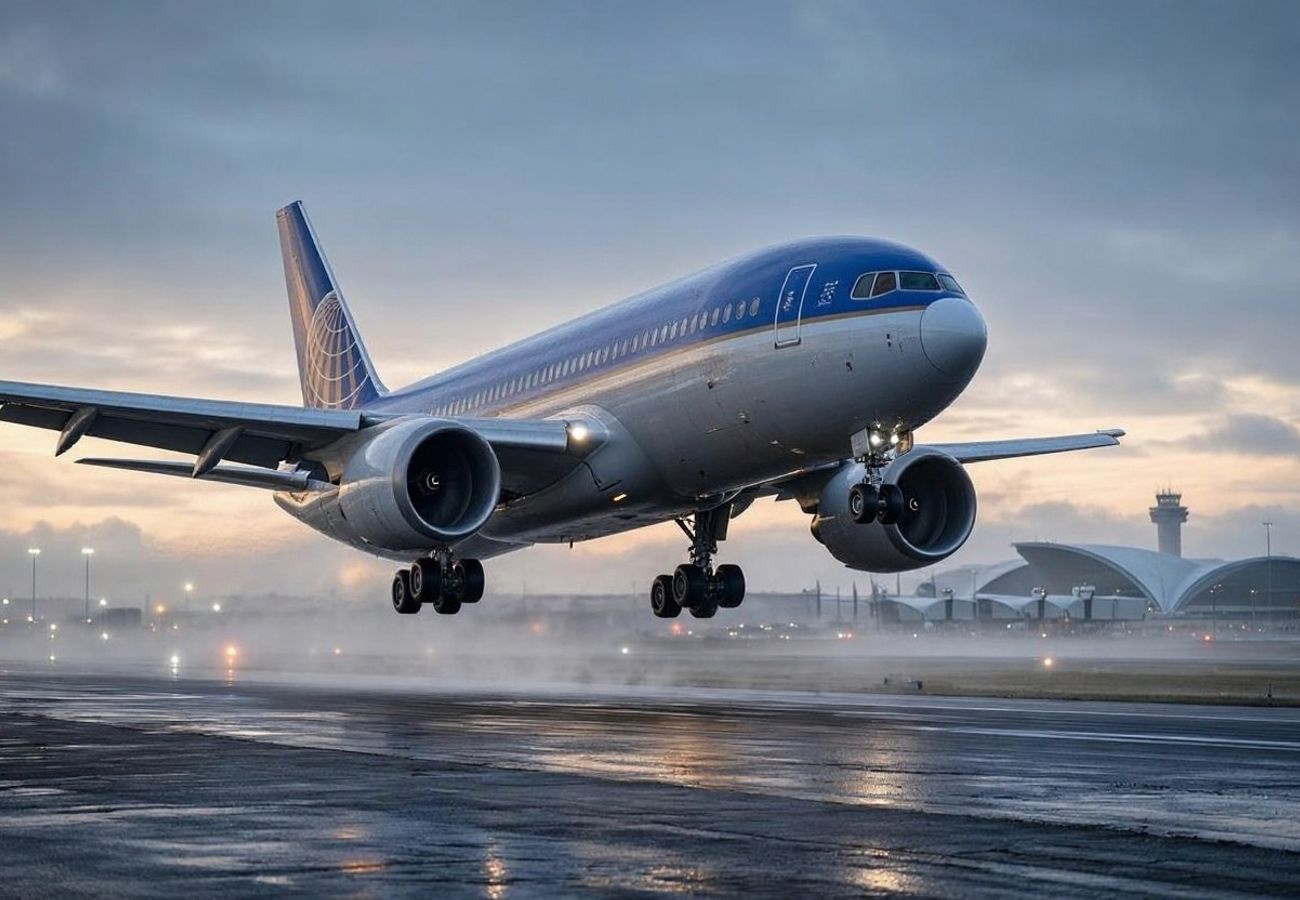
Delta Air Lines to Cancel Historic New York JFK to Washington Dulles Route Ending 35-Year Air Link in Early 2027


Delta Air Lines will permanently terminate its historic commercial air link between New York’s John F. Kennedy International Airport (JFK) and Washington Dulles International Airport (IAD) on February 10, 2027, bringing a close to an interstate connection that first took flight in 1991. The legacy carrier will initiate a phased operational drawdown on December 19, 2026, halving its existing twice-daily regional schedule to a single daily rotation before withdrawing from the 228-mile (366-kilometer) short-haul corridor entirely. The strategic cancellation, driven by a subpar 75.1% trailing twelve-month passenger load factor that trailed Delta’s systemwide network average by ten percentage points, reflects intensifying regional jet operating cost pressures, the high opportunity cost of valuable JFK departure slots, and fierce ground competition from Amtrak’s high-speed rail corridor linking Midtown Manhattan with downtown Washington, D.C.
While Delta will completely dismantle its nonstop link into Northern Virginia's primary international gateway, the Atlanta-based carrier will preserve its extensive commercial footprint across the National Capital Region by funneling passengers through Ronald Reagan Washington National Airport (DCA) from both JFK and New York LaGuardia (LGA). The scheduled exit of contract regional operators Republic Airways and Endeavor Air from the JFK–IAD pairing highlights a structural recalibration across the United States airline industry, where carriers are increasingly retiring short-haul turbofan hops in favor of longer, higher-yielding regional routes that maximize aircraft utilization. For corporate travelers, diplomatic personnel, and international transit passengers connecting through Delta's premier SkyTeam hub at JFK Terminal 4, the route's termination necessitates immediate itinerary restructuring and highlights the evolving geography of East Coast aviation.
========================================================================================
DELTA AIR LINES JFK–IAD ROUTE TERMINATION PROFILE
========================================================================================
Operational Dimension           Official Route Specification
----------------------------------------------------------------------------------------
Airline Operating Brand         Delta Connection (Delta Air Lines Regional Network)
Contract Regional Operators     Republic Airways (Contract departure: 18 Dec 2026)
                                Endeavor Air (Wholly owned subsidiary; operating until exit)
Origin Airport                  John F. Kennedy International Airport (JFK / KJFK), New York
Destination Airport             Washington Dulles International Airport (IAD / KIAD), Virginia
Flight Great Circle Distance    198 Nautical Miles / 228 Statute Miles / 366 Kilometers
Historical Service Debut        1991 (Operated intermittently across 35 calendar years)
Current Frequency (Pre-Dec 19)  Twice Daily (2 Round-Trips Daily / 14 Weekly Rotations)
Interim Frequency (Dec 19–Feb 10)Once Daily (1 Round-Trip Daily / 7 Weekly Rotations)
Final Commercial Operating Date Wednesday, 10 February 2027
Complete Service Termination    Thursday, 11 February 2027 (Zero scheduled Delta flights)
Regional Aircraft Deployed      Embraer E175 (76 Seats) & Bombardier CRJ900 (76 Seats)
Annual Planned Seat Capacity    107,000+ Scheduled Seats in 2026 (Cirium Fleet Data)
Trailing 12-Month Load Factor   75.1% (US Department of Transportation, ending June 2026)
Delta Systemwide Load Factor    ~85.1% (Trailing 12-Month Global Network Average)
National US Domestic Load Factor82.85% (Bureau of Transportation Statistics, August 2026)
========================================================================================
Source: US Department of Transportation (DOT), Bureau of Transportation Statistics (BTS), and Cirium Schedules.
========================================================================================
A 35-Year Aviation Chronicle: The Evolution of Delta's JFK–IAD Service Since 1991
The commercial air corridor connecting John F. Kennedy International Airport with Washington Dulles International Airport has functioned as a distinctive specialty route within the United States civil aviation landscape for three and a half decades.
When Delta first introduced services between JFK and Dulles in 1991, the flight was conceived primarily not as a point-to-point commuter shuttle, but as an international feeder mechanism. Following Delta’s landmark acquisition of Pan American World Airways' historic North Atlantic route network and European hub assets at JFK Terminal 3 (the iconic Worldport) in late 1991, the carrier required feed from government, diplomatic, and international corporate sectors in the Washington metropolitan area to support its newly acquired transatlantic widebody flights.
========================================================================================
HISTORICAL TIMELINE: DELTA JFK–IAD SERVICE (1991 – 2027)
========================================================================================
Year / Period            Strategic Milestone & Network Context
----------------------------------------------------------------------------------------
1991                     Delta inaugurates scheduled JFK–IAD flights following Pan Am North
                         Atlantic asset purchase; route funnels DC diplomats into JFK transatlantic jets.
1995 – 1999              Intermittent schedule suspensions as Delta restructures regional feeder
                         partners and shifts short-haul domestic emphasis toward LaGuardia.
Early 2000s              Service reinstated utilizing regional turbofans (Atlantic Southeast Airlines
                         and Comair) during post-9/11 New York hub reconstruction.
2010 – 2019              Modernization of Delta Connection regional fleet; transition from 50-seat
                         CRJ200s to dual-class Embraer E175s with First Class and Wi-Fi cabins.
2020 – 2021              Temporary suspension during COVID-19 pandemic as global travel collapsed
                         and business travel across the Northeast Corridor halted completely.
2022 – 2025              Post-pandemic restoration to twice-daily regional schedule; load factors
                         stagnate as business travel patterns evolve and rail competition hardens.
November 2026            Delta formally confirms two-stage drawdown: 50% capacity cut on December 19,
                         2026, culminating in permanent route cancellation on February 10, 2027.
========================================================================================
Throughout its 35-year tenure, the route encountered repeated operational suspensions and resumptions. Unlike the high-frequency Delta Shuttle linking New York LaGuardia (LGA) with Washington National (DCA), which catered to time-sensitive business executives traveling between downtown Manhattan and K Street, the JFK–IAD pairing served a dual-purpose clientele:
- Long-haul international passengers residing in Virginia, Maryland, and suburban Washington connecting onto Delta's evening transatlantic departures to London Heathrow, Paris Charles de Gaulle, Rome, and Amsterdam.
- Inbound foreign tourists and corporate travelers requiring direct access to Northern Virginia’s technology corridor and defense contracting hubs centered in Reston, Herndon, and Tysons Corner.
However, as global alliance dynamics matured, Delta’s joint-venture partners—including Air France, KLM, and Virgin Atlantic—inaugurated their own direct nonstop flights between European capitals and Washington Dulles, steadily siphoning high-yield transit traffic away from Delta’s domestic JFK feeder bank.
Dissecting the Economics: Load Factors, Cirium Capacity, and the Regional Jet Penalty
The commercial demise of the JFK–IAD route provides a case study in airline unit economics, capacity management, and the financial reality of operating regional jet aircraft on ultra-short stages.
According to official data published by the United States Department of Transportation (DOT), the route generated an average passenger load factor of 75.1% during the twelve months ending June 2026. While an occupancy rate of three out of every four seats might appear adequate on paper, in the context of network airline operations, it represented a significant commercial drag.
========================================================================================
PASSENGER LOAD FACTOR BENCHMARKING (12 MONTHS ENDING JUNE/AUGUST 2026)
========================================================================================
Aviation Operating Benchmark     Reported Passenger Load Factor Metric
----------------------------------------------------------------------------------------
Delta JFK–IAD Route (Trailing 12 Mo) 75.1% (Severe 10.0 Percentage Point Underperformance)
Delta Global Network Average     ~85.1% (Consolidated Systemwide Passenger Load Factor)
US National Domestic Average (BTS)82.85% (August 2026 All Scheduled US Carriers)
US National Domestic Average (2025)84.62% (August 2025 Prior-Year Benchmark Comparison)
Estimated Seat Capacity Deployed 107,000+ Total Seats Scheduled in 2026 Calendar Year
Unsold Seat Inventory on Route   Approximately 26,600+ Unoccupied Seats Annually
========================================================================================
The Cost per Available Seat Mile (CASM) Trap
To comprehend why a 75.1% load factor is economically unsustainable on a 228-mile stage length, one must evaluate Cost per Available Seat Mile (CASM).
Regional aircraft like the 76-seat Embraer E175 and Bombardier CRJ900 suffer from inherent aerodynamic and economic diseconomies of scale compared to mainline narrowbody jets like the Airbus A220 or A320:
- Fixed Crew and Ground Costs: Pilot wages, flight attendant salaries, ground handling fees, and gate pushback charges are largely identical regardless of whether a flight covers 200 miles or 1,200 miles. Spreading these fixed expenses across only 228 miles yields an exceptionally high unit cost per mile.
- Cycles vs. Flight Hours: Landing gear cycles, tire wear, brake overhauls, and pressurization cycles accumulate per flight, regardless of distance. Short regional hops place disproportionate wear on aircraft components relative to the revenue hours generated.
- Fuel Inefficiency of Climb and Descent: On a 228-mile flight, the aircraft spends virtually its entire airborne duration climbing to cruising altitude (typically between 18,000 and 24,000 feet) and immediately descending. Cruising efficiency is never achieved, resulting in high fuel burn per passenger-mile.
========================================================================================
SHORT-HAUL REGIONAL CASM PENALTY VS. MAINLINE DOMESTIC TRUNK
========================================================================================
Operating Factor         Short-Haul Regional (JFK–IAD, 228 Miles) Mainline Domestic (JFK–MCO, 944 Miles)
----------------------------------------------------------------------------------------
Aircraft Type Deployed   Embraer E175 / CRJ900 (76 Seats)        Airbus A321neo (194 Seats)
Flight Stage Length      228 Statute Miles                       944 Statute Miles
Cruising Optimization    Minimal (Spends flight in climb/descent)High (Long cruise at 36,000 feet)
Landing & Handling Cost  High proportion of total operating cost Low proportion of total operating cost
Fuel Burn Per Mile/Seat  Substantially elevated                  Optimized aerodynamic cruise
Breakeven Load Factor    Estimated 82% to 85% at regional yields Estimated 72% to 75% at mainline yields
========================================================================================
Cirium schedule analytics indicate that Delta deployed over 107,000 scheduled seats on the JFK–IAD route during 2026. With a 75.1% load factor, the carrier flew more than 26,600 empty seats across the corridor in a single year. In an era of high flight-crew wage contracts and elevated jet fuel prices, absorbing tens of thousands of empty regional seats on an underperforming segment became an unsustainable allocation of capital.
The Delta Connection Fleet Dynamic: Republic Airways, Endeavor Air, and Aircraft Reallocation
The phased withdrawal of Delta’s JFK–IAD service highlights the shifting operational responsibilities between contract regional airlines and wholly owned carrier subsidiaries.
========================================================================================
DELTA CONNECTION OPERATING TRANSITION: TWO-PHASE SCHEDULE DRAWDOWN
========================================================================================
Operational Phase        Dates & Operator Details            Aircraft & Daily Frequency
----------------------------------------------------------------------------------------
Phase 1: Status Quo      Current through 18 December 2026    Twice Daily (2 Round Trips)
                         Jointly operated by Republic &      Embraer E175 (Republic) &
                         Endeavor Air under Delta Connection Bombardier CRJ900 (Endeavor)
Phase 2: Interim Reduced 19 December 2026 to 10 Feb 2027     Once Daily (1 Round Trip)
Drawdown Schedule        Republic Airways completely exits;  Endeavor Air operates single
                         Endeavor Air handles sole rotation  daily morning/afternoon rotation
Phase 3: Complete Route  Effective Thursday, 11 Feb 2027     ZERO SCHEDULED FLIGHTS
Termination              Permanent operational cancellation; Nonstop JFK–IAD service eliminated
                         aircraft redeployed across network  from Delta booking systems
========================================================================================
The Departure of Republic Airways on December 18, 2026
Under the initial schedule adjustment taking effect on December 19, 2026, Republic Airways—an independent regional capacity contractor that operates a fleet of Embraer 170/175 regional jets for Delta, American, and United—will completely exit the JFK–IAD market. Republic's removal eliminates one of the two daily rotations.
From December 19 until the final departure on February 10, 2027, the remaining single daily frequency will be operated exclusively by Endeavor Air, Delta’s wholly owned regional subsidiary. Endeavor, headquartered in Minneapolis and operating an extensive network of Bombardier CRJ700/900 regional jets, will maintain the bare minimum service to protect existing holiday bookings during Christmas and New Year.
The Opportunity Cost of JFK Runway Slots
The withdrawal is motivated by more than just avoiding operating losses on flight U404; it is driven by fleet and slot opportunity costs.
John F. Kennedy International Airport is one of the most slot-constrained airfields in North America. Under Federal Aviation Administration (FAA) Level 3 slot regulations, departure and arrival authorizations during peak afternoon and evening banks are scarce assets worth millions of dollars in commercial value.
By terminating the twice-daily regional jet service to Dulles, Delta frees up:
- Valuable JFK Runway Slots: Slots previously tied up on 228-mile flights carrying an average of 57 passengers can be reallocated to higher-density domestic routes (such as Nashville, Charlotte, or Indianapolis) or used to support high-margin transatlantic feed from secondary European or Canadian business centers.
- Endeavor Air Pilot and Aircraft Hours: In the face of nationwide regional pilot constraints, shifting a CRJ900 aircraft off an underperforming 228-mile stage allows Endeavor to bolster reliability across critical upper Midwest and Southeast regional trunk corridors.
The Northeast Corridor Ground Battle: Amtrak Acela vs. Regional Aviation
Delta’s route cancellation cannot be understood without examining the fiercest intermodal rivalry in North American transport: the battle between commercial aviation and Amtrak’s Northeast Corridor (NEC) rail line.
Between New York City and Washington, D.C., intercity passenger rail has established a dominant market share exceeding 75% of all air-rail combined passenger travel, effectively decimating short-haul airline economics.
========================================================================================
INTERMODAL TRAVEL COMPARISON: NEW YORK CITY TO WASHINGTON, D.C.
========================================================================================
Journey Parameter        Commercial Flight (Delta JFK–IAD)   Amtrak Acela Express (Rail)
----------------------------------------------------------------------------------------
Departure Terminal       Queens, NY (JFK Terminal 4)         Midtown Manhattan (Moynihan Train Hall)
Arrival Station          Chantilly/Dulles, VA (IAD Airport)  Downtown Washington (Union Station)
Downtown-to-Terminal     45 to 75 Minutes (Subway/LIRR/Taxi) 0 Minutes (Departs from Midtown core)
Security Screening Time  30 to 60 Minutes (TSA Screening)    0 Minutes (Direct walk-on boarding)
Scheduled En Route Time  1 Hour 15 Minutes (Flight + Taxi)   2 Hours 50 Minutes (Express Rail)
Terminal-to-Downtown Arr.45 to 60 Minutes (Silver Line Metro)0 Minutes (Arrives 4 blocks from Capitol)
Total Door-to-Door Time  3 Hours 45 Min to 4 Hours 45 Min    3 Hours 05 Min to 3 Hours 25 Min
Productive Work Time     Fragmented (Taxi, security, flight) Uninterrupted (Wi-Fi, power at seat)
Baggage Restrictions    Strict carry-on limits & bag fees   Generous 2 free bags + personal item
Weather Vulnerability    High (ATC ground stops, summer t-storms)Low (All-weather electric rail)
========================================================================================
The Door-to-Door Equation
While the airborne flight time between JFK and Dulles is nominally only 45 to 55 minutes, the true door-to-door transit time heavily favors high-speed rail.
A corporate traveler departing a Midtown Manhattan office building heading to central Washington faces an arduous journey when flying from JFK:
- Traveling from Manhattan to JFK via the Long Island Rail Road (LIRR) and AirTrain takes approximately 50 minutes.
- Navigating TSA security checkpoints at JFK Terminal 4 requires 30 to 45 minutes.
- Boarding, taxiing across JFK's congested runway network, flying, and taxiing to the gate at Dulles adds another 75 to 90 minutes.
- Arriving at Washington Dulles requires a 45-to-50-minute journey on the Washington Metro Silver Line to reach central D.C.
- Total transit duration: nearly four to five hours.
In stark contrast, a traveler boards the Amtrak Acela Express at Moynihan Train Hall at Penn Station ten minutes before departure and steps off at Washington Union Station—situated four blocks from the United States Capitol—in 2 hours and 50 minutes. With uninterrupted high-speed Wi-Fi, spacious business-class seating, zero baggage fees, and complete immunity from FAA airport ground delay programs, Amtrak has rendered short-haul commercial flights between New York and Washington commercially uncompetitive for point-to-point business travelers.
Tri-Airport Geography: Analyzing DCA, IAD, and BWI in Washington's Aviation Ecosystem
The Washington metropolitan area is served by three distinct commercial airports, each occupying a specialized niche within the regional economy. Delta’s strategic retreat from Dulles reflects a conscious consolidation into the airport that best aligns with its corporate customer base.
========================================================================================
WASHINGTON METROPOLITAN AIRPORT TRINITY: COMPARATIVE ANALYSIS
========================================================================================
Airport Facility         Location & Primary Niche            Delta Air Lines Footprint & Strategy
----------------------------------------------------------------------------------------
Ronald Reagan Washington Arlington, Virginia                 CORE DELTA FOCUS: High-frequency
National Airport (DCA)   Adjacent to Pentagon & K Street;    mainline shuttle flights to New York LGA
                         Slot-controlled domestic perimeter  and high-frequency flights to New York JFK.
Washington Dulles        Dulles / Loudoun County, Virginia   WITHDRAWAL ZONE: United Airlines mega-hub;
International (IAD)      Major international & long-haul hub;Delta completely ceases nonstop service to
                         serves Northern Virginia tech belt  JFK; retains service to ATL, DTW, MSP, SLC.
Baltimore/Washington Int.Linthicum, Maryland                 SECONDARY METRO: Major Southwest hub;
Thurgood Marshall (BWI)  Serves Baltimore, Maryland suburbs, Delta operates baseline domestic trunk
                         and federal agency complexes        flights to Atlanta and Midwestern hubs.
========================================================================================
Why Delta Favors Ronald Reagan National (DCA)
For point-to-point travelers flying between New York and the National Capital Region, Ronald Reagan Washington National Airport (DCA) is overwhelmingly preferred. Located in Arlington, Virginia, directly across the Potomac River from the National Mall, DCA offers unrivaled access to Capitol Hill, government departments, defense headquarters, and downtown corporate law firms.
Delta maintains a powerful presence at DCA. The carrier operates frequent daily flights connecting DCA with both New York LaGuardia (LGA)—the primary home of the Delta Shuttle—and New York JFK. By funneling New York–Washington travelers through DCA, Delta maximizes ticket yields. Business travelers are willing to pay significant fare premiums to land at DCA, where a taxi or Metrorail ride reaches downtown Washington in under fifteen minutes.
The Dulles Reality: United's Fortress Hub
In contrast, Washington Dulles International Airport (IAD) is situated 26 miles west of downtown Washington. Dulles is not a Delta stronghold; it is a fortress hub for Star Alliance rival United Airlines, which operates hundreds of daily departures from its sprawling midfield concourses.
For Delta, maintaining a twice-daily regional outpost at Dulles with an underperforming 75.1% load factor meant competing against United on United's home turf, while simultaneously losing local point-to-point travelers to its own flights at DCA and to Amtrak trains. Consolidating resources into DCA allows Delta to preserve its core corporate passenger base while eliminating an inefficient regional operation.
The International Transit Disconnect: How JFK SkyTeam Hub Feed Loses Dulles Outbound Traffic
The primary operational casualty of the JFK–IAD route cancellation is the international transit passenger.
John F. Kennedy International Airport functions as Delta’s premier transatlantic and intercontinental gateway. Terminal 4 at JFK hosts dozens of daily long-haul departures operated by Delta and its SkyTeam alliance partners, including Air France, KLM, Virgin Atlantic, Korean Air, and Aeroméxico.
========================================================================================
INTERNATIONAL TRANSIT FEED IMPACT: SKYTEAM CONNECTIVITY MATRIX
========================================================================================
Passenger Journey Path   Operational Route Before Feb 2027   Operational Route After Feb 2027
----------------------------------------------------------------------------------------
Virginia / IAD Resident  Nonstop Delta Connection flight     Must fly Delta Connection from DCA to JFK;
to Europe / Asia / AfricaIAD → JFK; direct terminal          or take Amtrak rail to Penn Station + LIRR;
                         transfer at JFK Terminal 4          or connect via Atlanta (IAD → ATL → Int'l).
International Inbound    Arrives at JFK Terminal 4; clears   Must clear customs at JFK and transfer to
Visitor to Dulles Tech   CBP; connects onto direct regional  DCA-bound flight; or take ground transfer;
Corridor (Reston/Herndon)flight JFK → IAD landing near tech  or book nonstop Star Alliance flight directly
                         offices in Loudoun/Fairfax County   into IAD (United, Lufthansa, Air France).
SkyTeam Partner InterlinePassengers booked via Air France    Tickets must be reissued via alternative hubs
Booking (CDG/AMS/LHR)    or Virgin Atlantic connecting to    (e.g., London/Paris nonstop to Dulles,
                         IAD via JFK on single ticket        or connecting via Detroit/Boston).
========================================================================================
Disrupted Passenger Flows and Joint-Venture Adjustments
Prior to the cancellation, a traveler based in Northern Virginia could board a 2:00 PM Delta Connection flight at Dulles, land at JFK Terminal 4 at 3:15 PM, and comfortably connect onto evening widebody flights to London, Paris, Athens, or Tel Aviv.
After February 10, 2027, this direct transfer vanishes from Delta’s reservation systems. International travelers residing in the Dulles catchment area who wish to fly Delta must choose between two compromises:
- Travel to DCA: Commute across Northern Virginia traffic to depart from Reagan National Airport, fly to JFK, and connect to their long-haul flight.
- Double-Hub Connection: Depart from Dulles on Delta flights routing southward to Atlanta (ATL), westward to Detroit (DTW) or Minneapolis (MSP), or northward to Boston (BOS) before heading overseas—adding hours of circuity to their journeys.
Consequently, Delta risks forfeiting a portion of its transatlantic passenger feed from Northern Virginia to Star Alliance competitors (such as United, Lufthansa, and Austrian Airlines) and Oneworld carriers (such as British Airways), which offer direct nonstop intercontinental services straight out of Dulles.
US DOT Regulatory Framework: Passenger Refund Rights and Automatic Rebooking Mandates
The cancellation of Delta's JFK–IAD service triggers specific consumer protection mandates governed by the United States Department of Transportation (DOT) under Title 14 of the Code of Federal Regulations (14 CFR Part 259) and the finalized 2024–2026 airline refund rules.
========================================================================================
US DOT PASSENGER REFUND AND REBOOKING RIGHTS
========================================================================================
Booking Scenario         Advance Notice & Disruption Status  Mandatory Passenger Rights Under DOT Rules
----------------------------------------------------------------------------------------
Ticketed for Flight      Delta proactively removes flight    Passenger entitled to FULL PROMPT CASH REFUND
AFTER 10 February 2027   due to permanent route cancellation to original payment method within 7 business
                                                             days (credit card) or 20 days (cash/check).
Ticketed for Second DailyFlight frequency eliminated from    Passenger entitled to free re-accommodation
Flight (Dec 19 – Feb 10) schedule; flight time significantly onto remaining daily flight, alternative
                         altered (>3 hours domestic)         re-routing via DCA, or full cash refund.
Voluntary Acceptance of  Passenger agrees to alternate flightAirline must honor original class of service;
Rerouting via DCA        departing or arriving at DCA insteadno change fees or fare differences permitted.
Optional Airline VouchersAirline may offer travel credit or  Passenger is NOT required to accept travel
vs. Mandatory Cash       miles in lieu of a cash refund      vouchers; carrier MUST inform customer of
                                                             statutory right to cash before offering credit.
========================================================================================
Statutory Rights for Ticket Holders After February 10, 2027
Passengers holding confirmed reservations on Delta flights between JFK and Dulles scheduled for departure on or after February 11, 2027, are protected by federal air consumer regulations:
- Unconditional Cash Refund: Because Delta is unilaterally canceling the flight and abandoning the route, ticket holders are entitled to a 100% prompt refund to their original form of payment. Airlines are legally barred from forcing passengers to accept flight credits, e-vouchers, or frequent flyer miles.
- Significant Schedule Change Provisions: Under updated US DOT regulations, a schedule change altering domestic departure or arrival times by more than three hours qualifies as a significant change. If Delta attempts to rebook an IAD passenger onto a flight operating out of DCA, the passenger has the legal right to reject the alternative airport and demand an immediate cash refund.
- Baggage and Ancillary Fee Restitution: If a passenger requests a refund due to the route cancellation, Delta must refund all associated ancillary charges, including seat selection fees, priority boarding purchases, and pre-paid baggage fees.
Strategic Advisory for Business Travelers, Corporate Travel Planners, and Interline Buyers
The termination of the JFK–IAD corridor requires travel management companies (TMCs), corporate travel buyers, and independent passengers to adjust their East Coast booking protocols.
========================================================================================
ACTION CHECKLIST: MANAGING THE DELTA JFK–IAD ROUTE WITHDRAWAL
========================================================================================
Travel Horizon           Operational Protocol & Strategic Recommendation
----------------------------------------------------------------------------------------
Immediate – 18 Dec 2026  Both daily flights operate as scheduled; verify whether flight is on
                         Republic E175 or Endeavor CRJ900; monitor holiday booking seat availability.
19 Dec 2026 – 10 Feb 2027Only ONE daily flight operating; expect high holiday seat compression;
                         reconfirm departure times as flight schedule shifts to single daily frequency.
Post-10 February 2027    ZERO Delta nonstop services between JFK and IAD; re-route through DCA,
                         switch to Amtrak Acela Express, or book competing direct services on United.
Connecting Itineraries   If booked on an international itinerary connecting at JFK via Dulles after
                         Feb 10, contact Delta or travel agent immediately to request re-routing.
Corporate Policy Updates Corporate travel managers should update booking engines (Concur, Navan)
                         to designate Reagan National (DCA) as preferred Washington gateway for Delta.
========================================================================================
Tactical Recommendations for Affected Travelers
- Audit Existing Winter Bookings: Any traveler with reservations on Delta flight U2404 or sister frequencies between JFK and IAD scheduled after December 19, 2026, must log into Delta.com or their corporate travel portal. Passengers originally booked on Republic Airways departures will have been automatically shifted to Endeavor Air’s single daily service, potentially altering arrival times by multiple hours.
- Evaluate Ground Alternatives for Northern Virginia: If your final destination is Tysons Corner, Reston, or Loudoun County, examine whether flying into DCA and taking the Metrorail Silver Line is more reliable than connecting through secondary hubs. Alternatively, taking Amtrak from Moynihan Train Hall to Alexandria, Virginia (ALX) or Washington Union Station (WAS) provides a stress-free travel experience.
- Protect International Connections: Travelers flying long-haul international routes with SkyTeam partners who had planned to use the Dulles feeder should request Delta to rebook them via Boston Logan (BOS), Atlanta Hartsfield-Jackson (ATL), or Detroit Metropolitan (DTW), all of which maintain robust regional links into Dulles and offer extensive transatlantic banks.
Comprehensive Frequently Asked Questions
When will Delta officially end its New York JFK to Washington Dulles flight?
Delta Air Lines will operate its final commercial flight between New York JFK and Washington Dulles on Wednesday, February 10, 2027. Effective February 11, 2027, the nonstop route will be permanently discontinued.
How is Delta phasing out the JFK to Dulles route before February 2027?
Delta is reducing the service in two stages. Currently operating twice daily, the route will be reduced to a single daily flight on December 19, 2026, when Republic Airways departs the route. Endeavor Air will operate the remaining single daily flight until February 10, 2027.
Why is Delta cancelling the JFK to Washington Dulles route?
The decision was driven by weak passenger demand and regional jet economics. The route recorded a low 75.1% load factor for the twelve months ending June 2026—ten percentage points below Delta’s network average. Regional jets face high unit operating costs on short 228-mile hops, and Delta can redeploy valuable JFK runway slots to more profitable destinations.
How long has Delta flown between JFK and Washington Dulles?
Delta first inaugurated commercial flights between JFK and Dulles in 1991, following its acquisition of Pan American World Airways' transatlantic assets. The route has operated intermittently for 35 years, with temporary pauses during the late 1990s and the COVID-19 pandemic.
Will Delta still fly to the Washington, D.C. area?
Yes. Delta will maintain an extensive flight presence across the Washington area, concentrating its New York flights through Ronald Reagan Washington National Airport (DCA) from both New York JFK and New York LaGuardia (LGA). Delta also serves Baltimore/Washington International (BWI).
Which regional airlines operated the JFK–IAD flights for Delta?
The flights were operated under the Delta Connection banner by Republic Airways using Embraer E175 aircraft and Endeavor Air using Bombardier CRJ900 aircraft. Republic will exit on December 18, 2026, leaving Endeavor to operate the route until its February termination.
How does Amtrak competition affect the New York to Washington air corridor?
Amtrak’s Northeast Corridor trains, particularly the Acela Express, capture over 75% of the combined air-rail travel market between New York and Washington. Acela connects Midtown Manhattan with downtown Washington in 2 hours and 50 minutes, avoiding airport security queues, baggage charges, and ground transit delays.
What are my rights if Delta cancels my booked flight after February 10, 2027?
Under US Department of Transportation regulations, passengers whose flights are canceled due to route termination are entitled to a full prompt cash refund to their original payment method. Passengers can also opt for complimentary rebooking on alternative Delta flights via Reagan National (DCA) or other connecting hubs.
Can I get an automatic refund if my flight schedule was changed by more than three hours?
Yes. Under federal aviation regulations, an airline schedule modification exceeding three hours for domestic travel is classified as a significant change. If you reject the revised schedule or an alternate airport rebooking, Delta must issue a full cash refund.
How will this cancellation impact international connecting passengers?
Passengers from the Washington area will lose direct nonstop Delta Connection feeder flights into Delta's SkyTeam international hub at JFK Terminal 4. Travelers must instead connect via other domestic hubs such as Atlanta, Detroit, or Boston, fly out of Reagan National (DCA), or select competing carriers operating out of Dulles.
Strategic Outlook: Fleet Optimization and the Selective Future of US Regional Airline Networks
The retirement of Delta Air Lines’ 35-year New York JFK to Washington Dulles connection is symbolic of a broader structural transformation sweeping the United States commercial aviation industry. The era of maintaining low-frequency, high-cost regional jet flights between proximate metropolitan centers connected by high-speed rail and interstate highways is drawing to a close.
As legacy airlines face elevated pilot payrolls, heightened maintenance expenses, and severe slot caps at primary international gateways, every individual flight sector must demonstrate stand-alone profitability or deliver indispensable intercontinental feed. On the 228-mile hop between JFK and Dulles, an average passenger load factor of 75.1% could no longer justify the consumption of valuable JFK runway slots and dedicated regional aircraft. By consolidating its Washington operations at Reagan National Airport and redirecting regional jet capacity to higher-yielding markets, Delta is aligning its network with commercial realities. For the global aviation industry, the lesson is unmistakable: in modern network airline management, operational efficiency and capital discipline take absolute precedence over historical route legacy.
Related Travel Guides
- Barcelona-El Prat Airport Faces 15% Flight Capacity Cut as Aena Closes Runways for €3.1 Million Taxiway Upgrade
- Cathay Group Surpasses 3.4 Million Passengers in October 2026 Powered by China Golden Week and Resilient Asian Route Network
- easyJet Passenger Removed from London Luton to Glasgow Flight After Smoking in Aircraft Lavatory Triggers Emergency Delay
- United States December Shutdown Warning Sparks Flight Delay Fears Ahead of 2026 Christmas and New Year Travel Rush
This article is for informational purposes. Flight routes, passenger regulations, visa rules, and transit advisories are subject to change by airlines and aviation authorities. Readers are advised to verify schedules and travel documentation with relevant carriers and border agencies before departure.
Related Stories
Thanksgiving and Black Friday Air Travel Hits 29 Million Passengers as Fares Surge 39%

Sunrise Airways Launches Direct Cap-Haïtien to New York JFK Flights Unlocking Northern Haiti