
Middle East Flight Disruptions Escalate with 80 Cancellations and 778 Delays Across Key Hubs
Aviation hubs across the Middle East face 80 cancellations and 778 delays due to regional security concerns, air traffic restrictions, and scheduling pressure.

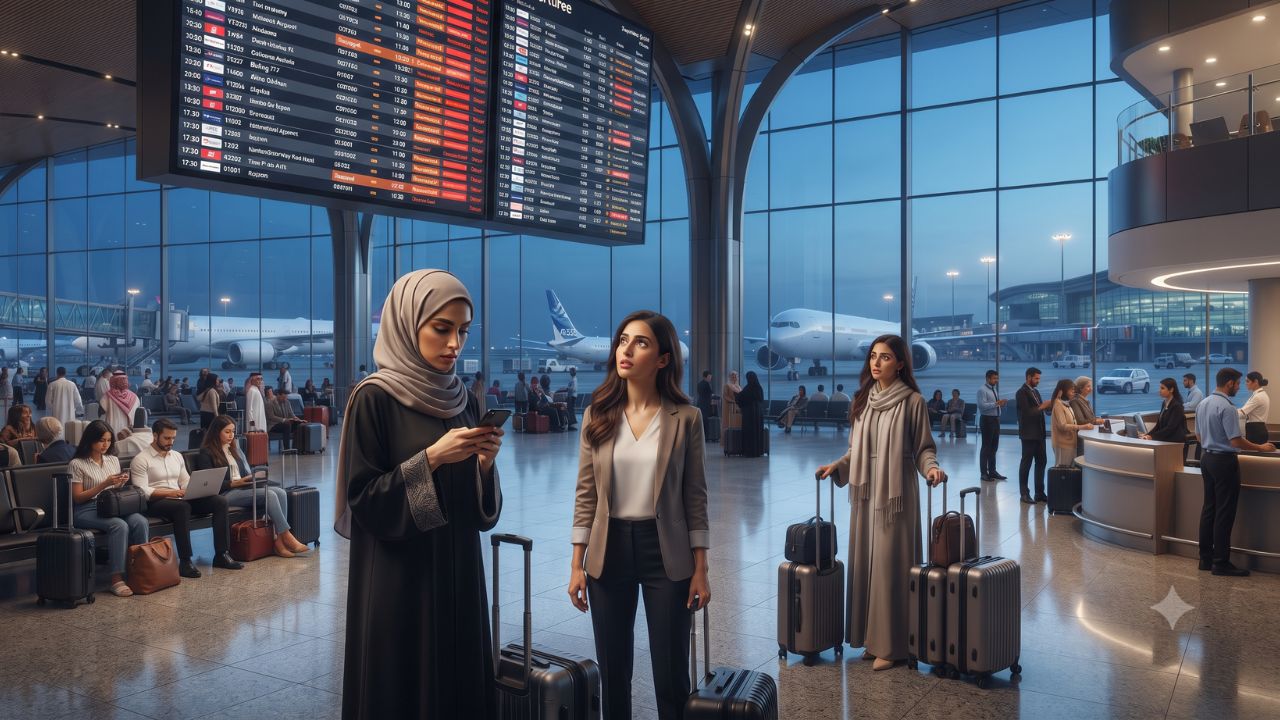
Image generated by AI
Flight disruptions have intensified across major Middle East hubs, recording 80 cancellations and 778 delays. Airports including Dubai, Doha, Riyadh, Jeddah, and Cairo are facing operational pressure driven by regional security concerns, air traffic restrictions, and shipping disruptions.
The airspace corridors and transit centers of the Middle East are experiencing significant scheduling pressure. Overlapping security challenges, airspace restrictions, and maritime disruptions are forcing airlines to adjust flight paths, reroute services, and coordinate emergency scheduling adjustments. The situation is affecting major international gateways and regional domestic airports, disrupting itineraries for thousands of transiting passengers.
For travelers, these delays highlight the complexity of navigating transit corridors in the region. Understanding airline rebooking policies, regional passenger rights, and airport amenities during delays is essential to manage long layovers and flight changes.
Escalating Travel Delays and Gate Cancellations Across Key Hubs
Real-time aviation data recorded on 4 August 2026 at 1:19 pm ET USA (9:19 pm) reveals a total of 80 cancellations and 778 delays across key Middle East hubs.
Dubai International Airport (DXB), one of the world's busiest gateways, logged the highest volume of disruptions, with 181 delays and 4 cancellations, impacting connecting flights between Asia, Europe, and Africa. In Egypt, Cairo International Airport reported 147 delays and 1 cancellation, affecting connections across North Africa. In Qatar, Hamad International Airport (DOH) in Doha experienced 111 delays and 3 cancellations.
Saudi Arabia experienced significant disruptions at its primary gateways, with King Khalid International Airport in Riyadh reporting 107 delays and 22 cancellations, and King Abdulaziz International Airport in Jeddah recording 80 delays and 13 cancellations. Regional flights were also adjusted, with Gizan Regional Airport reporting 18 cancellations and Najran Domestic Airport recording 12 cancellations. Elsewhere in the Gulf, Sharjah International Airport reported 43 delays and 3 cancellations, Seeb International Airport in Muscat recorded 79 delays and 2 cancellations, and Kuwait International Airport registered 30 delays and 2 cancellations.
Airlines across the region managed delayed departures and schedule adjustments:
- Saudia: The national carrier recorded 35 cancellations (representing 6% of its operations) and 43 delays (representing 7% of operations), affecting routes through Riyadh and Jeddah.
- Oman Air: The carrier reported 2 cancellations and 55 delays, with delays representing 41% of its total operations, creating significant travel times for transiting passengers.
- Royal Jordanian: The airline registered 3 cancellations and 36 delays, with delays representing 23% of its operations.
- Gulf Air: The carrier maintained stable operations, reporting 0 cancellations and 0 delays.
The disruptions are linked to maritime security concerns in the Red Sea, Bab el-Mandeb Strait, and Gulf of Aden. Ongoing instability involving regional conflicts, missile threats, and drone strikes has forced cargo shipping and aviation operators to adjust routes, increasing operational pressure across the entire regional transit network.
Air Routing Environmental Challenges and Passenger Protection Frameworks
For the visitor, these disruptions highlight the environmental cost of rerouting commercial flights away from restricted airspace. When flights must fly longer, circuitous routes to bypass conflict zones, fuel burn and greenhouse gas emissions increase significantly.
To manage this impact, regional airlines are working with the General Authority of Civil Aviation (GACA) in Saudi Arabia and local civil aviation departments to coordinate more efficient backup flight paths. During delays, travelers can support local sustainability initiatives by reducing their use of single-use plastics in terminal lounges, utilizing electronic boarding passes, and choosing transit hotels that maintain eco-certified operations.
Navigation and Dining Specialties for Middle East Transits
To help you navigate these cancellations and manage your transit through Middle Eastern hubs, follow these local recommendations:
- Regional Passenger Rights: In Saudi Arabia, the GACA Passenger Protection Regulations require airlines to provide care (food, drinks, and hotel accommodation) for flights delayed by more than three hours, depending on whether the delay was within the carrier's control. Similar customer care guidelines apply to major Gulf airlines when flights are diverted or cancelled.
- Airport Navigation & Amenities:
- At Dubai International (DXB): If experiencing a long delay, utilize the sleep pods in Terminal 3, or visit the indoor Zen Gardens between Gates B7 and B27 for a quiet environment.
- At Hamad International (DOH): Explore "The Orchard," an indoor tropical garden under a glass roof in the Terminal expansion area, offering quiet walking paths and seating areas.
- At King Khalid (RUH): Book a room at the transit hotel inside Terminal 5 to rest during extended layovers.
- Local Culinary Specialties During Layovers:
- In Riyadh: Try traditional Kahwa (cardamom-scented Arabic coffee) served with local dates at the terminal lounges.
- In Cairo: Sample traditional Koshary (a mix of lentils, rice, macaroni, and chickpeas topped with tomato sauce and onions) at terminal dining areas.
- In Dubai: Grab sweet, syrup-drizzled Luqaimat dumplings from local confectionery shops in Terminal 3.
- Transit and Rebooking: Ensure you have your airline's mobile application downloaded to receive instant notifications of gate changes. Keep your passport and boarding passes easily accessible when requesting rebooking assistance from transfer desks.
Future Outlook for Regional Air Travel Networks
The persistence of air traffic restrictions and security concerns indicates that flight delays are likely to continue affecting regional schedules. Middle Eastern transport authorities are working to maintain connectivity while ensuring passenger safety.
Over the coming years, expanding airport terminal capacity, improving runway safety systems, and establishing coordinated backup flight paths will remain essential. By maintaining high safety standards, offering flexible customer support, and investing in modern transit facilities, the region can continue to serve as a vital global connection point while supporting the long-term growth of the travel industry.
Related Travel Guides
- Gulf Aviation Hubs Struggle with Over 1,000 Flight Disruptions as Storms and Regional Security Concerns Impact Travel Networks
- US Flight Disruptions Widespread with 4,367 Delays and 210 Cancellations Due to Severe Weather
- Brenner Railway Reopens Alpine Corridor Between Innsbruck and Brennero Following Nine-Day Suspension for Tunnel Maintenance
Disclaimer
This article is for informational and educational purposes only. It does not constitute legal, financial, or professional advice. While we strive to provide accurate and up-to-date information, travel policies, regulations, and conditions change rapidly. Always verify information with official sources before making travel decisions. Nomad Lawyer makes no representations about the accuracy, reliability, completeness, or suitability of the information provided. Readers should consult qualified professionals for advice specific to their circumstances. The views expressed in this article are those of the author and do not necessarily reflect the views of Nomad Lawyer.
Kunal K Choudhary
Co-Founder & Contributor
A passionate traveller and tech enthusiast. Kunal contributes to the vision and growth of Nomad Lawyer, bringing fresh perspectives and driving the community forward.
Learn more about our team →