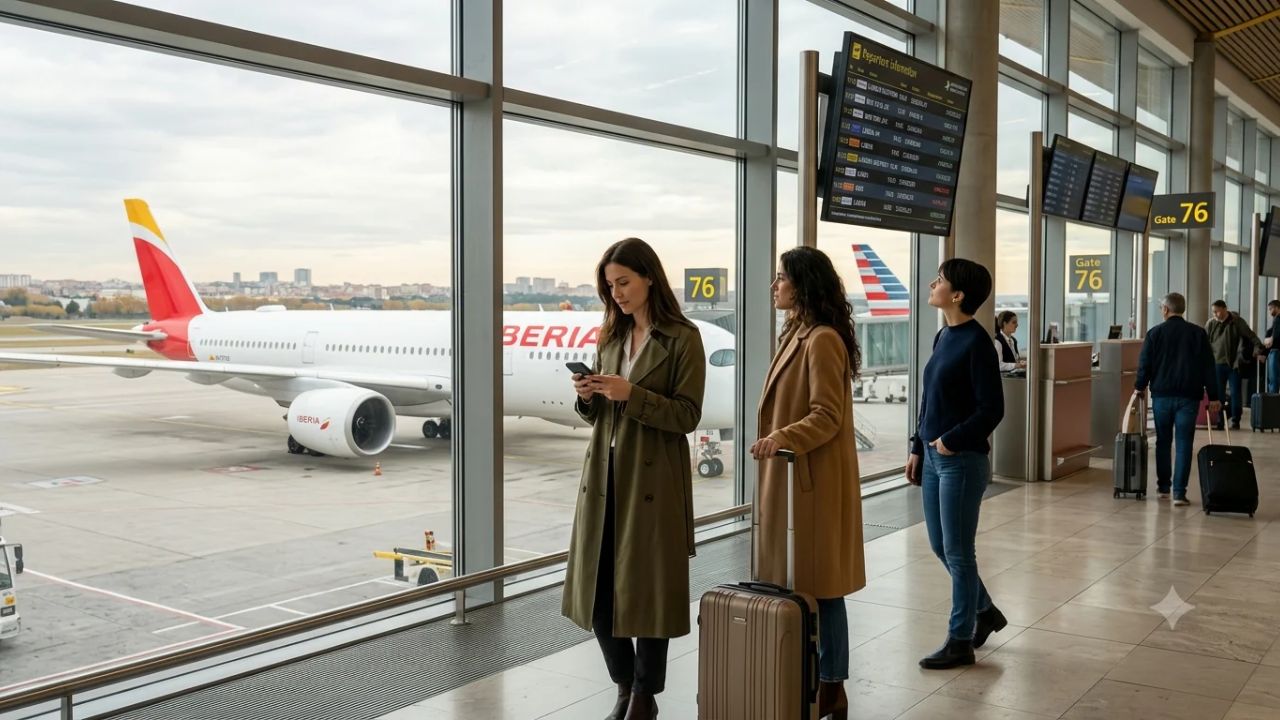
European Airports Post 3.2% Passenger Growth as Madrid Overtakes Paris and Winter Seat Capacity Slows to 1.6%


European airport passenger traffic expanded by 3.2% in September 2026 compared to the same month in 2025, buoyed by an extended autumn vacation season, resilient leisure demand across Southern Europe, and strong international long-haul passenger flows, according to official data released by Airports Council International Europe (ACI EUROPE). The figures, published on November 17, 2026, cemented a solid 3.4% passenger expansion across the third quarter of the year, powered primarily by Mediterranean sun-and-culture markets in Italy and Spain, as well as high-growth non-EU aviation corridors. In a major shift among Europe's premier aviation hubs, Adolfo Suárez Madrid-Barajas Airport surged into third place across the continent with 6.31 million passengers, overtaking Paris Charles de Gaulle and trailing only Istanbul Airport and London Heathrow. However, aviation authorities warn that a sharp slowdown in planned airline seat capacity growth to just 1.6% this winter will restrict ticket inventory and sustain elevated airfares through early 2027.
The third-quarter traffic figures highlight a profound structural divergence across the European continent. While Mediterranean gateways experienced robust commercial gains—led by Italy's 6.4% traffic growth and Spain's 4.2% expansion—mature northern markets stagnated, with the United Kingdom edging up by 1.2%, Germany registering a near-flat 0.1%, and France contracting by 0.5%. Simultaneously, regional airports in Central and Southeastern Europe, including Bratislava, Podgorica, and Tirana, logged dramatic double-digit passenger surges. As European holidaymakers finalize winter ski holidays and city escapes, travelers face a transformed operating landscape shaped by strict airline seat discipline, the newly operational biometric EU Entry/Exit System (EES), and nuanced airport transfer pricing structures that directly alter total holiday expenditure.
========================================================================================
EUROPEAN AIRPORT TRAFFIC PERFORMANCE SCORECARD: SEPTEMBER & Q3 2026
========================================================================================
Aeronautical Market Metric      September 2026 Growth Rate Q3 2026 Consolidated Trend
----------------------------------------------------------------------------------------
Total European Airport Network  +3.2% Year-on-Year         +3.4% Quarterly Expansion
EU+ Regional Airport Market     +2.8% Year-on-Year         Stable Mediterranean Driver
Non-EU+ Regional Airport Market +5.1% Year-on-Year         Led by Türkiye, Balkans & Central Asia
Southern European Sun Belt      +4.2% to +6.4% Range       Extended Summer Shoulder Season
Northern / Western European Core -0.5% to +1.2% Range      Aviation Taxes & High Airline CASM
Winter 2026–2027 Seat Forecast  +1.6% Capacity Growth      Sharp deceleration from +6.3% prior year
Top Hub Airport Ranking (Sep)   1. Istanbul (7.85M)        2. London Heathrow (7.18M)
                                3. Madrid-Barajas (6.31M)  4. Paris CDG (6.22M)
                                5. Amsterdam AMS (6.21M)   6. Frankfurt FRA (5.85M)
========================================================================================
Source: ACI EUROPE Official Air Traffic Release (November 17, 2026) and Eurocontrol Data.
========================================================================================
The Megahub Hierarchy: How Madrid-Barajas Eclipsed Paris Charles de Gaulle
The most significant competitive milestone revealed in ACI EUROPE’s September report is the reordering of Europe’s top five busiest aviation megahubs.
For decades, London Heathrow and Paris Charles de Gaulle competed neck-and-neck for the crown of Western Europe’s preeminent aviation center, shadowed closely by Frankfurt and Amsterdam Schiphol. In September 2026, Adolfo Suárez Madrid-Barajas (MAD) handled 6.31 million passengers, officially surpassing Paris Charles de Gaulle (CDG), which handled 6.22 million passengers, to claim the title of the third-busiest airport in geographical Europe and the second-busiest within the European Union.
========================================================================================
EUROPE'S TOP 5 BUSIEST AIRPORTS: SEPTEMBER 2026 TRAFFIC RANKING
========================================================================================
Rank  Airport Gateway            ICAO / IATA Sept 2026 Volume Primary Traffic Catalyst
----------------------------------------------------------------------------------------
1     Istanbul Airport           LTFM / IST  7.85 Million     Global intercontinental mega-hub;
                                                              connecting Asia, Europe, and Africa
2     London Heathrow Airport    EGLL / LHR  7.18 Million     Transatlantic trunk dominance;
                                                              maximum slot-constrained widebody feed
3     Adolfo Suárez Madrid-Baraj.LEMD / MAD  6.31 Million     Latin American gateway expansion;
                                                              surging domestic and European leisure
4     Paris Charles de Gaulle    LFPG / CDG  6.22 Million     Post-Olympic corporate normalization;
                                                              domestic short-haul high-speed rail shift
5     Amsterdam Airport Schiphol EHAM / AMS  6.21 Million     SkyTeam connecting traffic; bounded by
                                                              statutory annual environmental flight caps
========================================================================================
The Drivers of Madrid's Ascent
Madrid’s ascent reflects both cyclical leisure demand and structural network advantages. As the primary European bridgehead to Latin America, Madrid-Barajas has capitalized on surging transpacific and transatlantic mobility. Legacy carriers Iberia and Air Europa have expanded frequencies to Buenos Aires, São Paulo, Bogotá, and Mexico City, capturing high-yield corporate and visiting-friends-and-relatives (VFR) traffic.
Domestically and regionally, Madrid has benefited from Spain's sustained tourism boom. With autumn temperatures remaining mild well into late October, European holidaymakers from Germany, Britain, and the Nordic nations treated Madrid not only as a vibrant cultural city-break destination, but also as an intermodal transfer station connecting directly to Spain’s comprehensive Alta Velocidad Española (AVE) high-speed rail network.
The Headwinds Facing Paris Charles de Gaulle
In contrast, Paris Charles de Gaulle experienced a 0.5% passenger contraction in September. The French aviation hub encountered three distinct structural dampeners:
- Post-Olympic Demand Normalization: Following the unprecedented passenger volumes generated during the Paris 2024 Olympic and Paralympic Games, international leisure traffic experienced an expected correction as corporate and event travel normalized.
- Domestic Environmental Rail Bans: France's statutory ban on domestic commercial flights where an alternative direct rail journey of under two-and-a-half hours exists continued to erode short-haul domestic feeder services into CDG from cities like Lyon, Nantes, and Bordeaux.
- Escalating French Aviation Surcharges: Proposed and enacted increases in French passenger solidarity taxes (eco-taxe) prompted low-cost carriers to shift marginal winter aircraft allocations away from French airports toward Southern European and non-EU alternatives.
The North-South European Aviation Divide: Mediterranean Expansion vs Northern Stagnation
A granular analysis of ACI EUROPE’s September traffic metrics reveals an acute geographical cleavage dividing the European continent. While Southern European destinations along the Mediterranean basin recorded robust passenger growth, the historic economic powerhouses of Northern and Western Europe struggled to maintain momentum.
========================================================================================
NATIONAL AIRPORT TRAFFIC PERFORMANCE: SEPTEMBER 2026 GROWTH DIVERGENCE
========================================================================================
Aviation Market Region   Country       September YoY Change Key Structural Driver
----------------------------------------------------------------------------------------
Mediterranean Growth BeltItaly         +6.4%                Surging Venice (+14.6%) and Milan;
                                                            extended cultural & coastal tourism
                         Spain         +4.2%                Madrid hub surge; resilient Costa del
                                                            Sol and Balearic island shoulder demand
                         Malta         +12.1%               Low-cost carrier fleet expansion (Ryanair)
                         Greece        +3.8%                Late-season Aegean island vacation demand
Northern & Western Core  United Kingdom+1.2%                Stable Heathrow/Gatwick long-haul feed;
                                                            sluggish regional domestic performance
                         Germany       +0.1%                Excessive state aviation taxes; slowest
                                                            post-pandemic recovery in Europe
                         France        -0.5%                Post-event correction; domestic rail shift
========================================================================================
Italy's Aviation Renaissance
Italy led all major European economies with an impressive 6.4% year-on-year passenger surge in September. Growth was especially pronounced at northern gateway airports catering to cultural travelers. Venice Marco Polo Airport logged a staggering 14.6% passenger increase, while Milan Malpensa expanded by 4.5%.
The Italian market benefited from an extended tourist season, where travelers actively sought out late September and October holidays to avoid the intense heat waves and heavy crowding of peak July and August. Low-cost carriers, including Ryanair, Wizz Air, and easyJet, capitalized on this demand by maintaining full summer schedule frequencies well into autumn.
The German Stagnation Crisis
At the opposite end of the performance spectrum, Germany recorded a near-flat growth rate of just 0.1%, maintaining its status as Europe’s slowest-recovering major aviation market. Total passenger traffic across German airports remains stalled at approximately 85% of pre-2019 levels.
The causes of Germany's protracted aviation slump are structural rather than temporary:
- Punitive State Aviation Taxes: A sharp increase in Germany’s federal air passenger tax (Luftverkehrabgabe) in mid-2024 added up to €70.83 per ticket for long-haul departures, severely depressing passenger price elasticity.
- Exorbitant Security and ATC Charges: Air navigation and airport security fees in Frankfurt and Munich are among the highest in the world, leading low-cost giants like Ryanair to cut 12% of their German capacity and shutter bases in Dortmund, Dresden, and Leipzig.
- Domestic Business Shift: Germany’s corporate sector has permanently substituted short-haul domestic flights with Deutsche Bahn rail services or digital teleconferencing, decimating domestic flight frequencies between Berlin, Frankfurt, Hamburg, and Munich.
The Rise of Secondary and Southeastern Gateways: Bratislava, Tirana, Podgorica, and Kraków
While Europe's primary hubs captured headline passenger volumes, the most explosive percentage gains occurred across secondary, regional, and Southeastern European airports. Travelers seeking affordable, uncrowded winter escapes and authentic cultural destinations increasingly chose alternative gateways over traditional capitals.
========================================================================================
HIGH-GROWTH REGIONAL AIRPORT GATEWAYS: SEPTEMBER 2026
========================================================================================
Airport Gateway          Country      Sept YoY Growth Factor Driving Exceptional Surge
----------------------------------------------------------------------------------------
Bratislava Airport (BTS) Slovakia     +89.2%          Aggressive low-cost carrier base expansion;
                                                      serves as twin budget hub for Vienna metro
Podgorica Airport (TGD)  Montenegro   +44.2%          Expanding Balkan adventure & nature tourism;
                                                      new direct routes from Western Europe
Tirana Airport (TIA)     Albania      +21.3%          Booming Adriatic budget tourism corridor;
                                                      Wizz Air and Ryanair network investments
Slovenia (Ljubljana LJU) Slovenia     +16.6%          Government air connectivity subsidies;
                                                      new direct carrier frequencies
Kraków Airport (KRK)     Poland       +15.5%          Top European cultural city break gateway;
                                                      expanding inbound international tourism
Estonia (Tallinn TLL)    Estonia      +13.4%          Baltic tech and winter break expansion;
                                                      solid regional connectivity
========================================================================================
The Bratislava and Vienna Twin-Hub Phenomenon
Slovakia led the entire European Union market with a national airport passenger growth rate of 74.6%, anchored by Bratislava Airport’s astonishing 89.2% rise.
Bratislava’s growth is directly tied to its proximity to Vienna, Austria. Located just 60 kilometers (37 miles) east of the Austrian capital, Bratislava Airport has positioned itself as the premier low-cost alternative to high-fee Vienna International Airport (VIE). Budget travelers heading to Central Europe frequently fly into Bratislava on ultra-low-cost carriers and utilize direct 45-minute express shuttle buses into central Vienna, saving hundreds of euros on round-trip airfares.
The Western Balkans Tourism Boom
The Western Balkans emerged as one of the fastest-growing aviation frontiers in Europe. Podgorica Airport in Montenegro expanded by 44.2%, while Tirana International Airport in Albania grew by 21.3%.
Albania and Montenegro have evolved from niche backpacker secrets into mainstream European holiday destinations. By offering pristine coastlines, rugged mountain national parks, and dramatically lower accommodation and dining prices compared to neighboring Greece or Croatia, both nations have captured substantial autumn and winter leisure traffic. Competitive route expansions by budget airlines have connected Tirana with secondary industrial cities across Italy, Germany, and the United Kingdom, opening new tourism pipelines.
Winter 2026–2027 Capacity Squeeze: Why Airline Seat Growth Is Halting at 1.6%
While passenger demand across European airports remains robust, the commercial outlook for travelers planning winter holidays is complicated by a severe contraction in airline capacity expansion.
According to official forecasting models published by ACI EUROPE and Eurocontrol, airline seat capacity across European airports is projected to grow by just 1.6% during the winter 2026–2027 scheduling season (running from November 2026 through March 2027). This represents a dramatic deceleration from the 6.3% seat capacity growth recorded during the winter 2025–2026 season.
========================================================================================
AIRLINE WINTER CAPACITY EXPANSION COMPARISON: 2025 VS. 2026
========================================================================================
Winter Season Period     Projected Seat Capacity Growth Key Operational Bottlenecks
----------------------------------------------------------------------------------------
Winter 2025–2026         +6.3% Year-on-Year Expansion   Aggressive post-pandemic route restoration;
                                                        surging fleet utilization across Europe
Winter 2026–2027         +1.6% Year-on-Year DecelerationPratt & Whitney GTF engine groundings;
                                                        Boeing aircraft delivery delays; high fuel
Net Growth Contraction   -4.7 Percentage Point Drop     Severe capacity restraint; upward fare push
========================================================================================
The Quadruple Fleet and Cost Headwinds
Airlines operating in European airspace are deliberately constraining seat capacity in response to four compounding operational pressures:
- The Geared Turbofan (GTF) Engine Groundings: Dozens of Airbus A320neo and A321neo aircraft operated by major European carriers—including Wizz Air, Lufthansa, and Swiss—remain grounded for mandatory, time-intensive ultrasonic inspections of powdered-metal components in Pratt & Whitney PW1100G engines. This has removed critical narrowbody capacity from European ski and sun routes.
- Boeing Delivery Backlogs: Persistent manufacturing delays at Boeing have prevented carriers like Ryanair from receiving scheduled Boeing 737 MAX 8-200 aircraft, forcing airlines to trim planned winter route frequencies.
- Elevated Jet Fuel and Refining Margins: Geopolitical tensions in the Middle East and Eastern Europe have sustained elevated aviation kerosene costs, prompting airline revenue managers to prioritize yield and ticket pricing over raw passenger volume.
- European Emission Trading System (ETS) Phase-Outs: The ongoing phase-out of free carbon allowances under the EU ETS has significantly increased airline compliance costs, encouraging carriers to cancel marginally profitable winter routes.
What Slower Seat Growth Means for Travelers
For winter travelers, a 1.6% capacity expansion combined with a 3.2% passenger demand trend creates an inevitable economic outcome: higher ticket prices.
Airlines have already closed discount fare buckets on popular travel dates, particularly over Christmas, New Year, and the February school mid-term ski weeks. Travelers who delay booking winter holiday flights will encounter restricted seat availability and steep last-minute pricing surcharges.
The Ground Transit Arithmetic: Managing Airport Transfer Costs and Multi-Modal Connections
An essential consideration for international tourists planning European winter breaks is that the airfare constitutes only the initial component of total journey expenditure. Ground transport costs connecting airports with urban centers have risen sharply, dramatically altering the economic value of discount flights.
========================================================================================
AIRPORT GROUND TRANSPORTATION COST COMPARISON: MAJOR EUROPEAN GATEWAYS
========================================================================================
Airport Gateway          Transport Mode      Average One-Way Fare Travel Time to City Core
----------------------------------------------------------------------------------------
Madrid-Barajas (MAD)     Airport Express Bus €5.00                35 to 45 Minutes (Atocha)
                         Metro Line 8        €4.50 to €5.00       25 to 30 Minutes (Nuevos Min.)
                         City Taxi (Flat)    €33.00 Flat Rate     20 to 30 Minutes (Central core)
Barcelona-El Prat (BCN)  Aerobús (A1/A2)     €7.75                35 Minutes (Plaça Catalunya)
                         Metro Line L9 Sud   €5.50                30 Minutes (South Barcelona)
                         City Taxi (Metered) €35.00 to €45.00     25 to 35 Minutes
Rome Fiumicino (FCO)     Leonardo Express    €14.00               32 Minutes (Roma Termini)
                         Regional Train FL1  €8.00                45 Minutes (Roma Tiburtina)
                         City Taxi (Flat)    €55.00 Flat Rate     40 to 50 Minutes (Aurelian Walls)
London Heathrow (LHR)    Elizabeth Line      £13.30 (Peak)        35 Minutes (Paddington)
                         London Underground  £5.80 (Off-Peak)     55 Minutes (Piccadilly Line)
                         Heathrow Express    £25.00               15 Minutes (Paddington)
Paris Charles de Gaulle  RER B Train         €11.80               40 Minutes (Gare du Nord)
                         RoissyBus           €16.60               60 Minutes (Opéra)
                         City Taxi (Flat)    €56.00 to €65.00     45 to 60 Minutes (Right/Left Bank)
========================================================================================
The Madrid Cost Advantage
Madrid provides an instructive benchmark for managing travel expenses. Travelers landing at Adolfo Suárez Madrid-Barajas enjoy some of the most cost-effective ground transport links in Western Europe:
- Airport Express Bus (Línea Exprés Aeropuerto): Operates 24 hours daily from Terminal 1, Terminal 2, and Terminal 4 directly to Atocha Railway Station and Cibeles for a flat fare of €5.00.
- Metro Line 8: Connects all terminals directly to Nuevos Ministerios station in central Madrid for standard metro fare plus a statutory €3.00 airport supplement (total fare: €4.50 to €5.00).
- Fixed Taxi Tariffs: Taxis operating between Madrid Airport and any location inside Madrid’s inner ring motorway (Calle 30) operate under a statutory fixed flat rate of €33.00, eliminating meter anxiety for families or small groups.
In addition, visitors can purchase the Tourist Travel Pass (Tarjeta Turística), which provides unlimited rides across the metro, municipal EMT buses, and suburban Cercanías trains across Zone A (encompassing the airport) for periods ranging from 1 to 7 days, significantly trimming urban transit budgets.
Navigating the Digital Border: The EU Entry/Exit System (EES) and Schengen Protocols
International holidaymakers visiting European airports this winter must navigate a fundamentally restructured border environment following the full operational rollout of the European Union’s Entry/Exit System (EES).
Formally commissioned across all participating Schengen external air, land, and sea borders on April 10, 2026, the EES represents the most significant modernization of European border management since the signing of the Schengen Agreement.
========================================================================================
EU ENTRY/EXIT SYSTEM (EES): OPERATIONAL PROTOCOL AT AIRPORTS
========================================================================================
System Parameter         Regulatory Rule & Border Procedure
----------------------------------------------------------------------------------------
Full Operational Launch  10 April 2026 (Active across all 29 Schengen member states)
Target Passenger Group   All non-EU / non-Schengen nationals traveling for short stays
                         (including citizens of the UK, US, Canada, Australia, and Asia)
Biometric Enrollment     First-time arrival requires digital capture of four fingerprints
                         and a high-resolution facial photograph at dedicated airport kiosks.
Passport Stamping Status OBSOLETE: Physical ink passport stamping is permanently replaced
                         by an automated digital record in the centralized EU database.
Maximum Stay Limit       Strict enforcement of the 90-days-within-any-180-days rule;
                         system automatically calculates overstays and triggers border alerts.
Transit Buffer Advisory  Passengers connecting between non-Schengen and Schengen flights
                         must allow an extra 45 to 60 minutes for initial kiosk enrollment.
========================================================================================
The Initial Enrollment Protocol
Under the EES, travelers holding non-EU passports (including British citizens following Brexit and travelers from visa-exempt countries like the United States and Canada) no longer receive manual ink stamps in their passports.
Instead, upon landing at European airports such as Madrid, Milan, Frankfurt, or Paris, passengers must approach automated self-service kiosks before reaching the border control booth. At the kiosk, passengers:
- Scan their biometric e-passport.
- Complete digital fingerprint registration (four fingers of the right hand).
- Have a live biometric facial image captured.
Once enrolled, the digital file remains valid in the European database for three years. Subsequent entries into the Schengen Area during this period require only a rapid facial scan and passport verification at automated e-gates, significantly accelerating border clearance.
However, during initial registrations—particularly during peak winter holiday arrival banks—travelers must anticipate longer queues at immigration control. Travel planners advise non-Schengen travelers to allocate a minimum of 90 to 120 minutes for international-to-Schengen flight connections to prevent missed flights.
Air Passenger Protection: Enforcing EU Regulation EC 261/2004 in a Tight Winter Schedule
With airline seat capacity growing at a restricted 1.6% while passenger demand surges, European air traffic management systems and airport turnaround operations will operate with razor-thin resilience. When unexpected winter storms, technical snags, or French air traffic control industrial action disrupt schedules, passengers are protected by robust consumer rights under European Union Regulation EC 261/2004.
========================================================================================
EU REGULATION EC 261/2004 STATUTORY COMPENSATION MATRIX
========================================================================================
Flight Distance Band     Arrival Delay Threshold Statutory Cash Compensation Amount
----------------------------------------------------------------------------------------
Band 1: Short-Haul       3 Hours or More         €250 per passenger
(Under 1,500 km)
Band 2: Medium-Haul      3 Hours or More         €400 per passenger
(1,500 km to 3,500 km)
Band 3: Long-Haul        4 Hours or More         €600 per passenger
(Over 3,500 km)          (3 to 4 Hour Delay: €300)
Right to Care Threshold  2 Hours Delay (Short)   MANDATORY: Free meals, refreshments, two
                         3 Hours Delay (Medium)  phone calls/emails, and hotel accommodation
                         4 Hours Delay (Long)    with transport during overnight delays.
========================================================================================
Essential Steps When Flights Are Disrupted
- Demand Right to Care Immediately: If your flight is delayed beyond two hours on short-haul European routes, the operating airline is legally obligated under Article 9 of EC 261/2004 to provide meal vouchers and refreshments. If an airline agent is unavailable, retain itemized receipts for reasonable food and non-alcoholic drink purchases; airlines must reimburse these expenses.
- Overnight Accommodation Protections: If a flight cancellation or delay pushes your departure to the following day, the airline must provide free hotel accommodation and ground transport between the airport and the lodging facility.
- Verify "Extraordinary Circumstances" Claims: Airlines frequently attempt to reject cash compensation claims by citing generalized "air traffic management restrictions" or "weather conditions." However, under European Court of Justice (ECJ) precedent, technical aircraft maintenance failures, ordinary winter de-icing delays, and staff shortages are classified as internal operational failures and do not exempt airlines from paying compensation.
Tactical Advisory for Winter Holidaymakers, Corporate Travel Buyers, and Route Planners
To optimize winter travel itineraries across Europe, business travelers and holidaymakers should implement strategic travel management practices:
========================================================================================
WINTER 2026–2027 EUROPEAN TRAVEL TACTICAL CHECKLIST
========================================================================================
Planning Dimension       Recommended Operational Strategy
----------------------------------------------------------------------------------------
Flight Reservation TimingLock in winter holiday flights at least 60 to 90 days in advance;
                         restricted 1.6% capacity eliminates late discount fare inventory.
Gateway Airport SelectionConsider secondary hubs (e.g. Bratislava instead of Vienna;
                         Tirana or Podgorica for Mediterranean winter escapes).
Connection Architecture  Maintain minimum 90-minute buffers for European transfers;
                         avoid booking separate point-to-point tickets without through-check.
Ground Transfer Budget   Factor urban transfer costs (Aerobús, trains, taxis) into overall
                         flight comparison; a cheap flight to a distant airport can cost more.
EES Border Preparation   Ensure e-passports have at least six months validity; allow extra
                         time for first-time biometric enrollment at Schengen airport borders.
Travel Documentation     Download digital boarding passes, retain hotel/rail booking vouchers,
                         and keep receipts for any food or expenses incurred during flight delays.
========================================================================================
Navigating Secondary Airports Without Getting Trapped
While flying into secondary gateways like Bratislava, Kraków, or Podgorica offers substantial savings, travelers must calculate total journey economics:
- Verify public transit operating hours before booking late-night arrival flights. Express buses from distant regional airports may cease operating after 11:00 PM, forcing passengers to pay expensive private taxi fares that negate any airfare savings.
- For business travelers with fixed morning appointments in major financial capitals, flying into primary hubs like Madrid-Barajas, London Heathrow, or Milan Malpensa remains the superior choice due to dense rail and metro connectivity.
Comprehensive Frequently Asked Questions
By how much did European airport passenger traffic grow in September 2026?
According to official figures from ACI EUROPE, passenger traffic across the European airport network increased by 3.2% in September 2026 compared to September 2025, with quarterly Q3 growth reaching 3.4%.
Which European country recorded the highest airport passenger traffic growth?
Among major European aviation economies, Italy led with a 6.4% passenger increase, followed by Spain at 4.2%. In the broader EU+ market, Slovakia recorded the highest overall increase at 74.6%, driven by an 89.2% surge at Bratislava Airport.
What are the top five busiest airports in Europe according to the latest rankings?
In September 2026, the five busiest airports were:
- Istanbul Airport (7.85 million passengers)
- London Heathrow Airport (7.18 million passengers)
- Adolfo Suárez Madrid-Barajas Airport (6.31 million passengers)
- Paris Charles de Gaulle Airport (6.22 million passengers)
- Amsterdam Airport Schiphol (6.21 million passengers)
Why did Madrid-Barajas overtake Paris Charles de Gaulle in airport rankings?
Madrid experienced surging transatlantic traffic to Latin America, strong domestic travel, and robust autumn leisure tourism, growing to 6.31 million passengers. Meanwhile, Paris CDG saw a 0.5% contraction following the normalization of post-Olympic event traffic, domestic rail substitution, and higher French aviation taxes.
Why is European airline seat capacity growth slowing to 1.6% this winter?
Airlines are slowing capacity expansion due to mandatory Pratt & Whitney GTF engine inspections that have grounded dozens of Airbus aircraft, persistent Boeing aircraft delivery delays, elevated jet fuel prices, and macroeconomic cost discipline.
Will European flight ticket prices increase during the winter 2026–2027 season?
Yes. With passenger travel demand growing at over 3% while airline seat capacity expands at only 1.6%, restricted seat availability will push average winter airfares higher, particularly during peak Christmas, New Year, and February school holiday weeks.
What is the new EU Entry/Exit System (EES) and how does it affect travelers?
The EU Entry/Exit System is an automated digital border system that became operational on April 10, 2026. It replaces manual ink passport stamps with biometric registration (facial image and fingerprints) for non-EU travelers entering the Schengen Area for short stays.
How much does it cost to get from Madrid-Barajas Airport to the city center?
Madrid offers three primary transfer options: the 24-hour Airport Express bus (€5.00), Metro Line 8 (€4.50 to €5.00 including the airport supplement), and city taxis, which operate under a flat fixed rate of €33.00 to any location within central Madrid.
Are passengers entitled to compensation if their European flight is delayed or canceled?
Yes. Under EU Regulation EC 261/2004, passengers experiencing flight cancellations or arrival delays of three hours or more may qualify for cash compensation ranging from €250 to €600, unless the delay was caused by extraordinary circumstances such as severe meteorological conditions. Airlines must also provide complimentary meals and hotel accommodations.
Why are smaller airports like Tirana and Podgorica growing so rapidly?
Airports in Albania (Tirana +21.3%) and Montenegro (Podgorica +44.2%) are booming due to rapid network expansion by low-cost carriers, competitive vacation costs, pristine nature tourism, and growing popularity as affordable alternatives to traditional Mediterranean destinations.
Strategic Outlook: Sustaining European Air Connectivity in an Era of Capacity Discipline
The September 2026 traffic figures from ACI EUROPE illustrate a resilient and dynamically shifting European aviation ecosystem. As leisure travelers extend their holiday horizons deeper into the autumn shoulder season, Southern European gateways and high-growth Southeastern European destinations are driving continental connectivity, while historic northern megahubs adapt to environmental regulations and economic headwinds.
Looking ahead through the winter of 2026–2027, the decisive operational challenge facing the industry will not be generating consumer demand, but managing structural capacity constraints. With airline seat growth restricted to 1.6% amidst fleet delivery delays and engine groundings, the aviation market has firmly transitioned into an era of capacity discipline. For airlines, this environment supports high unit revenues and load factors; for holidaymakers, it demands strategic foresight, early booking discipline, and careful evaluation of airport transfer economics. By understanding these shifting regional patterns, international travelers can navigate Europe’s evolving skies with confidence, optimizing both holiday experiences and travel budgets.
Related Travel Guides
- Delta Air Lines to Cancel Historic New York JFK to Washington Dulles Route Ending 35-Year Air Link in Early 2027
- Barcelona-El Prat Airport Faces 15% Flight Capacity Cut as Aena Closes Runways for €3.1 Million Taxiway Upgrade
- Southern Europe Airport Transfers Cost Comparison: How Athens, Rome, Barcelona, Lisbon, and Malta Reshape Holiday Budgets in 2026
- Cathay Group Surpasses 3.4 Million Passengers in October 2026 Powered by China Golden Week and Resilient Asian Route Network
This article is for informational purposes. Flight routes, passenger regulations, visa rules, and transit advisories are subject to change by airlines and aviation authorities. Readers are advised to verify schedules and travel documentation with relevant carriers and border agencies before departure.
Related Stories
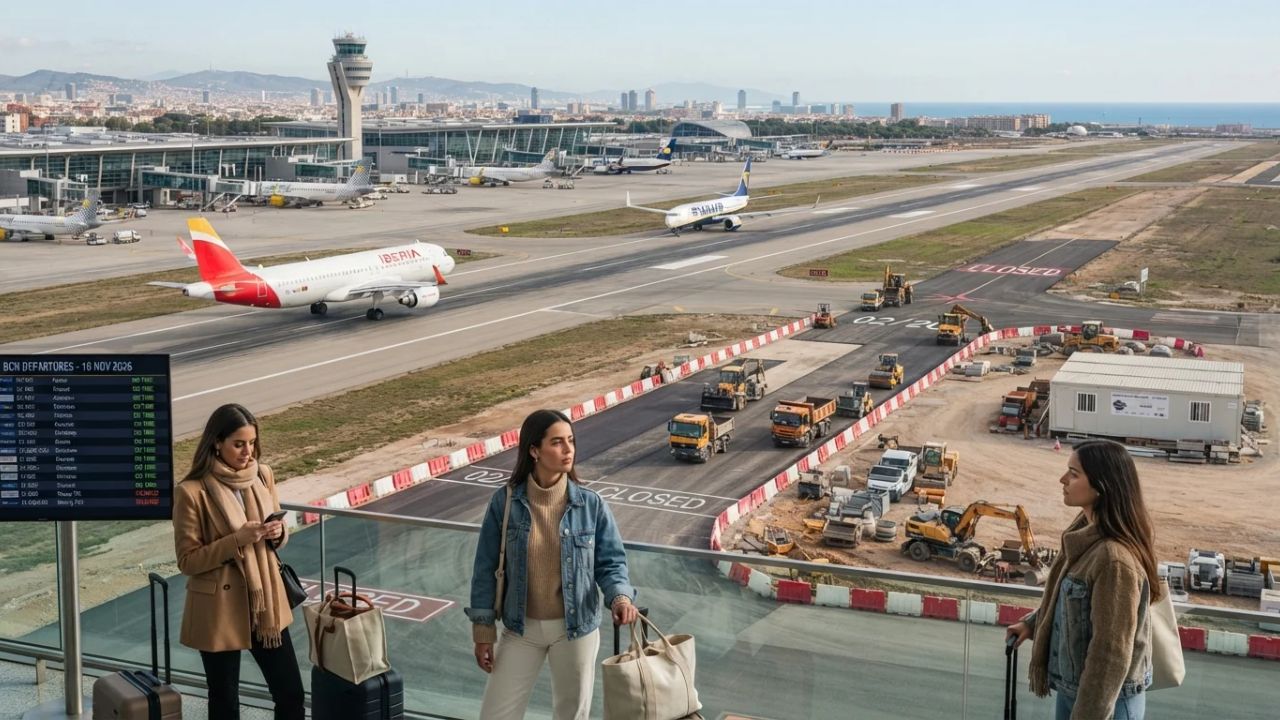
Barcelona-El Prat Airport Faces 15% Flight Capacity Cut as Aena Closes Runways for €3.1 Million Taxiway Upgrade

United States December Shutdown Warning Sparks Flight Delay Fears Ahead of 2026 Christmas and New Year Travel Rush