
United Airlines Long-Haul Network Restructuring: Transatlantic Hub Strategy and Global Route Changes 2026

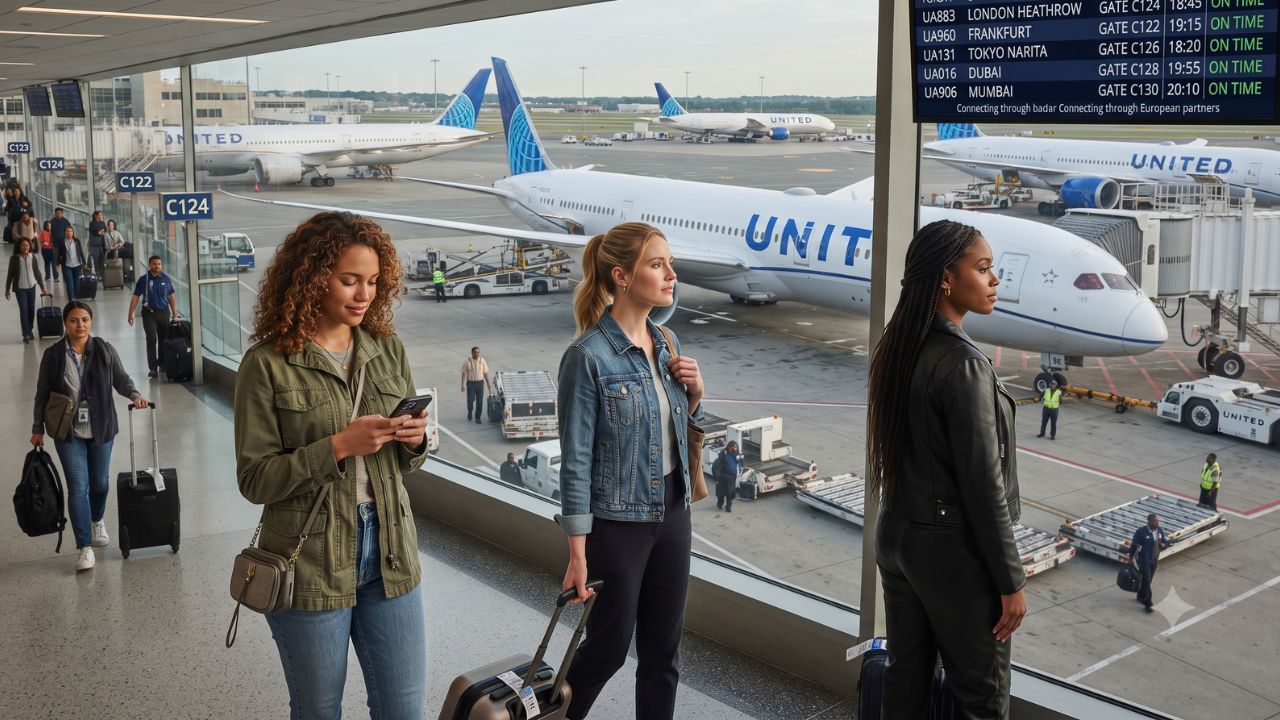
Over the span of two decades, United Airlines systematically eliminated nonstop passenger flights to 15 regional European destinations—from Newcastle and Belfast to Stuttgart and Bergen—consolidating transatlantic passenger flows almost entirely into high-density mega-hubs. Regulatory filings submitted to the Federal Aviation Administration and the Bureau of Transportation Statistics illustrate how shifting jet fuel costs, antitrust-cleared joint venture agreements, and geopolitical airspace restrictions fundamentally dismantled secondary point-to-point routes in favor of tightly coordinated mega-alliances.
For international passengers planning journeys between North America, Europe, Asia, and Africa, this quiet structural revolution has altered how tickets are priced, where connections happen, and which aircraft types transport them across the ocean. Today, the airline operates approximately 157 daily long-haul widebody departures anchored across seven core United States gateway hubs: Newark Liberty (EWR), Washington Dulles (IAD), San Francisco (SFO), Chicago O'Hare (ORD), Houston Intercontinental (IAH), Los Angeles (LAX), and Denver (DEN).
Transatlantic Alliance Consolidation: The End of Secondary European Point-to-Point Flights
The foundational pillar behind this long-haul restructuring is the A++ Transatlantic Joint Venture, an antitrust-immunized commercial partnership linking United Airlines with Lufthansa Group carriers (including Lufthansa, Swiss, Austrian Airlines, and Brussels Airlines) alongside Air Canada. Under this revenue-sharing framework, carriers coordinate schedules, share ticket proceeds, and funnel transatlantic passenger traffic directly into primary continental hubs rather than flying thin, seasonal point-to-point routes.
Instead of running dedicated widebody flights from Newark Liberty or Washington Dulles to medium-sized European cities, passenger flows are routed into four core continental gateways: Frankfurt (FRA), Munich (MUC), Zurich (ZRH), and Brussels (BRU). From these central transit platforms, regional partner airlines disperse travelers to their final destinations on high-frequency short-haul flights.
Securities and Exchange Commission disclosures and Department of Transportation records document why this shift occurred. Flying twin-aisle Boeing 777 and Boeing 787 aircraft to secondary cities produced seasonal revenue volatility and depressed seat yields during off-peak winter months. By terminating direct services to 15 specific European airports—Copenhagen (CPH), Moscow (DME), Istanbul (IST), Stuttgart (STR), Newcastle (NCL), Oslo (OSL), Belfast (BFS), Birmingham (BHX), Hamburg (HAM), Prague (PRG), Berlin Tegel (TXL), Manchester (MAN), Bergen (BGO), Stockholm (ARN), and Tenerife South (TFS)—the carrier concentrated high-yield corporate travelers onto dense hub-to-hub trunk routes.
To address niche transatlantic leisure markets without burning excess capital, fleet planners are deploying modern, fuel-efficient single-aisle narrowbodies like the Airbus A321XLR. These long-range aircraft offer lower trip costs, allowing the carrier to match seasonal seat capacity precisely to passenger demand without oversupplying regional transatlantic corridors.
Geopolitical Realignment Across Asia, the Middle East, and Africa
While commercial joint ventures reshaped European route maps, severe geopolitical blockades transformed Asian, African, and Middle Eastern flight paths. The imposition of Russian airspace overflight bans in March 2022 closed optimal polar pathways connecting North America to India and East Asia.
The loss of polar routing dealt an immediate economic blow to ultra-long-haul services. Nonstop flights between Newark Liberty and Mumbai (BOM) were suspended in March 2022 because southern detour tracks added hours of flight time, burned thousands of additional pounds of aviation fuel, and required payload penalties that forced aircraft to fly with empty seats to remain within safety reserves.
Similar commercial pressures led to the permanent exit from secondary Chinese gateways. Between 2014 and 2016, the airline launched ambitious direct flights from San Francisco to Chengdu, Hangzhou, and Xi'an under bilateral aviation accords. Following pandemic-era border restrictions and ongoing Russian airspace closures, these routes were permanently abandoned due to unsustainable operating costs.
In the Middle East and Africa, network adjustments reflect evolving commercial diplomacy:
- Kuwait City and Bahrain: Direct services from Washington Dulles were discontinued in 2016 following stiff competition from Persian Gulf carriers.
- Amman, Jordan: A nonstop route launched in May 2022 using Boeing 787-8 aircraft was later withdrawn following regional security advisories and shifting traffic patterns.
- Dakar, Senegal: A seasonal transatlantic route connecting Washington Dulles to Dakar was tested between May 2025 and January 2026 before being phased out.
- Dubai, United Arab Emirates: Rather than competing independently across the Gulf, the airline established a landmark codeshare partnership with Emirates, making Dubai its primary commercial transit anchor for the Middle East, East Africa, and the Indian subcontinent.
Visitor Insider Tips for Navigating Modern Long-Haul Routing
For travelers building itineraries across North America and Europe, understanding modern hub structures helps prevent costly layovers and baggage misdirection:
- Frankfurt and Munich Transit Tactics: When booking connecting flights to regional European cities, choose Munich (MUC) over Frankfurt (FRA) whenever possible. Munich's Terminal 2 is purpose-built for Star Alliance connections with a minimum connection time of 30 to 45 minutes, compared to Frankfurt's sprawling terminals where security transfers can require 60 to 90 minutes of walking.
- Navigating UK Regional Destinations: With direct services to Manchester, Birmingham, Newcastle, and Belfast discontinued, travelers heading to northern England or Scotland can consult VisitBritain to compare seamless train connections via London Heathrow Express or air transfers through Dublin and Brussels.
- Aircraft Type Verification: When booking transatlantic flights, inspect the seat map for aircraft type. Routes operated by modern Boeing 787 Dreamliners and Airbus A321XLR aircraft maintain lower cabin altitude pressurization (around 6,000 feet) and higher humidity levels compared to older Boeing 777-200ER aircraft, reducing travel fatigue and jet lag on seven-to-nine-hour overnight crossings.
- Same-Terminal Transfers at Newark: If flying into Newark Liberty (EWR) from domestic origins to catch an evening European departure, verify whether your domestic feeder flight lands at Terminal A or Terminal C. While Terminal C hosts the primary international departures, newer Terminal A gates require a transfer via the airside shuttle bus to avoid re-clearing TSA security.
Cultural and Environmental Context: Efficiency, Emissions, and Concentrated Passenger Corridors
The transition from decentralized point-to-point flying to consolidated alliance hubs carries deep implications for environmental sustainability and regional economies. Discontinuing thin point-to-point flights reduces the number of partially filled long-haul jets crossing the Atlantic, concentrating passenger numbers into high-density widebody flights operating at load factors exceeding 85%.
However, hub concentration places immense operational stress on major international gateways. Hubs like Frankfurt, London Heathrow, and Newark face recurring air traffic control bottlenecks, peak-hour noise constraints, and strict night-flight curfews.
For secondary regional cities across Europe and Asia, the loss of direct long-haul flights requires local governments and tourism boards to invest heavily in high-speed rail connections and regional feeder networks. By integrating rail links directly into airport basements—such as Frankfurt Airport's AIRail terminal and Zurich's subterranean rail platforms—travelers can step directly from a transatlantic widebody onto an electric high-speed train, reducing the overall carbon footprint of regional transit.
FAQ: Transatlantic and Long-Haul Travel Shifts 2026
Why did direct flights to secondary European cities get discontinued?
The airline consolidated traffic into core alliance hubs (Frankfurt, Munich, Zurich, Brussels) under its joint venture with Lufthansa Group, maximizing seat occupancy and route profitability.
Why are polar routes to India and secondary Chinese cities not operating?
Overflight restrictions across Russian airspace since March 2022 forced lengthy detours, resulting in unsustainable fuel costs and severe aircraft payload limitations.
Which US hubs handle the majority of international long-haul departures?
Newark Liberty (EWR), Washington Dulles (IAD), and San Francisco (SFO) serve as primary gateways, supported by Chicago O'Hare, Houston, Los Angeles, and Denver.
How does the airline serve the Middle East without direct flights to smaller Gulf states?
Through an extensive codeshare partnership with Emirates anchored at Dubai International Airport, offering passenger connections across the Middle East, Africa, and South Asia.
As airlines optimize their long-haul networks around strategic alliances and fuel-efficient narrowbodies, global travelers navigate a more consolidated, hub-centric international skyway.
Related Travel Guides
Disclaimer
This article is for informational and educational purposes only. It does not constitute legal, financial, or professional advice. While we strive to provide accurate and up-to-date information, travel policies, regulations, and conditions change rapidly. Always verify information with official sources before making travel decisions. Nomad Lawyer makes no representations about the accuracy, reliability, completeness, or suitability of the information provided. Readers should consult qualified professionals for advice specific to their circumstances. The views expressed in this article are those of the author and do not necessarily reflect the views of Nomad Lawyer.
Kunal K Choudhary
Co-Founder & Contributor
A passionate traveller and tech enthusiast. Kunal contributes to the vision and growth of Nomad Lawyer, bringing fresh perspectives and driving the community forward.
Learn more about our team →