
UK Issues Emergency Wildfire Alert for Travelers in Rural Tourism Areas
The UK Government has issued an emergency wildfire alert following extreme heat and dry weather, warning travelers in rural tourism areas to avoid fire risk activities.

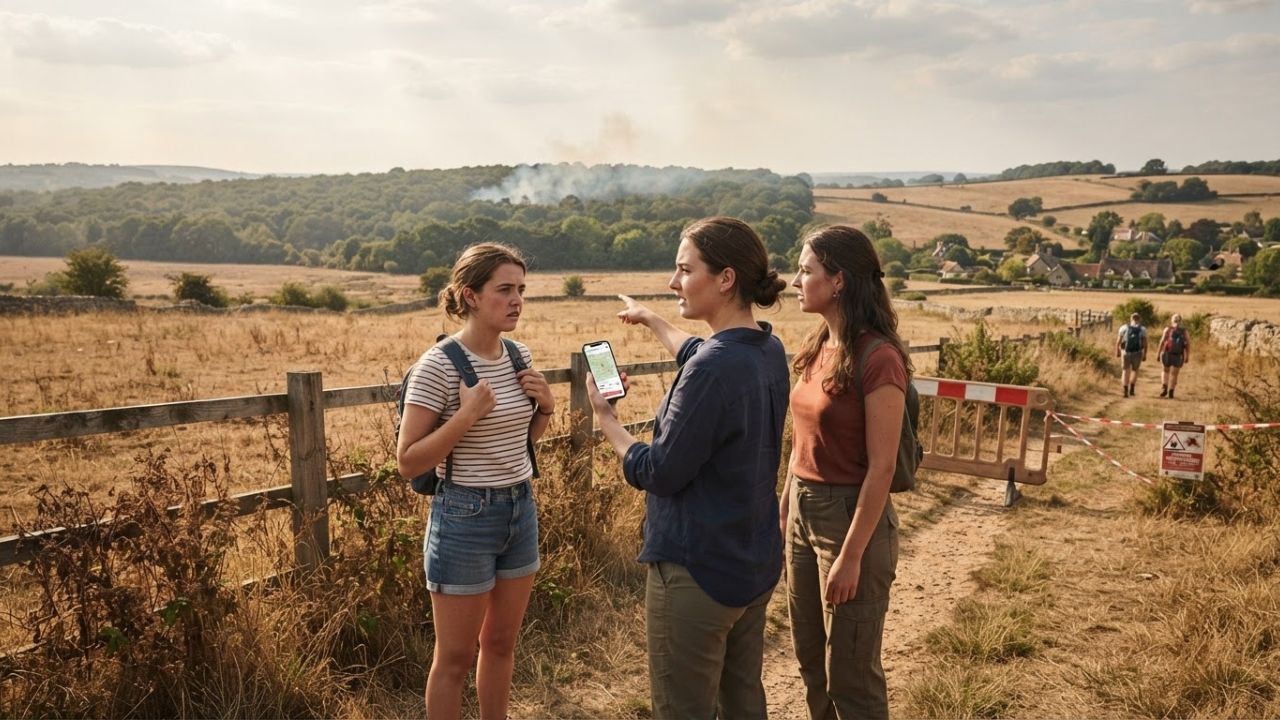
Image generated by AI
The UK Government has activated its emergency warning system to issue a nationwide wildfire alert on August 14, 2026, after prolonged heat waves and dry weather pushed the risk of grassland and forest fires to critical levels. While international flights and border entry procedures remain fully operational, travelers visiting rural tourism destinations and national parks must adapt to strict bans on open flames and disposable barbecues.
The Emergency Wildfire Alert for British Tourism
The rural travel sector across the United Kingdom is facing operational updates due to elevated wildfire dangers. On August 14, 2026, the UK Government utilized its national emergency alert system to send direct notifications to residents and visitors. The warning follows a period of scorchingly high temperatures and prolonged dry weather that have left grasslands, moorlands, and forests highly vulnerable to ignition.
The dry spell has raised the risk index significantly, making it essential for local councils to work with national park rangers to survey popular hiking areas. The warning came after local weather stations recorded dry soils and low humidity levels that make vegetation easy to ignite. This active threat is being monitored by fire services who are on high alert, preparing equipment and personnel to respond to potential outbreaks in remote valleys.
This emergency alert is particularly focused on countryside holidaymakers. Popular summer destinations, including national parks, walking trails, and campsites, are seeing increased monitoring to prevent accidental fires. Official reports highlight that the majority of wildfires are started by human activity, either through negligence or deliberate action. Consequently, the alert warns travelers that small, unattended flames can expand rapidly into large-scale wildfires that threaten wildlife, residential communities, and emergency services.
Fire Prevention Measures and Prohibited Activities
To manage these climate-related risks, local authorities and park services have introduced strict fire prevention measures across rural tourism zones. Travelers are urged to avoid any activity that could produce sparks or flames, with restrictions focused on common outdoor recreation habits.
By implementing these bans, local park boards are aiming to prevent the kind of ecological damage that can take decades to recover from. Wildfires destroy not only trees and plants but also the ground-nesting birds, insects, and small mammals that make the British countryside unique. Regional businesses are also supporting these measures by removing disposable grills from their shelves and promoting fire-safe cooking alternatives to their customers.
Specific prohibited and discouraged activities include:
- Disposable Barbecues: Sparks and hot metal frames can easily ignite dry vegetation on the ground.
- Campfires and Fire Pits: Open flames are highly volatile in windy, dry conditions, allowing embers to travel and start fires.
- Fireworks: Pyrotechnics can scatter sparks across a wide area, starting uncontrolled forest fires.
- Garden and Rubbish Fires: Controlled burning is restricted as containment becomes difficult during droughts.
These regulations are enforced to protect local ecosystems and reduce the burden on regional fire and rescue services. Campgrounds and holiday parks are updating their guest guidelines, requiring compliance with the fire bans.
Impact on UK National Parks and Outdoor Attractions
The wildfire alert affects some of the UK's most popular natural attractions. National parks, such as the Lake District, the Peak District, Snowdonia (Eryri), and Dartmoor, draw millions of visitors annually for hiking, climbing, and camping. Under the current alert, access to certain heathlands and open-access land may be restricted.
This legal framework ensures that the most vulnerable ecological zones are protected when weather models indicate exceptional fire danger. The suspension of access rights is a temporary measure, but it is necessary to prevent fires in peatlands, which are highly combustible when dry. Peat fires are particularly dangerous because they can burn underground for weeks before emerging as surface fires, making them incredibly difficult for fire crews to extinguish.
Under the Countryside and Rights of Way (CRoW) Act 2000, UK authorities can temporarily suspend public access to open country when the Met Office Fire Severity Index (FSI) reaches Level 5 ("Exceptional"). This index analyzes wind speed, temperature, humidity, and soil moisture to assess potential fire behavior. During exceptional risk periods, gates are locked and signs are posted to keep visitors out of high-risk moorlands, helping to protect both the public and fragile ground-nesting bird habitats.
Tourism Industry Response and Operator Responsibility
The wildfire warning does not represent a travel ban or a closure of the UK to international tourism. Flights continue to operate normally, and Schengen entry procedures, passport requirements, and visas are unaffected. The primary impact is concentrated within local rural tourism operations.
This proactive communication is also vital for keeping insurance coverage valid for rural properties, as failing to enforce local safety regulations can complicate claims if a fire occurs. By working with the National Fire Chiefs Council, tourism operators are establishing clear emergency plans, installing water points, and clearing dry brush around guest cottages. This collaboration helps build a resilient travel sector that can handle changing weather conditions safely.
Tour operators, rural hotels, and campsite managers are taking on greater responsibility for guest safety and education. Many operators are providing arriving guests with wildfire safety briefings, highlighting local fire bans, and displaying warnings at trailheads. By ensuring that visitors understand the dry conditions, the tourism sector aims to protect its natural environment while maintaining business continuity.
Visitor Guide: Safe Hiking, Local Etiquette, and Emergency Protocols
Navigating the British countryside during a wildfire alert involves adapting your outdoor habits, observing local safety codes, and preparing emergency tools. By practicing responsible travel, visitors can protect themselves and the local environment.
Practice strict fire safety when camping or picnicking. Avoid using gas stoves or lighter fluid near dry grass, and pack cold-prep meals or use flameless chemical heaters instead. Never throw cigarette butts on the ground or out of vehicle windows, and ensure all smoking materials are completely extinguished in water before disposal.
Follow the UK Countryside Code regarding waste management. Never leave glass bottles or broken glass in the fields or woodlands. Sunlight passing through glass can act as a magnifying lens, focusing heat rays to ignite dry brush below. Pack all trash, including glass and plastic containers, and carry it home if public bins are full.
Download safety applications before entering remote areas. The free mobile app What3Words is widely used by UK emergency services. It divides the countryside into three-meter squares, giving each square a unique three-word address. If you spot a wildfire, move to a safe, upwind location, dial 999 to contact the Fire and Rescue Service, and provide your three-word address to allow operators to pinpoint your exact coordinates. Do not attempt to fight a wildfire yourself.
Check the Met Office Fire Severity Index daily before setting out on hikes. Maintain a flexible itinerary, and have alternative plans to visit historic towns, museums, or indoor attractions if your preferred walking routes are closed due to exceptional fire danger.
Future Outlook: Climate Resilience in Rural Tourism
The long-term development of the UK's rural tourism sector relies on adapting to changing climate patterns. As warmer, drier summers become more frequent, national parks and forestry commissions are investing in long-term wildfire mitigation strategies.
Sustainable initiatives include restoring degraded peatlands, which act as natural water reservoirs and fire breaks, planting fire-resistant deciduous trees, and upgrading campground infrastructure with designated non-flammable cooking areas. By combining these environmental preservation projects with public safety campaigns, the UK aims to build a resilient tourism model that protects its iconic valleys for future generations of travelers.
Related Travel Guides
Disclaimer
This article is for informational and educational purposes only. It does not constitute legal, financial, or professional advice. While we strive to provide accurate and up-to-date information, travel policies, regulations, and conditions change rapidly. Always verify information with official sources before making travel decisions. Nomad Lawyer makes no representations about the accuracy, reliability, completeness, or suitability of the information provided. Readers should consult qualified professionals for advice specific to their circumstances. The views expressed in this article are those of the author and do not necessarily reflect the views of Nomad Lawyer.
Preeti Gunjan
Contributor & Community Manager
A passionate traveller and community builder. Preeti helps grow the Nomad Lawyer community, fostering engagement and bringing the reader experience to life.
Learn more about our team →