
Vietnam Smart Tourism 2026: Hanoi Deploys AI Robots and 3D Mapping to Modernize Travel
Hanoi is leading Vietnam's shift toward smart tourism by integrating AI robots, 3D mapping, and a centralized data ecosystem to redefine the visitor experience by 2030.

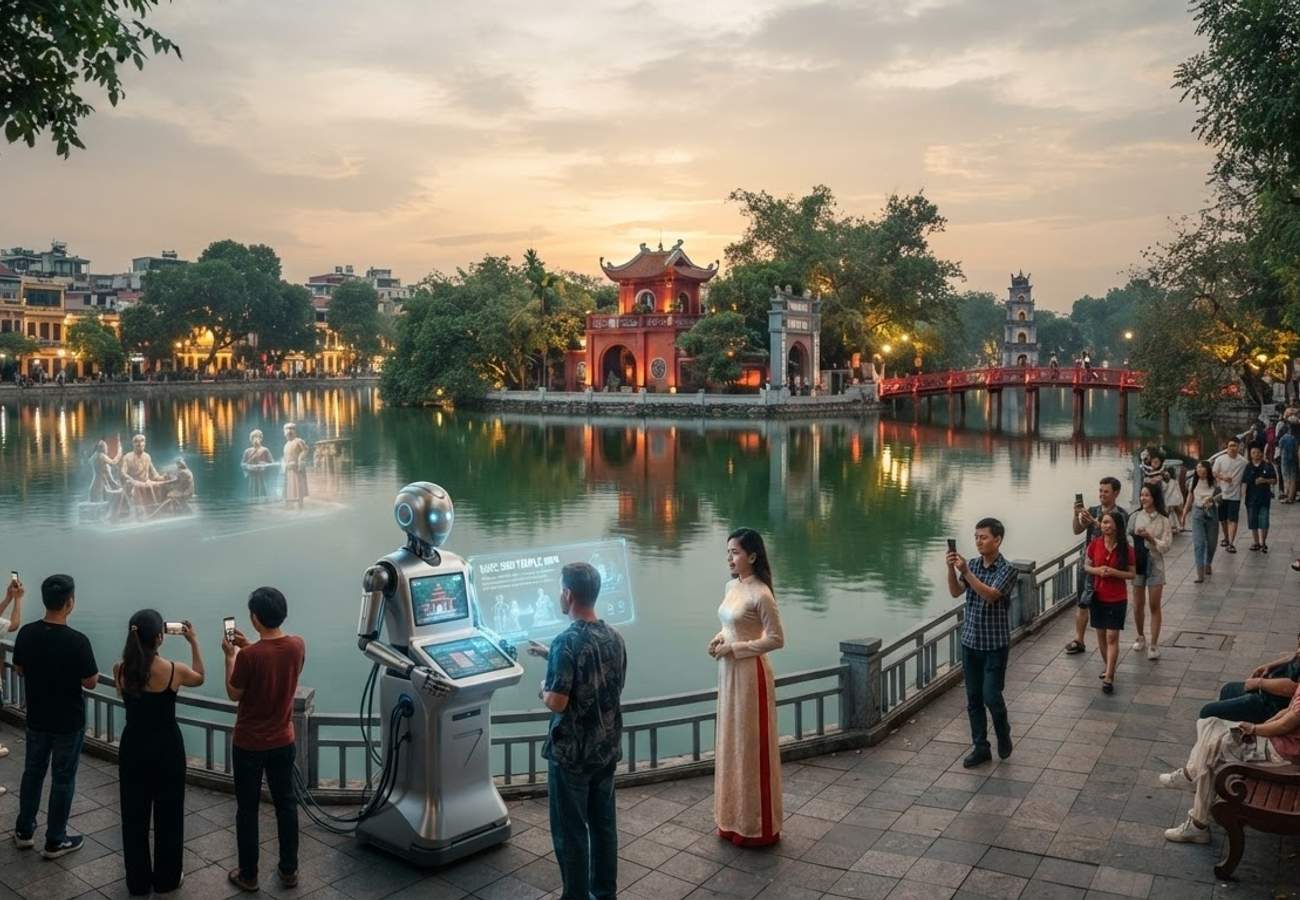
Image generated by AI
Vietnam is executing a major digital transformation by integrating artificial intelligence, robotic curators, and 3D mapping to reshape the visitor journey in Hanoi. With a unified digital platform slated for completion by 2030, municipal authorities are linking ancient heritage sites and craft villages into a single data-driven ecosystem.
Hanoi's Digital Pivot: The 2030 Smart Tourism Roadmap
Vietnam is undertaking a comprehensive modernization of its travel sector to align destination management with global digital standards. Hanoi serves as the primary testing ground for these innovations, led by the municipal Department of Tourism under the guidance of Deputy Director Nguyen Tran Quang. Instead of relying on traditional, fragmented approaches to destination promotion, municipal authorities are deploying cloud-based services and data-driven solutions to manage visitor flows and improve the visitor journey.
Previously, destination promotion relied on manual databases and printed brochures, which made it difficult to analyze visitor demographic shifts. Deputy Director Nguyen Tran Quang has highlighted that the new smart travel platform will unify public services and private hospitality providers under a single operational standard, allowing municipal planners to track real-time trends and distribute resources efficiently. The current roadmap suggests a fully realized digital tourism platform will be operational by 2030. This platform is designed to provide an end-to-end travel experience managed entirely through digital means, linking Hanoi's creative economy with its historic cultural assets. By establishing a unified digital ecosystem, the city aims to transition from localized, independent promotional systems to a scalable, integrated platform that supports sustainable economic growth across the municipality.
AI Receptionists and Virtual Reality Redefine the Museum Experience
For travelers navigating Hanoi, the digital transformation is introducing interactive touchpoints that optimize the traditional museum experience. A key development is the deployment of a robot receptionist at local museums, including the Vietnam National Fine Arts Museum. This advanced interface greets visitors, answers multilingual inquiries, and generates personalized tour routes based on a visitor's specific time constraints.
For example, the Vietnam National Fine Arts Museum has introduced a multilingual robot curator that can identify specific paintings, explain historical artistic styles, and provide directions to specific galleries. Visitors can also scan QR codes at key exhibits to launch 3D projection mapping and virtual reality sequences on their mobile phones, allowing them to see digital reconstructions of missing artifacts or ancient structural features. Beyond robotics, the visitor journey is being enhanced by several digital capabilities:
- Immersive Exploration: Interactive digital maps, 3D projection mapping, and virtual reality (VR) experiences offer immersive ways to explore historical landmarks, such as the Temple of Literature.
- Logistical Optimization: Electronic ticketing systems and automated audio guides have been implemented to reduce entry wait times and improve accessibility for disabled travelers.
- Unified Service Integration: Mobile applications allow travelers to coordinate accommodation booking, transport arrangements, and meal ordering within a single interface, ensuring a fluid journey throughout the capital.
Data Integration: Establishing a Centralized Tourism Repository
The transition to smart tourism relies heavily on aggregating data to understand visitor behavior and preferences. Nguyen Anh Tuan, Director of the Institute of Tourism Economics, has advocated for the establishment of a centralized tourism data center. This repository serves as a critical node where information regarding destination popularity, event scheduling, and visitor feedback is aggregated.
According to the Institute of Tourism Economics, the centralized repository will serve as the backbone for the city's smart-city infrastructure. By integrating visitor arrival records, border entry data, and hotel booking logs, the system will use predictive modeling to flag potential bottlenecks at historical sites hours before they occur, suggesting alternative cultural itineraries to travelers. By linking this centralized data pool with artificial intelligence, destination managers can perform deep market analysis and forecast visitor flows. This predictive capacity is vital for heritage management, allowing authorities to prevent overcrowding at fragile historical structures. Additionally, the data center helps local operators refine their promotional campaigns, targeting specific international markets and ensuring that municipal tourism remains resilient in the face of shifting global travel patterns.
Connecting Heritage Sites and Local Craft Cooperatives
A key element of Hanoi's smart tourism initiative is ensuring that digital tools support local economies and preserve cultural legacy. The Department of Tourism is integrating traditional craft villages—such as the Bát Tràng ceramic village and the Vạn Phúc silk village—into the city’s digital map. This integration connects local artisans directly with travelers, allowing visitors to discover workshops, learn about heritage crafts, and purchase products directly from makers.
Hanoi's surrounding craft cooperatives, including traditional embroidery and paper-making guilds, are also being mapped. By providing these small-scale makers with digital e-commerce storefronts and QR payment systems, the Department of Tourism is creating a decentralized network that helps keep young artisans in their home villages, supporting the local economy while preventing urban migration. By using technology to support community-based enterprises, the smart tourism strategy diverts economic benefits directly to local families, reducing dependency on large commercial intermediaries. This community focus ensures that the creative economy supports resident artisans, preserving ancient traditions while providing sustainable livelihoods. For the visitor, this creates opportunities to participate in hands-on cultural workshops, contributing directly to regional heritage conservation.
Visitor Guide: Local Dining, Cultural Etiquette, and Tech Tips in Hanoi
Navigating Hanoi's smart tourism ecosystem requires a blend of digital tools and traditional respect. To make the most of a visit, travelers should utilize the city's growing digital options while observing local cultural protocols.
When exploring historic temples or museums, visitors should download the "Smart Travel" app for e-ticketing and interactive maps. To experience the interactive robot receptionist at the Vietnam National Fine Arts Museum, visit during the off-peak hours of early morning or after 3:30 PM, when crowds are thin. For a deeper dive into heritage, the Temple of Literature night tour utilizes spectacular 3D projection mapping on historic facades. Travelers should purchase a local eSIM to ensure constant connectivity for virtual reality triggers at historical landmarks.
Between tech-guided tours, visitors must explore Hanoi's legendary culinary scene. Enjoy traditional bún chả (grilled pork with noodles) at local diners, or try chả cá Lã Vọng (turmeric-grilled fish with dill) at historic restaurants on Cha Ca Street. Finish the culinary tour with an authentic egg coffee (cà phê trứng) at Café Giảng on Nguyen Huu Huan Street.
While technology optimizes the journey, cultural etiquette remains paramount. When visiting sacred spaces like Ngoc Son Temple, wear respectful attire that covers shoulders and knees. Do not touch the stone tortoise stelae at the Temple of Literature, as these are protected cultural treasures. Finally, maintain the same respectful silence and behavior when interacting with AI curators and robot guides as you would with human staff.
Long-Term Outlook: Building a Resilient, Tech-Driven Destination
The transition toward smart tourism represents a fundamental shift in how Vietnam preserves and promotes its cultural legacy. By shifting from localized promotion to a unified, cloud-based ecosystem, Hanoi is laying the groundwork for a highly competitive, creative economy.
Ultimately, the digital roadmap leading to 2030 positions Hanoi as a regional leader in travel innovation. By standardizing digital border services and electronic integration, Vietnam is establishing a secure and sustainable framework for tourism growth. This data-driven approach ensures that the country's travel sector can adapt in real-time to global trends, protecting fragile environments while providing memorable, authentic experiences for future generations of international travelers.
Related Travel Guides
Disclaimer
This article is for informational and educational purposes only. It does not constitute legal, financial, or professional advice. While we strive to provide accurate and up-to-date information, travel policies, regulations, and conditions change rapidly. Always verify information with official sources before making travel decisions. Nomad Lawyer makes no representations about the accuracy, reliability, completeness, or suitability of the information provided. Readers should consult qualified professionals for advice specific to their circumstances. The views expressed in this article are those of the author and do not necessarily reflect the views of Nomad Lawyer.
Kunal K Choudhary
Co-Founder & Contributor
A passionate traveller and tech enthusiast. Kunal contributes to the vision and growth of Nomad Lawyer, bringing fresh perspectives and driving the community forward.
Learn more about our team →