
UK NATS Preliminary Report Blames Software Defect for September 2026 Air Traffic Chaos
A preliminary NATS investigation confirms a software defect, not human error, triggered widespread UK flight cancellations and delays on September 8, 2026.

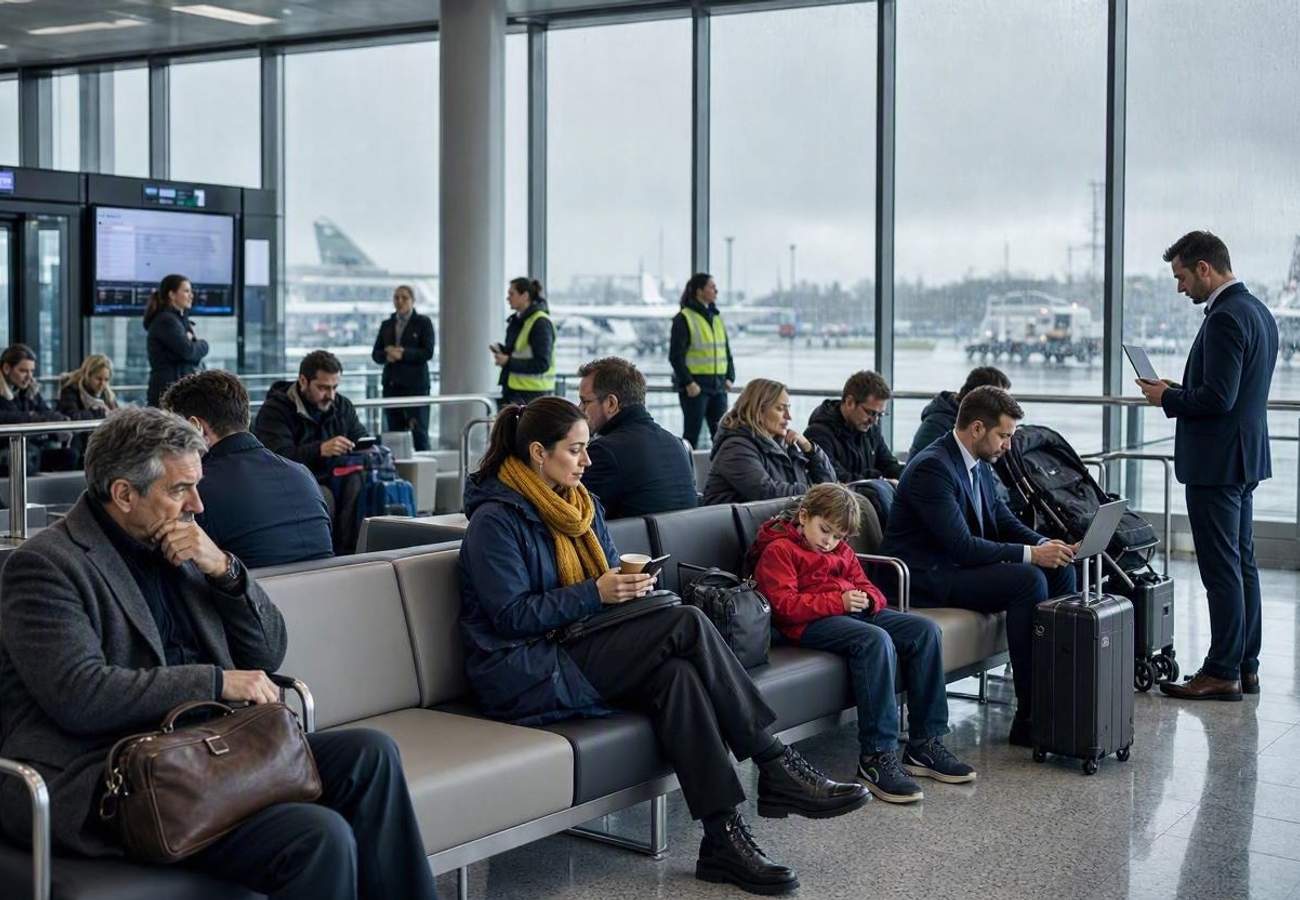
Image generated by AI
[London, September 19, 2026] — A preliminary investigation by NATS has determined that a software defect within the UK's national airspace system caused the massive air traffic disruptions on September 8, 2026, explicitly clearing both civil and military operators of any wrongdoing. The report concludes that the systemic failure was not the result of incorrect human actions or operator error.
The disruption originated within the National Airspace System, where a specific request triggered a software defect that corrupted critical flight data. This corruption occurred immediately after processing resumed, leaving air traffic controllers with severely reduced information. To maintain safety standards, NATS was forced to implement immediate capacity restrictions while technicians stabilized the system and reloaded the corrupted data.
The Technical Trigger of the Failure
The crisis centered on the London Area Control Centre, though the operational fallout was felt across the entire United Kingdom. Because the corrupted data affected the core of the flight information system, the recovery process required a comprehensive system restart.
This restart necessitated a wider network freeze to ensure that flight data was reloaded consistently across all sectors. This "blank slate" approach to data recovery is a safety necessity but creates an immediate bottleneck, pushing congestion into multiple airports simultaneously and shattering airline schedules. The preliminary findings emphasize that the trigger was purely systemic; the software behaved in an unforeseen manner that no operator intervention could have prevented at the moment of failure.
Who Is Affected
While the technical glitch was localized to the control center, the operational ripple effect impacted thousands of travelers and dozens of carriers.
| Impact Category | Specifics of Disruption |
|---|---|
| Primary Hubs | Major congestion at London Heathrow (LHR), Gatwick (LGW), and other regional UK airports. |
| Flight Operations | Widespread cancellations and cascading delays across all UK-managed airspace. |
| Personnel | Flight crews displaced from their scheduled rotations; some hitting legal duty-hour limits. |
| International Routes | Global delays as aircraft failed to return to their home bases for subsequent international legs. |
| Passenger Experience | Missed connections, baggage separation, and forced rebookings onto overcapacity flights. |
What This Means for Travelers
For passengers seeking refunds or compensation, the distinction between "operator error" and "software defect" is significant. Most airlines categorize air traffic control (ATC) failures as "extraordinary circumstances" or events outside their direct operational control.
Plain-Language Impact Assessment:
- Refunds: If your flight was canceled and you chose not to travel, you are generally entitled to a refund of the ticket price. This is a regulatory requirement regardless of whether the cause was a software glitch or a storm.
- Compensation: Because the Civil Aviation Authority (CAA) and similar bodies often view ATC failures as outside the airline's control, securing additional cash compensation for "inconvenience" is significantly more difficult than if the delay had been caused by a mechanical failure or crew scheduling issue.
- Duty of Care: Airlines are still expected to provide basic care (food, communication, and hotel accommodation) during long delays, regardless of the cause of the disruption.
Travelers currently dealing with the aftermath should prioritize documenting every expense. Keep digital copies of all itinerary changes and receipts for hotels or meals. If you are filing a claim through travel insurance, the NATS preliminary report serves as official evidence that the disruption was a systemic failure rather than a carrier-specific issue.
System Resilience and Future Oversight
The preliminary nature of this report indicates that a deeper forensic analysis is ongoing. The European Union Aviation Safety Agency (EASA) and other regulatory bodies typically scrutinize these events to determine why the defect remained dormant until triggered by a specific request.
The investigation is now shifting toward three primary areas:
- Detection: Why the software corruption was not flagged by automated monitors before it impacted live traffic.
- Containment: Whether the failure could have been isolated to a single sector rather than requiring a nationwide capacity reduction.
- Recovery: The efficiency of the data reloading process and whether redundancy systems could have prevented the total collapse of the schedule.
The reputational damage to NATS is substantial, as the event proved that a single line of corrupted code can ground an entire nation's aviation network. Future updates are expected to focus on enhanced system testing and the creation of more robust contingency playbooks to ensure that a software glitch does not result in days of knock-on delays.
FAQ: UK ATC Software Failure 2026
Was the flight chaos caused by a human mistake? No. The preliminary NATS report explicitly states the disruption was caused by a software defect and not by incorrect actions taken by civil or military air traffic operators.
Am I entitled to compensation for my delayed flight? You are entitled to a refund if you didn't travel. However, cash compensation is less likely because ATC failures are typically classified as "extraordinary circumstances" beyond the airline's control.
Why did the delays last for days after the software was fixed? Aviation networks rely on precise rotations. When flights are canceled, aircraft and crews end up in the wrong cities, and crews may exceed their legal working hours, creating a backlog that takes days to resolve.
How should I track my updated flight information during such events? Use the official airline mobile app in conjunction with airport departure boards. During ATC crises, gate assignments and aircraft swaps happen rapidly, and apps often update faster than physical screens.
A single software glitch has proven that the UK's skies are only as stable as the code managing them.
Related Travel Guides
Disclaimer
This article is for informational and educational purposes only. It does not constitute legal, financial, or professional advice. While we strive to provide accurate and up-to-date information, travel policies, regulations, and conditions change rapidly. Always verify information with official sources before making travel decisions. Nomad Lawyer makes no representations about the accuracy, reliability, completeness, or suitability of the information provided. Readers should consult qualified professionals for advice specific to their circumstances. The views expressed in this article are those of the author and do not necessarily reflect the views of Nomad Lawyer.
Kunal K Choudhary
Co-Founder & Contributor
A passionate traveller and tech enthusiast. Kunal contributes to the vision and growth of Nomad Lawyer, bringing fresh perspectives and driving the community forward.
Learn more about our team →