Canada, Bahamas, and Thailand Tighten Ebola Travel Restrictions: Border Screening and Entry Guide 2026

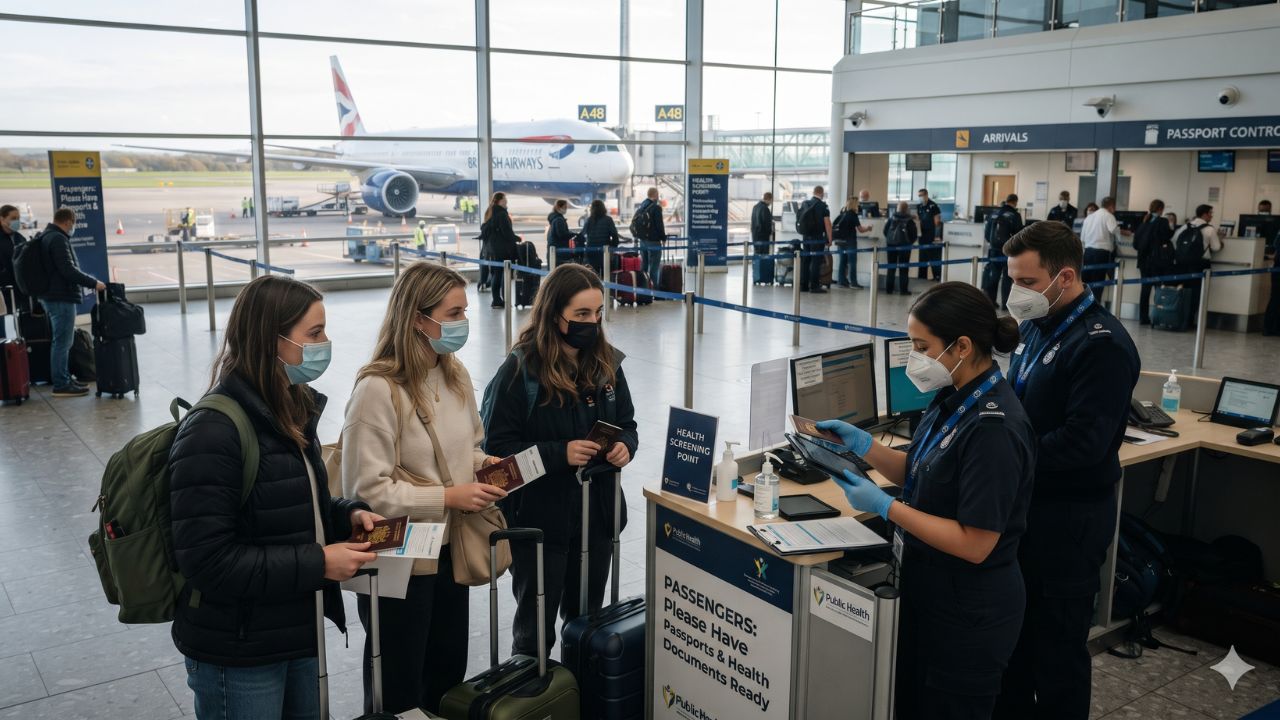
Image generated by AI
While the World Health Organization assesses the global risk of the current Bundibugyo Ebola outbreak as low and continues to advise against sweeping international travel embargoes, a growing corridor of global transit gateways is taking direct unilateral action. Across North America, the Caribbean, and Southeast Asia, border enforcement agencies are rolling out enhanced health screenings, suspending electronic travel authorizations, and enacting targeted entry bans. Under an official extension active through 27 November 2026, Canada is enforcing some of the strictest measures worldwide, blocking entry and transit for foreign nationals who visited the Democratic Republic of the Congo within the previous 21 days, while both the Bahamas and Thailand have instituted mandatory quarantine and health surveillance checkpoints for passengers arriving from affected equatorial African regions.
Asymmetrical Border Protocols: How Canada, the Bahamas, and Thailand Diverge
The current international border environment reveals sharp divergence in how national governments respond to international epidemiological alerts. The World Health Organization emphasizes that the Bundibugyo virus strain—unlike seasonal influenza or respiratory coronaviruses—does not transmit through ordinary airborne exposure. Infection requires direct physical contact with infectious bodily fluids, contaminated clothing, or infected biological tissues. Consequently, public health guidelines do not call for generalized trade or travel halts against affected nations.
Despite this guidance, national authorities have introduced fragmented statutory measures that place immense compliance burdens on multi-leg international itineraries. Canada's public health order, extended to 27 November 2026, specifically targets foreign nationals whose immigration, visa, or electronic travel authorization (eTA) filings identified the Democratic Republic of the Congo, Uganda, or South Sudan as their most recent country of residence. Under these provisions, previously issued visas and digital transit passes remain temporarily suspended.
Critically, Canada separates travelers into distinct legal categories based on destination history. Foreign nationals who have set foot in the Democratic Republic of the Congo during the 21 days preceding their scheduled arrival are barred from boarding Canada-bound flights or transiting Canadian airports, even if holding onward connecting tickets. Conversely, Canadian citizens, permanent residents, and registered Indian status holders retain their constitutional right of return, though they face mandatory port-of-entry health assessments and potential home quarantine directives.
In the Caribbean, the Bahamas has established an independent border protocol that adopts a wider chronological surveillance window. Border authorities in Nassau mandate that any arriving passenger who visited designated Ebola-affected regions within the preceding 30 days must submit to clinical evaluation by public health officers. Depending on symptoms, travel history, and contact exposure, travelers face mandatory quarantine in state-approved facilities or supervised isolation.
In Southeast Asia, Thailand's Department of Disease Control reaffirmed its targeted health framework in October 2026. Health control posts operating at Bangkok's Suvarnabhumi Airport (BKK) and Don Mueang (DMK) require all travelers arriving from or transiting through the Congo or Uganda to undergo medical assessment. Asymptomatic travelers face quarantine protocols scaled to the virus's 21-day incubation period, while any passenger presenting fever, unexplained bleeding, or acute gastrointestinal distress is isolated immediately in designated infectious disease referral hospitals.
| Country & Border Authority | Target Traveler Profile | Core Regulatory Restriction | Surveillance Window | Permitted Transit Status |
|---|---|---|---|---|
| Canada (CBSA & PHAC) | Foreign nationals residing in or visiting DRC, Uganda, South Sudan | Visas and eTAs suspended; 21-day entry ban for DRC visitors | Preceding 21 days | Transit barred for foreign travelers with DRC history |
| The Bahamas (Ministry of Health) | All travelers arriving from or transiting designated African zones | Mandatory medical screening, interview, and potential isolation | Preceding 30 days | Transit permitted only after clinical clearance |
| Thailand (Dept. of Disease Control) | Inbound passengers arriving from or transiting Congo and Uganda | Thermal screening, health declaration, quarantine for asymptomatic | Incubation timeline | Monitored transit permitted under strict quarantine |
| Global Standard (WHO Guidelines) | General international traveling public across unaffected routes | Low global risk; no blanket travel or commercial trade bans | Standard monitoring | Normal international flight corridors maintained |
These measures demonstrate that while international borders remain open for general tourism, travelers with multi-continental itineraries must scrutinize route histories to avoid unexpected boarding denials.
What Makes This Health Surge Different: The Bundibugyo Strain and Shifting Entry Laws
The current border tightening centers on the Bundibugyo ebolavirus, one of six recognized species within the genus Orthoebolavirus. First identified in western Uganda in 2007, this strain exhibits case-fatality rates ranging between 25 and 50 percent—substantially lower than the Zaire strain (which often approaches 70 to 90 percent), yet sufficiently severe to trigger international containment protocols.
The geographical focus encompasses equatorial Central and East Africa, where the Democratic Republic of the Congo, Uganda, and South Sudan share porous forested boundaries. Regional displacement, rural transit corridors, and limited health infrastructure in remote provinces complicate contact tracing, prompting international transit hubs like Bangkok and Toronto to establish secondary defensive perimeters at their own arrival gates.
For international travelers, the primary danger is not contracting the virus aboard commercial aircraft, but encountering regulatory entrapment. Because international airlines face severe financial penalties for transporting inadmissible passengers, airline check-in software now automatically flags passports with recent African transit stamps. A traveler flying from Nairobi or Johannesburg to New York who books an itinerary with a layover at Montreal Trudeau (YUL) or Toronto Pearson (YYZ) could be denied boarding at their departure gate if their passport reveals an excursion into the eastern Congo within the past three weeks.
Visitor Insider Tips: Layover Planning, Health Declarations, and Rerouting Strategies
Navigating these tightening health measures requires proactive itinerary management and strict adherence to documentation rules.
- Examine Transit Hub Restrictions Before Booking: Never book a flight connection through a Canadian airport (such as Toronto Pearson, Vancouver, or Montreal) if your passport contains travel stamps from the Democratic Republic of the Congo within the previous 21 days. Because Canadian immigration law treats transit as formal entry, airlines will deny boarding at your origin point. Instead, route long-haul connections through European hubs like London Heathrow, Paris-Charles de Gaulle, or Frankfurt, which maintain standard international transit zones without entry bars.
- The 30-Day Lookback in the Bahamas: When vacationing in the Bahamas following African travels, remember that Nassau's health authorities apply a 30-day lookback window—nine days longer than Canada's 21-day timeline. Keep digital boarding passes, lodging receipts, and medical clearance certificates on your smartphone to prove the exact dates you exited Central or East Africa.
- Thailand Health Control Checkpoint Protocol: Passengers arriving at Bangkok's Suvarnabhumi Airport who have traveled through Uganda or the Congo must visit the International Communicable Disease Control checkpoint before presenting their passports to immigration. Travelers must submit the official T.8 Health Declaration Form, provide proof of yellow fever vaccination, and undergo digital infrared temperature screening.
- Airline Check-in Verification: Carry paper documentation demonstrating travel dates and accommodations. If you traveled through unaffected African countries (such as Kenya, Tanzania, or South Africa), ensure your boarding passes clearly show that you did not enter or transit through the DRC, Uganda, or South Sudan.
Cultural and Environmental Context: Public Health Preparedness and African Community Stigmatization
Unilateral border closures carry profound social, economic, and ethical ramifications. Public health historians and humanitarian organizations consistently caution that sweeping travel bans often produce unintended negative consequences. Rather than halting transmission, punitive border rules discourage transparent disease reporting and damage local economies that rely on regional trade and conservation tourism.
In addition, broad border measures risk reviving harmful stigmas against African diaspora communities, international students, and business travelers who have had no proximity to outbreak zones. When countries suspend entire categories of approved immigration applications, families are separated, academic terms are disrupted, and vital humanitarian medical staff face delays reaching field operations.
True biosecurity requires international solidarity rather than isolationism. The most effective defense against hemorrhagic fevers is bolstering diagnostic laboratories, funding frontline community healthcare workers, and supporting African public health agencies at the source. By maintaining balanced, evidence-based border screenings rather than blanket bans, international authorities can safeguard global health while preserving human dignity and global connectivity.
FAQ: International Travel Under Ebola Border Restrictions 2026
Has Canada banned all travelers arriving from the African continent?
No. Canada's temporary restrictions apply exclusively to foreign nationals with recent residency or travel ties to the Democratic Republic of the Congo, Uganda, and South Sudan, specifically barring foreign visitors who visited the Congo within the past 21 days.
Can tourists still visit the Bahamas without Ebola health checks?
Yes. Routine holidaymakers arriving from North America, Europe, and unaffected international destinations enter the Bahamas without Ebola screening. Measures apply only to travelers with travel histories in affected African zones within the past 30 days.
Does Thailand require every international arrival to enter quarantine?
No. General tourists visiting Thailand face no quarantine. Quarantine and clinical monitoring apply strictly to travelers arriving from or transiting designated outbreak areas in the Congo and Uganda.
Can a traveler transit through a Canadian airport after visiting the Congo?
No. Foreign nationals who have visited the Democratic Republic of the Congo within the preceding 21 days are prohibited from entering or transiting through Canada, unless covered by specific statutory exemptions.
[By replacing travel anxiety with verified regulatory intelligence, international voyagers can navigate dynamic global border policies with absolute confidence.]
Related Travel Guides
US CDC Ebola Travel Declaration and Health Attestation Rules 2026
Saudi Arabia Ebola Travel Restrictions: Health Protocols and Africa CDC Updates
US Autumn Travel Alert: Dangerous Surf, Dense Fog, and Mountain Snow Threaten Tourist Routes
This article is for informational purposes. Flight routes, passenger regulations, visa rules, and transit advisories are subject to change by airlines and aviation authorities. Readers are advised to verify schedules and travel documentation with relevant carriers and border agencies before departure.
Related Stories

Malaysia Enters Northeast Monsoon Season as AirAsia Issues Urgent KLIA Terminal 2 Travel Advisory

France Rail Strike Grips Paris Terminals and Shuts Regional Train Networks Ahead of Peak Autumn Travel