
Eco-Tourism: Thailand Beach Resorts Integrate Marine Conservation Programs
Southern Thailand beach resorts launch guest-facing conservation programs, focusing on mangrove planting and marine habitat restoration.

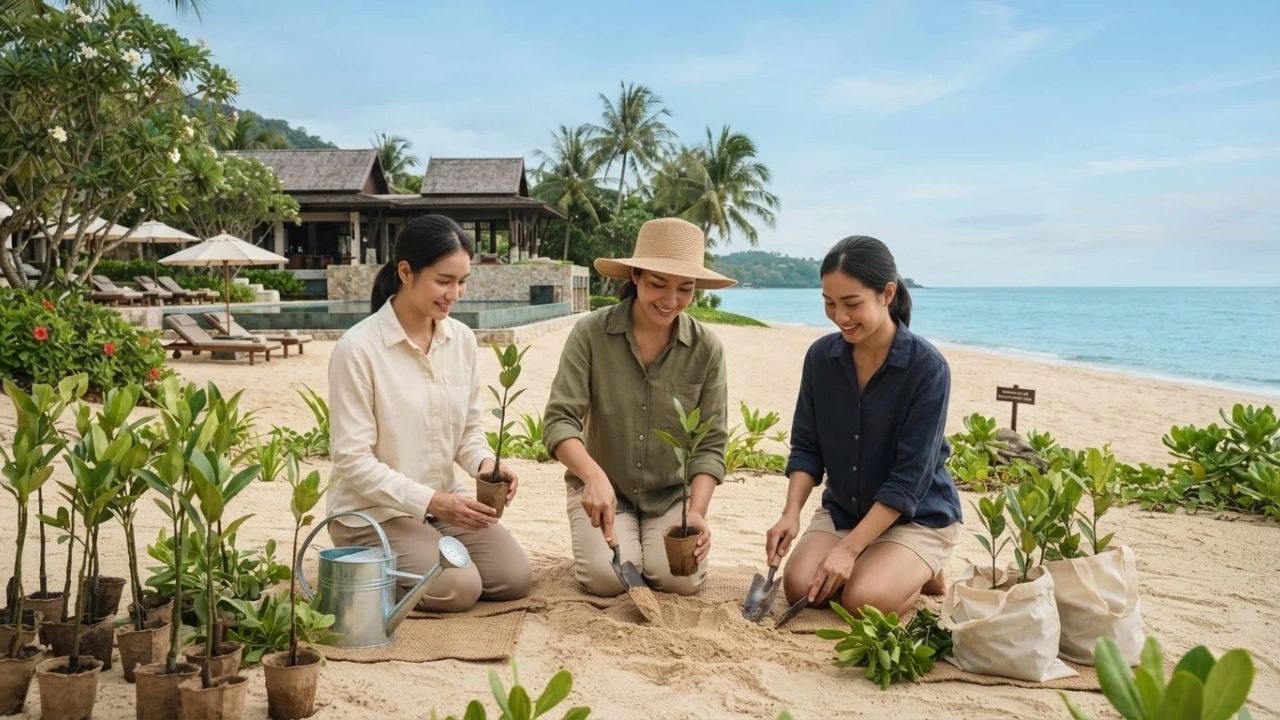
Image generated by AI
Southern Thailand beach resorts launch guest-facing conservation programs, focusing on mangrove planting and marine habitat restoration. The Tourism Authority of Thailand indicates that integrating environmental action with guest experiences meets the demand for responsible travel options.
The Rise of Active Conservation in Luxury Travel
A major trend in coastal hospitality is the shift from passive sustainability (such as towel reuse programs) to active guest-facing conservation initiatives. Historically, premium resorts managed environmental and waste systems behind closed doors, offering guests an isolated leisure experience. In 2026, operators design hands-on programs that allow travelers to participate in mangrove planting, marine nursery maintenance, and community upcycling workshops.
By involving guests in local conservation efforts, resorts turn vacations into educational experiences. This eco-focus supports regional conservation bodies and local communities, showing how tourism can help restore coastal habitats.
Southern Thailand Resort Programs and Milestones
Four properties under the OUTRIGGER Zone initiative deploy localized conservation programs:
- Khao Lak Resort: Plants more than 3,000 mangrove trees annually and coordinates Phang-Nga Sea Turtle Conservation Centre pond cleanings on 21 September. Ranked number one among 86 hotels in Khao Lak on Tripadvisor.
- Koh Samui Resort: Supports a food waste-to-farm project, the Baan Tai Crab Bank (which released three million baby crabs last year), and planted more than 24,000 seagrass seedlings.
- Phi Phi Island Resort: Features cultural references to the Urak Lawoi seafaring community and organizes a World Cleanup Day event on 18 September involving 50 participants.
- Surin Beach Resort (Phuket): Coordinates early-morning beach sweeps and launches a recycling campaign on 18 September to support the Bangtao community.
- Consumer Demand: Aligns with research indicating that 69 per cent of travelers in 2025 wanted to leave destinations better than they found them.
Three properties (Khao Lak, Koh Samui, and Surin) hold Green Key certification and participate in the GHA Discovery loyalty program.
Blending Community Support and Upcycling
The resort programs extend beyond marine biology to support local communities:
- Bangtao Community (Phuket): Recyclable materials collected during the September campaign are exchanged for eggs to support bedridden patients.
- World Cleanup Day (Phi Phi): Combines beach sweeps with upcycling workshops, teaching participants to convert plastic waste into practical products.
- Urak Lawoi Integration (Phi Phi): Promotes cultural tours led by members of the local seafaring community to preserve maritime heritage.
- Green Key Standards: Underpins resort operations with audited environmental criteria covering energy, waste, water, and community involvement.
This community-first model keeps tourism spending within the host villages.
Thailand Eco-Resort Conservation Coordinates
The table below breaks down the four active properties, localized conservation focuses, target dates, annual outputs, certifications, and coordinating environmental bodies recorded on August 23, 2026:
| Active Property | Localized Conservation Focus | Target Event Date | Annual Output Metric | Audited Certification | Coordinating Environmental Board |
|---|---|---|---|---|---|
| Khao Lak Resort | Mangrove planting & Turtles | 21 September | 3,000+ trees annually | Green Key certified | Phang-Nga Conservation Centre |
| Koh Samui Resort | Seagrass & Baan Tai Crab Bank | Ongoing projects | 3M baby crabs released | Green Key certified | Foundation for Environmental Ed |
| Phi Phi Island | Urak Lawoi heritage & Beach | 18 September | 50 active participants | GHA Discovery link | World Cleanup Day Committee |
| Surin Beach | Bangtao recycling & Sweeps | 18 September | Community egg exchange | Green Key certified | Tourism Authority of Thailand |
These coordinates outline the properties, focuses, dates, outputs, certifications, and boards established for the resort green schemes.
Resource Stewardship and Eco-Aware Coastal Travel
For the traveler, the benefit of choosing Green Key-certified resorts is the assurance that lodging operations are independently audited for water conservation, energy reduction, and responsible waste management. Supporting properties that run food waste-to-farm projects minimizes the local landfill footprint.
Additionally, participating in upcycling workshops teaches travelers practical waste-reduction techniques they can apply at home. Respecting local cultures (such as the Urak Lawoi community’s seafaring traditions) preserves indigenous heritage in sensitive coastal zones.
For comparison, you can explore the changing dynamics of Stimulus Launch: Taiwan Unveils Billion-Dollar Repeat Visitor Rewards to see how destinations promote visitor spend. For transit updates, comparing travel scheduling matches other networks, such as Infrastructure Development: Maldives Greater Malé Bridge Reaches Milestones updates. This trend is similar to the tourism growth seen in other destinations, as detailed in our guide on the Hacienda Heights Bus Fire Transport Safety regulations.
Visitor Insider Tips: Participating in Resort Green Schemes
If you are planning to visit southern Thailand, keep these practical tips in mind:
- Book Khao Lak Turtle Cleanings: If staying in Phang-Nga, register for the September 21 turtle pond cleaning in advance, as volunteer spots are limited.
- Explore Koh Samui's Seagrass Beds: Join the resort's marine biologist for a seagrass walk to learn how the 24,000 planted seedlings protect coastal waters.
- Coordinate World Cleanup Day in Phi Phi: If visiting in mid-September, join the September 18 beach sweep to help clean the island's shores.
- Bring Recyclables to Surin Beach: Participate in the Surin recycling drive starting September 18 to support the local Bangtao community egg exchange program.
- Select GHA Discovery Options: Use your GHA Discovery membership when booking to earn local experience rewards that support community programs.
Long-Term Outlook for Thai Coastal Tourism
The long-term outlook for transit and hospitality in southern Thailand is focused on introducing solar-powered electric longtail boats on Phi Phi Island, expanding coral restoration zones, and deploying smart water recycling systems at resorts. As traveler demand for eco-conscious holidays remains high, municipal environment offices and resort boards will cooperate to maintain preservation codes.
By protecting local marine habitats and supporting community upcycling, the travel sector aims to build a sustainable destination network.
FAQ
What is the OUTRIGGER Zone initiative?
It is a global conservation program launched by Outrigger Resorts & Hotels to protect marine ecosystems and support local communities near its properties.
How many mangrove trees are planted in Khao Lak?
The Khao Lak resort plants more than 3,000 mangrove trees annually through its guest-facing planting program.
What is the Baan Tai Crab Bank?
Located in Koh Samui, this community-supported marine conservation project released approximately three million baby crabs last year.
When is World Cleanup Day celebrated at Phi Phi Island?
The resort has scheduled its main beach clean-up and upcycling workshop for September 18, involving local students and hotel teams.
Stay updated on the regional travel regulations and environmental programs shaping Thai tourism.
Related Travel Guides
Disclaimer
This article is for informational and educational purposes only. It does not constitute legal, financial, or professional advice. While we strive to provide accurate and up-to-date information, travel policies, regulations, and conditions change rapidly. Always verify information with official sources before making travel decisions. Nomad Lawyer makes no representations about the accuracy, reliability, completeness, or suitability of the information provided. Readers should consult qualified professionals for advice specific to their circumstances. The views expressed in this article are those of the author and do not necessarily reflect the views of Nomad Lawyer.
Raushan Kumar
Founder & Lead Developer
Full-stack developer with 11+ years of experience and a passionate traveller. Raushan built Nomad Lawyer from the ground up with a vision to create the best travel and law experience on the web.
Learn more about our team →