UK Tourism Eyes Major Shopping Boost as Conservatives Pledge Return of Tax Free Shopping for Overseas Visitors

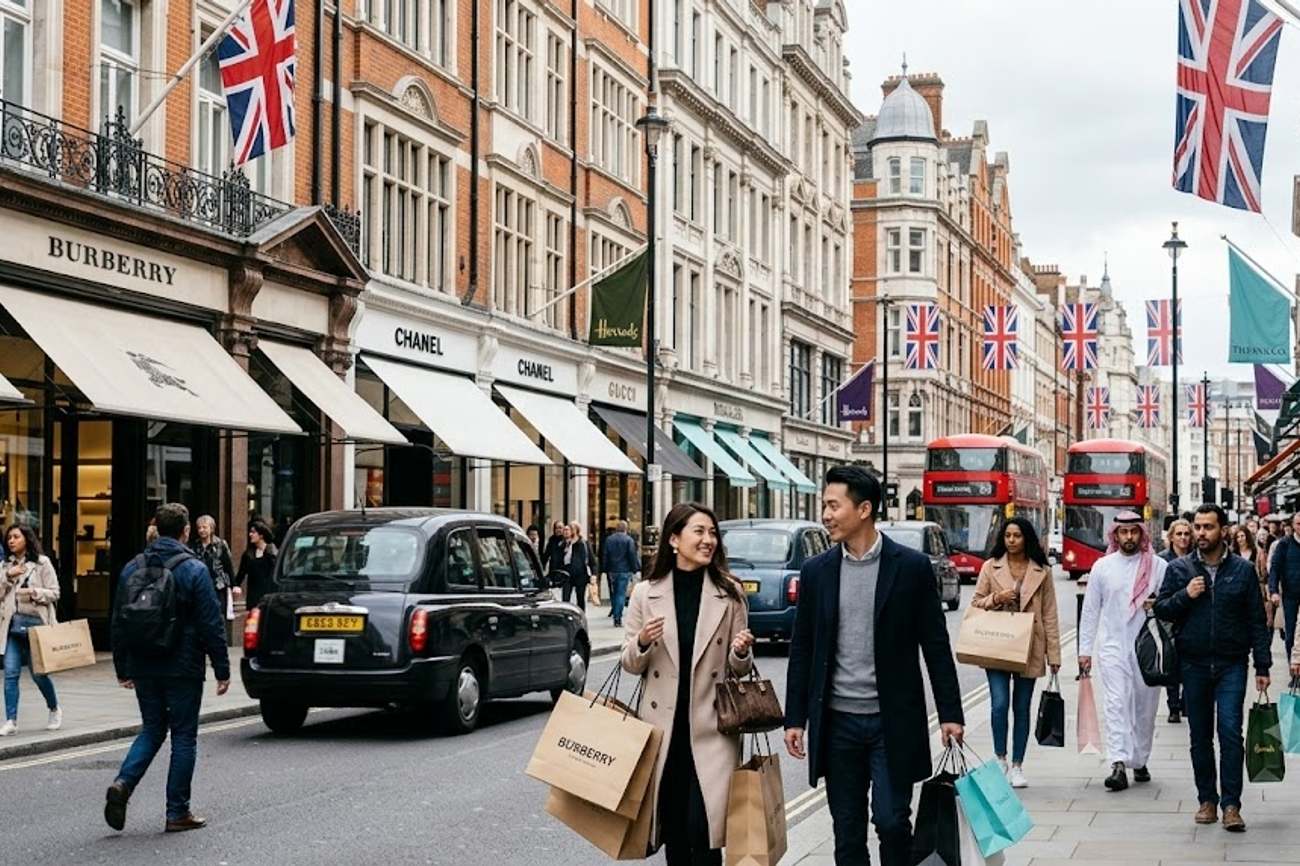
Image generated by AI
The Political Calculus of the High Street
44.2 million inbound visits are projected for the United Kingdom in 2026, a figure that underscores the massive scale of the visitor economy currently caught in a political tug-of-war over Value Added Tax (VAT). On September 20, 2026, the Conservative Party, led by Kemi Badenoch, announced a strategic plan to reinstate VAT refunds for eligible international visitors—excluding those from the European Union—should they return to power. This proposal is not merely a retail incentive but a targeted attempt to stimulate "shopping tourism" and revitalize high street commerce by lowering the effective cost of luxury goods for non-EU travelers.
Currently, the UK operates without a general VAT refund policy for international tourists in England, Scotland, and Wales. For the modern traveler, this means the sticker price is the final price. While the Conservative proposal suggests a return to a more competitive tax environment, it remains a campaign pledge rather than active law. Travelers booking trips to the UK today must operate under the existing framework where tax-free shopping is largely unavailable unless the retailer arranges for the goods to be shipped directly to a non-UK address.
The Erosion of Real Visitor Value
The debate over VAT refunds is driven by a stark divergence between nominal spending and inflation-adjusted value. While the raw numbers suggest growth, the underlying economic health of the visitor economy is more fragile than it appears. According to forecasts released by VisitBritain on August 27, 2026, total international spending is expected to reach £33.9 billion in 2026. While this represents a 2% increase over 2025, it masks a troubling trend: spending in real terms is forecast to remain at only 90% of 2019 levels.
This "value gap" explains why the UK government is shifting its focus from the volume of arrivals to the average expenditure per visitor. The goal is to attract "high-value" tourists—those whose spending ripples beyond the boutique and into the broader hospitality ecosystem.
| Tourism Indicator | 2026 Forecast / Latest Data | Source |
|---|---|---|
| Inbound Visits | 44.2 Million | VisitBritain |
| Inbound Spending | £33.9 Billion | VisitBritain |
| Visit Growth (vs 2025) | 2% | VisitBritain |
| Nominal Spending Growth (vs 2025) | 2% | VisitBritain |
| Real Spending (vs 2019) | 90% | VisitBritain |
| 2024 Overseas Visits | 42.6 Million | ONS |
| 2024 Overseas Spending | £31.6 Billion | ONS |
The Geopolitical Divide: EU vs. Non-EU
The proposed policy creates a distinct hierarchy of visitors. By specifically excluding EU citizens from the VAT refund scheme, the Conservatives are targeting long-haul, high-spending markets. This is a departure from the previous VAT Retail Export Scheme, which was dismantled across Great Britain on December 31, 2020, following the UK's exit from the European Union.
The current regulatory environment is fragmented. Northern Ireland continues to operate under a different set of VAT arrangements, where eligible visitors may still receive refunds under specific conditions, though participation remains voluntary for retailers. For the rest of the UK, the 2020 removal of the refund system effectively ended the era of the "tax-free shopping" trip for millions of visitors.
The strategic focus is now firmly on the United States and the Gulf Cooperation Council (GCC) nations. The U.S. market is a cornerstone of the UK's tourism revenue, with 5.5 million visits expected in 2026 and a projected spend of £7.5 billion. This means American travelers alone could represent over 20% of the total forecast international expenditure. Similarly, the Gulf market provides immense per-capita value; 2024 data shows approximately one million visits from GCC countries resulting in £2.2 billion in spending, averaging £2,143 per visit.
Expert Analysis: The Multiplier Effect of Retail Tax Policy
For travelers and business owners, the push to reinstate VAT refunds is about the "multiplier effect." The logic is simple: a tourist who saves 20% on a luxury handbag or a high-end watch is more likely to reallocate those savings into a five-star hotel room, a fine-dining experience, or an extended stay. Retail is the "hook," but the broader visitor economy—taxis, rail travel, and entertainment—is the beneficiary.
For travelers booking routes to London, the direct consequence of the current absence of VAT refunds is a price disadvantage compared to other global luxury hubs like Paris or Dubai. This makes the UK a less attractive destination for high-ticket shopping. If the Conservative proposal is implemented, the pricing pressure on luxury retailers will ease, likely leading to more aggressive marketing toward the U.S. and Gulf markets.
The UK government's pledge to reintroduce tax-free shopping for overseas visitors is expected to significantly boost tourism, with the Visit Britain website already highlighting the country's top shopping destinations, from London's Oxford Street to Manchester's Trafford Centre. This move is anticipated to attract more international visitors, particularly from countries like China and the US, who are known for their love of British brands and products. As a result, airports such as Heathrow are likely to see an increase in passenger numbers.
However, the recent payment data suggests a cooling trend. In June 2026, inbound card expenditure grew only 1% year-on-year, which actually represents a 2% decline in real terms. Average expenditure per trip was £406, a nominal increase of 4%, but this was offset by a 4% drop in the number of cardholder visits. This volatility suggests that simply lowering the tax barrier may not be enough to counteract broader macroeconomic headwinds or shifts in traveler behavior.
The impact on the aviation and hospitality sectors is currently theoretical. While the Office for National Statistics (ONS) provides the data on visitor volumes, there is no empirical evidence yet that this political proposal has triggered an increase in flight bookings or hotel occupancy. The connection is logical—more high-spending shoppers require more business-class seats and luxury suites—but it remains speculative until the policy becomes law.
Key Takeaways
- Policy Status: VAT refunds for non-EU visitors are currently a Conservative Party proposal for 2026 and are NOT currently in effect.
- Economic Gap: While nominal spending is forecast at £33.9 billion for 2026, real spending remains at only 90% of 2019 levels, driving the need for "high-value" visitor incentives.
- Target Markets: The strategy specifically targets the U.S. (5.5 million projected visits) and GCC markets (£2,143 average spend per visit) to boost revenue.
- Regional Variance: Northern Ireland maintains different VAT rules than England, Scotland, and Wales, where the Retail Export Scheme was abolished in December 2020.
- Urban Impact: London remains the primary beneficiary of any retail policy shift, having hosted 36 million overnight visitors in 2024.
FAQ: UK Tax-Free Shopping 2026
Can I currently get a VAT refund on shopping in London? No. For visitors to England, Scotland, and Wales, the VAT Retail Export Scheme was abolished in 2020. You cannot reclaim VAT at the airport upon departure.
Who would benefit from the proposed Conservative VAT plan? The proposal specifically targets international visitors from outside the European Union. EU citizens would remain excluded from the proposed refund scheme.
How does tax-free shopping work in Northern Ireland? Northern Ireland follows different VAT rules. Some retailers participate in a voluntary refund scheme for eligible visitors, but you must verify with the shop before purchasing.
Will this policy change my flight or hotel costs? No. The proposal affects the cost of goods purchased within the UK. While it may attract more visitors, it does not directly subsidize or lower the cost of airfare or accommodation.
The battle for the high street is no longer just about the brands on the window, but the tax codes in the ledger.
Tags: Kemi Badenoch, VisitBritain, UK VAT Refund 2026, GCC Tourism, London Visitor Economy, VAT Retail Export Scheme
Related Travel Guides
- Greece Earns More From Fewer Australian Tourists as Visitor Spending Surges 20.2 Percent
- Portugal Expands Accessible Tourism Facilities with 300% Growth in Adapted Accommodations and Regional Infrastructure Upgrades
- Mpumalanga Accelerates South Africa’s 2026 Safari Tourism Growth Through Kruger Infrastructure Upgrades, Conservation Funding, and Regional Air Links
This article is for informational purposes. Flight routes, passenger regulations, visa rules, and transit advisories are subject to change by airlines and aviation authorities. Readers are advised to verify schedules and travel documentation with relevant carriers and border agencies before departure.
Related Stories

Thailand Tourism Slowdown Tests Small Businesses as Kingdom Pivots to High-Yield Travel and Secondary Provinces

South Africa Expands Inclusive Wildlife Tourism with Woman-Owned Wellness Centre at Addo Elephant National Park