
Taiwan Tourism Expands Penghu Archipelago Links and Kaohsiung Ferry Services in 2026
Taiwan's Tourism Administration is transforming Magong into a primary maritime hub, enhancing ferry corridors from Kaohsiung, Tainan, and Chiayi to boost sustainable island tourism.

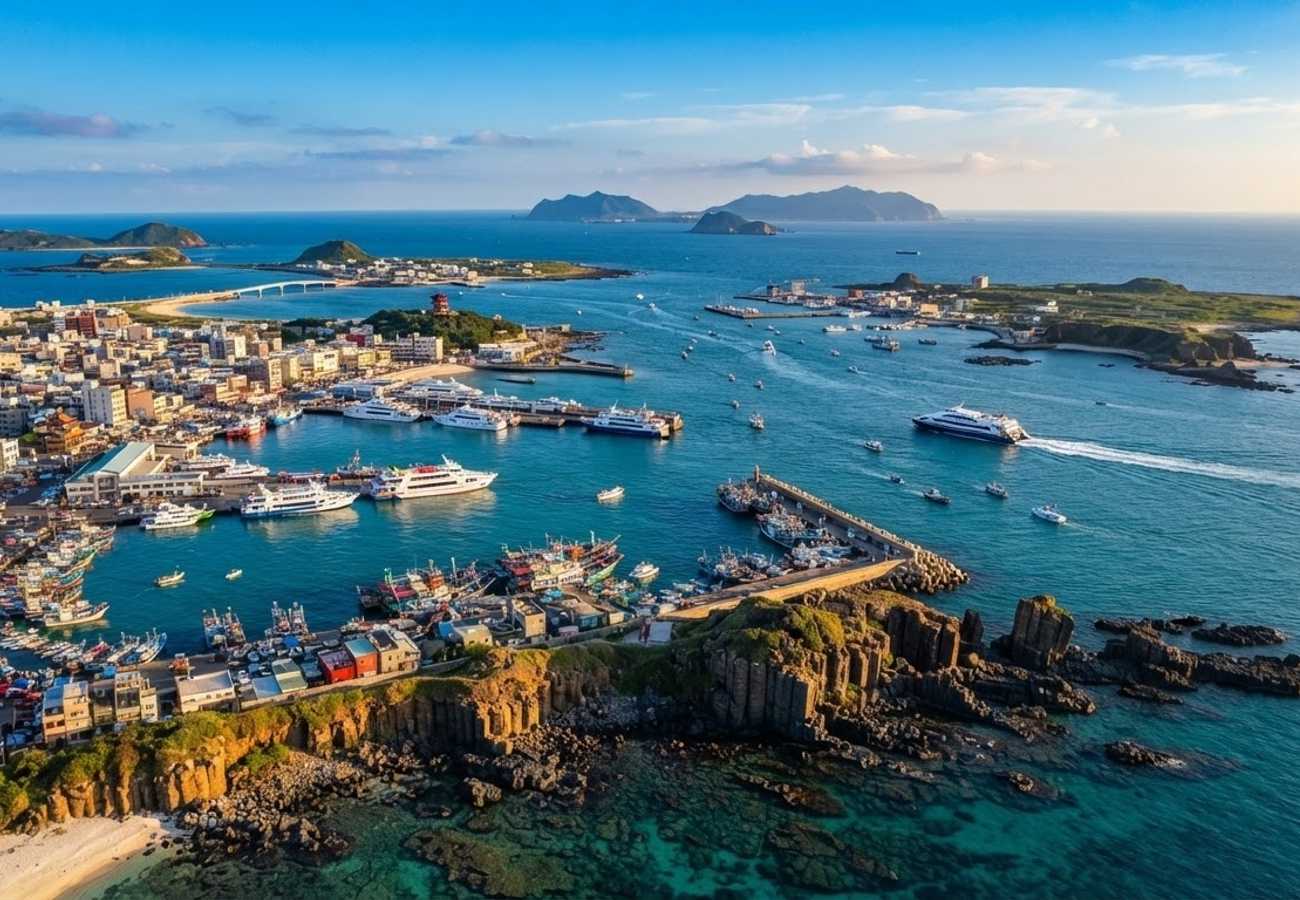
Image generated by AI
Taiwan is repositioning the Penghu archipelago as a primary maritime gateway, integrating Magong Harbor with expanded ferry corridors from Kaohsiung, Tainan, and Chiayi to decentralize tourism from urban centers.
Strategic Expansion of the Penghu Maritime Network
Taiwan’s Tourism Administration has shifted its strategic focus toward offshore islands, utilizing the Penghu archipelago as a testbed for sustainable tourism. Central to this initiative is the elevation of Magong—Penghu’s primary city and harbor—into a multi-modal transit hub capable of handling domestic commuters, international cruise passengers, and island-hopping tourists.
The current framework prioritizes the "Blue Highway" maritime program, which utilizes overnight cruising and port-side experiences to increase visitor dwell time. Magong now serves as the anchor for these itineraries, functioning as the pivot point for travelers transitioning from mainland Taiwan to the smaller islets of Wangan and Qimei.
A key infrastructure node in this expansion is Magong’s Third Fishing Port. Serving as the South Sea Visitor Center, this facility integrates sightseeing vessels with scheduled public-transport ferries, streamlining the transition between leisure cruises and essential transit.
Regional Transit Specifications and Route Data
The connectivity web surrounding Penghu is designed to allow "triangular" journeys, where travelers enter via one mainland port and exit through another. The following table outlines the current primary sea links connecting the mainland to the archipelago.
| Route | Departure Point | Primary Destination | Estimated Transit Time | Service Frequency |
|---|---|---|---|---|
| Southern Corridor | Kaohsiung | Magong | 4.5 – 6.5 Hours | Year-round (Seasonal adjustments) |
| Heritage Link | Tainan (Anping) | Magong | 2.5 Hours | Seasonal (Summer 2026) |
| Western Link | Chiayi (Budai) | Magong | Variable | Year-round |
| Island Hopper | Magong | Wangan / Qimei | Short Duration | Scheduled & Charter |
The Kaohsiung–Magong corridor remains the most critical artery for southern access. The introduction of the MV Penghu in 2023 has modernized this route, offering upgraded passenger comfort to encourage travelers to view the voyage as a primary part of the holiday experience rather than mere transit.
Traveler Logistics Guide: Navigating the Archipelago
From a ground-level perspective, the best way to navigate the Penghu network is to treat Magong as your base of operations. Because ferry schedules are highly sensitive to weather and seasonality, a rigid itinerary can lead to significant disruptions.
Booking and Connection Strategies:
- The "Open-Jaw" Approach: To maximize efficiency, book an arrival ferry from Kaohsiung and a departure via Tainan or Chiayi. This eliminates the need to backtrack and allows for a linear exploration of the islands.
- Buffer Times: When coordinating connections from the Kaohsiung–Magong ferry to outer-island boats (Wangan or Qimei), allow a minimum of 3 hours. Maritime delays are common due to tide and wind conditions.
- Digital Integration: Utilize the smart-scenic-area pilots now active in Penghu. Real-time transport information and integrated ticketing are being rolled out to reduce friction at the piers.
- Seasonal Awareness: Be aware that during winter months, service frequency drops significantly, and a single operator may dominate the Kaohsiung route. Always verify the current timetable via the Penghu National Scenic Area official notices before departure.
Infrastructure Impact and Sustainability Assessment
The transition toward a "Blue Highway" model is an attempt to solve the chronic issue of peak-season overcrowding in July and August. By diversifying the entry points (Tainan and Chiayi) and promoting overnight cruising, the Tourism Administration aims to spread visitor density across a wider timeframe and geographical area.
The integration of public-transport ferries with low-impact activities—such as cycling and walking tours upon arrival in Magong—indicates a move toward "sustainable destination highlights." This reduces the reliance on rental cars and scooters, which often strain the fragile coastal environments of the outer islets.
By strengthening the regional web, Taiwan is moving away from a hub-and-spoke model toward a mesh network, increasing the resilience of its tourism infrastructure and providing more flexible options for international and domestic travelers.
The evolution of Magong into a maritime pivot point signals a broader shift toward sustainable, sea-based regional connectivity in East Asia.
Related Travel Guides
Disclaimer
This article is for informational and educational purposes only. It does not constitute legal, financial, or professional advice. While we strive to provide accurate and up-to-date information, travel policies, regulations, and conditions change rapidly. Always verify information with official sources before making travel decisions. Nomad Lawyer makes no representations about the accuracy, reliability, completeness, or suitability of the information provided. Readers should consult qualified professionals for advice specific to their circumstances. The views expressed in this article are those of the author and do not necessarily reflect the views of Nomad Lawyer.
Preeti Gunjan
Contributor & Community Manager
A passionate traveller and community builder. Preeti helps grow the Nomad Lawyer community, fostering engagement and bringing the reader experience to life.
Learn more about our team →