
United Arab Emirates Joins Saudi Arabia, Qatar, Oman, Bahrain, and Kuwait in Historic Schengen-Style Mobility Shift as the GCC Grand Tours Visa Enters Public Rollout Phase in 2026
The UAE, Saudi Arabia, Qatar, Oman, Bahrain, and Kuwait launch the GCC Grand Tours Visa in 2026, creating a Schengen-sty

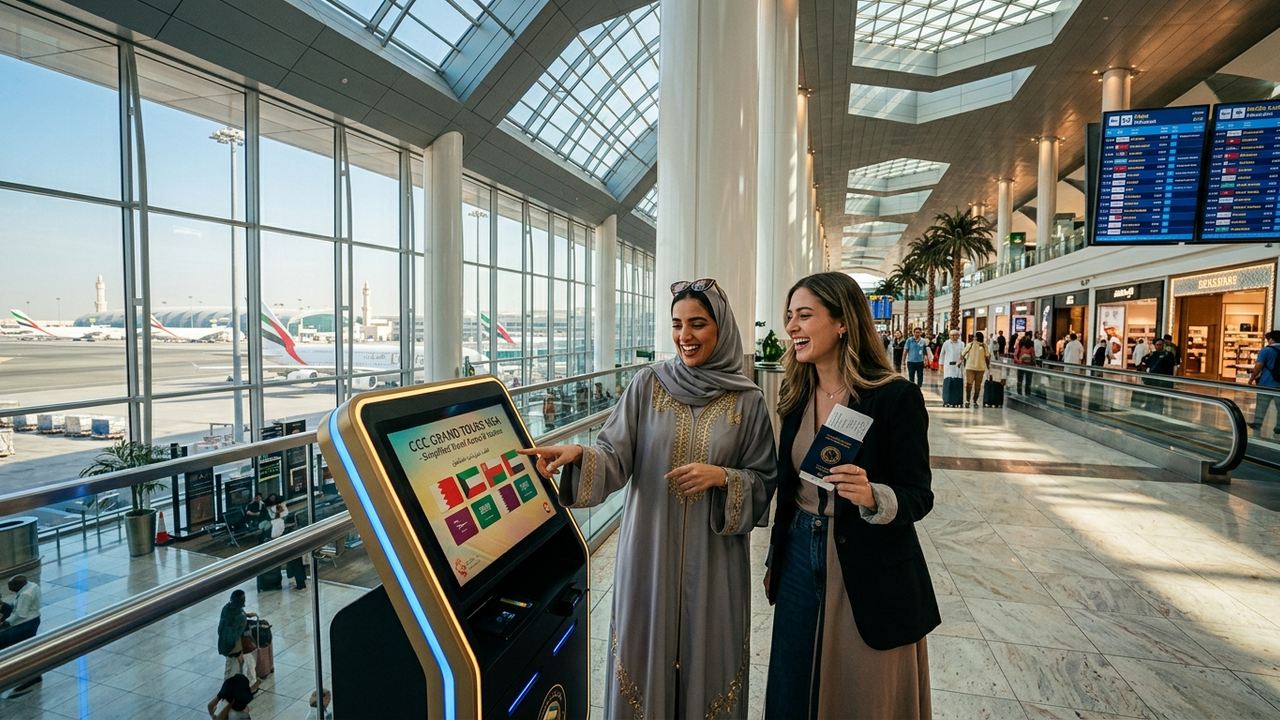
Image generated by AI
[Dubai, June 27, 2026] — The United Arab Emirates, Saudi Arabia, Qatar, Oman, Bahrain, and Kuwait are implementing a transformative regional mobility framework as the GCC Grand Tours Visa enters its public rollout phase in 2026. This initiative creates a unified tourism zone, allowing international visitors to traverse six different nations using a single electronic authorization, effectively mirroring the European Schengen model.
A New Era of Gulf Cooperation and Mobility
The introduction of the GCC Grand Tours Visa marks a strategic pivot in how the Gulf Cooperation Council (GCC) manages international arrivals. By synchronizing immigration protocols and digitizing the application process, the six member states are eliminating the need for individual visas for each destination. This shift is designed to position the Arabian Peninsula as a singular, cohesive travel destination rather than a collection of fragmented markets.
Industry observers note that the coordination involves a complex alignment of security frameworks and digital infrastructure to ensure that border integrity is maintained while friction for the traveler is removed. The project is being deployed in strategic phases to ensure stability and security across all participating borders.
United Arab Emirates Leverages Digital Infrastructure for Regional Transit
The United Arab Emirates is positioning itself as a primary engine for the digital integration of the Gulf. Leveraging its existing high-capacity digital visa systems, the UAE is expected to serve as a critical entry point and transit hub for the broader region.
Travelers arriving via Abu Dhabi or Dubai will be able to utilize their unified visa approval to venture into neighboring GCC states without additional paperwork. This alignment supports the UAE's broader tourism strategy, which emphasizes global connectivity and the promotion of multi-country itineraries. Reports indicate that the UAE anticipates a surge in stopover tourism, as visitors are more likely to extend their stays to explore the wider region.
Saudi Arabia Integrates Unified Mobility into Vision 2030
Saudi Arabia is utilizing the GCC Grand Tours Visa to accelerate its emergence as a global tourism powerhouse. The unified system is a key component of the Kingdom's strategy to attract millions of international visitors to its expanding array of heritage sites and mega-projects.
By allowing tourists to enter the Gulf through Saudi Arabia and easily move into adjacent countries, the Kingdom strengthens its role as a central gateway. This regional openness aligns with the goals of Vision 2030, fostering economic diversification and increasing the flow of high-spending international tourists into the Kingdom’s cultural and leisure sectors.
Qatar Enhances its Status as a Global Aviation Hub
Qatar is integrating the new visa framework to maximize the utility of its world-class aviation infrastructure in Doha. The GCC Grand Tours Visa allows passengers landing in Qatar to seamlessly transition into multi-country tours across the Peninsula.
The Qatari government is focusing on blending its luxury travel and event-driven tourism with the regional model. By becoming part of a larger, connected network, Qatar enhances its competitive edge in the global market, transforming from a standalone destination into a vital link in a larger regional travel circuit.
Oman Promotes Eco-Tourism via Seamless Border Access
Oman is poised to see a significant increase in visibility through the unified visa system. Known for its rugged mountains, deserts, and authentic cultural heritage, Oman often remained a secondary destination for those visiting the more urbanized Gulf cities.
The removal of visa barriers allows international travelers to easily incorporate Omani eco-tourism into their itineraries. This creates a more balanced travel circuit, where the modern luxury of the UAE and Qatar is complemented by the natural landscapes and sustainable tourism offerings of Oman.
Bahrain and Kuwait Expand Their Tourism Reach
Bahrain is leveraging its compact size and strategic location to become a popular "add-on" destination. Under the new system, tourists visiting larger GCC neighbors can include Bahrain as a short-stay extension, boosting weekend travel and demand for the country's entertainment and historical sites.
Similarly, Kuwait is utilizing the unified access to elevate its profile for both leisure and business travel. The simplified mobility is expected to drive higher occupancy rates in Kuwait's growing hospitality sector and make the country more attractive to international business delegates who may wish to visit multiple Gulf capitals in one trip.
Operational Framework of the Unified Travel Zone
The GCC Grand Tours Visa transforms six sovereign states into a single, connected tourism space. The system is built on a foundation of digital-first governance and shared immigration coordination.
| Feature | Description |
|---|---|
| Visa Scope | Single authorization for six GCC member nations |
| Application Method | 100% digital online platform |
| Processing | Accelerated electronic approvals for international travelers |
| Coordination | Shared immigration data and synchronized border security |
| Travel Model | Multi-country itineraries within a single trip |
Digital Transformation and Implementation Hurdles
The entire visa lifecycle—from application and document upload to payment and approval—is handled through a centralized digital platform. This removes the traditional delays associated with embassy visits and manual processing.
However, officials acknowledge that aligning six different immigration laws and security protocols is a significant undertaking. The primary challenges include:
- Standardizing eligibility criteria across different nationalities.
- Establishing secure, real-time data sharing between national security agencies.
- Integrating diverse digital platforms into one cohesive user interface.
- Maintaining consistent border security standards.
To mitigate these risks, the rollout is proceeding in phases, utilizing pilot programs to test the system's stability before a full-scale public launch.
Economic Projections for the Gulf Tourism Corridor
The transition to a "borderless" tourism model is expected to trigger a substantial economic ripple effect across the region. By encouraging longer stays and multi-destination trips, the GCC states aim to increase the average spend per visitor.
The economic benefits are expected to manifest in several key areas:
- Aviation: Increased demand for regional flight hops and multi-city ticket packages.
- Hospitality: Higher occupancy rates in mid-sized cities and boutique eco-lodges.
- Retail: Increased cross-border shopping and consumer spending.
- Investment: Greater regional investment in cross-border tourism infrastructure.
Why This Matters: The Strategic Shift in Global Tourism
The launch of the GCC Grand Tours Visa is more than a mere administrative convenience; it is a strategic geopolitical move to redefine the Arabian Peninsula's identity on the global stage. For decades, the Gulf was viewed by international tourists as a collection of distinct, high-barrier destinations. By adopting a Schengen-style model, the region is effectively creating a "Tourism Bloc."
This shift provides a massive "information gain" for the travel industry: it signals that the GCC is no longer relying solely on individual "trophy" projects (like the Burj Khalifa or NEOM) to attract visitors, but is instead selling a regional experience. This reduces the "friction of entry," which is historically the biggest deterrent for high-value travelers. By lowering the barrier to entry, the GCC is not just competing with other regions but is creating a new category of "mega-destination" that combines ultra-modernity, deep history, and diverse natural landscapes under a single administrative umbrella.
Related Travel Guides
Disclaimer
This article is for informational and educational purposes only. It does not constitute legal, financial, or professional advice. While we strive to provide accurate and up-to-date information, travel policies, regulations, and conditions change rapidly. Always verify information with official sources before making travel decisions. Nomad Lawyer makes no representations about the accuracy, reliability, completeness, or suitability of the information provided. Readers should consult qualified professionals for advice specific to their circumstances. The views expressed in this article are those of the author and do not necessarily reflect the views of Nomad Lawyer.
Preeti Gunjan
Contributor & Community Manager
A passionate traveller and community builder. Preeti helps grow the Nomad Lawyer community, fostering engagement and bringing the reader experience to life.
Learn more about our team →