
United Express Flight SKW5911 Diverts to Western Nebraska Regional Airport Amid Denver Weather
A SkyWest-operated United Express flight from Helena to Denver was forced to divert to Western Nebraska Regional Airport on August 8 due to challenging summer weather conditions.

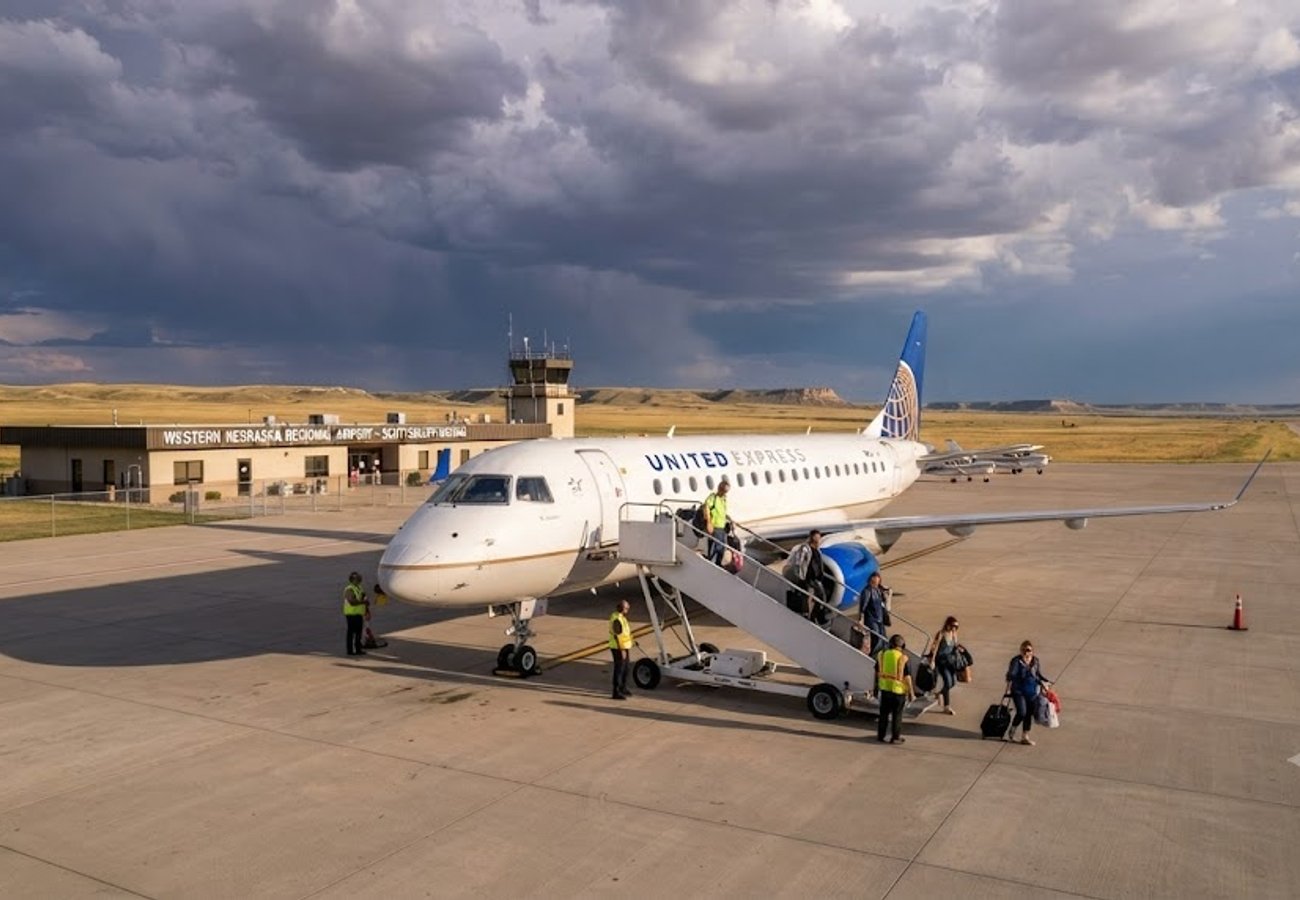
Image generated by AI
A regional flight from Helena to Denver was forced to make an unscheduled stop in Western Nebraska on August 8, illustrating the volatile summer weather patterns that frequently disrupt traffic into one of the U.S.'s busiest aviation hubs.
The incident involved flight SKW5911, an Embraer 175 operated by SkyWest Airlines on behalf of United Express. While the aircraft was intended to connect passengers from the northern Rockies to the United hub in Colorado, atmospheric conditions near Denver necessitated a rerouting to Western Nebraska Regional Airport, serving the Scottsbluff and Gering communities.
Route Deviation from Helena to Denver
Flight SKW5911 departed Helena Regional Airport on the morning of August 8, following a standard flight path toward Denver International Airport. This specific route is a critical link for smaller Montana communities, utilizing SkyWest's regional jet fleet to feed the larger United network.
According to flight tracking data, the aircraft maintained a steady cruise phase for the majority of the journey. However, as the flight approached the Colorado border, the crew altered course, turning east away from the primary arrival flow into Denver. This maneuver indicated a strategic decision to divert to an alternate airfield rather than enter holding patterns during a period of restricted arrival capacity.
The aircraft eventually touched down at Western Nebraska Regional Airport. For the passengers on board, this resulted in an unexpected visit to a community of approximately 15,000 residents—a location that rarely appears on a standard itinerary between Montana and Colorado.
Strategic Utility of Western Nebraska Regional Airport
The choice of Western Nebraska Regional Airport as a diversion point is not accidental. Aviation records indicate that the facility possesses a long paved runway and the necessary instrument approach procedures required to safely handle regional jets like the Embraer 175.
Industry reports suggest that SkyWest maintains a strong operational familiarity with this specific airfield. The airline has a history of providing scheduled connectivity to the Scottsbluff region through Essential Air Service (EAS) agreements. This existing relationship makes the airport a reliable "safety valve" when Denver's airspace becomes congested.
While larger Nebraska gateways such as Omaha or Lincoln offer more extensive services, the Scottsbluff facility is geographically better positioned for aircraft arriving from the northwest. By diverting here, pilots can exit Denver's holding patterns quickly, conserving fuel that would otherwise be spent flying further east or circling in turbulent air.
Operational Challenges at Denver International Airport
The diversion of SKW5911 highlights the inherent difficulties of operating a major hub at Denver's specific geographic coordinates. Situated at an elevation exceeding 5,000 feet and flanked by the Rocky Mountains, the airport is prone to rapid weather shifts.
During the summer months, convective storms and lightning frequently trigger "metering" by air traffic controllers. This process reduces the number of aircraft allowed to land per hour to ensure safety during wind shear or heavy precipitation. When acceptance rates drop, regional flights are often the first to be rerouted to alternates in Wyoming, Nebraska, or northeastern Colorado.
The Embraer 175 is particularly well-suited for these scenarios. Its ability to operate from shorter runways and smaller terminals allows it to utilize secondary fields that cannot accommodate mainline wide-body aircraft.
Passenger Experience and Logistics of Diversions
When a flight diverts to a small regional field, the impact on the traveler varies based on the severity of the weather. Typical protocols involve the aircraft remaining on the ramp while crews monitor fuel levels and wait for a new arrival slot from Denver dispatch.
For the passengers of SKW5911, this likely meant a period of uncertainty on the tarmac. In similar recent events at Denver, travelers have reported waiting several hours for weather cells to clear the Front Range. Crew duty-time limits also become a factor; if a pilot exceeds their legal working hours while waiting, the airline must find replacement crews or arrange ground transport.
Given that Scottsbluff is roughly 200 miles from Denver, road transportation is a viable fallback. If air travel remains impossible, airlines may charter buses to ferry passengers the remaining distance to ensure they reach their destination or their connecting flights.
Resilience Through Regional Aviation Networks
The SKW5911 event demonstrates the importance of a "web of alternates" in the American aviation system. The reliability of travel between the northern Rockies and the Great Plains does not rely solely on major hubs, but on the availability of smaller fields like those in North Platte and Scottsbluff.
Federal policy supports this through Essential Air Service contracts, which ensure that remote communities stay connected to the national grid. In return, these airports provide the infrastructure that allows the broader system to remain resilient. When a hub like Denver is overwhelmed, these smaller airports absorb the overflow, preventing total system collapse.
For the modern traveler, these diversions serve as a reminder that safety takes precedence over schedule. While a detour to Western Nebraska may be an inconvenience, it is the result of a conservative safety culture designed to avoid the risks associated with volatile mountain weather.
The ability of regional carriers to pivot to secondary airfields remains a cornerstone of aviation safety in the American West.
Related Travel Guides
Disclaimer
This article is for informational and educational purposes only. It does not constitute legal, financial, or professional advice. While we strive to provide accurate and up-to-date information, travel policies, regulations, and conditions change rapidly. Always verify information with official sources before making travel decisions. Nomad Lawyer makes no representations about the accuracy, reliability, completeness, or suitability of the information provided. Readers should consult qualified professionals for advice specific to their circumstances. The views expressed in this article are those of the author and do not necessarily reflect the views of Nomad Lawyer.
Raushan Kumar
Founder & Lead Developer
Full-stack developer with 11+ years of experience and a passionate traveller. Raushan built Nomad Lawyer from the ground up with a vision to create the best travel and law experience on the web.
Learn more about our team →