
Sweden Highlights Railway Culture for Travel as Inlandsbanefestivalen Reaches Östersund and Jokkmokk
Sweden Highlights Railway Culture for Travel as Inlandsbanefestivalen Reaches Östersund and Jokkmokk

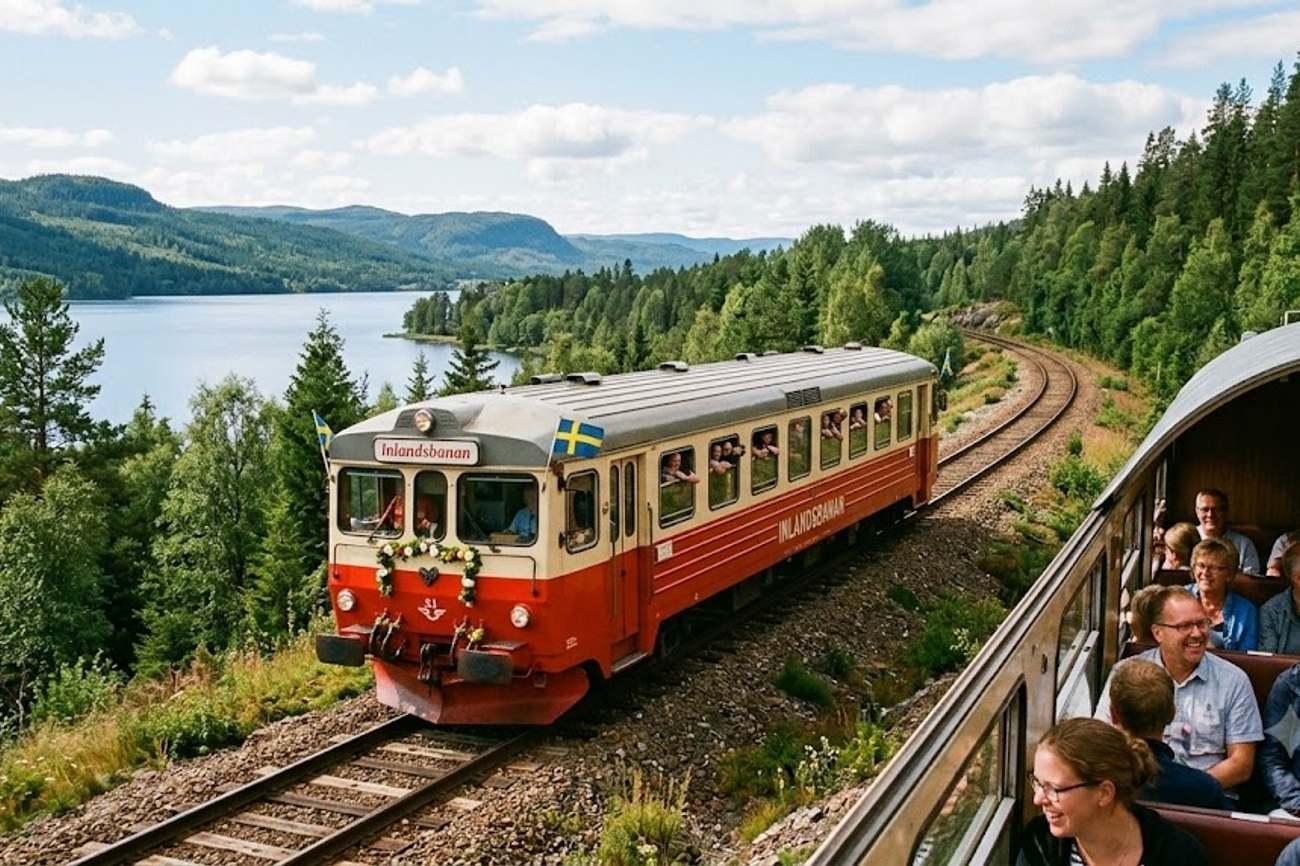
Image generated by AI
A 10% increase in summer journey volume for Inlandsbanan in 2026 highlights a growing appetite for experience-led rail travel, yet this surge exposes a critical disconnect between cultural event scheduling and operational capacity. While the Inlandsbanefestivalen brings its railbus to Jokkmokk on 20 September 2026, the reality for the independent traveler is stark: the railway is present as a cultural symbol, but absent as a viable transport utility.
The Paradox of the Traveling Festival
The Inlandsbanefestivalen represents a departure from traditional event tourism. Rather than acting as a static destination where the railway is merely a delivery mechanism, the festival is designed as a mobile entity. The event moves across northern Sweden via a dedicated railbus, integrating the physical act of rail movement into the cultural programming. This model was evident in the 2026 itinerary, which saw the festival arrive in Östersund on 17 September before reaching Jokkmokk on 20 September.
In Jokkmokk, the celebration is hosted at Folkets Hus from 18:00 to 20:00 on 20 September. Admission is free, and the event focuses on the intersection of rural Swedish identity and the communities linked by the inland line. Since its inception in 2007, the festival has functioned as a nomadic celebration of the North. However, for the nomad lawyer or the high-end traveler, the distinction between a "festival railbus" and a "passenger train" is the difference between a successful trip and a logistical failure.
Operational Gaps in the 2026 Timetable
The friction arises when the festival's cultural calendar is overlaid onto the Inlandsbanan operational schedule. The railway's primary tourism engine is strictly seasonal. For 2026, the official summer passenger traffic window ran from 16 June to 12 August. This window included daily services between Östersund and Gällivare.
By the time the festival reached Östersund on 17 September and Jokkmokk on 20 September, the standard tourist timetable had been defunct for over a month. The presence of the festival's railbus does not signal a reopening of public ticket sales or the addition of scheduled passenger services.
| Operational Factor | 2026 Data Point | Traveler Impact |
|---|---|---|
| Jokkmokk Event Date | 20 September (18:00–20:00) | Requires non-seasonal transport planning |
| Östersund Event Date | 17 September | Confirms festival movement outside summer window |
| Summer Service End | 12 August | Standard tourist trains are unavailable in September |
| Transport Model | Railbus-led movement | Cultural asset, not a public transit option |
| Primary Access Route | Rail to Murjek $\rightarrow$ Bus to Jokkmokk | The only viable conventional rail-link method |
| Summer Growth | ~10% increase in journeys | Proves demand but does not guarantee off-season service |
Expert Analysis: The "Experience Gap" in Rail Tourism
For travelers booking routes into northern Sweden, the direct consequence of this scheduling is a "transportation vacuum." The Inlandsbanefestivalen creates a high-visibility narrative around rail travel, which can inadvertently mislead visitors into believing the line is active year-round. This is a classic example of the tension between destination marketing and operational reality.
The Inlandsbanan railway offers a unique traversal of Sweden's interior, connecting remote wilderness areas with cultural hubs like Östersund and Jokkmokk. Travelers can coordinate their journeys through Visit Sweden, the official tourism board, to discover seasonal festivals and heritage sites along the route.
The pricing and logistical pressure this creates means that visitors cannot rely on "slow travel" for the final leg of their journey in September. Instead, they must pivot to a multi-modal approach. The official guidance from the Jokkmokk Municipality directs passengers to the main-line network toward Murjek. From Murjek, the journey continues via bus route 43 for approximately one hour to reach Jokkmokk. Additional regional bus connections link Jokkmokk to Gällivare and Östersund.
From a strategic standpoint, the 10% growth in summer passenger numbers reported on 4 September 2026 suggests that the "slow travel" product is commercially viable. However, the failure to align this demand with shoulder-season events like the Inlandsbanefestivalen represents a missed opportunity for revenue capture. When a destination creates a rail-centric event but requires visitors to use a bus from Murjek to attend, it breaks the "experience chain." For the travel industry, this signals a need for "event-specific" transit packages rather than relying on static seasonal timetables.
Key Takeaways
- Service Discontinuity: Standard Inlandsbanan tourist services ended on 12 August 2026; they are not available for the 20 September festival.
- Logistical Pivot: The only viable rail-access route to Jokkmokk in September is via the main line to Murjek, followed by a one-hour bus journey (Route 43).
- Event Nature: The festival railbus is a promotional and cultural tool, not a public passenger service available for booking.
- Market Demand: A 10% year-over-year increase in summer journeys indicates strong growth in inland rail tourism, despite shorter seasons due to track work.
- Access Windows: Visitors must verify specific regional bus timetables for Gällivare and Östersund, as these do not automatically mirror the summer rail schedule.
FAQ: Jokkmokk Rail Access 2026
Can I book a ticket on the Inlandsbanan to attend the festival on 20 September? No. Regular summer passenger services ended on 12 August 2026. The railbus accompanying the festival is not a scheduled public transport service for passengers.
Passenger logistics for these long-distance journeys are managed via the national rail infrastructure to ensure seamless connectivity across the northern provinces. For comprehensive schedules and official ticketing information, passengers should consult SJ, the state-owned railway operator.
What is the best way to reach Jokkmokk by train in September? Take the main-line railway to Murjek. From there, use bus route 43, which takes approximately one hour to reach Jokkmokk.
Is the Inlandsbanefestivalen free to attend? Yes, the Jokkmokk Municipality has confirmed that admission to the event at Folkets Hus on 20 September is free.
Why aren't trains running in September if the festival is happening? The railway operates on a strict summer tourism window (June–August). The festival uses a separate railbus for its nomadic program, which does not operate as a public transit service.
The gap between a cultural rail narrative and a functional timetable is where the modern traveler's journey often derails.
Tags: Inlandsbanan, Jokkmokk, Inlandsbanefestivalen 2026, Murjek, Swedish Rail Tourism, Northern Sweden Travel
Related Travel Guides
Disclaimer
This article is for informational and educational purposes only. It does not constitute legal, financial, or professional advice. While we strive to provide accurate and up-to-date information, travel policies, regulations, and conditions change rapidly. Always verify information with official sources before making travel decisions. Nomad Lawyer makes no representations about the accuracy, reliability, completeness, or suitability of the information provided. Readers should consult qualified professionals for advice specific to their circumstances. The views expressed in this article are those of the author and do not necessarily reflect the views of Nomad Lawyer.
Naina Thakur
Contributor & Travel Specialist
Travel enthusiast and legal writer covering visa regulations, responsible tourism, and cultural journeys across global destinations.
Learn more about our team →