
Bandung Faces New Tourism Safety Questions as BMKG Records 118 Earthquakes Across Indonesia’s West Java
Bandung Faces New Tourism Safety Questions as BMKG Records 118 Earthquakes Across Indonesia’s West Java

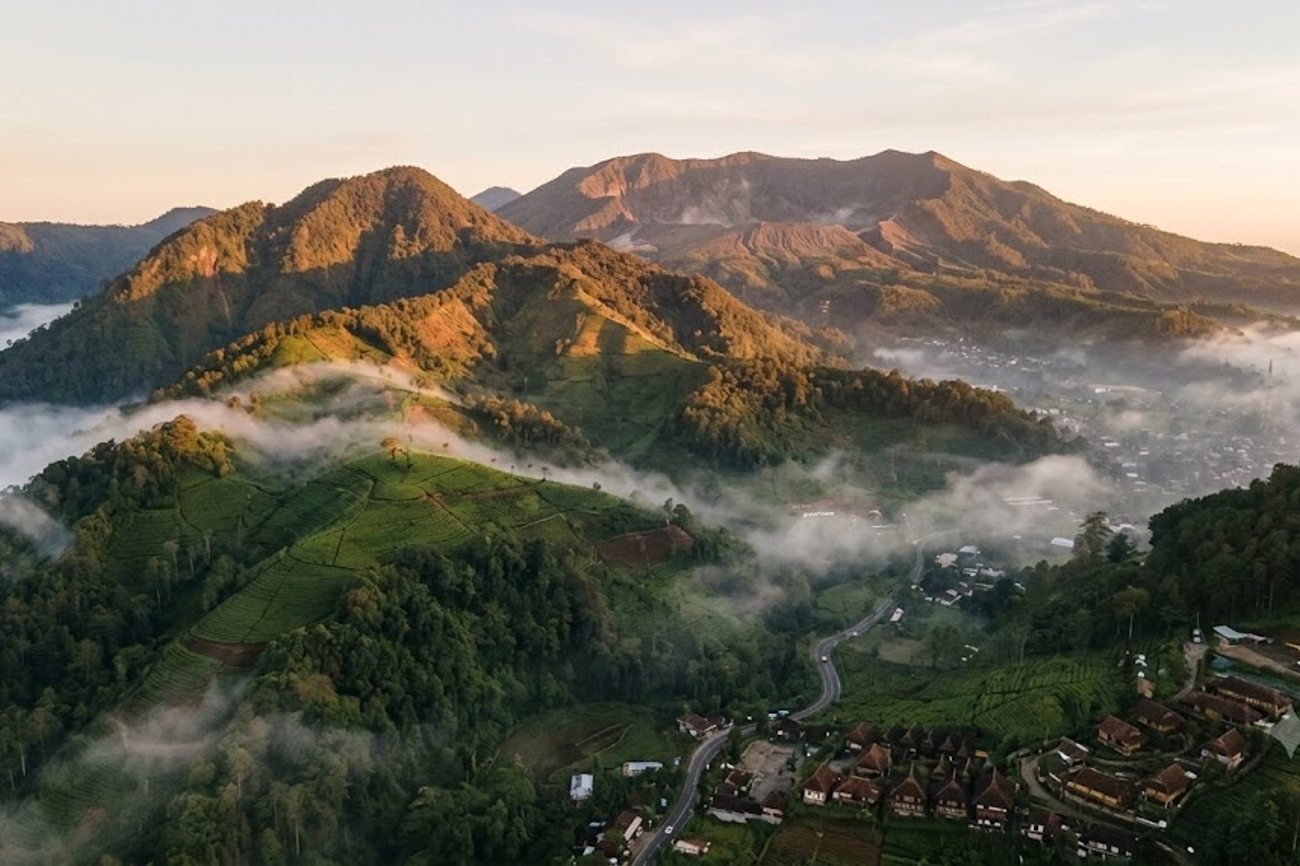
Image generated by AI
[Bandung, September 17, 2026] — Indonesia’s meteorological agency has recorded 118 earthquakes in the Bandung Regency region over a five-week period, sparking safety reviews for one of West Java's primary adventure tourism hubs.
The Badan Meteorologi Klimatologi dan Geofisika (BMKG), the national authority for seismic monitoring, confirmed the sequence of events occurred between August 11 and September 17, 2026. While the vast majority of these events were minor, the concentration of activity around the Pangalengan, Talegong, and Cisewu areas has raised concerns regarding the stability of nature-based tourism sites in the southern portion of the regency.
Local Fault Activity Triggers Seismic Cluster
The seismic activity is attributed to tectonic movements within localized faults rather than a major regional plate shift. According to BMKG analysis, the epicenters of the 118 recorded events align on a southwest-to-northeast axis. Specifically, the agency has positioned this activity five to eight kilometers west of the Kendang segment of the Garsela Fault and north of the Kencana segment.
The earthquakes are classified as "shallow," which often explains why even low-magnitude events can be felt by residents. The magnitude of these events ranged from M1.0 to M3.4. Of the 118 total events, only 13 were strong enough to be felt by the local population. These "felt" events registered intensities of II to III on the Modified Mercalli Intensity (MMI) scale, meaning the shaking was noticeable to people indoors but did not result in widespread structural failure or destructive impacts.
The most recent activity occurred in the early hours of September 17. At 06:21 WIB, a M2.7 earthquake struck at a depth of four kilometers, with intensity III reported in Pangalengan, Talegong, and Cisewu. Earlier that morning, another M2.6 event occurred at a depth of three kilometers, triggering intensity III shaking in Kertasari and Pangalengan.
Regional Tourism and Passenger Exposure
The seismic cluster is centered in Bandung Regency, an area distinct from the Bandung Municipality. The impact is most acute in the Pangalengan district, a critical zone for West Java's "nature and adventure" tourism sector.
The following areas and sectors are currently under observation:
- High-Risk Zones: Pangalengan, Talegong, and Cisewu.
- Impacted Attractions: Situ Cileunca, Malabar Plantation, Kertamanah Tea Plantation, and various white-water rafting operations.
- Business Exposure: The Bandung Regency tourism sector comprises 6,562 tourism businesses and 2,312 creative-economy participants.
- Visitor Volume: The region maintains high traffic, with July 2026 seeing 1,197,309 domestic tourist trips and June 2026 recording 1,185,203 trips.
The scale of the tourism economy in the broader region is massive. While the regency handles millions of visitors, the Badan Pusat Statistik (BPS) reports that Bandung Municipality—the urban center—recorded 2,033,376 domestic tourist trips in June 2026 alone, with hotel occupancy reaching 54.58%. It is critical for travelers to distinguish between the urban municipality and the rural regency where the seismic activity is concentrated.
Practical Traveler Advisory and Strategic Insights
For those currently booking trips to West Java or staying in the Bandung area, the situation does not warrant a total cancellation of plans, but it does require a shift in safety protocols.
1. No Total Closures The BMKG has not ordered a total closure of the Bandung Regency for tourism. Hotels, roads, and major attractions remain open. There is no government mandate prohibiting entry into the Pangalengan area.
2. Heightened Awareness in Nature Zones Travelers engaging in "special-interest tourism"—such as hiking, rafting, or staying in mountain lodges—should be more vigilant. Because the earthquakes are shallow and linked to local faults, those in open-air or mountainous environments are more susceptible to feeling tremors.
3. Distinguishing the "Danger Zone" If your hotel or itinerary is located within Bandung Municipality (the city center), you are outside the primary cluster of these 118 events. If your itinerary includes the southern regency (Pangalengan, Talegong, Cisewu), you are in the active zone.
4. Verification of Sources Travelers should ignore social media rumors regarding "imminent disasters" and instead rely on the BMKG official portal for real-time seismic data.
Monitoring and Future Outlook
Local officials and the BMKG maintain that the current sequence of earthquakes is a natural result of active local faulting and that the public should not be alarmed. However, the frequency of events—averaging more than three earthquakes per day over the last month—means that monitoring will remain intensive.
The focus for the coming weeks will be on whether the magnitude of these events increases. While M1.0 to M3.4 is generally considered low-risk, any shift toward M4.0 or higher could trigger different safety protocols and potential temporary closures of specific highland attractions.
Tourism authorities in Bandung Regency are expected to integrate more robust earthquake preparedness into their guest communications, particularly for the 6,500+ businesses operating in the region. The goal is to maintain the high domestic visitor volumes—which peaked at 1,318,486 trips in March 2026—while ensuring that "adventure tourism" does not become "unmanaged risk."
FAQ: Bandung Seismic Activity 2026
Is it safe to visit Bandung right now? Yes. The BMKG has not closed the area to tourists. Most earthquakes have been too small to be felt, and no widespread destruction has been reported. However, travelers to the southern regency should remain alert.
Which specific areas are experiencing earthquakes? The activity is concentrated in the Bandung Regency, specifically around Pangalengan, Talegong, and Cisewu. The urban center of Bandung Municipality is not the primary site of this seismic cluster.
What should I do if I feel a tremor while in Pangalengan? Follow standard earthquake safety: Drop, Cover, and Hold On. If you are outdoors in the highlands, move away from steep slopes or unstable structures that could be affected by landslides during shaking.
Are hotels and flights to Bandung being cancelled? No. There are no reports of mass cancellations. Hotel occupancy in the regency has remained steady, ranging between 21.80% and 24.11% throughout the mid-year period.
Stay updated via official BMKG channels for real-time tectonic alerts.
Related Travel Guides
- Colombia Aligns With Panama and More as Australia Issues New Travel Advisory Over Entry Rules and Travel Disruptions
- Mallorca Unites with Calvià, Magaluf and More Destinations in Europe Abandoning UK Tourists and Welcoming More US Spendthrift Tourists
- America Travel Shift: CVB Vision Helps Star City Create Authentic Visitor Experiences
Disclaimer
This article is for informational and educational purposes only. It does not constitute legal, financial, or professional advice. While we strive to provide accurate and up-to-date information, travel policies, regulations, and conditions change rapidly. Always verify information with official sources before making travel decisions. Nomad Lawyer makes no representations about the accuracy, reliability, completeness, or suitability of the information provided. Readers should consult qualified professionals for advice specific to their circumstances. The views expressed in this article are those of the author and do not necessarily reflect the views of Nomad Lawyer.
Raushan Kumar
Founder & Lead Developer
Full-stack developer with 11+ years of experience and a passionate traveller. Raushan built Nomad Lawyer from the ground up with a vision to create the best travel and law experience on the web.
Learn more about our team →