
Scotland’s Glasgow Subway Faces New Travel Warning As Delayed Underground Services Disrupt Morning Passengers
Scotland’s Glasgow Subway Faces New Travel Warning As Delayed Underground Services Disrupt Morning Passengers

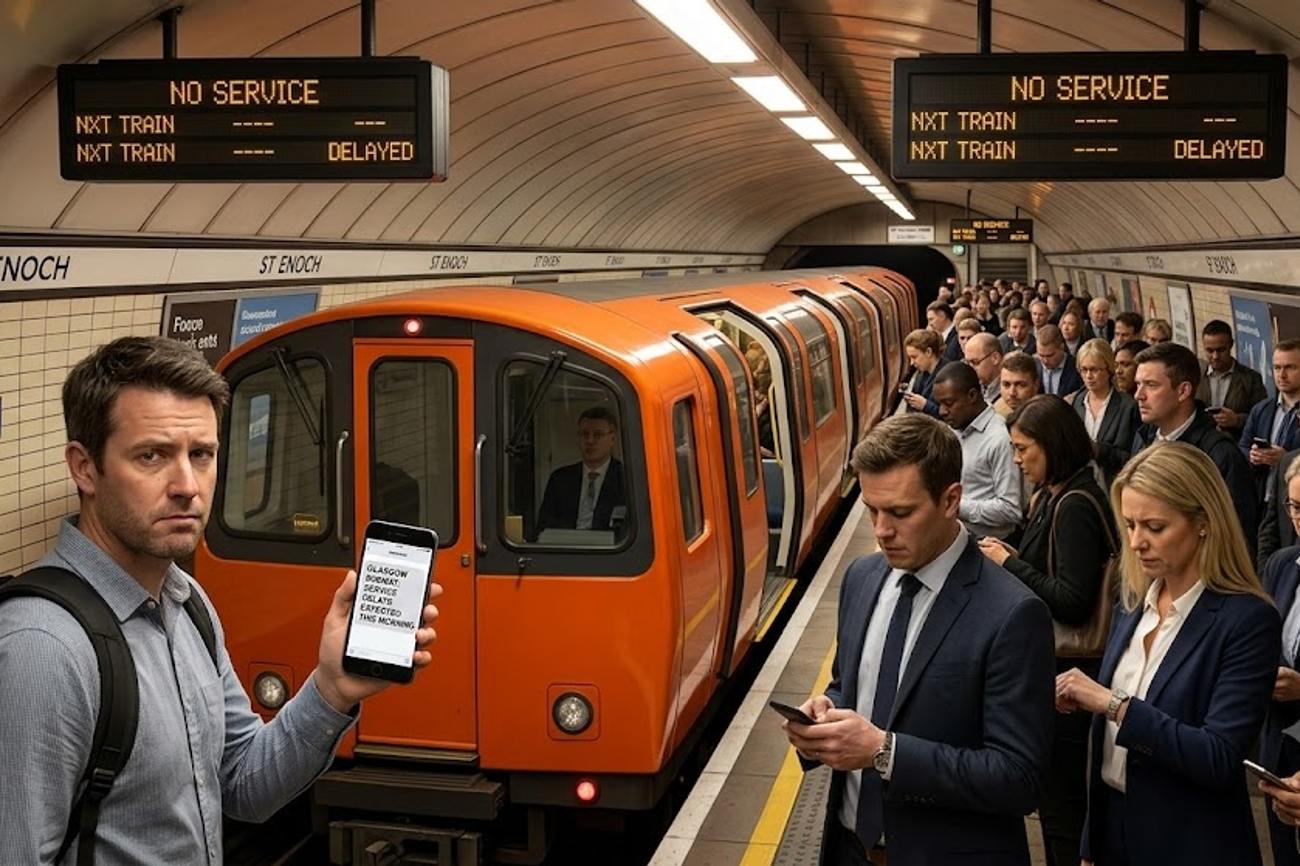
Image generated by AI
[Glasgow, Friday] — The Glasgow Subway suffered a total system failure during its early morning launch after overnight maintenance work overran, preventing the network from opening on schedule. The disruption left thousands of commuters stranded at stations as engineering teams struggled to clear the tunnels before the start of the business day.
The outage occurred on Friday morning when critical tunnel works extended beyond their allocated timeframe. This delay prevented the timely removal of heavy equipment and tools from the tracks, which is a mandatory safety requirement before passenger trains can enter the system. As a result, the network remained closed during the initial peak travel window, forcing passengers to seek alternative transport across Scotland's largest city.
Tunnel Maintenance Overruns
The immediate trigger for the shutdown was a failure in the synchronization of the overnight engineering schedule. Routine maintenance is conducted during non-service hours to ensure the long-term structural integrity and safety of the underground network. However, on this occasion, the specific tasks assigned for the night shifted from routine to delayed, meaning the system could not be certified as "clear" by the time the first scheduled trains were due to depart.
According to operational reports, the inability to remove maintenance equipment from the operational areas created a safety blockade. In underground rail systems, any foreign object or remaining tool on the track represents a catastrophic risk to train stability and passenger safety. Consequently, the Glasgow Subway operator was forced to keep stations closed until a full sweep of the tunnels was completed and verified.
Impacted Commuters and Routes
The disruption hit the city's core transit artery, affecting all passengers utilizing the circular subway system. Because the Subway serves as a primary link between residential hubs and the city center, the ripple effect was felt across multiple sectors of the urban economy.
The following groups and areas faced the most significant impact:
- Early Morning Commuters: Individuals attempting to reach workplaces in central Glasgow before 7:00 AM.
- Students: Those relying on the network to reach educational institutions across the city.
- Essential Workers: Personnel traveling to hospitals, government offices, and emergency services.
- Intermodal Travelers: Passengers attempting to connect from the Subway to national rail services at Central Station.
While the disruption was system-wide, the primary congestion occurred at the station entrances where passengers accumulated while awaiting updates from the transport operator.
Practical Traveler Advisory and Strategic Insights
For the average passenger, this incident underscores a critical vulnerability in the city's transit infrastructure: the lack of redundancy when maintenance overruns occur. When the Subway fails to open, the pressure shifts immediately to the city's road network and bus services, leading to secondary congestion.
If you are currently booking travel or commuting in Glasgow, be aware of the following:
- Check Real-Time Status: Do not assume the network is operational at the first scheduled train time. Use the official SPT (Strathclyde Partnership for Transport) alerts for live updates.
- Plan for "Maintenance Fridays": Engineering works are frequently scheduled for overnight windows. If you have a time-sensitive appointment (e.g., a flight from Glasgow Airport or a medical appointment), have a backup taxi or bus route planned.
- Buffer Time: Allow an additional 30 to 45 minutes for journeys during periods of heavy infrastructure upgrades, as "temporary" delays in tunnel clearing can lead to total system lockdowns.
Passengers experiencing disruptions on the Glasgow Subway are encouraged to seek alternative transport routes to avoid significant delays during peak morning hours. For real-time updates on city-wide transit and integrated travel planning, commuters should consult the official Transport Scotland portal.
Restoration of Service
The crisis was resolved shortly after 7:00 AM on Friday. Once the engineering teams successfully extracted all equipment and completed the necessary safety inspections, the network was cleared for passenger operations. The restoration was rapid, but the backlog of passengers created a temporary surge in crowding during the first few hours of operation.
The transport operator has emphasized that while these disruptions are inconvenient, the overnight work is non-negotiable for the safety of the system. The Glasgow Subway is currently undergoing various improvement programs designed to modernize infrastructure and increase operational efficiency. These upgrades are intended to reduce the frequency of such overruns in the future by streamlining how maintenance is executed and how equipment is removed from the tunnels.
Looking forward, the operator is focusing on better coordination between the engineering crews and the operational dispatch teams to ensure that the "handover" from maintenance to passenger service is seamless. This includes stricter deadlines for equipment removal and improved communication protocols to notify passengers earlier when a delay is imminent.
FAQ: Glasgow Subway Disruption 2024
Why did the Glasgow Subway fail to open on time? The opening was delayed because overnight maintenance work in the tunnels took longer than planned. This prevented the removal of engineering equipment from the tracks, which is a mandatory safety requirement before passenger trains can run.
What time did services return to normal? Normal operations were restored shortly after 7:00 AM on Friday morning, following the completion of safety checks and the clearing of the tunnels.
How can I find out if there are more delays? Passengers should monitor the official updates provided by the Strathclyde Partnership for Transport (SPT) or the Glasgow Subway's official digital channels for real-time service alerts.
Are these maintenance delays common? While regular maintenance is essential for safety, total opening delays are infrequent. The operator uses overnight windows specifically to avoid impacting the peak daytime travel periods.
Reliability in urban transit depends on the invisible work done in the dark.
Related Travel Guides
Disclaimer
This article is for informational and educational purposes only. It does not constitute legal, financial, or professional advice. While we strive to provide accurate and up-to-date information, travel policies, regulations, and conditions change rapidly. Always verify information with official sources before making travel decisions. Nomad Lawyer makes no representations about the accuracy, reliability, completeness, or suitability of the information provided. Readers should consult qualified professionals for advice specific to their circumstances. The views expressed in this article are those of the author and do not necessarily reflect the views of Nomad Lawyer.
Kunal K Choudhary
Co-Founder & Contributor
A passionate traveller and tech enthusiast. Kunal contributes to the vision and growth of Nomad Lawyer, bringing fresh perspectives and driving the community forward.
Learn more about our team →