
Santorini Tourism Enters a New Era as Akrotiri Pyrgos Perissa and Profitis Ilias Gain Attention
Santorini Tourism Enters a New Era as Akrotiri Pyrgos Perissa and Profitis Ilias Gain Attention

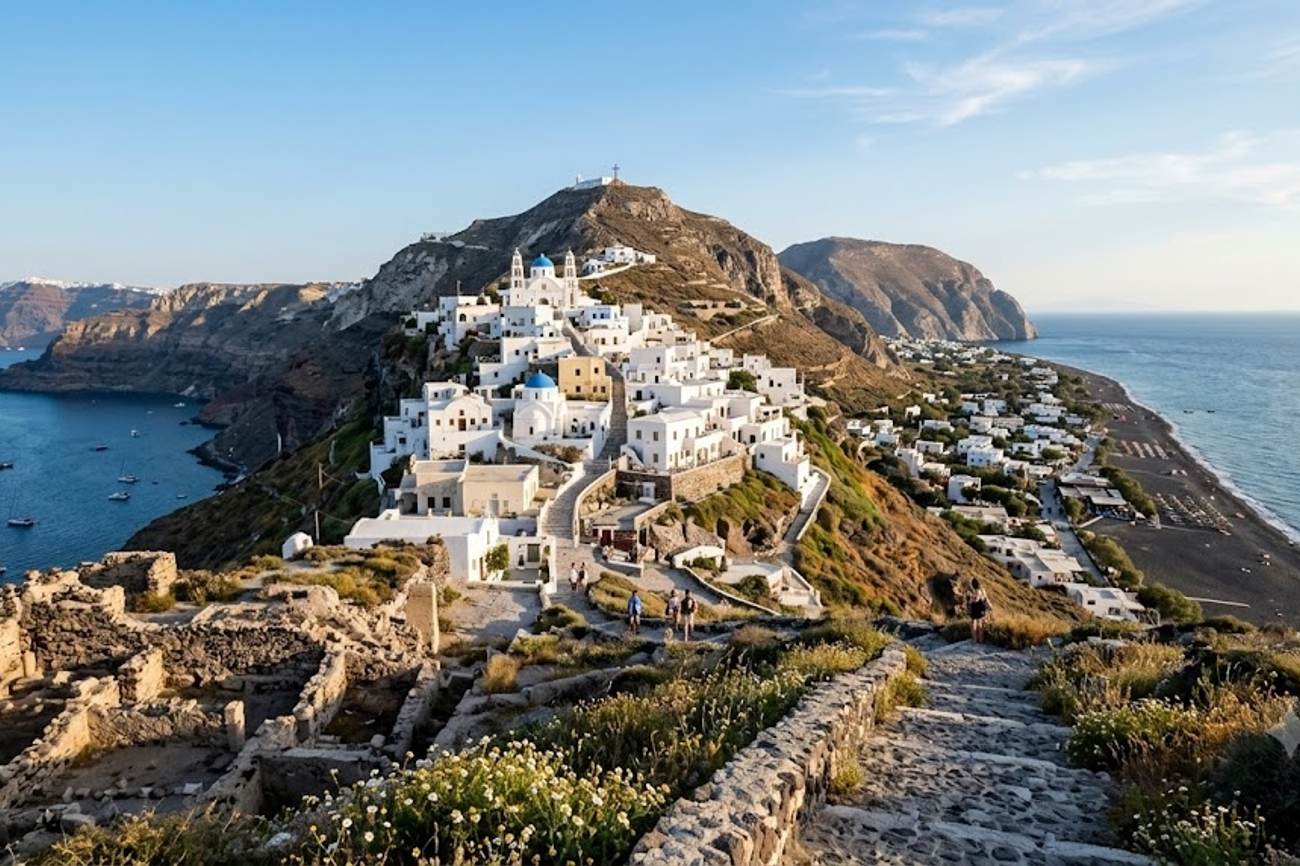
Image generated by AI
Greece's total travel receipts grew by 9.4% in 2025, according to Bank of Greece data published in May 2026, signaling a sustained upward trajectory in high-value tourism. This growth is now triggering a strategic pivot in destination management, specifically within Santorini, where the focus is shifting from the saturated caldera viewpoints of Oia toward a multisectoral dispersal model targeting Akrotiri, Pyrgos, Perissa, and Profitis Ilias.
The Santorini Diversification Metrics — 2026 Projections
The movement toward "multisectoral tourism" is not merely a marketing shift but a response to the physical limits of Santorini's infrastructure. Oia, while remaining the primary global identifier for the island, has reached a point of critical density, particularly during sunset windows. The data suggests that by distributing visitor flow across four distinct geographic and thematic hubs, the island can increase its total economic absorption capacity without degrading the visitor experience.
The current strategic focus identifies four key nodes for expansion:
- Akrotiri: Transitioning from a secondary stop to a primary hub for heritage and educational tourism.
- Pyrgos: Positioning as the center for "slow tourism" and cultural immersion.
- Perissa: Expanding the coastal economy to support family-oriented and outdoor recreation.
- Profitis Ilias: Developing the mountain and religious heritage sector to capture the walking tourism market.
By diversifying the "tourism story" beyond the caldera, Santorini is attempting to hedge against the volatility of mass tourism. This approach aligns with broader trends reported by the World Tourism Organization (UNWTO), which emphasizes the importance of sustainable tourism dispersal to prevent "overtourism" in hyper-concentrated zones.
Comparative Context: The Shift from Monocentric to Polycentric Tourism
Historically, Santorini's tourism model was monocentric, with the vast majority of spending and foot traffic concentrated in Oia and Fira. The 2026 trajectory indicates a move toward a polycentric model. While Oia continues to dominate in terms of luxury accommodation and photography, the southern and inland regions are seeing a rise in "specialist" visits—archaeology in Akrotiri and hiking in Profitis Ilias.
The following table illustrates the shift in visitor appeal and the resulting economic opportunities across the island's emerging hubs:
| Destination | Primary Visitor Driver | Emerging Tourism Sector | Economic Impact Area |
|---|---|---|---|
| Oia | Caldera Sunsets / Luxury | High-End Hospitality | Luxury Retail & Fine Dining |
| Akrotiri | Bronze Age Ruins | Heritage & Education | Specialist Guides & Museums |
| Pyrgos | Hilltop Architecture | Cultural / Slow Travel | Local Artisans & Boutique B&Bs |
| Perissa | Volcanic Black Sands | Coastal & Family | Water Sports & Beach Resorts |
| Profitis Ilias | Peak Elevation / Chapel | Landscape & Trekking | Eco-tourism & Active Gear |
This redistribution is critical because, as indicated by IATA trends regarding regional connectivity, the increase in inbound travelers to Greece requires a corresponding increase in "on-ground" capacity. If the visitor load remains concentrated in Oia, the resulting congestion creates a ceiling for growth. By expanding into the south and the interior, Santorini effectively increases its "usable" tourist acreage.
Practical Traveler Advisory and Strategic Insights
For the individual traveler, the 2026 shift toward multisectoral tourism transforms how an itinerary should be constructed. The "sunset-only" approach is no longer the most efficient way to experience the island, nor is it the most comfortable.
Booking and Itinerary Advice: If you are planning a visit in 2026, avoid centering your entire accommodation strategy in Oia. Data suggests that staying in Perissa or Pyrgos provides a more stable base with easier access to the island's diversifying attractions.
The shift toward southern hubs like Akrotiri and Perissa reflects a strategic effort to decentralize visitor traffic away from the congested caldera rim. Travelers can coordinate their arrivals and transport options through the Visit Greece official portal to better navigate these emerging districts.
Actionable Scheduling:
- Archaeology First: Visit Akrotiri in the early morning to avoid the heat and the cruise ship crowds. This site offers a depth of history—specifically the prehistoric Aegean settlement—that provides a necessary counterweight to the island's luxury image.
- The High-Altitude Pivot: Schedule Profitis Ilias for early morning or late afternoon. The mountain setting requires specific preparation (sturdy footwear and hydration), but it offers the only vantage point where the island's agricultural and geological layout is fully visible.
- Slow-Pace Integration: Allocate a minimum of four hours for Pyrgos. Unlike the rapid sightseeing stops common in Fira, Pyrgos is designed for walking tours and exploration of winding lanes.
Travelers should consult the Ephorate of Antiquities of the Cyclades for real-time access updates to archaeological sites, as these are subject to change based on preservation needs.
Forward Projection: The 2027-2030 Trajectory
Based on the 9.4% increase in travel receipts seen in 2025, the trajectory for Santorini suggests a move toward "integrated corridors." We can expect the emergence of formal tourism routes that link Akrotiri, Perissa, and Pyrgos into a single "Southern Circuit."
This evolution will likely lead to:
- Infrastructure Investment: Increased investment in transport links between the south and the center to reduce reliance on rental cars in narrow village streets.
- Niche Market Growth: A rise in "educational shore excursions" and "archaeological retreats," moving the island away from being a mere honeymoon destination.
- Environmental Regulation: As Perissa expands its coastal offer, we expect stricter waste management and water-use protocols to be implemented to protect the volcanic shoreline.
The long-term stability of Santorini's economy depends on this dispersal. If the island successfully transitions to a multisectoral model, it will move from a "bucket-list" destination—where visitors check a box and leave—to a "destination of depth," where longer stays are encouraged by a wider variety of activities.
FAQ: Santorini Tourism Trends 2026
Will hotel prices in Oia decrease as people move to other areas? Unlikely. Oia maintains a high-prestige brand value. However, you will find better value-to-quality ratios in Pyrgos and Perissa, where the "slow tourism" and "beach tourism" sectors are expanding their capacity.
Is it a good time to book a trip to southern Santorini? Yes. The push toward Akrotiri and Profitis Ilias is designed to reduce crowding. Visiting these areas now allows you to experience the island's heritage before these sites reach the saturation levels seen in the caldera.
Which transport options are best for the new multisectoral routes? Small-group guided tours and scheduled shuttles are recommended. The narrow streets of Pyrgos and the environmental sensitivity of the volcanic beaches make large tour buses impractical and increasingly restricted.
Are the Atlantis theories at Akrotiri scientifically backed? No. While the connection to Atlantis is a popular narrative for some tours, the site's verified importance is its role as a preserved Bronze Age settlement. Focus on the archaeological evidence provided by the Ephorate of Antiquities.
The shift from the caldera's edge to the island's interior marks the transition of Santorini from a visual postcard to a living museum.
Related Travel Guides
Disclaimer
This article is for informational and educational purposes only. It does not constitute legal, financial, or professional advice. While we strive to provide accurate and up-to-date information, travel policies, regulations, and conditions change rapidly. Always verify information with official sources before making travel decisions. Nomad Lawyer makes no representations about the accuracy, reliability, completeness, or suitability of the information provided. Readers should consult qualified professionals for advice specific to their circumstances. The views expressed in this article are those of the author and do not necessarily reflect the views of Nomad Lawyer.
Preeti Gunjan
Contributor & Community Manager
A passionate traveller and community builder. Preeti helps grow the Nomad Lawyer community, fostering engagement and bringing the reader experience to life.
Learn more about our team →