Russia Stands Alongside China as Travel Flows Rise 50% Fuelled by New Visa Free Tourism Opportunities

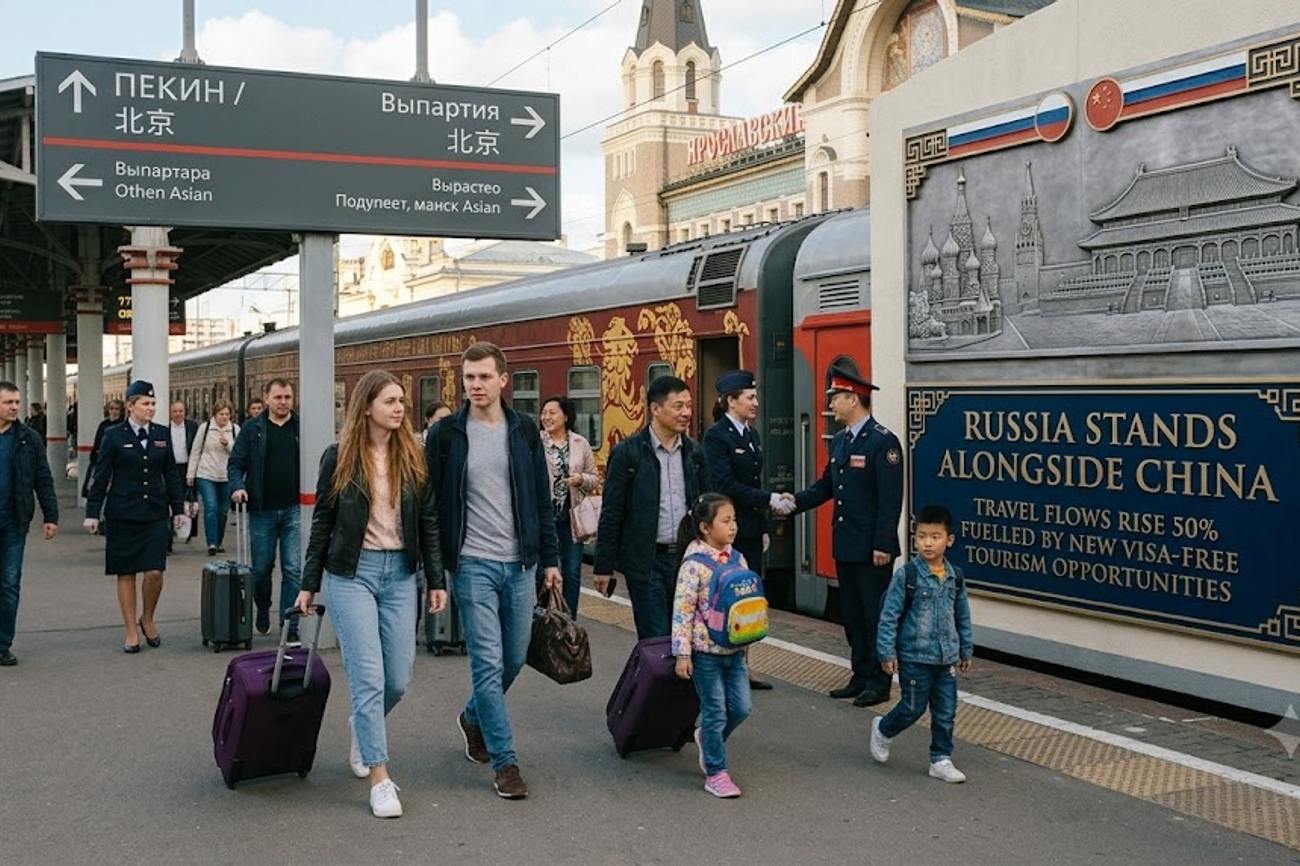
Image generated by AI
[Moscow, July 2026] — Tourist exchanges between Russia and China have surged by 50% during the first half of 2026, driven by a strategic pivot toward visa-free travel and deepening bilateral economic ties.
The rapid escalation in visitor traffic reflects a broader geopolitical and economic alignment between Moscow and Beijing. The growth is not merely a result of leisure demand but is integrated into a wider framework of cooperation involving trade, energy, and infrastructure. This surge comes as both nations seek to reduce reliance on Western financial systems and travel restrictions, positioning tourism as a primary pillar of their mutual partnership.
Visa-Free Access and Policy Shifts
The primary catalyst for this growth is the aggressive implementation of visa-free travel arrangements. By removing traditional bureaucratic barriers, both governments have significantly lowered the friction for cross-border movement. This policy shift has allowed for a 1.5x increase in tourist exchanges compared to previous periods, transforming the ease with which citizens of both nations can enter each other's territories.
This policy is operating in tandem with the "Plan 2030" long-term development strategy. This initiative aims to synchronize economic cooperation across finance, technology, and tourism. The goal is to create a seamless corridor for both business and leisure travel, ensuring that the movement of people keeps pace with the movement of goods and capital.
Markets and Infrastructure Impact
The increase in visitor volume has forced a rapid modernization of Russian tourism infrastructure to accommodate the specific needs of the Chinese market. The Russian government and private sector are prioritizing "destination readiness" to ensure that the surge in arrivals does not overwhelm existing facilities.
Key Impact Areas:
- Hospitality Certification: Over 80 hotels, airports, and hospitality facilities have now achieved "China Friendly" certification. This program mandates specific service standards, multilingual signage, and facilities tailored to Chinese preferences.
- Airport Operations: Major hubs are adapting ground handling and passenger services to manage the increased flow of Chinese nationals.
- Regional Development: Beyond major cities, regional transport operators, restaurants, and local attractions are seeing an influx of revenue as visitors move into the Russian interior.
- Russian Outbound Travel: Russian citizens are increasingly targeting Chinese modern urban centers, shopping districts, and heritage sites, diversifying their travel patterns away from traditional European destinations.
Practical Traveler Advisory and Strategic Insights
For the individual traveler, the current environment represents a significant reduction in cost and complexity. The shift toward visa-free access means that the traditional weeks-long application process and associated fees are largely eliminated for eligible travelers.
Practical Implications:
- Simplified Booking: Travelers can now book spontaneous trips without the lead time required for visa processing.
- Payment Ecosystems: With bilateral trade now almost entirely conducted in national currencies, there is a concerted effort to integrate digital payment systems. Travelers should expect more seamless options for using national currency-based apps and cards, reducing reliance on US-dollar-denominated credit systems.
- Enhanced Service Standards: Chinese travelers entering Russia will find a higher concentration of certified "China Friendly" establishments, meaning better translation services and culturally aligned hospitality.
- Diversified Itineraries: The increase in infrastructure investment is making non-traditional destinations more accessible, allowing for longer stays and deeper exploration of rural or historic regions.
Economic Foundations and Trade Synergy
The tourism boom is a direct byproduct of a massive economic synchronization. Trade between Russia and China has stabilized at approximately US$200 billion annually for three consecutive years. However, 2026 has seen a further acceleration; in the first seven months of the year, bilateral trade grew by nearly 24%.
This economic bedrock is supported by Russia's continued supply of raw materials, agricultural products, and energy resources to China. The financial architecture supporting this trade has shifted; nearly all settlements are now performed using national currencies, bypassing foreign currency dependencies. This financial integration simplifies the logistics of travel, as business travel often precedes and facilitates leisure tourism.
Technological Integration and Future Outlook
The next phase of Russia-China travel is expected to move beyond physical infrastructure and into the digital realm. Both nations are exploring the integration of artificial intelligence (AI) and cross-border digital platforms to further streamline the visitor experience.
Upcoming Developments:
- Digital Payment Convergence: Efforts are underway to link digital payment systems, allowing travelers to pay for services via mobile platforms without needing to exchange physical currency.
- AI-Driven Planning: The implementation of AI for travel planning and destination management is expected to optimize passenger flows and improve customer service at airports and hotels.
- E-commerce Synergy: The growth of cross-border e-commerce is expected to create new "shopping tourism" incentives, where travel is driven by the desire to access specific regional goods.
For more information on international travel regulations, travelers can consult the Ministry of Foreign Affairs of the Russian Federation or the Ministry of Foreign Affairs of the People's Republic of China. Aviation updates regarding new route capacities can be monitored via the International Civil Aviation Organization (ICAO).
FAQ: Russia-China Travel 2026
Do I still need a visa for travel between Russia and China in 2026? Many travelers no longer require visas due to new visa-free arrangements. However, eligibility depends on the specific passport held and the purpose of the visit. Always check current official government portals before booking.
What is "China Friendly" certification? It is a Russian certification program for hotels and airports that ensures the facility meets specific service, language, and amenity standards required to comfortably accommodate Chinese tourists.
How are payments handled for travelers in these regions? There is a strong shift toward using national currencies. Travelers are encouraged to use digital payment platforms and national currency accounts, as reliance on Western foreign currency systems has decreased.
Which destinations are currently most popular? Chinese visitors are prioritizing Russian cultural heritage sites and historic cities. Russian visitors are focusing on China's modern metropolitan hubs and regional shopping districts.
A new era of Eurasian mobility is underway, redefining the map of global tourism.
Related Travel Guides
- Ghana Travel Enters New Era As Tourism Authority Drives Digital Reset, Better Standards And Economic Growth
- Vietnam-China Cultural Celebration Brings Travellers Closer Through a Magical 2026 Mid-Autumn Festival Experience
- Malta Overtakes Estonia and More in the Race for EU Commercial Flight Growth as Travel Demand Hits Records
This article is for informational purposes. Flight routes, passenger regulations, visa rules, and transit advisories are subject to change by airlines and aviation authorities. Readers are advised to verify schedules and travel documentation with relevant carriers and border agencies before departure.
Related Stories

Zen Awakening Festival 2026: Florida's Transformational Music, Mindfulness, and Arts Gathering in Fruitland Park

Plan the Whole Visayas in One Trip: ‘Discover the Visayas’ Launches Multi-Island Itinerary Builder Via Cebu