Malta Overtakes Estonia and More in the Race for EU Commercial Flight Growth as Travel Demand Hits Records

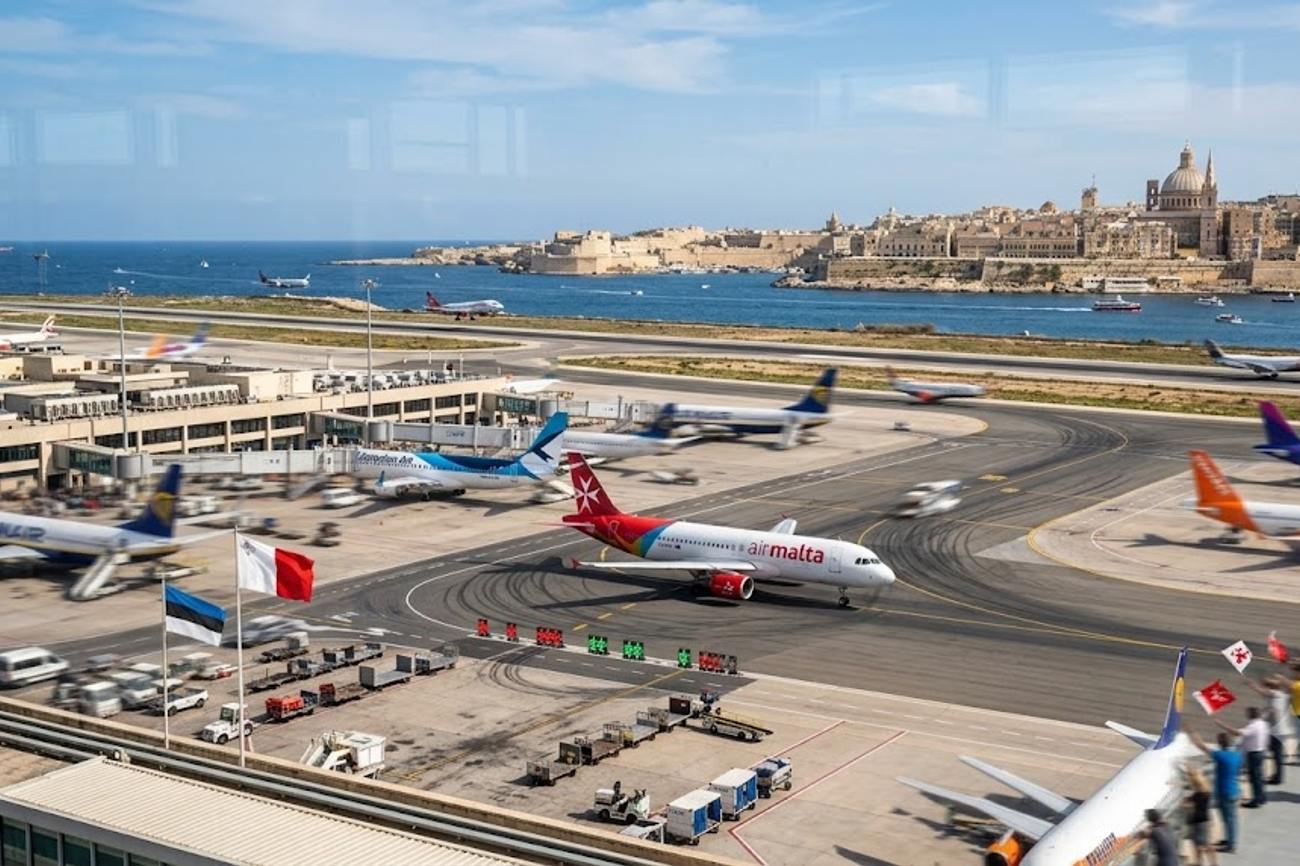
Image generated by AI
[Valletta, August 2026] — Malta has emerged as one of the European Union's fastest-growing aviation hubs, recording a 12.4% year-on-year surge in commercial flight traffic during August 2026. This growth trajectory places the Mediterranean island second only to Slovakia in terms of EU aviation expansion for the month, signaling a massive shift in regional travel demand.
The surge is driven by a combination of aggressive airline capacity increases and a record-breaking influx of international tourists. According to data from Eurostat, the increase encompasses all commercial operations, including scheduled and non-scheduled flights, freight, and mail services operating under Instrument Flight Rules. This expansion occurs against a backdrop of a modest 2.3% average growth across the broader EU market, where total commercial activity reached 708,980 operations in August 2026.
The Catalyst for Aviation Expansion
The immediate trigger for this spike is a profound escalation in tourism demand that has outpaced most of Europe's traditional destinations. Malta's reliance on international air links—given its geography as a small island nation—has forced a rapid scaling of flight frequencies to keep pace with visitor numbers.
This growth is not merely a recovery from previous years but a structural expansion of the market. The synergy between the Malta Tourism Board and airline partners has resulted in a significant increase in seat availability and aircraft movements. While 19 EU nations saw growth in August 2026, Malta's 12.4% jump dwarfs the EU average, indicating a concentrated shift in traveler preference toward the archipelago.
The scale of the growth is best understood when compared to other high-performing EU markets during the same period:
- Slovakia: +37% (Ranked 1st)
- Malta: +12.4% (Ranked 2nd)
- Estonia: +8.3% (Ranked 3rd)
- EU Average: +2.3%
Markets and Routes Impacted
The aviation boom is centered on Malta International Airport, which has become the primary engine for the island's economic growth. The impact is felt across three primary sectors: leisure travel, business connectivity, and cargo logistics.
Passenger Volume and Flight Frequency The airport handled nearly 1.2 million passengers in July 2026 alone. To accommodate this volume, airlines ramped up operations to an average of 108 daily flights during the summer peak. This increased frequency has lowered the barrier for entry for short-haul European travelers and expanded the reach for long-haul visitors.
Tourist Arrival Statistics The correlation between flight growth and visitor arrivals is absolute. The following data points illustrate the scale of the influx:
- July 2026 Inbound Tourists: 489,494 (a 20.8% increase over July 2025).
- January–July 2026 Arrivals: Over 2.62 million tourists (an 18.6% year-on-year increase).
- 2025 Baseline: The island surpassed the four-million-visitor milestone for the first time in 2025, welcoming 4.02 million people.
Economic Spillover The aviation surge is directly fueling the local economy. In 2025, tourism expenditure hit a record €3.9 billion. The current increase in flight capacity is expected to push these figures even higher as more visitors access the island's historic cities and coastal regions.
Practical Traveler Advisory and Strategic Insights
For passengers booking travel to or through Malta, this aviation surge translates into several practical changes in the travel experience.
Increased Flight Options and Pricing The rise in "airline seat capacity" mentioned in official reports means travelers have more choices regarding flight times and carriers. Increased competition and more frequent flights typically lead to more competitive pricing on popular routes from major European hubs.
Airport Congestion Risks With nearly 1.2 million passengers moving through a single airport in July and daily flights averaging 108, travelers should expect higher congestion levels at Malta International Airport. This likely impacts security wait times, baggage claim efficiency, and ground transportation availability upon arrival.
Hotel and Service Availability The 20.8% spike in July arrivals suggests that accommodation and local services are under significant pressure. Travelers booking during the summer peak should anticipate higher hotel occupancy rates and the need for advanced reservations for restaurants and cultural tours.
Divergence in the European Market
Malta's success stands in stark contrast to other EU member states that are currently experiencing an aviation downturn. While Malta and Slovakia are seeing double-digit growth, several major economies are contracting.
In August 2026, the following countries reported declines in commercial flight activity:
- Austria: -4.7%
- Cyprus: -3%
- Germany: -2.4%
This divergence suggests a redistribution of tourism traffic within the EU. While Germany and Austria may be seeing a cooling of demand or adjustments in flight schedules, Malta is capturing a larger share of the Mediterranean market, potentially at the expense of competitors like Cyprus.
Future Aviation Outlook
The trajectory for Malta suggests that the current growth is sustainable rather than a seasonal anomaly. The transition from 4.02 million visitors in 2025 to the current 2026 growth rates indicates a permanent upward shift in the island's destination status.
Moving forward, the focus will likely shift from simply increasing flight numbers to optimizing infrastructure. The continued reliance on a single international airport means that any further growth will require significant operational efficiencies to avoid bottlenecks. Airlines are expected to introduce even more frequencies and strengthen seasonal connections as they capitalize on the proven demand.
The long-term goal for the region is to maintain the momentum of the 18.6% growth seen in the first seven months of 2026, ensuring that the aviation network can support a tourism economy that has already proven it can exceed the four-million-visitor threshold.
FAQ: Malta Aviation Growth 2026
Is it more expensive to fly to Malta now that demand is higher? Not necessarily. While demand is at a record high, the increase in "airline seat capacity" and more frequent daily flights often lead to more competitive pricing among carriers.
How crowded is Malta International Airport during the summer? Extremely. With nearly 1.2 million passengers in July and 108 daily flights, travelers should allow extra time for security and immigration to account for peak-season congestion.
Which EU countries are seeing the opposite trend of Malta? Austria, Cyprus, and Germany all reported declines in commercial flight activity in August 2026, with Austria seeing the sharpest drop at -4.7%.
How many tourists visited Malta in 2025? Malta reached a historic milestone in 2025, welcoming 4.02 million international tourists, the first time the country surpassed the four-million-visitor mark.
Malta is no longer just a Mediterranean stopover; it is now a primary engine of European aviation growth.
Related Travel Guides
- Germany and Greece Lead Europe Travel Shift as Coolcations and Emerging Destinations Gain Momentum
- Tanzania Introduces Mandatory Forty Four US Dollars Travel Insurance Rule for Foreign Visitors From 2026
- Seoul Outpaces Paris, Bangkok and More Global Cities Where Renting Could Cost Far Less Than Buying a Home
This article is for informational purposes. Flight routes, passenger regulations, visa rules, and transit advisories are subject to change by airlines and aviation authorities. Readers are advised to verify schedules and travel documentation with relevant carriers and border agencies before departure.
Related Stories

Zen Awakening Festival 2026: Florida's Transformational Music, Mindfulness, and Arts Gathering in Fruitland Park

12 Underrated Cities in China That International Travelers Are Starting to Discover