
Over 60 Cancellations and 1,130 Delays Disrupt Middle East Travel at Muscat, Dubai and Other Airports
Over 60 Cancellations and 1,130 Delays Disrupt Middle East Travel at Muscat, Dubai and Other Airports

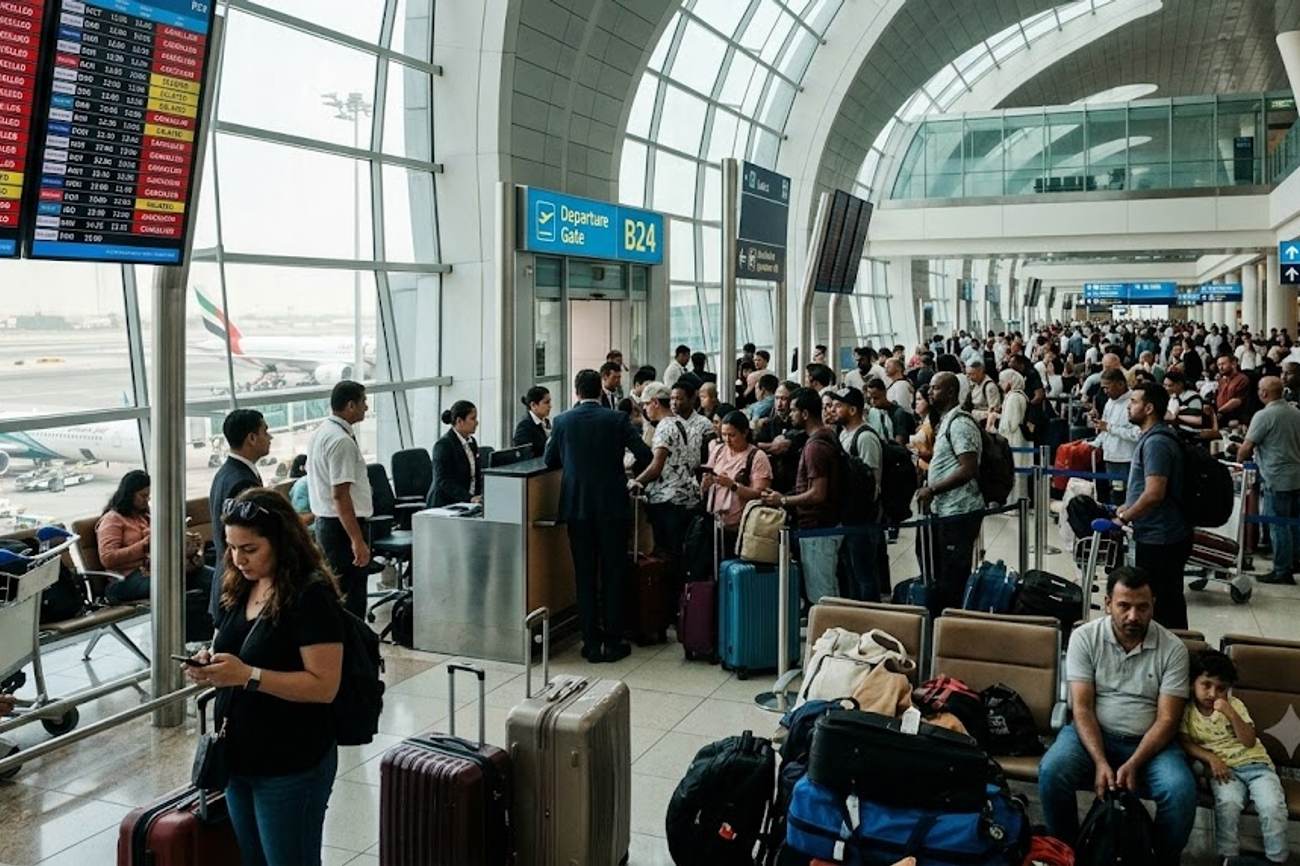
Image generated by AI
While Dubai is famous for its seamless luxury, a recent operational surge has seen Dubai International Airport record 181 delays and 16 cancellations, the highest number of cancellations for any Gulf hub in the current data set. This volatility is not an isolated incident but part of a wider regional instability affecting 1,137 delays and 60 cancellations across the Middle East's primary aviation arteries. For the seasoned nomad or the corporate traveler, these numbers represent more than just statistics; they are a signal that the region's hyper-growth is currently colliding with operational limits.
The Current State of Gulf Aviation
The Middle East is currently witnessing a period of intense schedule volatility. The aviation networks spanning the UAE, Saudi Arabia, Qatar, Oman, Kuwait, Bahrain, Jordan, Israel, Türkiye, and Syria are struggling with shifting timetables and local air traffic pressure. This isn't merely a matter of bad weather; it is a systemic struggle with connectivity demands and route modifications.
The scale of the disruption is most evident in the massive hubs that bridge East and West. Istanbul Airport has been particularly hard hit, recording 207 delays and one cancellation, while Istanbul Sabiha Gokcen International Airport added another 126 delays and two cancellations to the tally. In the Levant, Ben Gurion International Airport in Israel reported 176 delays and one cancellation, illustrating how geopolitical and operational tensions create a ripple effect across the eastern Mediterranean.
For those transiting through the Gulf, the pressure is concentrated in the "Big Three" hubs. Hamad International Airport in Doha saw 91 delays and one cancellation. In Saudi Arabia, the pressure is split between the two primary gateways: King Abdulaziz International Airport in Jeddah recorded 98 delays and eight cancellations, while King Khalid International Airport in Riyadh saw 79 delays and nine cancellations.
What Makes Middle East Transit Unique
Traveling through this region is fundamentally different from navigating European or North American hubs because of the "Super-Hub" model. Airports like Dubai International and Hamad International are designed as massive transfer engines. When a delay occurs here, it doesn't just affect one flight; it disrupts a global web of connections.
The airline data reveals a stark contrast in how carriers are handling this pressure. Turkish Airlines, for instance, dealt with 193 delays (an 11% delay rate) but managed to keep cancellations to a minimum with only one flight scrapped. In contrast, the low-cost carriers are feeling a sharper pinch. FlyDubai and Air Arabia both reported a 21% delay rate, with FlyDubai recording 62 delays and six cancellations.
The most extreme volatility is found in smaller or more specialized regional operations. Fly Cham / Cham Wings in Syria reported a staggering 33% delay and cancellation rate, with two delays and two cancellations. Similarly, El Al in Israel faced a 67% delay rate across 23 flights. This disparity shows that while the giants can absorb some shock, regional carriers are far more vulnerable to the current operational shifts.
Visitor Insider Tips
Navigating these disruptions requires a strategy that goes beyond checking an app. Having spent significant time in these terminals, here is how to handle the current climate:
The "Buffer" Rule Given that airlines like Saudia (11% delay rate) and Qatar Airways (13% delay rate) are experiencing frequent shifts, never book a connection with less than four hours of layover in Dubai or Doha. If you are using a separate ticket for your next leg, extend this to 24 hours.
Strategic Base Selection If your itinerary involves multiple cities in the UAE, consider basing yourself in Sharjah rather than Dubai. While Sharjah International Airport still saw 58 delays and one cancellation, it often offers a less chaotic alternative for regional hops via Air Arabia.
Local Transport Hacks When delayed in Dubai, avoid the taxi queues at the arrivals gate, which can stretch for hours during mass cancellation events. Use the Dubai Metro or pre-booked chauffeur services via the Dubai Airports official portal to bypass the surface-level congestion.
Etiquette and Communication In the Middle East, patience is a cultural currency. When dealing with ground staff during a delay, a polite, calm approach yields far better results than aggression. Use the official Visit Saudi or Visit Qatar resources to find alternative lounge access or hotel vouchers if you are stranded.
Food and Survival During long delays at Hamad or Dubai International, move away from the main gates. The "satellite" terminals often have quieter dining options and more available charging ports, which are gold during a mass delay event.
Cultural and Environmental Context
The current aviation turbulence is a symptom of the region's aggressive push toward becoming the center of global trade and tourism. Saudi Arabia's Vision 2030 and the UAE's diversification strategies have led to a massive increase in flight frequencies, often outpacing the physical and operational capacity of the airspace.
This growth creates a tension between economic ambition and environmental sustainability. The sheer volume of aircraft circling hubs like Jeddah and Riyadh contributes to significant carbon emissions and noise pollution for local communities. Furthermore, the reliance on high-capacity hubs makes the region's economy hypersensitive to any operational glitch.
There is also a human element to these disruptions. The pressure on airport staff and crew is immense, as they manage millions of passengers in high-stress environments. For the local population, the expansion of these airports often means increased traffic congestion and urban sprawl around the airport perimeters. Preserving the heritage of these cities while building the world's largest terminals is a delicate balancing act that the region is still navigating. For those interested in the broader historical context of these regions, the UNESCO World Heritage listings for sites in Oman and Saudi Arabia provide a sobering contrast to the glass-and-steel efficiency of the modern airports.
FAQ: Visiting the Middle East 2024
What is the best time to visit the region to avoid disruptions? While operational delays happen year-round, avoid the peak summer months (June-August) when extreme heat can impact ground handling and technical operations. The window from October to March offers the most stable weather and comfortable sightseeing.
Do I need a visa for these major hubs? Visa requirements vary. UAE and Qatar offer visa-on-arrival or e-visas for many nationalities. Saudi Arabia has streamlined its process with a tourist e-visa. Always check the official government portal of your destination 14 days before departure.
How do I get from the airport to the city center in Dubai or Doha? In Dubai, the Metro is the most efficient link from Terminal 3. In Doha, the Metro is exceptionally modern and connects Hamad International directly to the city. Both are cheaper and faster than taxis during peak traffic hours.
Is it safe for solo travelers? Yes, the UAE, Qatar, and Oman are among the safest destinations globally for solo travelers. Use registered ride-sharing apps or official airport taxis, and respect local customs regarding dress and public behavior.
When the screens turn red and the delays mount, remember that the Middle East is a region of hospitality—sometimes the best stories start with a missed connection.
Related Travel Guides
Disclaimer
This article is for informational and educational purposes only. It does not constitute legal, financial, or professional advice. While we strive to provide accurate and up-to-date information, travel policies, regulations, and conditions change rapidly. Always verify information with official sources before making travel decisions. Nomad Lawyer makes no representations about the accuracy, reliability, completeness, or suitability of the information provided. Readers should consult qualified professionals for advice specific to their circumstances. The views expressed in this article are those of the author and do not necessarily reflect the views of Nomad Lawyer.
Naina Thakur
Contributor & Travel Specialist
Travel enthusiast and legal writer covering visa regulations, responsible tourism, and cultural journeys across global destinations.
Learn more about our team →