
American Airlines Joins United and More as Rising Fuel Prices Rattle US Holiday Flights
American Airlines Joins United and More as Rising Fuel Prices Rattle US Holiday Flights

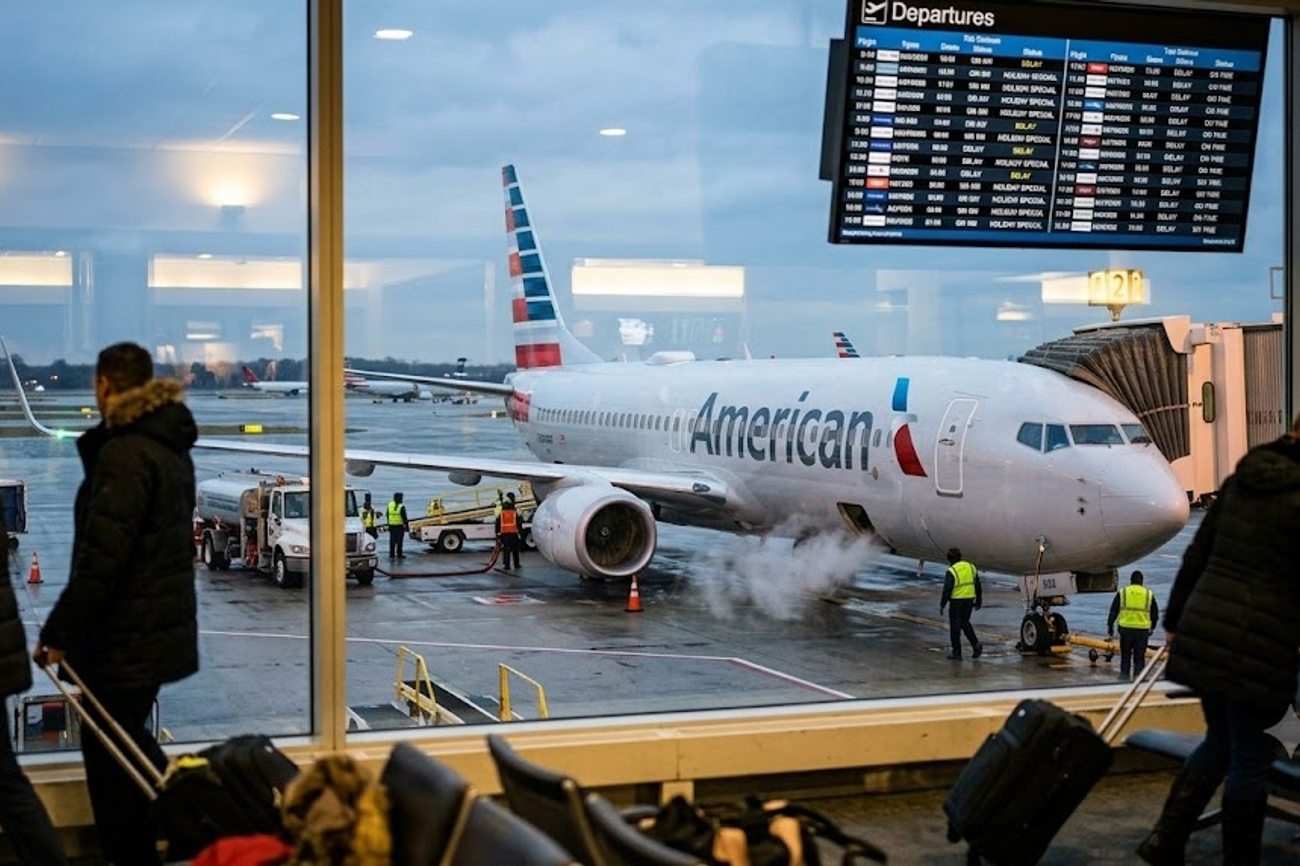
Image generated by AI
US jet fuel prices hit US$4.53 per gallon on 17 September 2026, triggering a systemic reassessment of growth trajectories among the United States' largest carriers. This price surge has shifted the operational priority for American Airlines, United Airlines, and Southwest Airlines from aggressive market expansion to aggressive cost containment. As fuel represents one of the most volatile and significant line items on an airline's balance sheet, this spike is forcing a pivot toward "profitability over presence," where the viability of a route is no longer judged by passenger volume alone, but by its ability to absorb skyrocketing energy costs.
The Mechanics of Fuel-Driven Capacity Contraction
When airlines speak of "capacity," they are referring to Available Seat Miles (ASMs)—the total number of seats available across all flights. A reduction in capacity does not necessarily signal the total abandonment of a city or a route. Instead, it manifests as a strategic thinning of the schedule. For example, a carrier may reduce a route from three daily frequencies to two, or swap a high-capacity wide-body aircraft for a smaller, more fuel-efficient model.
The current crisis is exacerbated by the lack of financial buffers. American Airlines, for instance, entered the second half of 2026 with no fuel hedging contracts in place as of 30 June. Fuel hedging allows airlines to lock in prices for future consumption, acting as an insurance policy against market volatility. Without this protection, American is fully exposed to the spot market, meaning every cent increase in the price per gallon translates directly into a loss of margin or a necessary increase in ticket prices.
The scale of this financial pressure is evident in the second-quarter data. American Airlines reported an average fuel cost of US$4.05 per gallon, representing a massive 77.1% increase compared to the previous year. This drove their quarterly fuel and tax expenditure to US$4.9 billion, a staggering increase of US$2.2 billion over the prior year's corresponding period.
Quantifying the Retrenchment
The response to these costs varies by carrier, ranging from the preemptive removal of flights to the slowing of long-term growth targets. United Airlines has taken the most immediate action by scrubbing selected flights from its December schedule. This move is a calculated attempt to protect free cash flow during the high-demand holiday season, ensuring that every flight operated is highly profitable.
Southwest Airlines has adopted a more structural approach by revising its 2026 expansion goals. Originally targeting a capacity increase of 2% to 3%, the carrier has nearly halved that ambition, now projecting growth of only 1% to 1.5%. This suggests that Southwest is not just reacting to a temporary spike but is recalibrating its entire growth model for the year.
| Carrier | Primary 2026 Action | Financial Indicator | Hedging Status | Passenger Impact |
|---|---|---|---|---|
| American Airlines | Potential capacity trade-offs | Q2 fuel cost: US$4.05/gal (+77.1% YoY) | No hedges as of June 30 | Reduced frequencies; higher fares |
| United Airlines | December flight removals | Prioritizing profit over market share | Not disclosed | Fewer holiday options; faster sell-outs |
| Southwest Airlines | Growth cut (2-3% $\rightarrow$ 1-1.5%) | Q2 fuel cost: US$3.92/gal | Not disclosed | Slower network expansion; fewer new seats |
| US Market Avg | Margin-based route reviews | Index price: US$4.53/gal (Sept 17) | Varies | Higher fares; lower availability at peak |
Expert Analysis: The Shift Toward "Disciplined" Aviation
For the modern traveler, the direct consequence of this trend is the end of the "growth at all costs" era. For several years, US carriers chased market share by adding routes to secondary cities and increasing frequencies to capture every possible passenger. The current fuel crisis is forcing a return to "revenue discipline," where airlines will no longer operate "prestige" or "low-margin" routes simply to keep a competitor out of a market.
The pricing pressure created by these costs cannot be offset instantly. Because airlines sell a significant portion of their inventory weeks or months in advance, there is a lag between the fuel price spike and the fare increase. This creates a dangerous window where airlines operate flights at a loss. To mitigate this, carriers like United Airlines and American Airlines are likely to implement more aggressive dynamic pricing algorithms, leading to sharper price hikes for last-minute bookings.
Furthermore, the disparity between hub airports and regional spokes will widen. High-demand corridors (e.g., New York to Los Angeles) will remain untouched because the demand is inelastic—people will pay whatever is necessary to fly. However, smaller regional airports are now at high risk. When a carrier reviews "weaker-margin flying," the first flights to be cut are those serving smaller communities where planes fly half-empty. This effectively creates a "travel desert" for regional passengers, forcing them to drive longer distances to major hubs.
The industry's reliance on the International Air Transport Association (IATA) standards for fuel efficiency is becoming a competitive necessity rather than a sustainability goal. Airlines with older, thirstier fleets will be forced to cut capacity faster than those who have invested in next-generation aircraft.
Key Takeaways
- Price Surge: US jet fuel hit US$4.53 per gallon on 17 September 2026, driving a sector-wide review of flight schedules.
- Growth Slowdown: Southwest Airlines has slashed its 2026 growth projections from a maximum of 3% down to a range of 1% to 1.5%.
- Holiday Constraints: United Airlines has already removed flights from its December calendar, likely leading to higher fares and fewer seats for winter travelers.
- Financial Exposure: American Airlines is particularly vulnerable due to a total lack of fuel hedging contracts as of June 2026, with fuel costs rising 77.1% year-on-year in Q2.
- Regional Risk: Low-margin routes and smaller airports are the most likely targets for frequency reductions as airlines prioritize profitability over market share.
FAQ: US Flight Availability 2026
Why are my flight options for December decreasing? Airlines, specifically United, are removing less profitable flights to offset the rise in jet fuel prices (which hit US$4.53/gallon in September). They are prioritizing high-margin flights to ensure profitability during the holiday peak.
Will ticket prices go up because of fuel costs? Yes. While airlines try to absorb some costs, the 77.1% increase in fuel costs seen by carriers like American Airlines often leads to higher base fares and increased surcharges to protect profit margins.
Are airlines canceling entire routes? Not currently on a mass scale. Instead of canceling entire routes, airlines are reducing "capacity"—meaning they may fly a route once a day instead of twice or use smaller planes.
How does "fuel hedging" affect my ticket price? Hedging allows airlines to lock in lower fuel prices. Airlines without hedges, like American Airlines, are more exposed to market spikes, which makes them more likely to raise fares quickly when fuel prices jump.
The era of cheap expansion is over; the era of the lean, high-margin schedule has arrived.
Tags: American Airlines 2026, United Airlines December Schedule, Southwest Airlines Capacity, US Jet Fuel Prices 2026, Aviation Fuel Hedging
Related Travel Guides
- Biman Bangladesh Airlines BG201 Sylhet to London Flight Sees Mid-Air Passenger Brawl as Cabin Crew Intervenes
- Turkey Travel Spotlight as Corendon Airlines Streamlines UK Antalya Flights With New 2027 Summer Schedule
- Singapore Airlines Joins Turkish, Air Canada and More Airline Companies Around the World Leads Skytrax 2026
Disclaimer
This article is for informational and educational purposes only. It does not constitute legal, financial, or professional advice. While we strive to provide accurate and up-to-date information, travel policies, regulations, and conditions change rapidly. Always verify information with official sources before making travel decisions. Nomad Lawyer makes no representations about the accuracy, reliability, completeness, or suitability of the information provided. Readers should consult qualified professionals for advice specific to their circumstances. The views expressed in this article are those of the author and do not necessarily reflect the views of Nomad Lawyer.
Kunal K Choudhary
Co-Founder & Contributor
A passionate traveller and tech enthusiast. Kunal contributes to the vision and growth of Nomad Lawyer, bringing fresh perspectives and driving the community forward.
Learn more about our team →