
Nashville and New Orleans Lead America’s Cultural Weekend Getaway Surge: 2026 Travel Guide

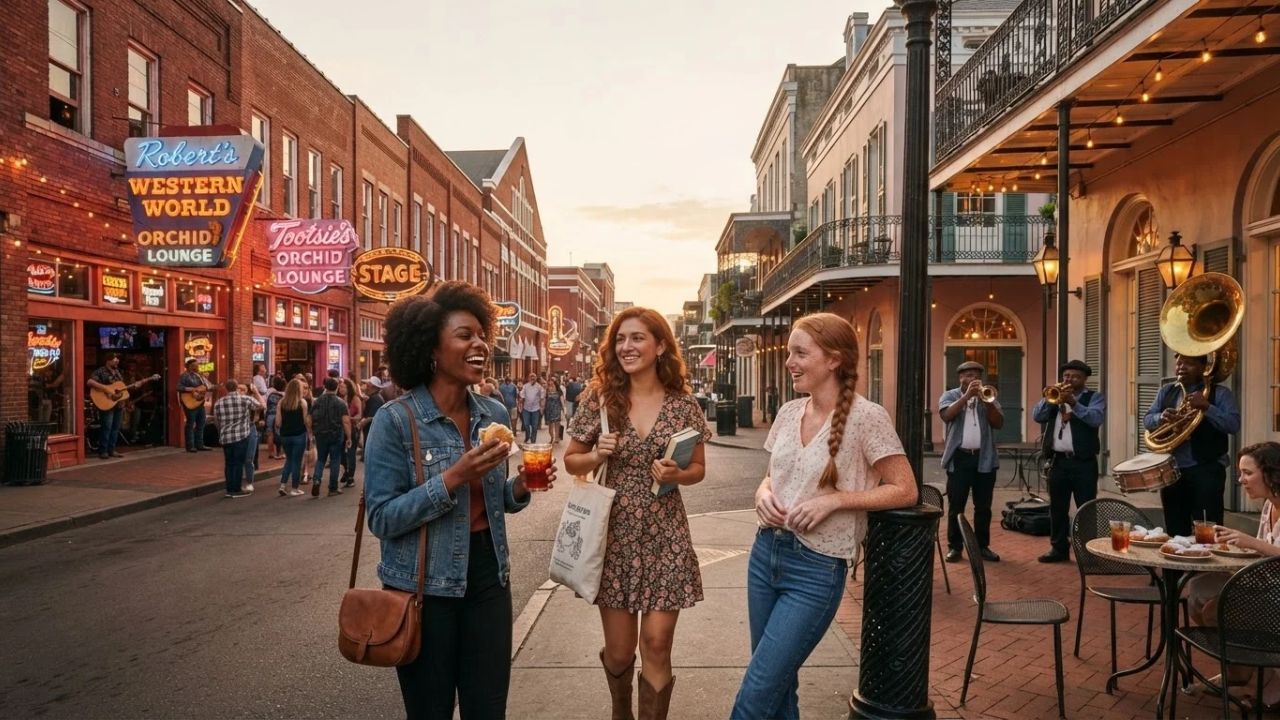
Fueling a $1.19 trillion domestic travel boom forecast for 2026, American travelers are replacing generic beach resorts with cultural and culinary weekend pilgrimages to Nashville and New Orleans. Injecting $31.8 million daily into Nashville alone, short getaways anchored in authentic live music and regional cuisine are reshaping domestic flight schedules and urban economies.
The Local Trend Revealed: The Rise of the Cultural and Culinary Pilgrimage
The character of domestic leisure travel across the United States is undergoing a fundamental structural transition. Moving away from isolated all-inclusive resorts and formulaic theme parks, travelers are prioritizing short, high-impact weekend journeys to cities celebrated for their distinct sonic traditions and regional kitchens.
Today's travelers treat these getaways as secular pilgrimages—intentional trips to experience authentic musical genres and time-honored recipes that cannot be replicated elsewhere. In response, municipalities and regional tourism boards are investing heavily in historic venue conservation, independent arts funding, and regional culinary preservation.
The Financial Scale of Experiential Domestic Tourism
Official forecasts from the U.S. Travel Association confirm the strength of this domestic leisure shift. Despite economic pressures, domestic travelers continue to defend their holiday budgets, choosing concentrated three- to four-day city breaks:
- Surging National Spend: Domestic leisure travel spending reached $895 billion in 2025 and is projected to expand to approximately $1.19 trillion in 2026, exceeding inflation-adjusted pre-pandemic records.
- Reallocation to Dining and Recreation: Consumer spending has shifted away from mass retail and generic amusement parks toward live concert tickets, independent chef-driven restaurants, historic walking tours, and regional food festivals.
- The Local Multiplier: Dollars spent at an independent Cajun kitchen in New Orleans or a neighborhood smokehouse in Tennessee circulate rapidly through local supply chains, benefiting regional farmers, working musicians, and independent hospitality staff.
| Economic Benchmark | Official Metric / Source | Impact on Regional Tourism |
|---|---|---|
| US Domestic Travel Spending (2025) | U.S. Travel Association | $895 billion in domestic leisure expenditure |
| US Domestic Travel Spending (2026 Forecast) | U.S. Travel Association | Approximately $1.19 trillion projected spend |
| Davidson County (Nashville) Direct Spend (2025) | Tourism Economics / TN Dept of Tourist Development | Record $11.6 billion (up 3.5% year-over-year) |
| Statewide Concentration | Tennessee Department of Tourist Development | Nashville accounts for 35% of all Tennessee tourism spending |
| Daily Economic Influx | Nashville Convention & Visitors Corp | Visitors inject $31.8 million daily into Nashville's economy |
| Local Tax Revenue Relief | Davidson County Fiscal Reports | Saves each Nashville household $3,674 annually in taxes |
| Hospitality Employment | U.S. Bureau of Labor Statistics | 74,000 workers in Davidson County ($3.2 billion labor income) |
Nashville: Music City's $11.6 Billion Economic Powerhouse
Nashville, Tennessee, provides the clearest example of this cultural boom. According to official figures released by Tourism Economics and the Tennessee Department of Tourist Development, visitors to Davidson County generated a record-breaking $11.6 billion in direct spending in 2025. This 3.5% increase represents more than one-third (35%) of all visitor spending across the state's 95 counties.
To put this economic concentration in perspective, it takes the combined tourism output of Tennessee's next four largest counties—Shelby, Sevier, Knox, and Hamilton—to match Nashville's $11.6 billion total. The city hosted 17.4 million daily and overnight visitors in 2025.
Beyond the neon lights of Lower Broadway's Honky Tonk Highway and the Grand Ole Opry, Nashville's hospitality appeal is propelled by a culinary renaissance. Led by James Beard Award-winning chefs, upscale Southern fusion kitchens, and historic hot chicken institutions, the dining scene works in lockstep with the city's music venues. As noted by Deana Ivey, President and CEO of the Nashville Convention & Visitors Corp, tourism generated $1.2 billion in state and local tax revenue in 2025 ($715.8 million state, $477.8 million local), subsidizing public education and infrastructure while saving local households thousands each year.
New Orleans: The Blueprint for Jazz, Creole, and Cajun Heritage
Where Nashville represents modern commercial momentum, New Orleans, Louisiana, remains the foundational blueprint of American cultural travel. As the birthplace of jazz and the epicenter of Creole and Cajun culture, New Orleans offers an environment rooted in centuries of cultural synthesis:
- Edible History: Louisiana Office of Tourism data underscores culinary heritage as a primary economic driver. Traditional gumbo, jambalaya, crawfish étouffée, and overstuffed po-boys represent a centuries-old fusion of French, Spanish, West African, and Native American traditions.
- Living Soundtracks: Live music in New Orleans extends beyond clubs into public street life through second-line brass band parades in Tremé, neighborhood social aid clubs, and historic jazz halls along Frenchmen Street in the Faubourg Marigny.
- Year-Round Vitality: Beyond world-famous compressed events like Mardi Gras and the New Orleans Jazz & Heritage Festival, baseline year-round weekend travel sustains thousands of independent hospitality careers.
Regional Contenders: Austin, Memphis, Charleston, and Savannah
This experiential wave extends across other regional powerhouses:
- Austin, Texas: Known as the "Live Music Capital of the World," Austin blends mega-events like South by Southwest (SXSW) and Austin City Limits (ACL) with year-round live performances across the Red River Cultural District and East Austin. Its culinary reputation is defined by Central Texas craft barbecue, where travelers wait in line for hours for oak-smoked brisket.
- Memphis, Tennessee: Anchoring western Tennessee's Shelby County, Memphis attracts music fans to Sun Studio, Stax Records, and Beale Street, while celebrating its distinct dry-rubbed pork barbecue tradition and the annual World Championship Barbecue Cooking Contest.
- Charleston & Savannah: Along the Atlantic coast, Charleston, South Carolina, and Savannah, Georgia, draw visitors through preserved antebellum architecture, Gullah Geechee cultural traditions, and elevated Lowcountry cuisine featuring shrimp and grits, she-crab soup, and locally harvested coastal oysters.
Cultural & Environmental Value: Community Preservation and Sustainable Urbanism
The rise of the weekend cultural pilgrimage supports local conservation and regional identity:
- Direct Community Wealth: When visitors patronize independent jazz clubs, heritage diners, and neighborhood craft markets, tourist expenditures circulate directly to working musicians, culinary staff, and local purveyors.
- Federal and State Preservation Support: The National Endowment for the Arts (NEA) has awarded more than $5.5 billion since its founding, supporting Creative Placemaking initiatives, folk arts apprenticeships, and independent music festivals. In Tennessee, Commissioner Mark Ezell emphasizes that sales tax captured from out-of-state visitors directly funds community infrastructure without burdening permanent residents.
- Car-Free Urban Exploration: Cities like New Orleans and Charleston benefit from dense, walkable historic quarters. Visitors can traverse New Orleans using the historic St. Charles Avenue and Canal Street streetcar lines, reducing urban traffic congestion and vehicle emissions.
Visitor Insider Tips: Maximizing Weekend Cultural Getaways
To experience Nashville, New Orleans, and peer cities like a seasoned specialist, incorporate these local recommendations:
- Off-Peak Timing Windows:
- Nashville: Visit between November and February (avoiding holiday weekends and major NFL game days) to secure reservations at top chef-driven restaurants and experience Lower Broadway without overwhelming bachelor party crowds.
- New Orleans: Late spring (May) and autumn (October to mid-November) offer pleasant temperatures (20°C to 26°C) and active street life outside the high-season crush of Mardi Gras.
- Music Venue Etiquettes:
- Nashville Listening Rooms: At renowned venues like The Bluebird Cafe or The Listening Room Cafe, strict quiet policies apply during acoustic rounds. Keep conversations silent while the songwriter is performing, and always tip the working musicians generously.
- Frenchmen Street, New Orleans: Most traditional music clubs charge no cover but rely on cash tip buckets for the brass band or jazz quartet. Keep $5 and $10 bills handy to support the artists after every set.
- Local Dining Specialties:
- Nashville Hot Chicken: Visit original spots like Prince's Hot Chicken Shack. First-time visitors should start with "Mild" or "Medium"—traditional Nashville spice blends pack genuine habanero and cayenne heat.
- Meat-and-Three: Sample traditional cafeteria-style meat-and-three lunches (such as country-fried steak, turnip greens, macaroni and cheese, and skillet cornbread).
- New Orleans Gumbo and Po-Boys: Seek out neighborhood sandwich counters in the Bywater and Mid-City for roast beef po-boys soaked in rich "debris" gravy, paired with a cup of dark roux seafood filé gumbo.
- Under-the-Radar Neighborhoods:
- East Nashville (Five Points): A walkable bohemian enclave filled with vintage record stores, independent coffee roasters, and craft cocktail bars.
- Bayou St. John, New Orleans: A serene waterway neighborhood near City Park where locals picnic on po-boys and watch kayakers drift past historic Creole cottages.
Tourism Outlook: Cultural Hubs Prepare for America's Mega-Decade
The trajectory for cities anchored in distinct regional heritage points toward sustained long-term growth. Economic forecasting indicates that visitor spending in Nashville will reach $12.2 billion by the close of 2026, with projections climbing steadily to $17.4 billion by 2036.
Aviation networks are adapting accordingly. Transportation Security Administration (TSA) passenger records indicate heavy domestic passenger volumes, prompting airlines to add dedicated Thursday-to-Sunday frequencies linking regional hubs to Nashville (BNA), New Orleans (MSY), and Austin (AUS).
Looking ahead to an unprecedented "mega-decade"—including the 2026 FIFA World Cup, America's 250th Anniversary commemorations, and the 2028 Summer Olympic Games in Los Angeles—international visits are forecast to rebound to 70.4 million in 2026 and reach 81.9 million by 2029. As global and domestic travelers seek authenticity over commercialized uniformity, America's music and culinary capitals are positioned to lead the nation's tourism economy.
Related Travel Guides
Disclaimer
This article is for informational and educational purposes only. It does not constitute legal, financial, or professional advice. While we strive to provide accurate and up-to-date information, travel policies, regulations, and conditions change rapidly. Always verify information with official sources before making travel decisions. Nomad Lawyer makes no representations about the accuracy, reliability, completeness, or suitability of the information provided. Readers should consult qualified professionals for advice specific to their circumstances. The views expressed in this article are those of the author and do not necessarily reflect the views of Nomad Lawyer.
Raushan Kumar
Founder & Lead Developer
Full-stack developer with 11+ years of experience and a passionate traveller. Raushan built Nomad Lawyer from the ground up with a vision to create the best travel and law experience on the web.
Learn more about our team →