
US Cities Expand Direct International Flights: Denver, Nashville, and Regional Gateways Guide

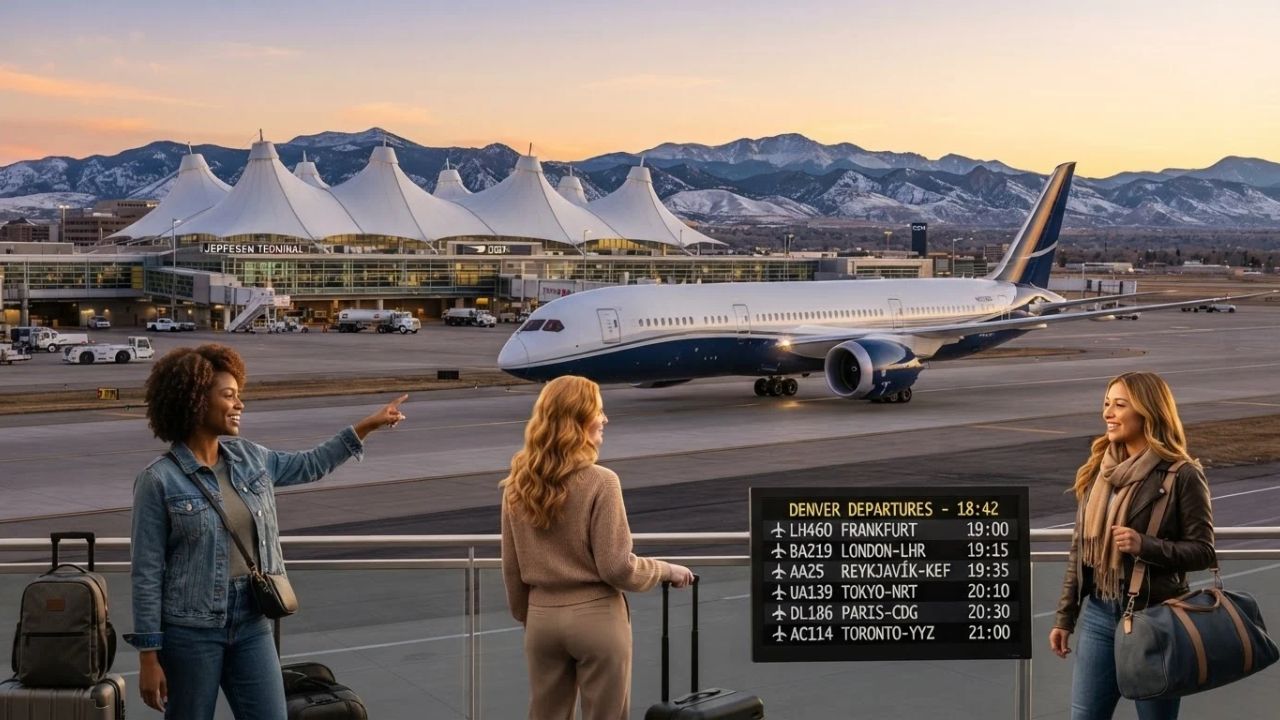
While the top 20 US airports handled 79.1% of international departures in 2025, cities like Denver, Nashville, Salt Lake City, and Austin are securing direct overseas links, transforming how travelers access Europe, Asia, and Latin America without routing through traditional coastal hubs. This distributed aviation network cuts out domestic positioning flights, providing overseas holidaymakers and corporate flyers direct entry into America’s regional cultural capitals.
The Local Trend Revealed: America’s Expanding Global Gateways
America’s international aviation network is entering a more distributed phase. Austin, Nashville, Denver, Raleigh-Durham, Tampa, Charlotte, Orlando, Portland, Salt Lake City, and San Diego are strengthening direct overseas and cross-border links. Meanwhile, New York, Los Angeles, Miami, Chicago, and Atlanta still command enormous international volumes.
The shift is not a collapse of traditional gateways. Instead, international flight growth is giving more US cities direct access to global markets without requiring every traveler to connect through a handful of coastal hubs. US Department of Transportation (DOT) data shows the scale remains concentrated, yet airport-level schedules reveal a widening network beyond the established giants.
Measuring Gateway Concentration vs. Regional Growth
The traditional American gateways remain extraordinarily powerful, particularly when measured by international passengers rather than route additions. The US Department of Transportation continues to identify New York, Los Angeles, and Miami among the leading US international gateway markets. Its year-ended March 2025 figures placed JFK, LAX, Miami, San Francisco, and Newark among the five largest domestic scheduled passenger gateways for international traffic.
Bureau of Transportation Statistics (BTS) data shows the top 20 US airports accounted for 79.1% of international departures in 2025, while Miami alone recorded 101,033 international departures. Total nonstop flights from US airports reached 9.95 million in 2025, with the top 20 airports claiming a 47.8% share of all nonstop US flights.
| Aviation Metric | Source / Benchmark | What the Latest Data Shows |
|---|---|---|
| Top 20 Airports' International Share | BTS 2025 Data | 79.1% of total US international departures |
| Miami International Departures | BTS 2025 Record | 101,033 international departures |
| Total Nonstop Flights from US Airports | BTS 2025 Record | 9.95 million flights |
| Top 20 Share of All Nonstop Flights | BTS 2025 Share | 47.8% of total US nonstop flights |
| Orlando Nonstop Flight Volume | BTS 2025 Record | 419,114 nonstop flights (up 10.6% year-on-year) |
| Denver Total Passenger Volume | Airports Council International 2025 | 82.4 million passengers |
The data confirms that emerging gateways are not replacing traditional giants; they are widening the pool of cities capable of participating directly in global air travel.
Three Operating Models Driving Expansion
Calling every non-coastal airport a "secondary gateway" no longer fits operational reality. Denver recorded 82.4 million passengers in 2025 according to Airports Council International (ACI), functioning as a primary continental hub. Orlando handled 419,114 nonstop flights in 2025—up 10.6% from the previous year—proving how leisure demand builds international scale.
Airlines and airports are expanding through three distinct models:
- The Inland Mega-Gateway (Denver & Salt Lake City): Positioned between population centers, these airports leverage airline hub depth (United Airlines in Denver; Delta Air Lines in Salt Lake City) to connect regional fliers across continents.
- The Tourism-and-Events Gateway (Nashville & Orlando): High inbound leisure interest sustains direct flights from Europe, Canada, and the Caribbean.
- The Knowledge-Economy Gateway (Austin & Raleigh-Durham): Corporate, technology, and research sectors generate predictable business-class demand, supporting transatlantic and Latin American links.
| City | International Network Scope | Primary Driver | Airline Representation |
|---|---|---|---|
| Austin | Europe, Latin America, Canada | Business and technology | KLM, Lufthansa, British Airways, Air Canada, Aeromexico, Viva, Copa |
| Nashville | Europe, Canada, Caribbean, Mexico | Tourism and events | British Airways, Aer Lingus, Icelandair, Volaris |
| Denver | Europe, Asia, Latin America, Caribbean | Inland airline hub | United Airlines, Volaris, foreign transatlantic carriers |
| Raleigh-Durham | Europe, Canada, Latin America | Research and corporate demand | Transatlantic and regional cross-border carriers |
| Tampa | Caribbean, Latin America, Europe | Leisure and population growth | Transatlantic and Caribbean carriers |
| Charlotte | Europe, Caribbean, Latin America | Major airline hub | American Airlines hub network |
| Orlando | Caribbean, Latin America, Europe | Inbound leisure tourism | Global leisure and scheduled carriers |
| Portland | Canada, Europe, Asia | Pacific Northwest connectivity | Transpacific and transatlantic services |
| Salt Lake City | Europe, Asia, Latin America | Rocky Mountain airline hub | Delta, SkyWest, KLM, WestJet, Aeromexico, Volaris |
| San Diego | Mexico, Europe, Canada | Border economy and tourism | Alaska Airlines, British Airways, cross-border carriers |
Airport Case Studies: How Rapidly Route Maps Evolve
The breadth of regional international route development demonstrates how quickly airport portfolios adapt:
- Denver: In February 2026, Volaris announced year-round twice-weekly service to Querétaro starting in June. That route marked the ninth nonstop Mexican destination from Denver and lifted its international destination total to 35, the highest in airport history. Denver's network spans Europe, Asia, Canada, the Caribbean, Central America, and Mexico. Its schedule features Tokyo, eight Canadian destinations, five Caribbean destinations, five Central American destinations, eight European markets (including London, Paris, Frankfurt, Munich, Rome, Dublin, Reykjavík, and Istanbul), and nine Mexican destinations.
- Salt Lake City: Its June 2026 schedule listed 14 international destinations, including Amsterdam, Seoul, London, Paris, Lima, Mexico City, Calgary, Cancún, Edmonton, Guadalajara, Los Cabos, Puerto Vallarta, Toronto, and Vancouver. In August, the airport recorded 106 weekly international departures across listed services. Delta accounted for 64 departures, SkyWest-operated services accounted for 28 departures, with KLM, WestJet, and Volaris rounding out the roster.
- Nashville: Its September 2026 schedule features British Airways to London, Aer Lingus to Dublin, and Icelandair to Reykjavík, alongside Canadian routes to Calgary, Vancouver, and Toronto, and Caribbean links to Cancún and Punta Cana. Volaris is scheduled to launch Nashville–Guadalajara service in October 2026, expanding Mexican cross-border access.
- San Diego: The airport reported 87 nonstop destinations in spring and summer 2026, its highest total in history. Carriers increased nonstop service by more than 10% year-on-year, while seven international flights were expanded or resumed. In September 2026, Alaska Airlines announced seasonal San Diego–Loreto service starting in December, becoming San Diego’s 12th international destination.
- Austin: Austin recorded 97 nonstop destinations in 2023 and 100 in 2024, before posting 88 in fiscal 2025. Its 2026 network includes Amsterdam, Frankfurt, London, Mexico City, Monterrey, Toronto, and Panama City. However, planning data highlights strong unserved demand for nonstop flights to Paris, Seoul, Tokyo, Rome, San José, Dublin, São Paulo, Madrid, and Barcelona.
Cultural & Environmental Value: Regional Economies and Low-Emission Routing
For international visitors, landing directly in cities like Nashville, Denver, or Salt Lake City shifts tourism spending away from coastal tourist enclaves and injects capital into regional economies:
- Bypassing Inefficient Congestion: Eliminating domestic positioning segments through crowded hubs like JFK, O'Hare, or Atlanta reduces fuel burn, delays, and aviation emissions. Passengers flying direct save hours of taxi time and transit stress.
- Direct Capital for Regional Heritage: Visitors touching down at Nashville International Airport directly support independent historic venues, such as Ryman Auditorium, historic studios on Music Row, and local preservation trusts. In Denver, direct overseas arrivals channel resources into the Denver Art Museum, Clyfford Still Museum, and regional Rocky Mountain trail conservation initiatives managed by Colorado Parks and Wildlife.
- Eco-Transit Airport Links: Denver's RTD A-Line commuter rail whisks international passengers from airport gates directly to downtown Denver Union Station in 37 minutes using electric rail. Similarly, Salt Lake City's TRAX Light Rail Green Line connects terminals directly to the downtown cultural district without requiring highway car rentals.
Visitor Insider Tips: Navigating America's Emerging Gateways
When booking direct overseas flights into America’s inland and regional gateways, keep these practical operational tips in mind:
- Verify Seasonality vs. Year-Round Operations: Nashville explicitly designates several international services as seasonal, whereas Denver’s Querétaro link operates twice weekly year-round. Check whether spring or autumn schedules alter operating days.
- Terminal Timing and Immigration Processing: Regional international arrivals facilities are often less congested than JFK or LAX, but processing banks can be concentrated around single flight banks. Mobile Passport Control (MPC) is available at Denver, Salt Lake City, and Austin, drastically shortening customs clearance for eligible travelers.
- Altitude and Climate Preparation:
- Denver: Sitting at 5,280 feet (1,609 meters), travelers arriving from sea-level European or Asian origins should hydrate immediately and limit alcohol consumption during their first 24 hours.
- Salt Lake City: The Wasatch Range brings dry mountain air; winter travelers heading to nearby ski resorts should rent vehicles with all-wheel drive or utilize regional ski shuttles.
- Neighborhood Dining and Hidden Cultural Spots:
- Nashville: Beyond Lower Broadway's loud honky-tonks, spend evenings in East Nashville or historic Germantown. Sample authentic hot chicken at Prince's or Bolton's, and respect live music etiquette by tipping the band whenever you enjoy a set.
- Denver: Explore the River North (RiNo) Art District for street murals and craft cider houses, or catch a sunrise at Red Rocks Amphitheatre on non-event mornings when the park is open to hikers. Sample Colorado green chile smothered burritos at local neighborhood diners.
- Austin: Head to Barton Springs Pool in Zilker Park for a natural spring-fed swim (constant 68°F/20°C water). For barbecue, skip the four-hour lines and order ahead at Micklethwait Craft Meats or Terry Black’s on Barton Springs Road.
- Salt Lake City: Ride the TRAX rail to the 9th & 9th neighborhood for independent bookstores, artisanal gelato, and neighborhood bistros. Taste Utah's distinct culinary quirk: house-made fry sauce served alongside local burgers.
Tourism Outlook: Decentralization Shapes the Future of Travel
The decentralization of US international aviation provides travelers with unparalleled routing flexibility. By distributing global arrivals across cities with distinct cultural identities, international tourism avoids oversaturating a handful of coastal gateways.
As airports like Denver, Nashville, and Salt Lake City expand foreign airline partnerships and add international gates, regional destinations gain direct influence over global travel flows. For global travelers, the next trip to the United States no longer has to start in New York or California—it can begin directly in the American heartland.
Related Travel Guides
Disclaimer
This article is for informational and educational purposes only. It does not constitute legal, financial, or professional advice. While we strive to provide accurate and up-to-date information, travel policies, regulations, and conditions change rapidly. Always verify information with official sources before making travel decisions. Nomad Lawyer makes no representations about the accuracy, reliability, completeness, or suitability of the information provided. Readers should consult qualified professionals for advice specific to their circumstances. The views expressed in this article are those of the author and do not necessarily reflect the views of Nomad Lawyer.
Raushan Kumar
Founder & Lead Developer
Full-stack developer with 11+ years of experience and a passionate traveller. Raushan built Nomad Lawyer from the ground up with a vision to create the best travel and law experience on the web.
Learn more about our team →