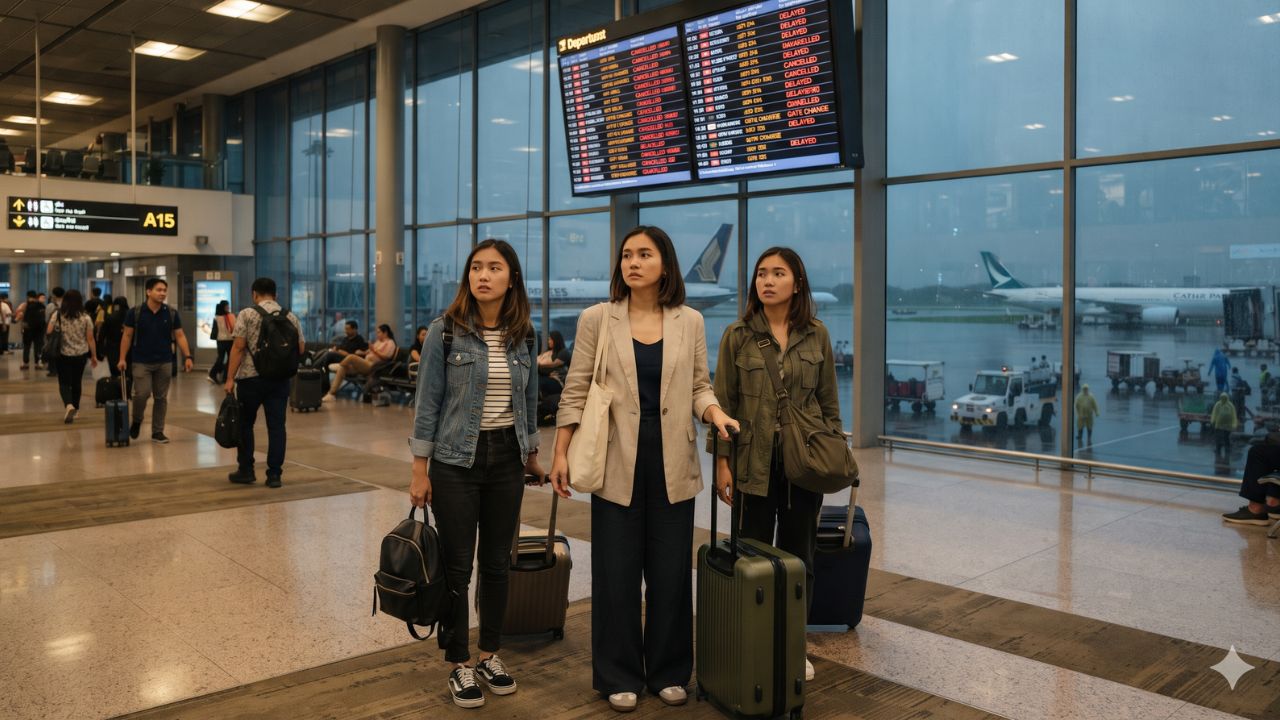
Gulf and Türkiye Aviation Turmoil: 832 Delays and 62 Cancellations Snarl Dubai, Riyadh, and Istanbul

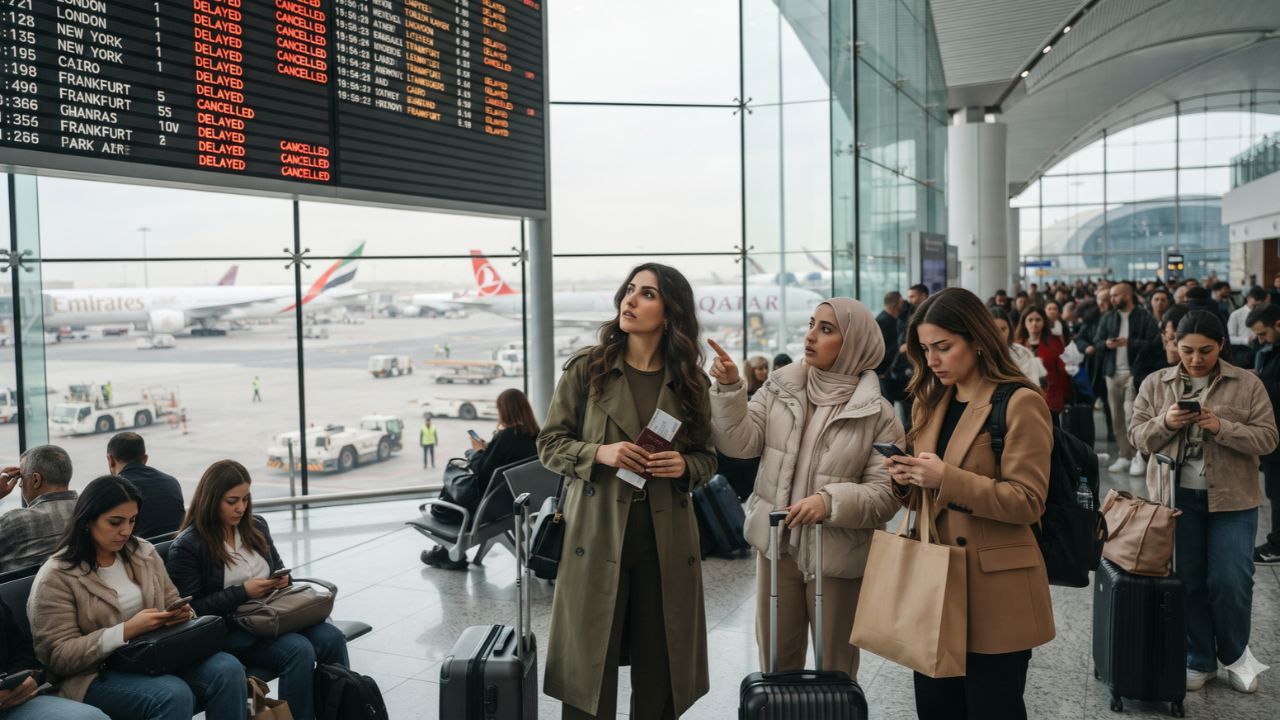
While Dubai International Airport absorbed the highest concentration of delayed flights in the region with 182 late departures, Saudi Arabia emerged as the epicenter of outright route cancellations—logging 38 grounded flights across four commercial gateways as infrastructure security precautions and international airline suspensions extended into November. Operational tracking audits compiled through FlightAware on 30 October 2026 at 5:55 pm ET (31 October at 1:55 am GST) document 894 total flight disruptions across ten major aviation facilities in five countries. Comprising 832 delayed flights and 62 cancellations, the operational friction highlights growing fragility across Middle Eastern and Eastern Mediterranean air transit corridors connecting Europe, Asia, and Africa.
Middle East Aviation Strains: Regional Security and Airspace Detours
The widespread schedule fracturing across the Arabian Peninsula and Türkiye stems from layered operational constraints. Repeated missile and drone strikes targeting civil aviation infrastructure in Saudi Arabia have prompted foreign and domestic carriers to enact emergency route suspensions and impose defensive holding patterns. While King Khalid International Airport in Riyadh has resumed limited commercial flight rotations following recent strikes, operations remain heavily restricted, leading the ten-hub survey with 19 cancellations alongside 17 delays.
Simultaneously, international civil aviation authorities have mandated precautionary re-routings away from higher-risk flight paths over the Red Sea and surrounding combat zones. These diversions lengthen flight times, force unplanned refueling stops, and scatter aircraft and flight crews away from their scheduled rotations. Across Saudi Arabia's four primary commercial airfields—Riyadh, Jeddah, Dammam, and Madinah—airlines recorded a combined total of 149 delays and 38 cancellations.
Connecting hubs along the Persian Gulf also experienced significant strain. Dubai International Airport recorded 182 delays and two cancellations, creating severe friction for travelers moving between European gateways and South Asian destinations. Bahrain International Airport registered 42 delays and eight cancellations, while Kuwait International Airport logged 20 delays and two cancellations. In Türkiye, high-density traffic corridors at Istanbul Airport (152 delays, 5 cancellations), Sabiha Gökçen (171 delays, 5 cancellations), and Mediterranean resort gateway Antalya (116 delays, 2 cancellations) suffered cascading backlogs as regional transit traffic backed up.
| Country | Airport Facility & City (IATA Code) | Delayed Flights | Outright Cancellations | Primary Disruption Factor | Traveler Impact & Risk Level |
|---|---|---|---|---|---|
| UAE | Dubai International, Dubai (DXB) | 182 | 2 | Airspace feeder compression and intercontinental transfer bottlenecks. | Missed long-haul flight connections across Asia and Europe. |
| Saudi Arabia | King Khalid International, Riyadh (RUH) | 17 | 19 | Heightened security protocols following recent infrastructure strikes. | Severe route cancellations and foreign airline schedule freezes. |
| Saudi Arabia | King Abdulaziz International, Jeddah (JED) | 75 | 16 | Umrah pilgrimage influx combined with airspace avoidance paths. | Gate congestion and prolonged terminal check-in queues. |
| Saudi Arabia | King Fahd International, Dammam (DMM) | 41 | 1 | Precautionary holding patterns and regional rotation delays. | Regional Gulf shuttle schedule slippage. |
| Saudi Arabia | Prince Mohammad bin Abdulaziz, Madinah (MED) | 16 | 2 | Feeder schedule adjustments from domestic Saudi origins. | Extended waiting periods for domestic and religious travelers. |
| Bahrain | Bahrain International, Manama (BAH) | 42 | 8 | Regional feeder cancellations and security holding corridors. | Connecting passenger delays on Gulf Air routes. |
| Kuwait | Kuwait International, Kuwait City (KWI) | 20 | 2 | Upper airspace rerouting and regional arrival pacing. | Short-haul schedule delays across the northern Gulf. |
| Türkiye | Sabiha Gökçen International, Istanbul (SAW) | 171 | 5 | Low-cost carrier aircraft turnaround pressure and regional weather. | Extensive departures board delays for point-to-point flights. |
| Türkiye | Istanbul Airport, Istanbul (IST) | 152 | 5 | Long-haul wave flow adjustments and European sector spacing. | Tight transfer windows across international terminal concourses. |
| Türkiye | Antalya International, Antalya (AYT) | 116 | 2 | Seasonal autumn charter movements and Mediterranean route spacing. | Extended terminal dwell times for leisure holidaymakers. |
| Total Benchmark | Ten Major Hubs Across Five Countries | 832 | 62 | Combined security, airspace rerouting, and operational backlogs. | 894 total flight disruptions affecting global transit. |
Airline Performance: Comparing Low-Cost and Full-Service Carriers
Carrier-level operational statistics highlight substantial variations between total delay volumes and proportional schedule disruption. Turkish budget operator Pegasus Airlines logged the highest raw delay count among the five tracked airlines, with 223 delays affecting 29 percent of its schedule, alongside seven cancellations (listed at a rounded 0 percent cancellation rate).
In contrast, United Arab Emirates budget carrier Air Arabia experienced the highest delay percentage, with 30 percent of its tracked flights (71 departures) falling behind schedule, paired with one cancellation. Neighboring low-cost carrier flydubai posted a 27 percent delay rate, involving 78 delayed flights and one cancellation.
Full-service flag carriers demonstrated different operational profiles:
- Saudia (Saudi Arabia): Recorded 11 cancellations (a 2 percent cancellation rate) and 62 delayed flights (15 percent delay rate), reflecting deliberate schedule trimming to protect fleet stability around Riyadh and Jeddah.
- Gulf Air (Bahrain): Experienced eight cancellations, representing a significant 5 percent cancellation rate across its active fleet, alongside 34 delayed flights (a 22 percent delay rate).
These figures demonstrate that while budget carriers absorbed higher percentage delays to keep aircraft flying, legacy flag carriers selectively canceled flights to avoid stranding multi-leg passengers at secondary regional outstations.
Visitor Insider Tips: Navigating Middle Eastern and Turkish Hub Layovers
- Expand Minimum Connection Times at DXB: If you are booking an itinerary connecting through Dubai International Airport, do not accept the standard 60-minute connection window. Terminals 1, 2, and 3 are separated by extensive distances; changing gates from Concourse A to Concourse C can take upwards of 35 minutes on foot and transit train. Insist on a connection window of at least two and a half hours to absorb inbound arrival delays.
- Beware the Istanbul Dual-Airport Trap: When rebooking canceled flights through Istanbul, never book a self-transfer between Istanbul Airport (IST) on the European side and Sabiha Gökçen (SAW) on the Asian side. The two airfields lie roughly 80 kilometers apart. Clearing customs, finding highway transport, and crossing the Bosphorus bridges can take over three hours in heavy traffic, making missed connections almost certain.
- Invoke GACA Protections in Saudi Arabia: If your flight is delayed by more than three hours or canceled within the Kingdom, enforce your legal rights under the Saudi General Authority of Civil Aviation (GACA) consumer protection regulations. GACA mandates that carriers provide hot meals, hotel accommodations for overnight delays, and cash compensation scaled in IMF Special Drawing Rights (SDRs) rather than non-negotiable travel vouchers.
- Secure Stamped Delay Certifications On-Site: Before exiting the secure airside departures concourse, locate the airline customer service counter and request a signed, stamped flight irregularity certificate (Attestation de Retard). Travel insurance underwriters require official proof from the operating carrier confirming whether schedule disruptions were caused by security airspace closures, air traffic flow restrictions, or mechanical faults.
- Locate Quiet Rest Facilities in Transit: If stranded at Dubai International, avoid crowded boarding gate benches. Proceed to the snooze lounges or sleep 'n fly sleep pods in Terminal 3 (near Gate A1 or B14) to rent private, soundproof cabins by the hour. At Istanbul Airport, head toward the nap zones near the F and B concourse gates, which offer free reclining lounge chairs shielded by acoustic privacy dividers.
Cultural and Environmental Context: Geopolitical Corridors and Umrah Logistics
Aviation across the Middle East is inextricably bound to geographic corridors that serve as vital bridges between East and West. The airspace over the Arabian Peninsula and the Eastern Mediterranean funnels intercontinental traffic connecting North America and Europe with India, Southeast Asia, and Australasia. When geopolitical hostilities force commercial airliners to bypass traditional transit corridors, the resulting flight reroutings add thousands of nautical miles to daily flight paths.
These extended flight detours carry significant environmental consequences. Rerouting widebody jets like the Boeing 777 and Airbus A350 around conflict zones burns tens of thousands of additional tons of jet kerosene each month, increasing operational emissions and driving up ticket prices across international networks.
On a human level, flight disruptions in Saudi Arabia directly affect pilgrims undertaking the Umrah pilgrimage to the holy cities of Makkah and Madinah. King Abdulaziz International Airport in Jeddah and Prince Mohammad bin Abdulaziz Airport in Madinah welcome tens of thousands of international religious travelers daily. Flight delays and cancellations create emotional and logistical hardships for multigenerational families traveling on strict pilgrimage package visas, compelling local hospitality authorities to coordinate emergency accommodation across western Saudi Arabia.
FAQ: Gulf and Türkiye Flight Disruptions 2026–2027
Why are flight cancellations so concentrated in Riyadh?
King Khalid International Airport has faced repeated security alerts and infrastructure attacks, forcing aviation authorities to restrict movements and prompting international airlines to extend precautionary route cancellations.
What compensation am I entitled to if my flight is delayed in Dubai?
Flights departing Dubai on UAE carriers are governed by local carriage rules and UAE GCAA standards. While hot meals and hotel rooms are provided during extended delays, fixed statutory cash compensation applies primarily to flights departing European Union airports under EU261 rules.
Can I take public transit between Istanbul Airport and Sabiha Gökçen?
There is no direct rail line connecting IST and SAW. Transferring requires taking the M11 metro into central Istanbul and switching through multiple commuter lines, taking over two hours, or booking an airport express coach across the Bosphorus.
Are airlines offering free ticket changes for Gulf travel?
Yes. Most carriers operating through Riyadh, Jeddah, and regional Gulf hubs have instituted travel waivers allowing passengers to rebook alternative travel dates or request full refunds without paying change penalties.
Across the desert skies and ancient crossroads of the Gulf, modern travelers are reminded that true journeys require not just speed, but the patience and foresight to read the changing winds.
Related Travel Guides
Greenland Opens Ilulissat International Airport: Direct Arctic Flights to UNESCO Icefjord Begin
The Best Long-Haul Middle East Transit Lounges and Airport Rest Hacks, According To Reddit (Coming Soon)
This article is for informational purposes. Flight routes, passenger regulations, visa rules, and transit advisories are subject to change by airlines and aviation authorities. Readers are advised to verify schedules and travel documentation with relevant carriers and border agencies before departure.
Related Stories
US State Department Worldwide Caution Alert 2026: Impact on Middle East Aviation and Travel Insurance