
Gulf Aviation Hubs Struggle with Over 1,000 Flight Disruptions as Storms and Regional Security Concerns Impact Travel Networks
Middle East aviation hubs including Dubai, Jeddah, and Riyadh face severe delays and cancellations due to heavy summer storms and regional security concerns.

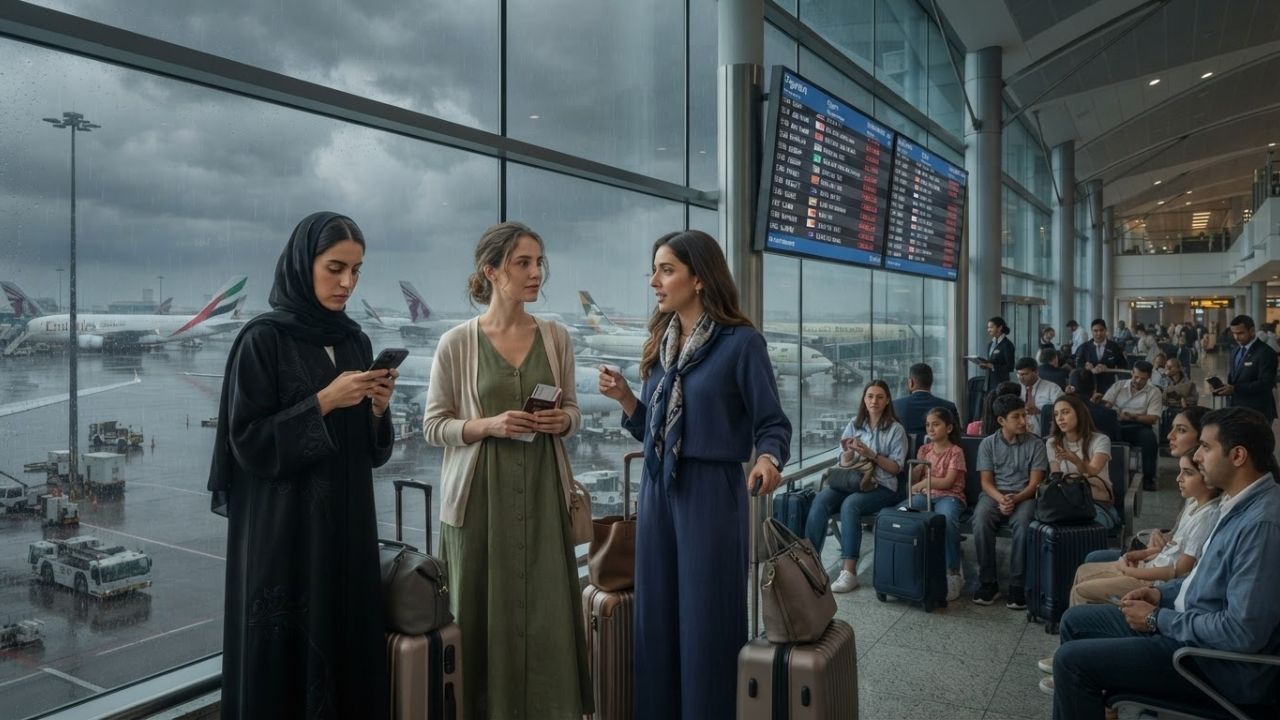
Image generated by AI
Aviation networks across the Middle East are experiencing significant travel disruptions, with twelve regional hubs recording a combined 894 delays and 138 cancellations. Severe summer weather warnings in the United Arab Emirates and ongoing geopolitical corridor restrictions are placing immense operational pressure on airlines like Emirates and Saudia. According to flight-tracking data compiled on August 3, 2026, the disruptions are affecting major international connection hubs, causing transit delays for passengers traveling between Europe, Asia, and Africa.
Weather Impact: Managing Dust Storms and High Wind Advisories in the UAE
Extreme seasonal weather has become a major challenge for airport ground operations and flight schedules in the Gulf. The National Centre of Meteorology in the UAE issued warnings regarding high winds reaching up to 50kph, which create blowing dust and limit visibility on runways.
The advisories include Abu Dhabi, Al Ain, and Al Dhafra, alongside expected rain and hail in northern and eastern sectors of the country. Unpredictable summer humidity and rapid cloud development further complicate safety protocols, forcing airlines to adjust landing slots and fuel load calculations.
Corridor Routing: Adjusting Air Traffic Control for Regional Security
In addition to the weather, ongoing geopolitical instability in the Middle East has limited the availability of standard air corridors.
Airlines are coordinating with air traffic control systems to divert flights around restricted airspaces, which increases flight durations and fuel consumption. These routing adjustments create a bottleneck at major entry points, adding to the delays experienced at regional airports. Operational teams are monitoring developments continuously, resulting in short-notice flight route adjustments that disrupt crew schedules and connections.
Airport Pressure: Reviewing Hub Delays in Dubai, Jeddah, and Riyadh
The flight disruption is concentrated across the region's largest international and domestic hubs.
- Dubai International Airport (DXB): Logged 199 delays and six cancellations, creating significant issues for passengers transit-connecting between global routes.
- Saudi Arabian Hubs: King Abdulaziz International Airport in Jeddah recorded 155 delays and 27 cancellations, while King Khalid International Airport in Riyadh reported 127 delays and 37 cancellations.
- Regional Gateways: Abu Dhabi recorded 133 delays and two cancellations, while smaller airports like Gizan Regional and Najran Domestic faced complete cancellations on regional routes.
Airline Schedules: Assessing Flight Cancellations for Saudia and Emirates
Regional carriers are bearing the brunt of the schedule adjustments, with fleet networks facing heavy backlogs.
National carrier Saudia recorded 52 cancellations and 85 delays, primarily affecting domestic links and regional connections. Emirates reported 93 delays and two cancellations at its Dubai hub. Low-cost operators Air Arabia and flyadeal also faced schedule changes, with flyadeal recording seven cancellations and 41 delays, while Air Arabia logged 56 delays and four cancellations.
Why This Matters (Information Gain & Experience)
For the traveler, the high volume of delays and cancellations at Gulf hubs means that booking connection windows of under three hours is extremely risky. During periods of weather alerts and corridor diversions, passengers should opt for single-ticket bookings, ensuring the airline is responsible for rebooking during missed connections.
From a planning perspective, travelers should monitor regional weather reports and airline notifications before leaving for the airport. Passengers whose flights are cancelled should contact their carriers immediately via phone apps or online portals rather than waiting in airport customer service lines, as rebooking slots fill quickly when multiple flights are affected.
Data Tables
Table 1: Airport Disruption Statistics
| Regional Airport | Destination Country | Flight Delays | Flight Cancellations | Primary Regional Impact |
|---|---|---|---|---|
| Dubai International Airport | United Arab Emirates | 199 | 6 | Mega international transit hub |
| King Abdulaziz International Airport | Saudi Arabia | 155 | 27 | Jeddah gateway for religious travel |
| King Khalid International Airport | Saudi Arabia | 127 | 37 | Riyadh capital and business hub |
| Abu Dhabi International Airport | United Arab Emirates | 133 | 2 | Capital airport weather disruptions |
| Cairo International Airport | Egypt | 104 | 4 | Primary North African connection point |
| Sharjah International Airport | United Arab Emirates | 66 | 3 | Regional low-cost carrier gateway |
| Seeb International Airport | Oman | 55 | 5 | Muscat transit and regional traffic |
| Kuwait International Airport | Kuwait | 23 | 2 | Northern Gulf transit corridor |
| Bahrain International Airport | Bahrain | 17 | 3 | Regional connection hub |
| Abha Regional Airport | Saudi Arabia | 15 | 16 | Southwest regional passenger routes |
| Gizan Regional Airport | Saudi Arabia | 0 | 19 | Southwest border airport operations |
| Najran Domestic Airport | Saudi Arabia | 0 | 14 | Border region route cancellations |
Table 2: Airline Disruption Statistics
| Target Airline Carrier | Flight Delays Recorded | Flight Cancellations Recorded | Primary Operating Fleet Impact |
|---|---|---|---|
| Emirates | 93 | 2 | Global long-haul connection delays |
| Saudia | 85 | 52 | Heavy domestic and international route cancellations |
| Air Arabia | 56 | 4 | Low-cost regional connection delays |
| EgyptAir | 53 | 2 | North African route delays |
| flyadeal | 41 | 7 | Low-cost domestic Saudi connections |
| Oman Air | 32 | 5 | Muscat hub route delays |
| Royal Jordanian | 23 | 2 | Levant transit corridor delays |
| Air Cairo | 17 | 3 | Low-cost charter and regional flights |
Key Takeaways
- Massive Disruptions: Middle East airports recorded 894 delays and 138 cancellations due to a combination of weather and security challenges.
- Hub Pressure: Dubai International Airport was the most affected hub, recording 199 delayed flights.
- Saudi Cancellations: Riyadh and Jeddah airports combined experienced 64 flight cancellations and 282 delays.
- Weather Warnings: UAE authorities warned of 50kph winds, dust storms, and rain in Abu Dhabi, Al Ain, and Al Dhafra.
- Airline Impacts: Saudia recorded the highest number of cancellations with 52 grounded flights, while Emirates experienced 93 delays.
FAQ
Why are flights delayed and cancelled across the Gulf?
Disruptions are caused by severe summer weather alerts (including 50kph winds and dust storms in the UAE) and airspace restrictions due to regional security concerns.
Which airport recorded the highest number of delays?
Dubai International Airport (DXB) recorded the highest volume with 199 delayed flights, followed by Jeddah with 155 delays.
How are Saudi Arabian domestic flights affected?
Several domestic routes have been cancelled, including 19 cancellations at Gizan Regional Airport and 14 at Najran Domestic Airport.
What should passengers with connecting flights do?
Passengers are advised to allow longer layovers (minimum three hours) and book flights on a single ticket to ensure the airline handles rebooking.
When was this flight disruption data recorded?
The data is based on FlightAware figures recorded on August 3, 2026, at 3:34 pm ET USA (11:34 pm GST).
Related Travel Updates and Regional Guides
- Related: Porto Santo Complements Funchal With Luxair Luxembourg Flights, New Airport Terminal Tender and Integrated Buses to Support Sustainable Tourism
- Related: Ireland Tourism Growth Gathers Momentum as Spain, United States and Germany Drive Inbound Leisure Travel Across Five Months in 2026
- Related: Five Affordable Winter Sun Destinations Offering Competitive Travel Packages Outside of Europe for the 2026-2027 Season
Disclaimer
This article is for informational and educational purposes only. It does not constitute legal, financial, or professional advice. While we strive to provide accurate and up-to-date information, travel policies, regulations, and conditions change rapidly. Always verify information with official sources before making travel decisions. Nomad Lawyer makes no representations about the accuracy, reliability, completeness, or suitability of the information provided. Readers should consult qualified professionals for advice specific to their circumstances. The views expressed in this article are those of the author and do not necessarily reflect the views of Nomad Lawyer.
Kunal K Choudhary
Co-Founder & Contributor
A passionate traveller and tech enthusiast. Kunal contributes to the vision and growth of Nomad Lawyer, bringing fresh perspectives and driving the community forward.
Learn more about our team →