Middle East Flight Cancellations and Delays Hit Jeddah, Muscat, and Dubai: Regional Airspace Alert

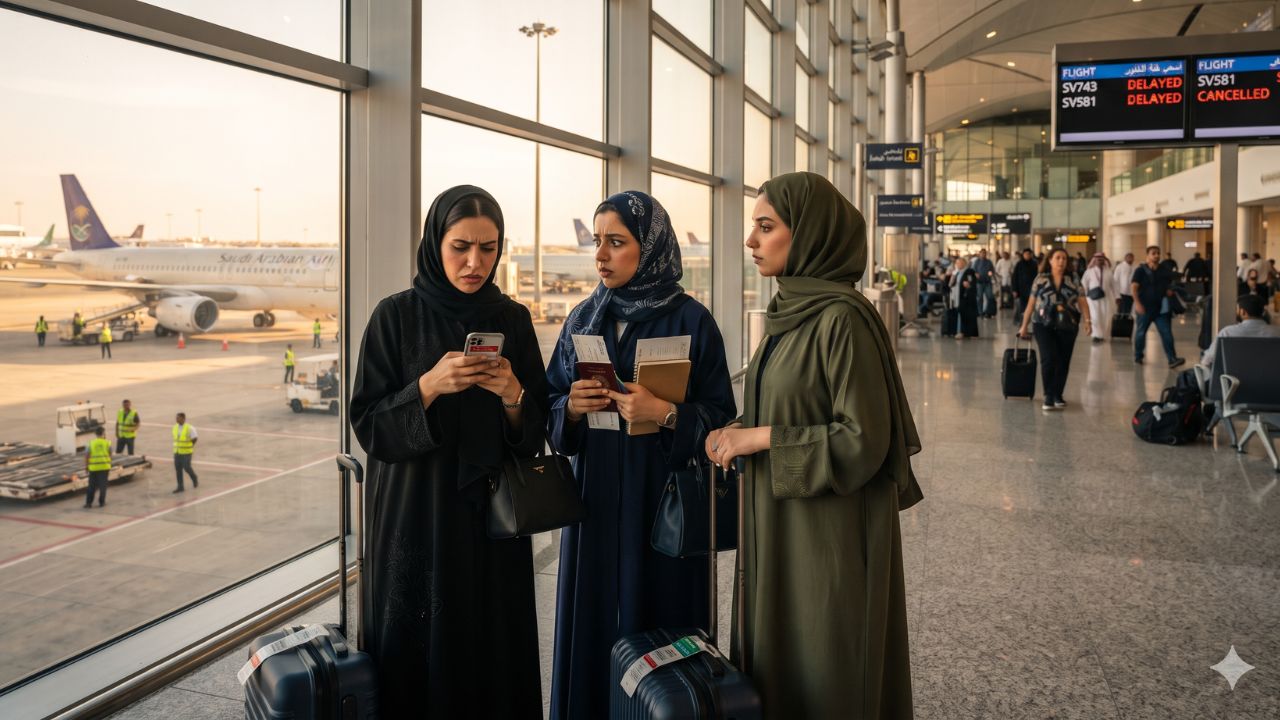
While Dubai International Airport absorbed 181 delayed flights as the region's primary commercial bottleneck, Saudi Arabia emerged as the epicenter of Middle Eastern flight cancellations on 2–3 November 2026, recording 83 grounded flights across five airports under strict military airspace restrictions and emergency civil aviation permits. Governed by Saudi NOTAM A3650/26 and conflict-zone bulletins issued by the European Union Aviation Safety Agency, the airspace strain has triggered 108 cancellations and 775 delays across nine countries. Compounding the disruption, Singapore Airlines has extended its Dubai suspension until 28 February 2027, while German flag carrier Lufthansa has postponed its planned Gulf return until 25 November 2026, creating complex itineraries for travelers throughout the Gulf Cooperation Council (GCC) and neighboring Levant gateways.
Saudi Airspace Corridors: Security Restrictions and Operational Bottlenecks
The primary operational constraint across the Arabian Peninsula centers on Saudi Arabia, where civil aviation operates under heightened security protocols following drone and missile attacks in October. At Riyadh’s King Khalid International Airport (RUH), all aircraft movements require advance permission from Saudi Arabia’s General Authority of Civil Aviation (GACA) under emergency NOTAM A3650/26. Although the airfield remains open, international airlines including Air India, IndiGo, KLM, and Etihad have suspended selected Riyadh operations, each maintaining staggered resumption dates. During the reporting window, Riyadh recorded 12 delays and 33 cancellations, representing a high concentration of grounded flights.
In eastern Saudi Arabia, King Fahd International Airport in Dammam recorded 32 delays and seven cancellations as international carriers continue to adjust schedules following an attack on 21 October. In western Saudi Arabia, King Abdulaziz International Airport in Jeddah logged 96 delays and 37 cancellations. Abu Dhabi-based Etihad Airways suspended specified scheduled flights to Jeddah through 5 November. In the mountainous Asir province, Abha Regional Airport instituted direct operating restrictions, enforcing mandatory overnight closures between 18:00 and 06:00 that continue until the morning of 5 November, sharply limiting available flight slots. Meanwhile, Prince Mohammad Bin Abdulaziz International Airport in Medina recorded 29 delays and three cancellations. Together, these five Saudi airports accumulated 176 delays and 83 cancellations.
Regional Transit Hubs: Dubai, Sharjah, Istanbul, and Muscat Under Pressure
Across the United Arab Emirates, Dubai International Airport (DXB) recorded 181 delayed flights and three cancellations, marking the highest individual delay tally in the region. While home carriers Emirates and flydubai continue operating broad networks, services linking Dubai with Saudi destinations experienced targeted cancellations, including Emirates flights to Riyadh, Dammam, and selected Jeddah frequencies. At neighboring Sharjah International Airport (SHJ), low-cost carrier operations logged 67 delays and two cancellations.
In Türkiye, dual gateways serving Istanbul faced cascading schedule congestion. Istanbul Airport (IST) recorded 109 delays and one cancellation, while Istanbul Sabiha Gökçen International Airport (SAW) on the Asian shore registered 75 delays and one cancellation, driven by single-runway winter maintenance and downline Middle Eastern airspace restrictions. In North Africa, Cairo International Airport in Egypt recorded 80 delays and two cancellations, while Bahrain International Airport logged 30 delays and nine cancellations. At Muscat International Airport in Oman, 30 delays and one cancellation were tracked, endorsed by regional tourism monitoring from Experience Oman. In Jordan, Amman’s Queen Alia International Airport recorded 20 delays and one cancellation, Kuwait International logged seven delays and five cancellations, and Iraq’s Jalal Talabani International Airport registered one cancellation.
| Airport Gateway | Country | Flight Delays | Flight Cancellations | Primary Operational Status |
|---|---|---|---|---|
| Dubai International (DXB) | United Arab Emirates | 181 | 3 | High transit bank delays; Saudi route cuts |
| Istanbul Airport (IST) | Türkiye | 109 | 1 | Eurasian transit flow metering |
| King Abdulaziz International (JED) | Saudi Arabia | 96 | 37 | High cancellations; Etihad suspended to 5 Nov |
| Cairo International (CAI) | Egypt | 80 | 2 | Regional airspace rerouting holds |
| Sabiha Gökçen (SAW) | Türkiye | 75 | 1 | Winter runway maintenance & flow holds |
| Sharjah International (SHJ) | United Arab Emirates | 67 | 2 | Air Arabia regional turnaround delays |
| King Fahd International (DMM) | Saudi Arabia | 32 | 7 | Post-attack carrier schedule realignments |
| Bahrain International (BAH) | Bahrain | 30 | 9 | Gulf connecting bank adjustments |
| Muscat International (MCT) | Oman | 30 | 1 | Arabian Sea coastal corridor re-sequencing |
| Medina Airport (MED) | Saudi Arabia | 29 | 3 | Pilgrimage corridor schedule compression |
| Queen Alia International (AMM) | Jordan | 20 | 1 | Levant air corridor flow control |
| King Khalid International (RUH) | Saudi Arabia | 12 | 33 | GACA NOTAM A3650/26 prior permission rules |
| Abha Regional Airport (AHB) | Saudi Arabia | 7 | 3 | Mandatory overnight closure (18:00–06:00 to 5 Nov) |
| Kuwait International (KWI) | Kuwait | 7 | 5 | Regional feeder cancellations |
| Jalal Talabani International | Iraq | 0 | 1 | Regional feeder cancellation |
Carrier Disruption: Saudia, Air Arabia, and Gulf Fleets Navigate Airspace Limits
Airline operational records show stark differences in how regional carriers are absorbing the disruption. Saudi Arabian flag carrier Saudia recorded 22 cancellations (representing four percent of its tracked operations) alongside 46 delays (nine percent). Low-cost domestic subsidiary flyadeal reported 16 cancellations (nine percent) and 11 delays (six percent). In Bahrain, Gulf Air registered nine cancellations (six percent) and 24 delays (16 percent).
Sharjah-based budget carrier Air Arabia logged the highest delay volume among regional airlines, recording 61 delayed flights (equivalent to 28 percent of its operation) alongside two cancellations. Yemenia (Yemen Airways) reported one cancellation (eight percent) and three delays (25 percent), while Iraqi Airways tracked one cancellation (three percent) with zero recorded delays.
| Airline Operator | Home Base | Recorded Cancellations | Cancel Rate (%) | Recorded Delays | Delay Rate (%) |
|---|---|---|---|---|---|
| Saudia | Jeddah / Riyadh, Saudi Arabia | 22 | 4% | 46 | 9% |
| flyadeal | Jeddah, Saudi Arabia | 16 | 9% | 11 | 6% |
| Gulf Air | Manama, Bahrain | 9 | 6% | 24 | 16% |
| Air Arabia | Sharjah, United Arab Emirates | 2 | 0% | 61 | 28% |
| Yemenia (Yemen Airways) | Aden / Sana'a, Yemen | 1 | 8% | 3 | 25% |
| Iraqi Airways | Baghdad, Iraq | 1 | 3% | 0 | 0% |
What Makes Middle Eastern Air Corridors Different: Geopolitical Crossroads and Pilgrimage Hubs
Aviation in the Middle East functions under unique geographic, cultural, and geopolitical realities. The airspace connecting the Persian Gulf, the Red Sea, and the eastern Mediterranean represents one of the world's narrowest international flight funnels. When the European Union Aviation Safety Agency issues conflict-zone bulletins advising airlines to avoid specified portions of the Jeddah flight information region and exercise caution in maritime airspace, long-haul airliners traveling between Europe, Asia, and Australasia must alter their flight paths. These mandatory detours push international traffic into congested corridors over Oman, the UAE, and Egypt, creating cascading delay banks across secondary airports.
Culturally, airports like Jeddah and Medina serve as the sacred gateways for millions of Muslim pilgrims undertaking Umrah year-round. Unlike business travelers who can easily reschedule meetings, pilgrims travel on fixed spiritual itineraries tied to hotel bookings in Mecca and Medina. Flight cancellations or late-evening ground holds in Jeddah disrupt high-speed rail connections and sacred rituals, requiring rapid ground-transport adaptation.
Visitor Insider Tips: Navigating Gulf Layovers and Transit Disruptions
Travelers moving through Middle Eastern hubs during this active airspace advisory period can protect their travel plans with practical local strategies:
- Bypass Jeddah Airfield Cancellations via the Haramain High-Speed Train: If your domestic or regional connection between Jeddah and Medina is cancelled, do not wait for replacement flights. Walk directly to the Haramain High-Speed Railway station inside Jeddah Airport Terminal 1. Sleek electric trains depart regularly, reaching Mecca in 54 minutes and Medina in under two hours at speeds up to 300 km/h for approximately 50 to 150 SAR.
- Utilize Free Rest Suites and Dubai Metro Access at DXB: If facing an extended connection hold at Dubai International Airport, skip crowded boarding gates and head to the quiet relaxation zones in Concourse B or Concourse A. If your delay exceeds four hours, use the direct Dubai Metro Red Line from Terminal 1 or Terminal 3 to access the historic Al Fahidi neighborhood or downtown Dubai in under 25 minutes.
- Monitor the EASA Conflict-Zone Validity Window: Travelers booked on European carriers through Middle Eastern airspace should note that the current EASA conflict advisory remains active until 16 November 2026. Airlines like Lufthansa (returning 25 November) and Singapore Airlines (suspended to 28 February 2027) have modified regional routes accordingly; verify your ticketing carrier’s operational status before departing.
- Anticipate Abha and Southern Saudi Curfews: If traveling through southern Saudi Arabia, remember that Abha Regional Airport enforces strict overnight closures between 18:00 and 06:00 through 5 November. Ensure all inbound and outbound bookings are ticketed during daylight operational banks.
- Maintain Digital Documentation for Carrier Compensation: If your flight is delayed over four hours or cancelled outright, obtain an official written or digital delay endorsement from airline customer service counters. Keep itemized receipts for meals, hotel accommodation, and ground transit to file claims under applicable aviation passenger rights frameworks.
Cultural and Environmental Context: Regional Resilience and Aviation Sustainability
The recurring airspace disruptions across the Middle East highlight the delicate balance between geopolitical stability, economic connectivity, and environmental stewardship. When airlines are compelled to reroute widebody airliners around restricted airspace zones in Saudi Arabia and the Gulf, flight paths extend by hundreds of nautical miles. A Boeing 777 or Airbus A350 forced to skirt southern Arabian airspace burns thousands of additional kilograms of jet fuel per journey, increasing global greenhouse gas emissions across fragile desert and marine ecosystems.
Locally, regional communities exhibit remarkable infrastructural resilience. Massive national investments in high-speed rail networks, like Saudi Arabia’s Haramain Railway, and modernized multi-terminal airports like Muscat and Dubai provide alternative transport redundancy when skies are restricted. As aviation authorities work through emergency protocols, regional collaboration remains essential to ensuring civilian skies remain secure, sustainable, and welcoming for international travelers.
FAQ: Middle East Flight Cancellations and Disruptions November 2026
What caused the 108 cancellations and 775 delays across Middle Eastern airports?
Disruptions were driven by ongoing security concerns and airspace restrictions following October attacks in Saudi Arabia, GACA NOTAM A3650/26 prior permission rules, and EASA conflict-zone bulletins valid through 16 November 2026.
Which airport recorded the highest number of flight delays?
Dubai International Airport (DXB) recorded the highest delay count in the region, logging 181 delayed flights alongside three cancellations.
Which airlines have suspended flights to Saudi Arabia and Dubai?
Air India, IndiGo, KLM, and Etihad suspended selected flights to Riyadh, while Etihad suspended specified Jeddah flights through 5 November. Singapore Airlines extended its Dubai suspension until 28 February 2027, and Lufthansa postponed its Gulf return to 25 November 2026.
What operating restrictions apply to Abha Regional Airport?
Abha Regional Airport enforces mandatory overnight closures between 18:00 and 06:00, remaining in effect through the morning of 5 November 2026.
[Under the sweeping expanse of Arabian skies, seasoned travelers rely on regional rail corridors and proactive navigation to turn unexpected delays into journeys of discovery.]
Related Travel Guides
This article is for informational purposes. Flight routes, passenger regulations, visa rules, and transit advisories are subject to change by airlines and aviation authorities. Readers are advised to verify schedules and travel documentation with relevant carriers and border agencies before departure.
Related Stories
Egypt Winter Travel Alert: Bishkek–Sharm El-Sheikh Flights Suspended Amid New Entry Rules

Asia Flight Cancellations and Delays Hit Riyadh, Bali, and India: Cyclone Murasu and Regional Air Alert