
Middle East Travel Disruption: 1,078 Flight Delays and 134 Cancellations Affect Gulf Hubs
A massive travel disruption hits Gulf aviation hubs, causing 1,078 flight delays and 134 cancellations across 12 airports in the UAE, Saudi Arabia, Egypt, and Turkey.

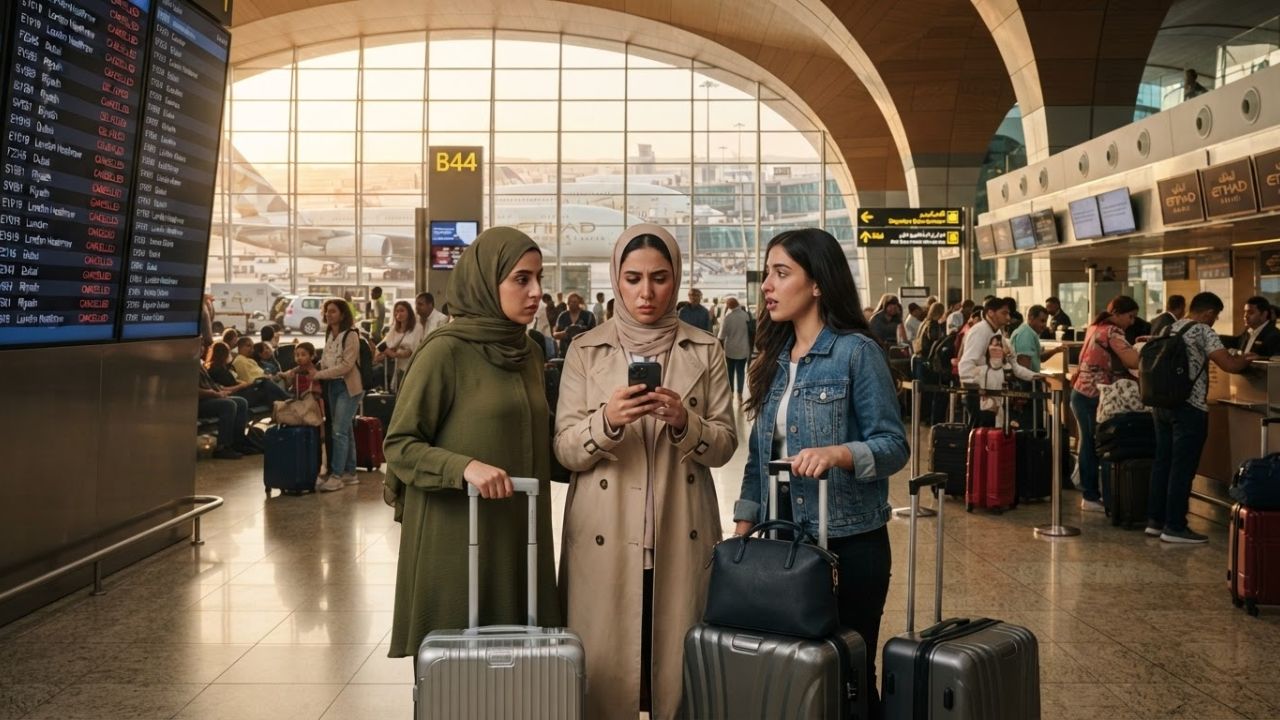
Image generated by AI
A massive scheduling backlog has hit the Middle East aviation corridor, causing 1,078 flight delays and 134 cancellations across 12 regional airports in the UAE, Saudi Arabia, Egypt, and Turkey.
Flight Delays and Cancellations Cascade Through Saudi Arabia and the UAE
Gulf regional airlines are experiencing severe operational bottlenecks, affecting passenger connections linking Europe, Asia, and Africa. Real-time aviation figures from FlightAware indicate that Dubai International Airport (DXB) has recorded 293 delays and 6 cancellations, creating a ripple effect across its extensive international network.
In Saudi Arabia, King Khalid International Airport (RUH) in Riyadh logged 134 delays and 34 cancellations, while King Abdulaziz International Airport (JED) in Jeddah experienced 121 delays and 26 cancellations. Regional gateways in the Kingdom also faced heavy cancellation percentages: Gizan Regional Airport logged 29 cancellations with no delays, Najran Domestic Airport reported 16 cancellations, and Abha Regional Airport registered 22 delays and 10 cancellations.
In the United Arab Emirates, Abu Dhabi International Airport processed 136 delays and 2 cancellations, while Sharjah International Airport reported 74 delays and 6 cancellations.
Air traffic management in the Gulf region operates under high density, as the airspace bridges flight corridors connecting the eastern and western hemispheres. The General Authority of Civil Aviation (GACA) in Saudi Arabia and the Dubai Civil Aviation Authority must coordinate flight paths through narrow civilian corridors, which are frequently constrained by military airspace allocations. When convective weather patterns, such as summer dust storms or high-altitude turbulence, affect these corridors, controllers must implement flow control safety measures, causing significant delays.
Extreme summer temperatures also impact operations. High ground temperatures reduce air density, which directly affects aircraft engine performance and aerodynamic lift. During peak heat periods in Riyadh and Jeddah, airlines may be forced to restrict cargo weight or reduce passenger boarding numbers on long-haul flights, leading to boarding delays and baggage backlogs as ground crews adjust payloads.
Regional Extensions: Egypt and Turkey Face Backlogs
The operational pressure has extended north and west to other major regional connection points. Cairo International Airport in Egypt registered 170 delays and 1 cancellation, highlighting the challenges of managing transcontinental connections during network disruptions.
In Turkey, Istanbul Sabiha Gokcen International Airport (SAW) recorded 125 delays and 3 cancellations. These disruptions reflect the challenges faced by airport authorities and air traffic control services as they monitor changing operating conditions across the region.
Gulf Airlines Manage Crew Adjustments and Network Schedules
Widespread disruptions have impacted both full-service and low-cost airlines. Emirates, based at Dubai's Terminal 3, logged 180 delays and 1 cancellation, with delays affecting 34% of its monitored operations. Saudia reported the highest cancellation count, with 53 cancellations and 70 delays.
Other UAE-based carriers experienced scheduling difficulties, with FlyDubai reporting 78 delays and 1 cancellation, and Air Arabia logging 62 delays and 7 cancellations. Saudi low-cost carriers were also affected: Flynas reported 64 delays and 1 cancellation, while flyadeal recorded 39 delays and 5 cancellations.
According to reports from the General Authority of Civil Aviation (GACA) and the Dubai Civil Aviation Authority, these delays are linked to network adjustments and crew limitations as airlines work to restore their scheduled operations. The unbundled schedules of low-cost carriers, which rely on high aircraft utilization rates, are particularly sensitive to delays. A single delayed turnaround for a Flynas or flyadeal flight in the morning can cascade through the aircraft's daily rotation, resulting in flight delays for multiple cities by the evening.
Key Passenger Rights and Rebooking Advice
Under GACA's consumer protection guidelines, passengers departing from Saudi airports are entitled to specific assistance during extended delays. For flight delays exceeding three hours, airlines must provide food and beverages. If a delay extends beyond six hours, or if a cancellation occurs, carriers must offer alternative flight options, full refunds, or hotel accommodations, including airport transport.
For travelers transiting through Dubai, the UAE Civil Aviation Authority enforces similar passenger care rules. Passengers experiencing delays are advised to request official delay certificates from their carrier to support travel insurance claims for missed hotel reservations or tours.
Sustainable Practices in Gulf Aviation Hubs
As Gulf airports expand to accommodate growing passenger volumes, sustainability has become an important focus. Airports like Dubai International are integrating solar arrays to power terminals and utilizing advanced water-recycling systems to reduce utility consumption.
Travelers can support these efforts by avoiding single-use plastics and utilizing the water refill stations provided throughout the concourses. When planning regional transit, choosing direct flights or utilizing public transit networks can help minimize the carbon footprint of regional travel.
Local Insider Travel Strategies
- Optimal Transit Windows: To avoid terminal congestion, plan connections during off-peak transit windows, such as mid-morning (9:00 AM to 11:00 AM) or early afternoon (2:00 PM to 4:00 PM) when the major banks of flights between Europe and Asia have finished departing.
- Cultural Etiquette: Dress modestly with shoulders and knees covered when transiting through public terminal areas, particularly at airports in Saudi Arabia and Egypt. If utilizing airport prayer rooms, remain silent and remove shoes before entering the designated areas.
- Local Specialties: Try authentic Arabic coffee (gahwa) served with fresh date-infused pastries at airport cafes to experience local hospitality.
- Quiet Retreats: If transiting through Dubai International (DXB) Terminal 3, visit the quiet Zen Garden located near Gates B7 and B27 for a peaceful, green space away from the main terminal crowds.
Long-Term Outlook for Middle Eastern Aviation
The scale of this travel disruption highlights the vulnerability of highly consolidated hub-and-spoke networks to scheduling backlogs. As regional aviation authorities invest in airspace upgrades and airport expansions, balancing high passenger volumes with operational resilience will remain a priority. For travelers, these events demonstrate the value of monitoring flight statuses via airline applications and planning buffer times for connecting flights.
Related Travel Guides
Disclaimer
This article is for informational and educational purposes only. It does not constitute legal, financial, or professional advice. While we strive to provide accurate and up-to-date information, travel policies, regulations, and conditions change rapidly. Always verify information with official sources before making travel decisions. Nomad Lawyer makes no representations about the accuracy, reliability, completeness, or suitability of the information provided. Readers should consult qualified professionals for advice specific to their circumstances. The views expressed in this article are those of the author and do not necessarily reflect the views of Nomad Lawyer.
Raushan Kumar
Founder & Lead Developer
Full-stack developer with 11+ years of experience and a passionate traveller. Raushan built Nomad Lawyer from the ground up with a vision to create the best travel and law experience on the web.
Learn more about our team →