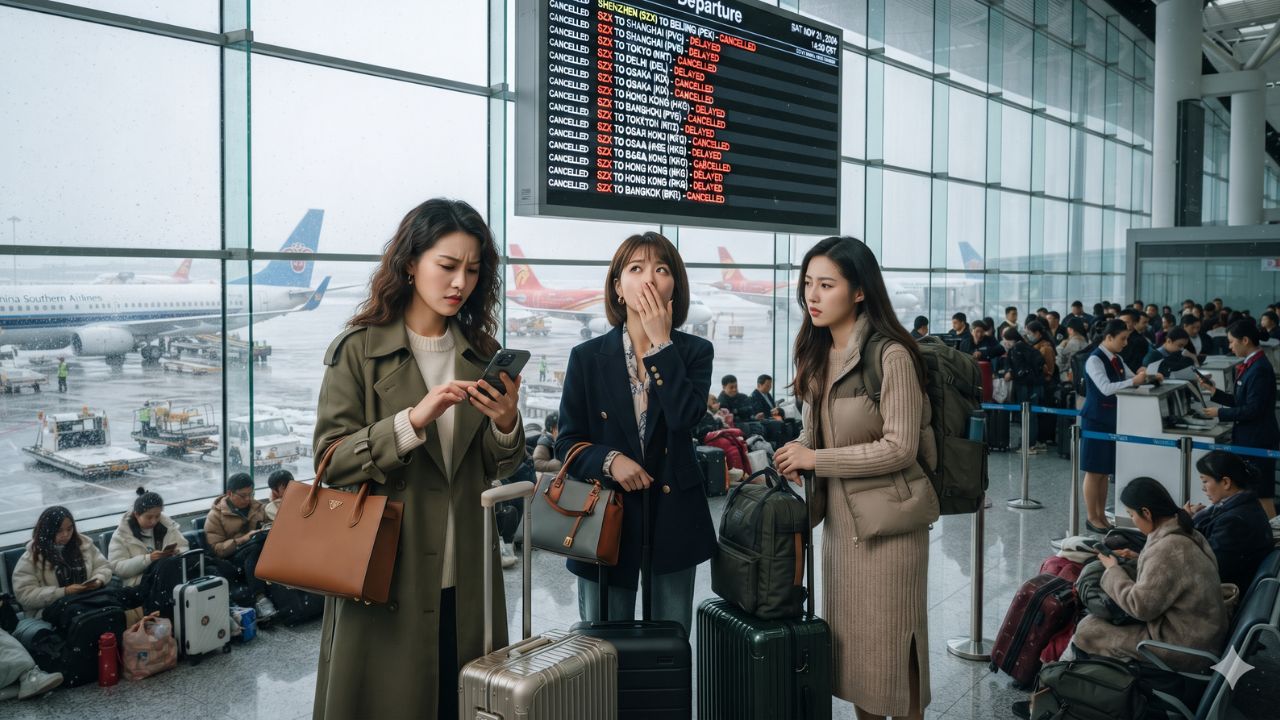
US Holiday Travel Rush Faces Disruption Risks Following Nationwide FAA Telecommunications Outage

When a routine router upgrade in Arkansas triggered an automated flood of 1,000 connection requests every four seconds, it crippled 17 of America's 22 regional air traffic control centers and grounded domestic aviation for five hours, leaving 81.5 million Thanksgiving holiday travelers questioning the resilience of the national airspace.
The sudden nationwide ground stop enacted on 13 November 2026 brought commercial aviation across the continental United States to an abrupt standstill. While federal aviation authorities successfully stabilized internal communication links and confirmed no external cyber intrusion took place, the systemic failure eliminated aircraft scheduling buffers less than two weeks before the busiest travel stretch of the calendar year. With 5.96 million domestic airline passengers expected to transit American terminals between 24 November and 30 November, airline scheduling desks and airport operators face elevated operational strain.
Telecommunications Failure and the Amarillo-El Dorado Relay Collapse
The breakdown began at approximately 3:30 PM Eastern Time on Friday, 13 November 2026, when communications channels connecting regional radar centers began dropping data feeds. Technicians traced the fault to specialized telecommunications equipment operated by defense and systems contractor L3Harris, which was conducting scheduled hardware upgrades at two discrete facilities: a primary radar installation in Amarillo, Texas, and an en-route radio communications site in El Dorado, Arkansas.
A configuration conflict within the new networking protocol generated an unexpected loop, causing legacy terminal equipment to experience packet exhaustion. Over a span of minutes, older switching nodes received roughly 1,000 connection attempts every 4 to 5 seconds. The surge paralyzed internal messaging pipelines, prompting the Federal Aviation Administration (FAA) to declare a safety-first ground stop across 17 of the nation's 22 Air Route Traffic Control Centers (ARTCC).
Controllers methodically managed approximately 3,500 commercial and cargo aircraft already airborne, guiding them to normal runway touchdowns while maintaining priority routing for airborne medical and emergency operations. By the time engineers stabilized the network and lifted the national stop order at approximately 8:15 PM Eastern Time, flight tracking systems logged 12,462 total domestic cancellations, including roughly 9,082 cancellations on major scheduled carriers. Although federal officials clarified that severe autumn frontal storms contributed to part of that cancellation total, the telecommunications freeze exposed vulnerabilities that linger as Thanksgiving peak departures approach.
To prevent a secondary cascade, technical crews disabled automated broadcast polling across more than 60 regional network routers and halted all further equipment swap-outs across federal air traffic facilities through the remainder of the holiday season.
Thanksgiving 2026 Travel Projections and New York Airport Metrics
According to annual holiday mobility figures published by the American Automobile Association (AAA) on 16 November 2026, overall interstate passenger movement remains steady despite record-high ticket prices. An estimated 81.5 million travelers will journey at least 50 miles from home between Tuesday, 24 November, and Monday, 30 November, representing a marginal 0.1 percent dip from the 81.6 million recorded during Thanksgiving week in 2025.
| Travel Sector Metric | Thanksgiving 2025 Recorded | Thanksgiving 2026 Projected | Net Variation (%) |
|---|---|---|---|
| Total US Holiday Travelers | 81.6 million | 81.5 million | -0.1% |
| Automobile Drivers (50+ Miles) | 73.1 million | 72.9 million | -0.3% |
| Domestic Airline Passengers | 5.97 million | 5.96 million | -0.2% |
| Alternative Modes (Bus, Train, Ferry) | 2.50 million | 2.60 million | +4.1% |
| Average Return Domestic Airfare | $684 | $800 | +17.0% |
| Port Authority NY/NJ Flyers (4 Hubs) | 3.30 million | 3.10 million | -3.0% |
| NY/NJ River Crossing Vehicles | 5.48 million | 5.50 million | +0.4% |
The national average domestic round-trip ticket price reached approximately $800 this season, climbing 17 percent compared to the prior year. This financial commitment raises the stakes for holiday passengers who encounter weather holds or crew scheduling timeouts.
The Port Authority of New York and New Jersey issued its holiday operations forecast on 20 November 2026, projecting that 3.1 million passengers will move through John F. Kennedy International (JFK), Newark Liberty International (EWR), LaGuardia (LGA), and New York Stewart International (SWF) during the eight-day window from 23 November through 30 November. That total marks a 3 percent decrease from 3.3 million passengers in 2025. Concurrently, regional bridges and tunnels will handle an estimated 5.5 million vehicular crossings.
Ground Transit Contingencies Across the New York Tri-State Hubs
Managing ground congestion is central to keeping metropolitan airports functional during the holiday window. To preserve vehicular throughput across bridge and tunnel networks, the Port Authority will suspend all non-emergency construction and lane closures starting at 5:00 AM on Wednesday, 25 November, through 5:00 AM on Monday, 30 November.
Travelers bound for LaGuardia Airport should use regional mass transit to bypass Grand Central Parkway congestion. The Metropolitan Transportation Authority (MTA) operates the LaGuardia Link Q70 Select Bus Service free of charge year-round. Connecting directly from transit stations at Jackson Heights-Roosevelt Avenue (7, E, F, M, R subway lines) and Woodside (Long Island Rail Road), the dedicated express bus delivers travelers straight to Terminal B and Terminal C frontage without parking fees or bridge tolls.
For flyers taking app-based rideshares or private livery cars out of LaGuardia Terminal B, airport dispatch patterns designate all pick-ups on Level 1 of the Terminal B parking garage. Passengers arriving on domestic flights must follow terminal signage down to the garage structure rather than waiting at exterior departures curbsides.
At JFK and Newark Liberty, terminal parking garages frequently reach maximum capacity by the Tuesday afternoon preceding Thanksgiving. Airport managers advise that drive-up parking rates include steep surcharges for stays over three hours unless stalls are reserved online at least 24 hours in advance.
Strategic Preparation for High-Density Holiday Travel
Securing early departure slots minimizes disruption risk. Federal ground delay programs typically build progressively throughout the afternoon as gates fill and runway departure queues lengthen.
- Target Morning Flights: Booking domestic departures scheduled between 5:30 AM and 8:30 AM ensures your aircraft was parked at the gate overnight. Afternoon flights depend on inbound legs that can be delayed hundreds of miles away.
- Arrive Well Ahead of Boarding: Airport operators mandate arriving at terminal security checkpoints at least two hours before domestic departures and three full hours ahead of international flights. Baggage drop lines often exceed standard processing limits during holiday peaks.
- Monitor Inbound Airframes: Track the tail number of your assigned aircraft via commercial radar flight tools rather than relying solely on departures boards. Identifying an inbound mechanical hold two hours before your scheduled departure gives you valuable lead time to approach customer service desks.
- Understand DOT Refund Guidelines: Under revised federal rules enforced by the U.S. Department of Transportation Aviation Consumer Protection, carriers must issue automatic cash refunds to the original payment method within seven business days (twenty calendar days for alternative tender) if an airline cancels a service or imposes a significant departure schedule change and the passenger declines rebooking. Air traffic management halts originating from federal equipment outages remain non-compensable for overnight hotel accommodations.
Infrastructure Aging and Regional Transit Adaptations
The November telecommunications failure highlights the technical pressures facing the federal airspace architecture as older computer systems interface with modern digital protocols. Routing millions of passengers through dense geographic bottlenecks requires thousands of automated data handshakes per second. When single-point relay components malfunction in regional facilities like Amarillo or El Dorado, the ripple effect reaches hub airports from coast to coast within minutes.
Higher average domestic fares, now averaging $800 return, have pushed budget-conscious travelers toward alternative regional travel modes. Intercity passenger rail, scheduled bus lines, and ferry networks will carry 2.6 million holiday passengers this year, representing a 4.1 percent jump over 2025 volumes. For travelers moving along congested rail corridors between Washington, New York, and Boston, booking train travel provides reliable scheduling that remains immune to ground stop directives issued by air traffic controllers.
Frequently Asked Questions
What caused the nationwide FAA ground stop on 13 November 2026?
Contractor L3Harris was upgrading network hardware in Amarillo, Texas, and El Dorado, Arkansas. A configuration conflict caused older switching equipment to receive 1,000 automated connection attempts every four seconds, exhausting network capacity across 17 regional control centers.
Are airlines required to provide hotel vouchers if an FAA ground stop cancels my flight?
No. Federal regulations classify air traffic control ground stops and telecommunications outages as uncontrollable events. While airlines must issue a full cash refund if you choose not to fly on a rescheduled flight, they are not legally mandated to provide free hotel lodging or meal vouchers.
How does the Port Authority manage ground traffic at New York airports during Thanksgiving?
The Port Authority suspends all non-emergency roadway work from 5:00 AM on 25 November until 5:00 AM on 30 November. Travelers can take the free LaGuardia Link Q70 bus directly to Terminals B and C, while app-based rideshare pickups at Terminal B operate exclusively from Level 1 of the parking garage.
Navigating the holiday rush successfully demands departing on the earliest morning flight, securing ground transit ahead of time, and maintaining real-time awareness of your aircraft's physical location.
Related Travel Guides
This article is for informational purposes. Flight routes, passenger regulations, visa rules, and transit advisories are subject to change by airlines and aviation authorities. Readers are advised to verify schedules and travel documentation with relevant carriers and border agencies before departure.
Related Stories
US Flight Delays Top 2,840 as Orlando Leads Airport Gridlock: DOT Refund & Survival Guide
San Francisco SFO Weather Delays: 40 MPH Winds Trigger FAA Ground Stop and 658-Minute Holds