
Asia Aviation Crisis: Over 4,200 Flights Delayed as Fog, Cyclones, and Airspace Rules Strike Hubs

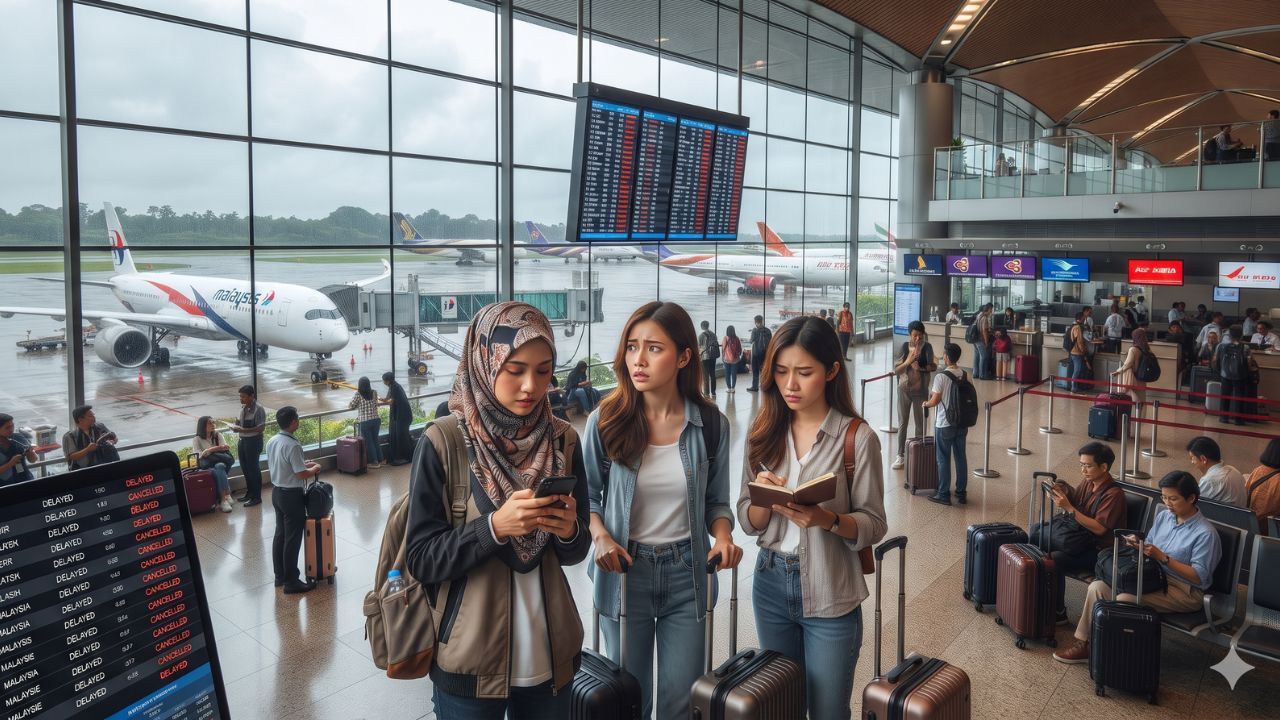
On 18 November 2026, Indian budget carrier SpiceJet cancelled an astonishing 49% of its entire daily flight schedule—grounding 67 flights as a synchronized wave of northern winter fog, southern cyclonic squalls, and Southeast Asian storms triggered 497 cancellations and 4,222 flight delays across the continent. Real-time aviation tracking records confirmed severe disruptions across India, Malaysia, Thailand, Indonesia, China, and the Middle East. Kuala Lumpur International Airport (KUL) emerged as the single most delay-plagued gateway in Asia with 493 flights held behind schedule, while Mumbai's Chhatrapati Shivaji Maharaj International Airport (BOM) led the continent in grounded aircraft with 38 outright cancellations.
The compounding factors reveal how fragile regional flight connections become when seasonal meteorological shifts coincide with diplomatic airspace closures and tight aircraft turnaround cycles. For independent travelers traversing Asian transit hubs, navigating this gridlock requires immediate contingency planning.
The Triple Pressure: Meteorology, Cyclones, and Airspace Mandates
The widespread disruption stems from three converging operational friction points across Asian airspace:
In India, aviation operations faced a geographical pincer movement. Across northern India, the India Meteorological Department (IMD) issued dense fog warnings from 17 to 20 November, with morning visibility at Delhi's Indira Gandhi International Airport (DEL) plunging into mist and shallow fog. When runway visual range drops, air traffic controllers must enforce mandatory aircraft spacing intervals, triggering 183 delays and 30 cancellations in the capital.
Simultaneously in southern India, an IMD weather bulletin tracked a developing severe cyclonic storm in the Bay of Bengal, unleashing heavy rainfall and gusty gale winds across coastal Andhra Pradesh and Tamil Nadu on 18 and 19 November. The storm front complicated approach patterns and ground turnaround handling into Chennai (45 delays, 5 cancellations) and sent operational shockwaves into Mumbai (204 delays, 38 cancellations) and Bengaluru (110 delays, 24 cancellations).
Across Southeast Asia, monsoonal thunderstorm fronts tracked by the Malaysian Meteorological Department (MetMalaysia) hammered the Strait of Malacca, prompting KUL's record-setting 493 delays. Bangkok's Suvarnabhumi Airport (BKK) followed with 270 delays and 16 cancellations, Singapore Changi (SIN) logged 186 delays, and Jakarta Soekarno-Hatta (CGK) recorded 173 delays and 21 cancellations.
In East Asia, security perimeters surrounding the APEC Summit in Shenzhen added air traffic congestion. Operational advisories enacted temporary airspace closures and slot restrictions across the Pearl River Delta and Greater Bay Area from 11 to 22 November, directly impacting flight corridors into Shanghai Pudong (127 delays, 7 cancellations), Beijing Capital (76 delays, 8 cancellations), and Chengdu Tianfu (57 delays, 7 cancellations).
| Major Asian Airport Hub | Recorded Flight Delays | Outright Cancellations | Primary Operational Stress Factor |
|---|---|---|---|
| Kuala Lumpur (KUL) | 493 | 13 | Severe regional convective thunderstorms |
| Bangkok Suvarnabhumi (BKK) | 270 | 16 | Aircraft rotation & Southeast Asian delays |
| Dubai International (DXB) | 228 | 33 | Western Asian transit bank bottlenecks |
| Mumbai (BOM) | 204 | 38 | Highest national cancellation rate; apron capacity |
| Istanbul Airport (IST) | 187 | 3 | Flow management & transit holds |
| Singapore Changi (SIN) | 186 | 3 | Regional connection & weather holds |
| Delhi Indira Gandhi (DEL) | 183 | 30 | Dense morning fog & CAT III-B runway spacing |
| Jakarta Soekarno-Hatta (CGK) | 173 | 21 | Monsoonal downpours & ramp holds |
| Shanghai Pudong (PVG) | 127 | 7 | APEC Summit airspace restrictions |
| Sabiha Gökçen (SAW) | 118 | 2 | Domestic & regional rotations |
| Bengaluru (BLR) | 110 | 24 | Southern cyclonic feeder delays |
| Jeddah (JED) | 95 | 10 | Pilgrim & Middle East transit sequencing |
| Kolkata (CCU) | 77 | 6 | Bay of Bengal moisture & runway holds |
| Beijing Capital (PEK) | 76 | 8 | Flow control & airspace limits |
| Hangzhou Xiaoshan (HGH) | 72 | 6 | Greater Bay Area rerouting |
| Chengdu Tianfu (TFU) | 57 | 7 | Domestic trunk route adjustments |
| Shanghai Hongqiao (SHA) | 56 | 4 | Airspace slot restrictions |
| Bali Denpasar (DPS) | 54 | 11 | Indonesian island hopper schedule fallout |
Carrier Fragility: The Airline Breakdown
The operational figures demonstrate that low-cost carriers with lean aircraft reserves suffered severe fleet disruption compared to network legacy operators:
- SpiceJet: Experienced catastrophic disruption, cancelling 67 flights—representing 49% of its scheduled operations—while logging 22 delays (16%).
- Akasa Air: Cancelled 35 flights (13% of operations) alongside 40 delayed flights (15%).
- IndiGo: Kept cancellations minimal (only 4 flights, or roughly 0%), but absorbed 418 flight delays (18% of its schedule) due to its vast multi-sector domestic network.
- Malindo Air (Batik Air Malaysia): Cancelled 18 flights (10%) and delayed 72 services (42%).
- Thai Vietjet Air: Logged 11 cancellations (6%) alongside 68 delays (42%).
- Flydubai: Posted 9 cancellations (3%) and 77 delays (26%).
- China Eastern Airlines: Reported 31 cancellations (1%) and 156 delays (6%).
- Air China: Recorded 23 cancellations (1%) and 63 delays (3%).
- Vietnam Airlines: Experienced 3 cancellations (0%) and 93 delays (22%).
Passenger Rights: DGCA Mandates in India
Because Indian airports accounted for the vast majority of cancellations, travelers flying domestically or departing India fall under statutory mandates enforced by the Directorate General of Civil Aviation (DGCA India):
Statutory Cancellation Compensation
If an airline cancels a flight without providing at least two weeks' notice, or fails to offer an alternate flight departing within two hours of the original schedule, passengers are legally entitled to:
- A full cash refund of the ticket price within seven working days.
- Statutory cash compensation ranging from ₹5,000 to ₹10,000, depending on flight block time, unless the airline proves the cancellation was caused by an extraordinary weather event beyond its control.
Mandatory Refreshments for Delays
Under DGCA passenger charters, when delays exceed two hours for flights with block times under 2.5 hours, or exceed four hours for longer routes, the operating airline must provide free meals and refreshments. For delays stretching overnight, carriers must provide free hotel accommodation and ground transfers.
Visitor Insider Tips: Navigating Asian Hub Bottlenecks
When cascading schedule disruptions paralyze Asian international corridors, use these field-tested tactics:
Kuala Lumpur (KUL) Terminal Transit Tactics
- Terminal 1 vs. Terminal 2 Confusion: If your connection in Kuala Lumpur involves switching between Malaysia Airlines (Terminal 1) and AirAsia or Batik Air (Terminal 2), do not rely on landside shuttle buses during heavy tropical rainstorms. Board the express KLIA Transit train connecting the two terminals; it takes three minutes and costs RM 2.
- Beat Downtown Traffic: Skip highway ride-hailing during storm-delayed arrivals. The KLIA Ekspres train runs non-stop from the airport to KL Sentral in 28 minutes, bypassing flooded highway underpasses.
Delhi and Mumbai Airport Strategies
- Book Morning CAT III Aircraft in Delhi: During the mid-November fog window, fly on airlines with fully CAT III-B certified flight crews and aircraft (such as Air India or IndiGo). Regional turboprops and smaller commuter operators lack low-visibility landing clearance and are the first to be diverted or cancelled.
- Navi Mumbai Alternative Check: Note that Navi Mumbai International Airport (NMI) recorded 31 delays and 5 cancellations. If transferring between Mumbai airports, budget at least three hours for ground transit across the Mumbai Trans Harbour Link during rainy conditions.
Rebooking Priority Protocols
- Bypass Terminal Service Queues via Mobile Apps: When a flight is cancelled at Mumbai or Delhi, ticket counter queues can exceed 300 passengers within minutes. Open the airline's mobile app immediately to select alternate flights. Most automated systems permit free self-rebooking within 10 minutes of an official cancellation ping.
Environmental Volatility in Asian Aviation Corridors
The mid-November aviation freeze reflects the complex environmental conditions facing South and Southeast Asian transit networks. Rapid urbanization, agricultural residue burning across the Indo-Gangetic Plain, and seasonal temperature inversions trap particulates at ground level, creating dense radiation fog that blinds modern airport sensor systems.
Simultaneously, warming sea surface temperatures in the Bay of Bengal fuel late-season cyclonic systems with increasing frequency, disrupting critical maritime and aviation paths. Adapting to this climate reality requires regional civil aviation authorities to modernize runway lighting arrays, expand airport surface radar tracking, and build cross-border slot coordination to prevent single-hub weather delays from paralyzing the continent.
FAQ: Asian Flight Disruptions 2026
What caused thousands of flight delays across Asia on 18 November 2026?
Delays were triggered by dense winter fog in northern India, a severe cyclonic storm in the Bay of Bengal, monsoonal thunderstorms in Malaysia, and APEC Summit airspace restrictions in southern China.
Which airport recorded the highest number of cancellations?
Mumbai's Chhatrapati Shivaji Maharaj International Airport (BOM) led the continent with 38 flight cancellations.
Why did SpiceJet cancel almost half of its daily flights?
SpiceJet cancelled 49% of its scheduled flights (67 cancellations) due to operational bottlenecks, weather diversions, and aircraft rotation issues.
Am I entitled to a hotel if my flight is delayed overnight in India?
Yes. Under DGCA consumer regulations, airlines are legally required to provide complimentary hotel accommodation and airport transfers for passengers delayed overnight.
Related Travel Guides
- Air France AF702 Declares Emergency Over France: 263-Tonne Overweight Landing and Passenger Guide
- US Aviation Expansion 2027: Nonstop Routes Reshape Seattle, San Francisco, and Regional Hubs
- Hyatt and Delta Loyalty Alliance Goes Live: Double-Dipping Points, Free Nights, and Sky Club Access
Track weather radars, verify your statutory airline refund rights, and budget generous connection buffers when navigating Asian air hubs during seasonal weather shifts.
This article is for informational purposes. Flight routes, passenger regulations, visa rules, and transit advisories are subject to change by airlines and aviation authorities. Readers are advised to verify schedules and travel documentation with relevant carriers and border agencies before departure.
Related Stories
Asia Flight Alert: Over 4,700 Flights Delayed and Cancelled Across Kuala Lumpur, Mumbai, and Delhi
Malaysia Enters Northeast Monsoon Season as AirAsia Issues Urgent KLIA Terminal 2 Travel Advisory
