
Malaysia Reframes Eastern Sabah Travel as Sandakan and Tawau Gain Festival Momentum Amid Split Advisories
Malaysia Reframes Eastern Sabah Travel as Sandakan and Tawau Gain Festival Momentum Amid Split Advisories

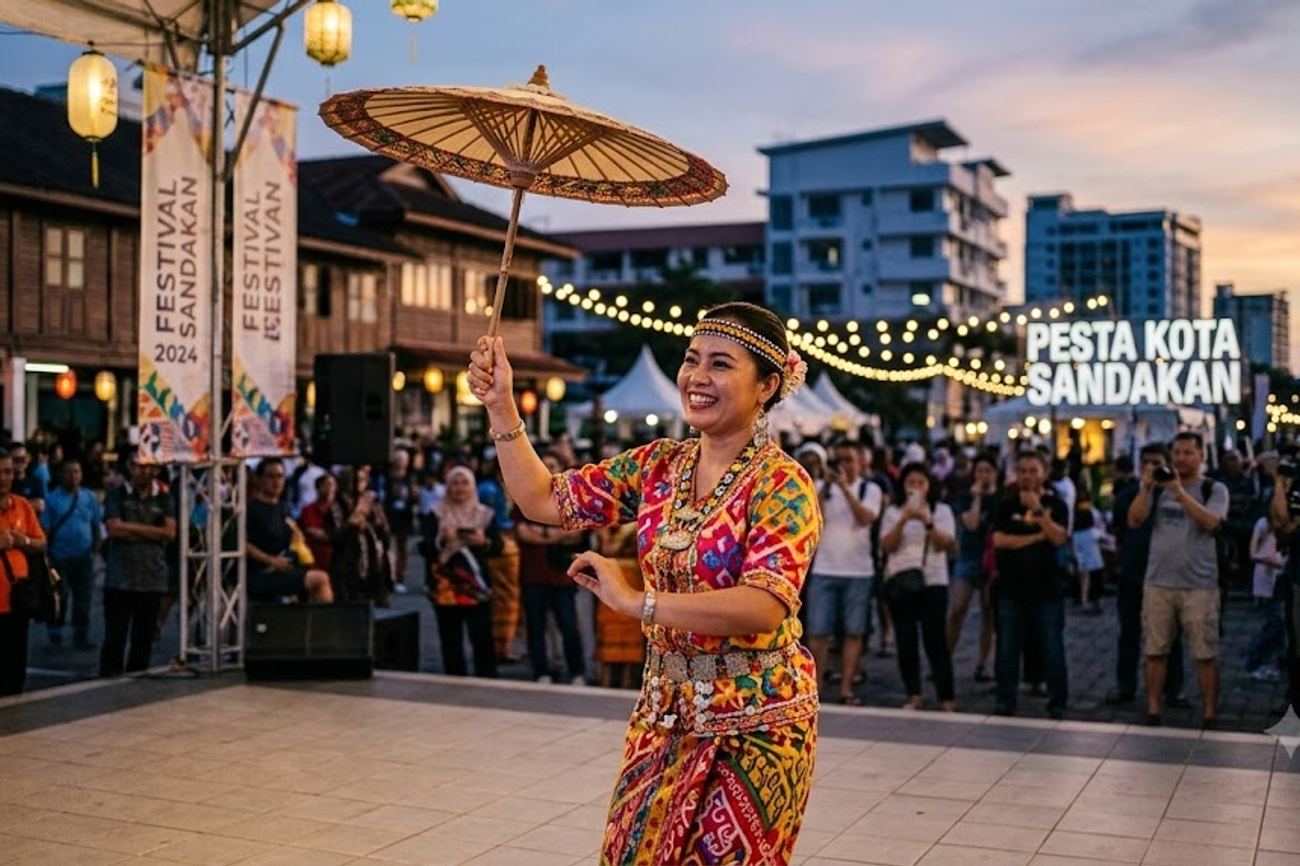
Image generated by AI
[Sandakan, September 18, 2026] — International travel advisories for Eastern Sabah have fragmented into a complex patchwork of risk levels, forcing travel operators to abandon uniform regional warnings in favor of nationality-specific and geography-based risk assessments.
The divergence occurs as major global powers—including the United States, Japan, and the United Kingdom—have decoupled their safety warnings for mainland Sabah from those governing offshore islands and maritime zones. This shift comes at a critical juncture as the Sabah Tourism Board pushes to expand cultural tourism through the ongoing Sabah Fest 2026, while aviation infrastructure in the region receives a technical overhaul.
Divergent Global Security Assessments
The immediate cause of this operational complexity is the lack of a unified international stance on the security environment in Eastern Sabah. While some nations have downgraded risks for the coastline, others maintain strict warnings that encompass both land and sea.
Japan led a significant shift on June 15, 2026, when the Japanese Ministry of Foreign Affairs lowered the risk level for the coastal stretch from Kudat to Tawau to Level 1. This revision includes Banggi and Balambangan islands, though other eastern islands were moved to Level 2. Japanese officials cited improved security conditions, though they maintain that kidnapping and terrorism risks cannot be entirely dismissed.
The United States maintains a different distinction. The U.S. Department of State classifies Malaysia generally as Level 1, but maintains a Level 2 "carve-out" for maritime areas and islands between Kudat and Tawau. This specifically targets high-profile dive destinations such as Mabul and Sipadan, where kidnapping risks remain a primary concern.
The United Kingdom has adopted an even sharper divide. As of September 18, 2026, the Foreign, Commonwealth and Development Office (FCDO) advises against all but essential travel to dive sites and islands between Sandakan and Tawau, including Lankayan Island. However, the FCDO explicitly excludes mainland Sabah from this warning, effectively clearing the way for land-based tourism.
In contrast, Australia, Canada, and France remain significantly more cautious. Australia applies a "high degree of caution" to the mainland shoreline between Terusan and Tawau and advises against offshore travel south of Lankayan Island. Canada maintains a high degree of caution for the entire east coast from Kudat to Tawau, including offshore sites. France continues to apply strong restrictions to the north and east maritime areas, specifically naming Sandakan and Tawau as locations subject to restrictive advice.
Markets and Routes Impacted
The impact of these conflicting advisories is felt most acutely by travel agents and insurance providers who must now calculate risk based on the passenger's passport and the exact GPS coordinates of the itinerary.
| Source Market | Mainland Status | Offshore/Maritime Status | Primary Risk Driver |
|---|---|---|---|
| Japan | Level 1 (Kudat to Tawau) | Level 2 (Selected Islands) | Residual Kidnapping Risk |
| United States | Level 1 | Level 2 (Kudat to Tawau) | Kidnapping |
| United Kingdom | No Warning | Avoid (All but essential) | Maritime Security |
| Australia | High Caution (Terusan-Tawau) | Reconsider (South of Lankayan) | Regional Instability |
| Canada | High Caution (Kudat-Tawau) | High Caution | Coastal Security |
| France | Restrictive Advice | Strong Restrictions | Maritime Safety |
What This Means for Travelers
For the average traveler, this fragmentation means that a "safe" trip is no longer a universal fact, but a variable dependent on nationality and specific activity.
Insurance Validity: This is the most critical impact. Many travel insurance policies are void if a traveler enters a region flagged by their home government's foreign office. A British citizen may be fully covered for a hotel stay in Sandakan but lose all coverage the moment they board a boat to Lankayan Island.
Itinerary Design: Travelers are encouraged to pivot toward "mainland-first" itineraries. Sandakan serves as the primary gateway to the Lower Kinabatangan and the Sepilok Orang Utan Rehabilitation Centre. Similarly, Tawau offers land-based attractions including Tawau Hills Park, the Teck Guan Cocoa Village, and the Columnar Basalt Balung Cocos. These locations allow tourists to experience Eastern Sabah without triggering the more severe maritime warnings.
Booking Transparency: Travelers should not rely on generic "Eastern Sabah" brochures. Every booking must now specify whether the activity is "Mainland" or "Offshore," as the legal and safety implications differ wildly between the two.
Aviation Infrastructure Upgrades
Parallel to the shifting security landscape, the Civil Aviation Authority of Malaysia (CAAM) has implemented technical upgrades to improve the reliability of travel to the region.
On September 10, 2026, new Automatic Terminal Information Service (ATIS) systems were activated at both Sandakan and Tawau airports. These systems, which were rolled out simultaneously at Kota Kinabalu and Sibu, are designed to automate the dissemination of meteorological data and operational information to pilots.
Furthermore, CAAM has launched a three-month operational trial for a Digital ATIS (D-ATIS) system, running from September 10 through November 30, 2026. While voice services remain the official primary source, digital messages are now available via approved platforms. It is important to note that these upgrades are operational efficiency measures; they do not increase passenger capacity, add new flight routes, or expand terminal facilities.
Sabah Fest 2026 Integration
The timing of these aviation and advisory shifts coincides with Sabah Fest 2026. Running from August 29 to September 29, 2026, the festival aims to distribute tourism traffic away from the main hub of Kota Kinabalu and into the eastern districts.
The festival's inclusion of Sandakan and Tawau as official venues is a strategic attempt to highlight the mainland's cultural and natural assets. By promoting the Sandakan Heritage Trail and the Tawau Tanjung Market, the Sabah Tourism Board is attempting to decouple the image of Eastern Sabah from the risks associated with its offshore dive sites.
FAQ: Eastern Sabah Travel 2026
Is it safe to visit Sandakan or Tawau mainland? It depends on your nationality. UK, US, and Japanese citizens currently face low to no warnings for the mainland. However, Australian, Canadian, and French citizens are advised to exercise a high degree of caution or follow restrictive guidance.
Can I still visit Sipadan or Mabul islands? These offshore areas remain under higher caution levels (Level 2 for US/Japan, "Avoid" for UK). Travelers should check their specific government advisory and confirm if their travel insurance covers "high-risk" maritime zones.
Do the new airport systems in Sandakan and Tawau affect flight schedules? No. The ATIS and D-ATIS upgrades are technical communication tools for pilots and air traffic control. They improve safety and efficiency but do not change flight times or increase the number of available seats.
What is Sabah Fest 2026? It is a month-long cultural tourism program running from August 29 to September 29, 2026. It features events in Kota Kinabalu, Kuala Lumpur, Kudat, Tawau, and Sandakan to promote regional heritage.
The map of Eastern Sabah is no longer a single color; it is a mosaic of risk.
#SabahFest2026 #CAAM #SandakanAirport #TawauAirport #SipadanSecurity #MalaysiaTravelAdvisories
Related Travel Guides
Disclaimer
This article is for informational and educational purposes only. It does not constitute legal, financial, or professional advice. While we strive to provide accurate and up-to-date information, travel policies, regulations, and conditions change rapidly. Always verify information with official sources before making travel decisions. Nomad Lawyer makes no representations about the accuracy, reliability, completeness, or suitability of the information provided. Readers should consult qualified professionals for advice specific to their circumstances. The views expressed in this article are those of the author and do not necessarily reflect the views of Nomad Lawyer.
Raushan Kumar
Founder & Lead Developer
Full-stack developer with 11+ years of experience and a passionate traveller. Raushan built Nomad Lawyer from the ground up with a vision to create the best travel and law experience on the web.
Learn more about our team →