Asia Pacific Destinations Get New Travel Tech Policy Channel as PATA and ATTIA Join Forces

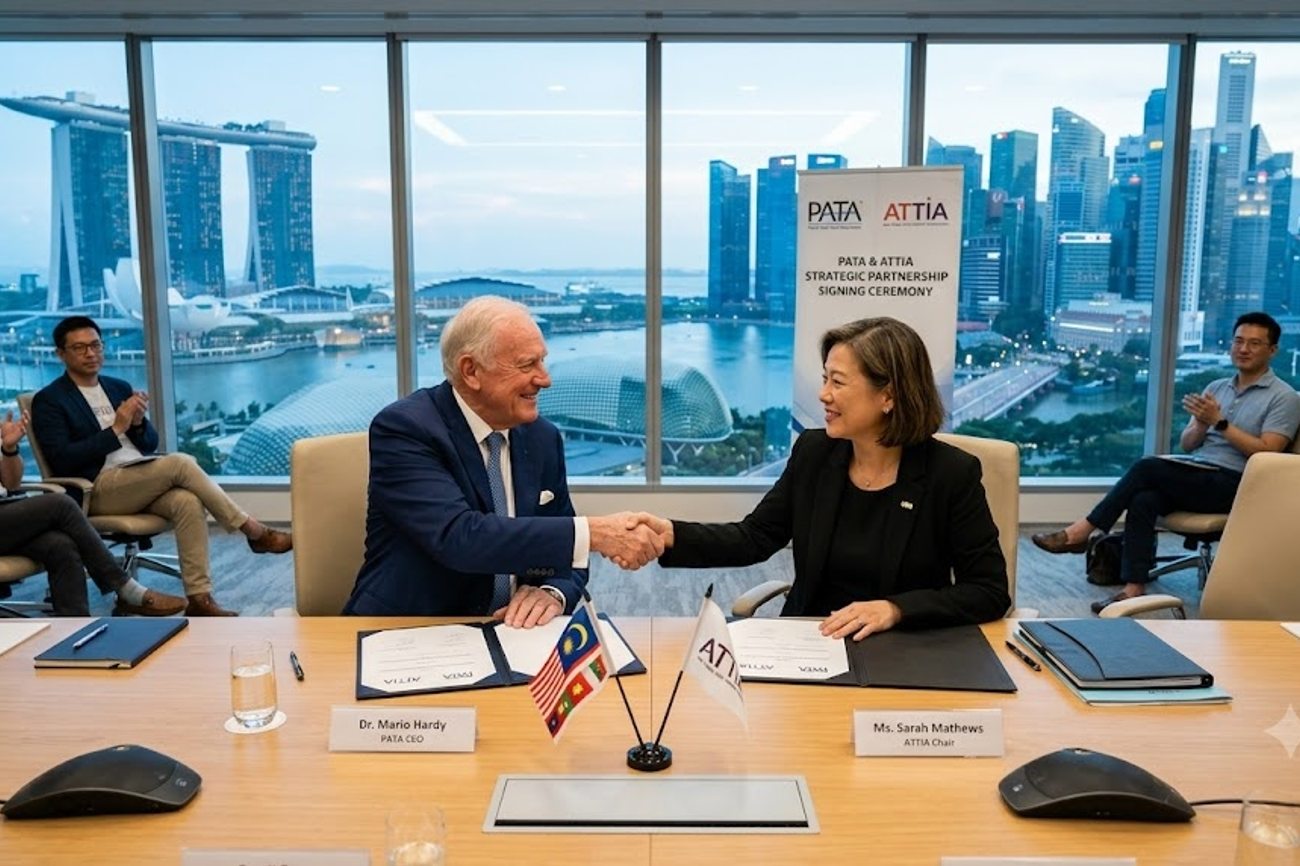
Image generated by AI
[Bangkok, September 15, 2026] — The Pacific Asia Travel Association (PATA) and the Asia Travel Technology Industry Association (ATTIA) have signed a formal Memorandum of Understanding to integrate technology policy with tourism strategy across the Asia Pacific region. The agreement moves the two organizations from informal cooperation to a structured partnership aimed at synchronizing digital innovation with government policy and destination management.
The partnership was finalized during a high-level meeting in Bangkok on September 15, 2026. It establishes a comprehensive framework for knowledge exchange, industry advocacy, and joint marketing. By bridging the gap between PATA’s network of governments and destinations and ATTIA’s focus on travel-tech innovation, the alliance seeks to modernize how the region handles the digital economy. The collaboration arrives as the region sees a massive surge in visitor volume, necessitating a shift from traditional tourism promotion to sophisticated digital distribution.
The Digital Policy Catalyst
The immediate trigger for this alliance is the fundamental shift in how international travelers interact with destinations. The modern traveler's journey now begins with AI-supported services, mobile applications, and complex online research long before a flight is booked or a hotel is reserved. This shift has rendered digital tourism a matter of national competitiveness rather than a niche concern for IT departments.
ATTIA Managing Director Mark Chan noted that the partnership leverages PATA's ability to convene government leaders and travel businesses, combining that reach with ATTIA's specific expertise in the technology sector. The goal is to transform raw industry experience into actionable policy dialogue. This is particularly urgent as smaller tour operators and independent hotels in the Asia Pacific region struggle to maintain visibility within increasingly complex digital distribution channels.
The agreement focuses on several core pillars:
- Policy Dialogue: Creating a forum where technology providers can inform government officials on emerging digital trends.
- Knowledge Transfer: Sharing research on AI-driven travel discovery and changing planning behaviors.
- Capacity Building: Organizing workshops and training sessions to help regional stakeholders implement policy reforms.
- Industry Engagement: Coordinating webinars and conferences to align the interests of tech developers with those of destination managers.
Regional Market Impact and Projections
The partnership is timed to coincide with a significant recovery in international travel following the 2020 crisis. Data provided by the Pacific Asia Travel Association (PATA) indicates a steady upward trajectory for visitor arrivals across 39 Asia Pacific destinations.
The following table outlines the projected international visitor arrivals based on PATA’s June 2026 mid-year forecast:
| Year | Forecasted International Visitor Arrivals |
|---|---|
| 2026 | 714.9 million |
| 2027 | 758.8 million |
| 2028 | 789.2 million |
By 2028, these figures represent 115.6% of the levels seen in 2019. This growth translates directly into a higher volume of digital transactions, including airfare comparisons, accommodation bookings, and mobile payments. The Asia Travel Technology Industry Association (ATTIA) will play a central role in ensuring the digital infrastructure can support this volume without compromising the traveler experience or the viability of local businesses.
Practical Traveler Advisory and Strategic Insights
While the PATA-ATTIA agreement is a B2B and B2G (business-to-government) framework, the downstream effects will be felt by every passenger and tourist visiting the region.
Simplified Digital Journeys Travelers can expect a more seamless transition between different digital touchpoints. As governments and tech providers align their policies, the friction involved in cross-border digital payments, e-visas, and integrated booking platforms should decrease.
Better Access to Boutique Providers A primary goal of the partnership is to help smaller, independent hotels and local experience providers gain better visibility. For the traveler, this means a wider variety of authentic, non-corporate options will become easier to find and book through mainstream digital channels.
AI-Enhanced Discovery With PATA focusing on AI-driven travel discovery, the way travelers find destinations will evolve. Expect more personalized, data-driven recommendations that move beyond generic "top 10" lists to highly specific itineraries based on real-time regional data and updated policy frameworks.
Standardized Digital Services The push for "better-informed policymaking" suggests a move toward more standardized digital services across the region. This reduces the "tech shock" travelers feel when moving between different countries in the Asia Pacific, as digital interfaces and expectations become more uniform.
The strategic partnership between PATA and ATTIA aims to accelerate the adoption of travel technology to streamline passenger logistics across the Asia Pacific region. By integrating digital solutions, the initiative seeks to enhance the visitor experience and operational efficiency as outlined by the Pacific Asia Travel Association.
Implementation Timeline and Next Steps
The partnership will not result in immediate new regulations, as neither PATA nor ATTIA possesses legislative authority. Instead, the impact will be incremental, beginning with "visible" activities.
The first phase of the rollout involves the synchronization of industry events. PATA and ATTIA have committed to supporting each other's conferences and webinars through cross-participation and shared speaking opportunities. This ensures that technology-policy discussions are integrated into the broader tourism conversation rather than kept in a silo.
Simultaneously, the organizations will begin sharing tourism insights and research. PATA’s 2026 research catalog, which already includes studies on AI-driven discovery and visitor patterns, will serve as the baseline for these discussions. The next 24 months will see a transition from these theoretical discussions to practical workshops and training sessions designed to stimulate policy reform within member destinations.
As the region pushes toward the 789.2 million visitor mark in 2028, the success of this partnership will be measured by how effectively destinations can manage the relationship between increasing visitor volumes and the digital tools used to facilitate those visits.
FAQ: Asia Pacific Tourism Tech 2026
Will this agreement change how I book flights or hotels in Asia? Not directly. The agreement focuses on policy and infrastructure. However, you will likely see an increase in the number of small, local operators available on major booking platforms and a more seamless digital experience across different countries.
Is this a new government regulatory body? No. PATA and ATTIA are industry associations, not government agencies. They provide a forum for discussion and research to help governments make better decisions; they do not pass laws or enforce regulations.
How does this affect the use of AI in travel? The partnership specifically targets AI-driven discovery. This means destinations are working with tech experts to better understand how AI influences where people travel, leading to more personalized and efficient travel planning tools for users.
Which regions are covered by these visitor forecasts? The projections cover 39 destinations across the Asia Pacific region, tracking recovery and growth against a 2019 baseline to ensure the region exceeds pre-pandemic travel volumes by 2028.
Digital infrastructure is no longer an accessory to tourism; it is the destination's front door.
Related Travel Guides
This article is for informational purposes. Flight routes, passenger regulations, visa rules, and transit advisories are subject to change by airlines and aviation authorities. Readers are advised to verify schedules and travel documentation with relevant carriers and border agencies before departure.
Related Stories

Delta's Austin–Arkansas Flights Reshape Regional Tourism Economics: Day Trips, Late Arrivals, and Visitor Spending 2027

UK Noise Pollution Rankings 2026: Salford Loudest City While Scotland's Perth and Kinross Emerges as Ultimate Peaceful Travel Retreat