
Las Vegas Flight Inflight Wi-Fi Incident Triggers Cybersecurity Warnings for Travelers
Delta Flight 591 from Las Vegas to Atlanta experienced a 30-minute Wi-Fi shutdown due to a rogue hotspot, highlighting inflight cybersecurity risks.

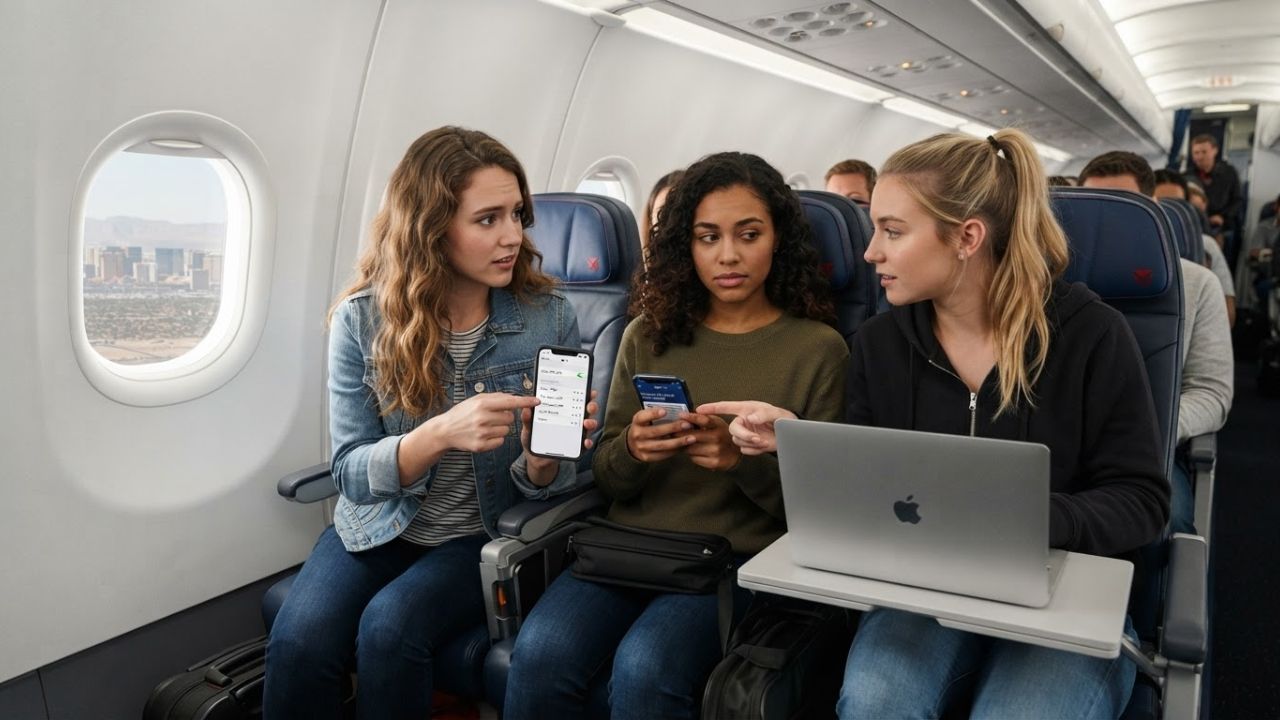
Image generated by AI
Delta Flight 591 traveling from Las Vegas to Atlanta experienced a temporary thirty-minute inflight Wi-Fi shutdown after an unauthorized hotspot emerged, mimicking the airline's official portal. This incident has prompted national security agencies to issue warnings regarding the vulnerability of passenger data on public networks in airports and aircraft.
The Las Vegas Flight Wi-Fi Security Incident
The integration of digital technology into the commercial aviation passenger experience has introduced new challenges for traveler security. On August 15, 2026, Delta Flight 591, en route from Harry Reid International Airport (LAS) in Las Vegas, Nevada, to Hartsfield-Jackson Atlanta International Airport (ATL) in Georgia, experienced an unusual technical disruption. During the flight, passenger-facing cabin crew detected an unauthorized wireless network imitating the airline's official onboard connectivity portal.
In response to the potential security hazard, the flight crew temporarily deactivated the aircraft's entire passenger Wi-Fi service for approximately 30 minutes. This measure allowed the crew to inspect onboard systems and coordinate with ground operations. Delta subsequently confirmed that its critical inflight navigation and operating systems were not compromised, nor was the passenger internet system hacked. However, the appearance of the rogue network—linked in reports to the name "Delta WiFi Fast"—triggered an active investigation involving federal law enforcement and aviation regulators.
The incident occurs during a period of high passenger volumes on domestic routes, when travelers are particularly reliant on digital connectivity to manage their work and travel schedules. By disrupting the service on Flight 591, the carrier highlighted the challenges of managing passenger security in real-time. This proactive response by the flight crew is being analyzed by other airlines looking to establish guidelines for managing rogue hotspots in their cabins.
Understanding Inflight Cybersecurity and the Human Factor
The Delta Flight 591 incident highlights what cybersecurity experts refer to as the human factor in digital safety. Commercial aviation relies on strict architectural separation between passenger entertainment networks and flight-critical control systems. While passenger-facing Wi-Fi cannot interfere with the safe guidance of the aircraft, the personal data of the travelers sitting in the cabin remains vulnerable to interception if they connect to unauthorized networks.
Travelers often make the dangerous assumption that any network sporting the airline's name is safe and legitimate. In a captive environment like an airplane cabin, this trust can be exploited by malicious actors who set up "evil twin" networks. These are fraudulent access points designed to mimic official SSIDs. When a passenger connects to a spoofed network, their device routes all traffic through the attacker's system. This allows the attacker to intercept passwords, bank logins, and email credentials, without needing to hack the airline's official infrastructure.
Inflight Wi-Fi as a Personal Identity Protection Issue
The threat of rogue hotspots shifts the conversation around inflight internet from a convenience feature to an identity protection issue. Modern passengers carry a vast amount of sensitive personal and corporate data on their smartphones and laptops. During long-haul flights, travelers frequently use internet access to conduct online banking, log into corporate networks, manage travel bookings, and check personal emails.
A single unauthorized network connection can compromise a traveler's identity, especially if the user lacks active security protections. The Federal Trade Commission (FTC) has repeatedly warned consumers that public Wi-Fi networks in airports, hotels, and aircraft cabins present risks. The agency advises travelers to verify network security settings, use secure websites, and limit sensitive activities while traveling. The 30-minute Wi-Fi deactivation on Flight 591 demonstrates that airlines must react quickly to protect passengers from these digital threats, showing that passenger education is a necessary part of modern travel security.
This security focus is also essential for corporate travel managers who oversee employee safety during business trips. A compromise of a single corporate laptop can expose sensitive business files, customer data, and internal emails, resulting in significant financial and reputational losses. By establishing strict guidelines for inflight connectivity, businesses can protect their intellectual property while employees travel.
Comparative Risks: Inflight Wi-Fi vs. Hotel and Airport Networks
The behavior of travelers connecting to public networks remains consistent across the hospitality and transport industries. However, the physical settings of these connections create distinct risk profiles.
- Inflight Wi-Fi: Passengers are in a captive space, making them highly reliant on the available cabin network. The appearance of duplicate or slightly modified network names (SSIDs) can go unnoticed by users who assume the airline cabin is an inherently secure environment.
- Airport Wi-Fi: Large international gateways like Harry Reid International Airport in Las Vegas offer free public Wi-Fi, typically under the name "LAS-WIFI". The sheer volume of travelers connecting to these unencrypted networks makes them attractive targets for attackers seeking to intercept unencrypted data packets.
- Hotel Wi-Fi: Shared networks in resorts and hotels are accessed by hundreds of guests. These connections often have weak security settings and lack end-to-end encryption between the guest's device and the router, allowing local network monitoring.
Visitor Guide: Verification, VPNs, and Digital Hygiene for Travelers
Protecting your personal data while traveling involves practicing digital hygiene, using encryption tools, and verifying local network credentials. By following these steps, travelers can minimize their vulnerability to cyber threats.
Before connecting to any network, verify the official SSID with the service provider. At Harry Reid International Airport in Las Vegas, ensure you connect only to the official "LAS-WIFI" network. In the aircraft cabin, do not select a network simply because it contains the airline's name. Check the seatback safety card, official airline application, or consult a flight attendant to confirm the exact spelling and connection procedures for the onboard portal.
Utilize a Virtual Private Network (VPN) when accessing public Wi-Fi networks. A reputable VPN encrypts all internet traffic from your device, creating a secure tunnel that prevents third parties on the same network from viewing your browsing activity or stealing credentials. If your device displays a security warning or certificate error when connecting, disconnect immediately. Enable multi-factor authentication (MFA) on all financial, work, and email applications prior to your trip to provide an additional layer of protection.
Avoid conducting sensitive transactions while connected to public travel networks. Postpone online banking, password changes, and access to secure corporate systems until you can connect via a secure personal hotspot or a trusted residential network. In your device's settings, disable the option to automatically connect to open networks, and delete or "forget" the "LAS-WIFI" and airline profiles after use to prevent your device from reconnecting automatically.
Future Outlook: Rebuilding Inflight Digital Trust
The future development of inflight connectivity will rely on the integration of advanced encryption standards and secure authentication protocols. As airlines continue to transition toward high-speed, free Wi-Fi models, they must implement systems that verify network authenticity.
To protect passengers, aviation technology firms are developing secure onboarding systems, similar to the Passpoint technology used in cellular networks. These systems allow passenger devices to authenticate the airline's network automatically using secure certificates, preventing connections to unauthorized hotspots. By combining these technology upgrades with clear passenger briefings and safety announcements, the aviation industry aims to restore digital trust, ensuring that inflight connectivity remains a safe and reliable service for global travelers.
Related Travel Guides
Disclaimer
This article is for informational and educational purposes only. It does not constitute legal, financial, or professional advice. While we strive to provide accurate and up-to-date information, travel policies, regulations, and conditions change rapidly. Always verify information with official sources before making travel decisions. Nomad Lawyer makes no representations about the accuracy, reliability, completeness, or suitability of the information provided. Readers should consult qualified professionals for advice specific to their circumstances. The views expressed in this article are those of the author and do not necessarily reflect the views of Nomad Lawyer.
Kunal K Choudhary
Co-Founder & Contributor
A passionate traveller and tech enthusiast. Kunal contributes to the vision and growth of Nomad Lawyer, bringing fresh perspectives and driving the community forward.
Learn more about our team →