Japan's Nagano Landslide Traps Tourists at Nakabusa Onsen

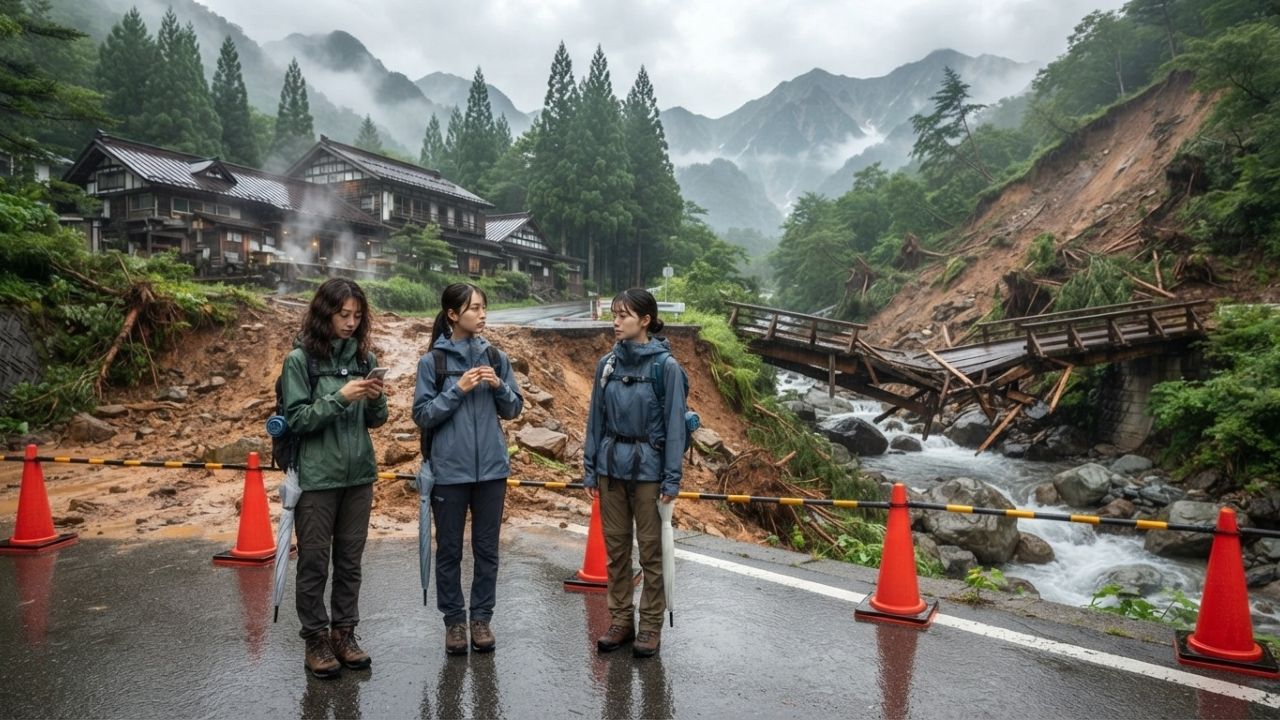
Image generated by AI
With heavy summer downpours sweeping across Nagano Prefecture, a major landslide has blocked the primary access route to the historic 200-year-old Nakabusa Onsen resort.
The Core Transit Update
Extreme summer weather has disrupted regional access in Japan’s mountainous regions. On Saturday, August 8, 2026, torrential downpours in the Azumino area—recording approximately 50 millimeters of rainfall within a single hour—triggered a landslide that blocked the mountain road and swept away a key bridge leading to Nakabusa Onsen.
This access road blockage has temporarily trapped 390 visitors, including hotel guests staying at the resort and hikers using nearby mountain shelters. No injuries or casualties have been reported, and emergency services are working to restore access.
Destination Profile & Transit Status
Navigating remote onsen resorts during severe weather requires tracking geographic parameters alongside road conditions. The following tables outline the destination profile of Nakabusa Onsen and the current regional transport status.
| Destination Hot Spring | Altitude / Location | Historical Heritage | Outdoor Recreation Access |
|---|---|---|---|
| Nakabusa Onsen | 1,462 meters / Azumino | 200-year-old hot spring resort | Northern Alps hiking trails |
Nakabusa Onsen destination profile.
| Transport Link | Normal Route Status | Landslide Damage Impact | Regional Passenger Status |
|---|---|---|---|
| Azumino Mountain Road | Closed to all vehicles | Blocked by rocks & debris | ~390 guests and hikers isolated |
| Nakabusa River Bridge | Completely destroyed | Swept away by mudslides | Restoring pedestrian transit routes |
Nakabusa Onsen regional transit status.
Traveler Logistics Guide
From a ground-level perspective, the best way to navigate this is to monitor the Japan Meteorological Agency (JMA) weather warnings before departing for any mountain hot spring resorts or high-altitude hiking trailheads in the Northern Alps, as remote access roads can become blocked by landslides during intense rainstorms. Checking transport updates is recommended.
To ensure safety and manage your transit:
- Pre-Arrival Weather Checks: Avoid traveling to mountainous regions when hourly rainfall is forecast to exceed 30 millimeters, which indicates high landslide risks on narrow valley roads.
- Review Emergency Supplies: When visiting remote alpine cabins, carry sufficient personal medications, cash, and emergency rations in case transport links are temporarily suspended.
- Coordinate Hiking Routes: If using Nakabusa Onsen as a starting point for hikes across the Northern Alps, register your itinerary with the local mountain safety board and carry a portable GPS device.
- Okinawa Typhoon Disruptions: If planning transits to southern Japan, note that Typhoon Dolphin has caused power outages and structural damage across the Okinawa region.
Infrastructure Impact Assessment
The landslide near Azumino highlights the operational challenges faced by historic mountain resorts that rely on single-access transport corridors. The destruction of the Nakabusa River bridge requires complex engineering repairs due to unstable soil conditions and ongoing rain.
Nagano Prefecture officials are focusing on restoring safe pedestrian transit options and stabilizing the hillside to support the local hospitality and outdoor tourism sectors.
Related Travel Guides
- Universal Studios Hollywood Implements Controversial 4 PM Water Bottle Ban for Halloween Horror Nights 2026
- Mozambique Travel Alert 2026: Balancing Luxury Tourism Growth and Cabo Delgado LNG Security Risks
- Sargassum-Smart Caribbean Travel Guide 2026: The Insider Strategy for Grand Cayman, Aruba, and Curaçao
This article is for informational purposes. Flight routes, passenger regulations, visa rules, and transit advisories are subject to change by airlines and aviation authorities. Readers are advised to verify schedules and travel documentation with relevant carriers and border agencies before departure.
Related Stories

Hanoi Opens 12 Old Quarter Heritage Sites for Creative Design Festival as Vietnam Accelerates High-Yield City Breaks

Albania’s Historic Castle Town of Krujë Pivots to Slow Travel as Overnight Stays Replace Day-Trip Crowds