Shenzhen Launches Southern China’s First Cruise to Nowhere: Sold-Out Debut of Dream Marks High-Seas Tourism Breakthrough

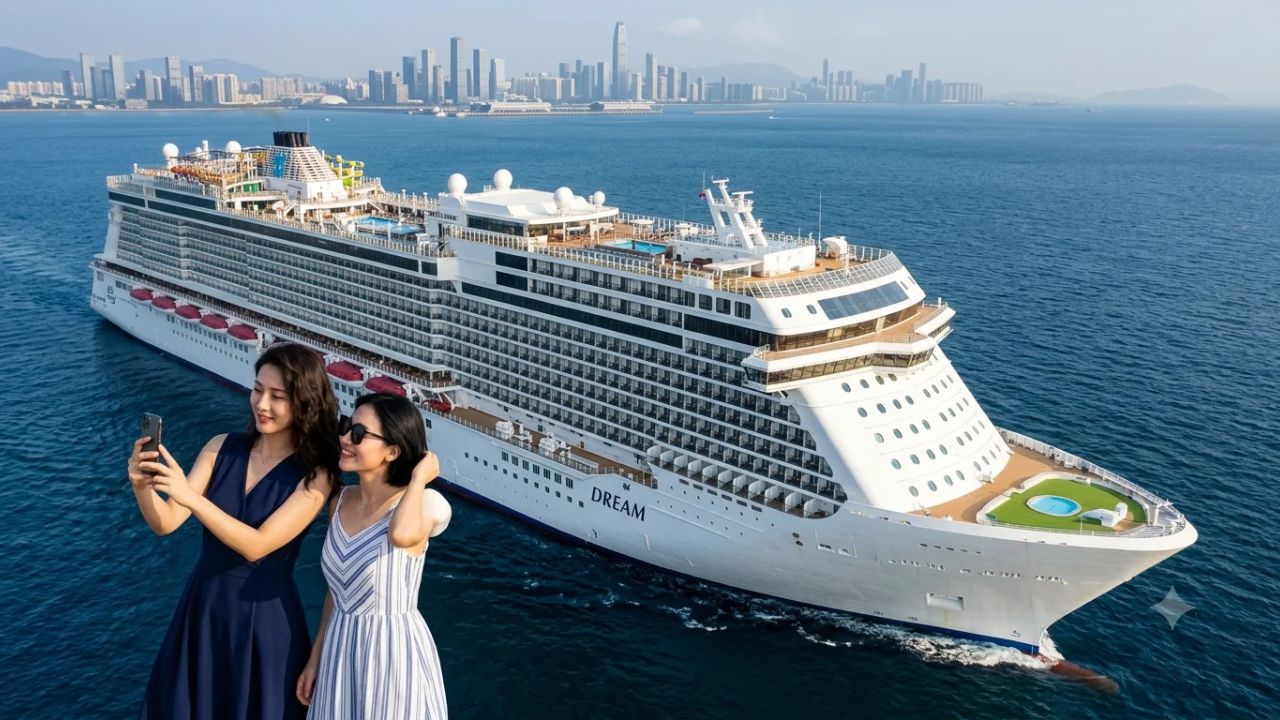
SHENZHEN, China — Southern China’s maritime tourism industry reached an unprecedented operational milestone as the 77,000-gross-ton cruise liner Dream successfully completed the region's first-ever "cruise to nowhere" pilot voyage, returning to Shenzhen’s Shekou Cruise Home Port following a sold-out three-day high-seas itinerary. Confirmed by China’s Ministry of Transport (中华人民共和国交通运输部) and the Shenzhen Municipal People's Government, the inaugural voyage departed on 30 October 2026, positioning Shenzhen as the third operational pilot gateway in mainland China for no-destination ocean voyages, following earlier rollouts in Shanghai and Tianjin. Featuring streamlined digital border inspection protocols that accelerated passenger clearance efficiency by more than 30 percent, the pilot establishes a frictionless weekend leisure escape for residents across the Guangdong–Hong Kong–Macao Greater Bay Area (GBA).
The completion of the three-day, two-night high-seas voyage demonstrates a structural evolution in China's post-pandemic cruise strategy. Rather than evaluating maritime vacations solely through the lens of port-hopping sightseeing itineraries in Southeast Asia or Japan, Chinese tourism policymakers are actively cultivating the shipboard experience itself as the primary holiday destination. By pairing liberalized exit-entry permit rules for non-passport holders with advanced automated customs single-window systems, Shenzhen is pioneering a high-volume, low-friction cruise model designed to capture the weekend vacation spending of China's most affluent urban demographic.
SHENZHEN SHEKOU CRUISE TO NOWHERE: INAUGURAL PILOT BENCHMARKS
| PERFORMANCE BENCHMARK | OFFICIAL REPORTED METRIC | STRATEGIC IMPLICATION & ANALYSIS |
|---|---|---|
| Operating Cruise Vessel | Dream (梦想号) | 77,000 GT; 261.31m length; 15 passenger deck |
| Departure Home Port | Shekou Cruise Home Port | Nanshan District, Shenzhen, Guangdong |
| Maiden Departure Date | 30 October 2026 | First operational pilot in Southern China |
| Voyage Duration | 3 Days, 2 Nights | High-seas sailing without overseas calls |
| National Pilot Rank | Third Nationwide | Follows Shanghai (June 2026) & Tianjin |
| Ticket Demand Status | 100% Sold Out | Over 2,150 commercial tickets processed |
| Border Clearance Gain | +30% Inspection Speed | Single Window digital pre-screening |
| Passport-Free Policy | Special Exit-Entry Permit | Single-entry permit via mainland ID card |
| Maritime Safety Protocol | "One Ship, One Plan" | AIS, VTS, drone patrols, 16 weather stations |
| Provincial Cruise Volume | 34 Calls / 138,600 Trips | Cumulative Guangdong cruise volume in 2026 |
Deconstructing the Concept: How China’s Cruise to Nowhere Operates
A "cruise to nowhere" (known in Chinese maritime regulatory parlance as a no-destination high-seas voyage or 无目的地游轮航线) departs from an authorized coastal cruise terminal, sails into international open waters without berthing at any intermediate domestic or foreign port, and returns passengers directly to the original port of embarkation.
This operating model delivers decisive logistical and commercial advantages over traditional multi-destination cruises:
- The Ship as the Exclusive Destination: By eliminating port disembarkation fees, pilotage charges at foreign terminals, and overseas ground transportation logistics, cruise operators focus passenger attention entirely on onboard hospitality, gourmet dining, live theatrical productions, duty-free retail, and poolside relaxation.
- Weekend-Friendly Time Optimization: Traditional international sailings from southern China to ports in Vietnam, the Philippines, or Japan typically require five to eight nights, demanding substantial annual leave commitments from corporate professionals. A three-day, two-night itinerary departing Friday afternoon and returning Sunday morning allows travelers to experience an international cruise vacation with zero workplace disruption.
- Streamlined Regulatory Processing: Because the vessel does not enter foreign territorial waters or anchor at foreign piers, international visa mandates and foreign immigration processing are completely bypassed.
However, maritime authorities emphasize that high-seas cruises must not be mistaken for domestic ferries. Because vessels enter international waters, all departing travelers must clear formal exit and entry border inspections, and vessels must comply with strict international maritime safety, cabotage, and customs standards.
CONVENTIONAL CRUISE VS. NO-DESTINATION HIGH-SEAS CRUISE
| Entity / Route | Metrics | Operational Status |
|---|---|---|
| OPERATIONAL PARAMETER | CONVENTIONAL INTERNATIONAL | HIGH-SEAS CRUISE TO NOWHERE |
| Port Itinerary Pattern | Multi-Port (Foreign Calls) | Circular Loop (Zero Port Calls) |
| Typical Voyage Length | 5 to 8 Nights Minimum | 3 Days, 2 Nights (Weekend Escapes) |
| Destination Visa Requisite | Requires Foreign Visas / EVAs | Completely Exempt from Foreign Visas |
| Non-Passport Access Option | Strictly Not Permitted | Mainland Travel Permit Permitted |
| Onboard Spending Focus | Split with Shore Excursions | 100% Retained Onboard the Vessel |
| Terminal Processing Friction | Standard Manual / E-Gate Mix | +30% Faster Digital Single Window |
The Vessel: Dream Launches Shekou’s High-Seas Era
The vessel selected to execute Shenzhen’s maiden high-seas pilot is the Dream (梦想号), an established mid-sized international cruise liner operated by Orient International Cruise. Originally constructed by Fincantieri in Italy as the Sea Princess for Princess Cruises, the ship underwent extensive technical modernizations and interior refurbishments before entering the Chinese homeport market:
- Naval Architecture and Dimensions: Measuring 261.31 metres in length overall (LOA) with a beam of 32.25 metres and a gross tonnage of approximately 77,000 GT, the Dream possesses the maritime stability and hydrodynamic seaworthiness required for comfortable navigation across the open waters of the South China Sea.
- Accommodation Capacity: Across its 15 decks, the vessel incorporates 1,008 passenger cabins, encompassing luxury owner suites, private balcony staterooms, ocean-view staterooms, and interior cabins, supporting a maximum passenger capacity exceeding 2,200 travelers alongside a 900-member international crew.
- Integrated Onboard Amenities: The ship is equipped with a grand multi-deck Broadway-style theatre, four specialty restaurants serving authentic Cantonese, Sichuan, and Western fine dining, expansive outdoor sundeck swimming pools and whirlpool spas, duty-free designer boutiques, a comprehensive fitness centre, and dedicated youth entertainment clubs.
Prior to the 30 October pilot, the Dream had been operating nine scheduled international rotations from Shekou between 20 September and 5 November, calling at ports across Vietnam, Malaysia, Brunei, and Singapore. The addition of the high-seas itinerary demonstrates an agile fleet deployment strategy, allowing the operator to fill shoulder-season gaps between longer international voyages.
DREAM CRUISE LINER: TECHNICAL & PASSENGER SPECIFICATIONS
| SPECIFICATION METRIC | OFFICIAL VESSEL DATA (SHEKOU CRUISE HOME PORT) |
|---|---|
| Vessel Name (English/CN) | Dream (梦想号) |
| Former Historical Name | Sea Princess (Sun Class Cruise Liner) |
| Builder & Shipyard | Fincantieri Shipyard (Monfalcone, Italy) |
| Gross Registered Tonnage | Approximately 77,000 GT |
| Length Overall (LOA) | 261.31 Metres |
| Maximum Beam (Width) | 32.25 Metres |
| Total Decks / Passenger | 15 Decks / 12 Passenger-Accessible Decks |
| Guest Cabin Inventory | 1,008 Staterooms (Suites, Balcony, Ocean-View, Interior) |
| Maximum Passenger Load | >2,200 Passengers (Standard Double: ~1,950 Keys) |
| Operating Speed | 20.0 Knots (Cruising Velocity) |
| Homeport Deployment | Shekou Cruise Home Port, Nanshan District, Shenzhen |
Administrative Innovation: Special Exit-Entry Permits for Passport-Free Travel
The most consequential structural breakthrough introduced by the Shenzhen pilot lies in its revolutionary travel documentation framework. Historically, Chinese citizens wishing to board any international cruise vessel departing from a mainland port were legally required to present a valid ordinary passport (因私普通护照), creating a substantial administrative barrier for millions of domestic citizens who had not previously applied for international travel documents.
Under regulatory authorizations sanctioned by the National Immigration Administration and the Ministry of Public Security, the Shenzhen pilot introduces a dual-track documentation pathway:
1. The Standard Passport Track
Mainland Chinese citizens holding a valid ordinary passport can book and board the Dream without obtaining visas for any overseas destination. Border control officers apply standard exit and entry verification stamps without requiring proof of onward travel or foreign consular authorizations.
2. The Identity-Card Travel Permit Track
For mainland residents who do not possess an ordinary passport, municipal authorities established a specialized administrative channel:
- Eligible residents can apply for a Single-Entry / Single-Exit Travel Permit (中华人民共和国出入境通行证) using their standard mainland Resident Identity Card (居民身份证).
- Applications are processed directly through the dedicated exit-entry service hall of the Shenzhen Public Security Bureau’s Nanshan branch (深圳市公安局南山分局出入境服务大厅).
- Upon identity authentication and background verification, applicants receive the temporary biometric permit, unlocking maritime leisure travel for a vast domestic consumer base that was previously excluded from ocean cruising.
Regulations for Non-Mainland Travelers
Authorities emphasize that the mainland identity-card permit policy does not extend to foreign nationals or residents of Hong Kong, Macao, and Taiwan:
- Hong Kong and Macao Residents: Must present their Mainland Travel Permit for Hong Kong and Macao Residents (回乡证).
- Taiwan Residents: Must present a valid Mainland Travel Permit for Taiwan Residents (台胞证).
- Foreign Passport Holders: Must hold valid national passports and ensure that exiting mainland customs territory to enter international waters does not invalidate their Chinese visas. Foreign residents must hold valid multi-entry visas (多次往返签证) or permanent residence cards to ensure seamless re-entry upon the ship’s return to Shekou.
30% Efficiency Surge: Digital Single Window Border Clearance
Processing over 2,100 cruise passengers and 900 crew members through a maritime passenger terminal within a concentrated two-hour embarkation window presents immense logistical hurdles. To eliminate terminal congestion and avoid boarding delays, Shekou border inspection authorities deployed advanced digital border technology that accelerated processing throughput by more than 30 percent.
SHEKOU BORDER INSPECTION: ADVANCED DIGITAL CLEARANCE ARCHITECTURE
| Category / Entity | Details / Impact |
|---|---|
| OPERATIONAL COMPONENT | TECHNICAL MECHANISM & PERFORMANCE ADVANTAGE |
| Trade Single Window Data | Passenger and crew manifests pre-submitted digitally 24 hours prior; |
| (中国国际贸易单一窗口) | automated background pre-clearance completed before terminal arrival |
| Biometric Smart E-Gates | Facial recognition and chip document scanners process passengers in |
| under 8 seconds per individual, cutting physical counter queues | |
| Coordinated Agency Desk | Customs, Maritime Safety, and Border Inspection execute joint manifest |
| (One-Stop Joint Review) | verification, eliminating redundant physical document inspections |
| Luggage RFID Tracking | Checked stateroom baggage undergoes automated high-speed CT scanning |
| and digital tracking directly from curbside drop to cabin door |
Pre-Arrival Manifest Data Integration
Through the China (Shenzhen) International Trade Single Window, the cruise line securely transmits complete passenger manifests, ticket reservations, and identity records to border authorities 24 hours before sailing. Immigration systems execute automated preliminary risk assessments, allowing border control officers to calibrate lane staffing and pre-screen traveler credentials before guests step into the terminal concourse.
Biometric Fast-Track Lanes
At Shekou Cruise Home Port, passengers proceed through automated biometric e-gates equipped with high-resolution facial recognition cameras and multi-format document readers. The digital system verifies ticket validity, identity documents, and boarding authorization in less than eight seconds per passenger, delivering an overall clearance speed enhancement exceeding 30 percent compared to conventional manual inspection counters.
Maritime Safety Infrastructure: "One Ship, One Plan" and 16 Weather Stations
Operating a high-seas cruise into open waters requires comprehensive maritime safety coordination. The Shekou Maritime Safety Administration (MSA) instituted a bespoke, vessel-specific protection framework known as the "One Ship, One Plan" (一船一策) safety governance system.
Comprehensive Electronic Monitoring Matrix
The safety architecture utilizes overlapping surveillance networks to safeguard the Dream throughout its 72-hour voyage:
- Automatic Identification System (AIS): Constant satellite and terrestrial tracking of the ship’s precise geographic coordinates, heading, speed, and draft.
- Vessel Traffic Services (VTS): Central maritime controllers monitor the ship's navigation through the heavily trafficked Pearl River Estuary, managing sea-lane separation corridors to prevent conflicts with commercial container ships and high-speed ferries.
- Real-Time Video Surveillance: High-definition closed-circuit monitoring covers terminal berthing aprons, navigation channels, and open-sea passage corridors.
Meteorological Network: 16 Coastal Observation Stations
The South China Sea is subject to rapidly shifting maritime weather conditions, coastal fog banks, and sudden wind squalls. To provide real-time atmospheric intelligence:
- MSA command centers integrated live meteorological feeds from 16 specialized coastal marine observation stations positioned across the Pearl River mouth and outer Guangdong islands.
- Dedicated meteorological teams provided continuous six-hour weather forecasting updates directly to the ship's bridge, ensuring the vessel's master could adjust cruising coordinates in open waters to maintain optimal passenger comfort.
- Shekou MSA deployed specialized offshore patrol cutters (海巡船) and long-range surveillance drones to conduct visual escorts during the ship’s departure and return transits through the Shekou fairway.
GUANGDONG PROVINCE CRUISE TRAFFIC & FLEET ACTIVITY (2026 BENCHMARKS)
| PERFORMANCE METRIC | AUDITED PROVINCIAL TALLY | REGIONAL CONTEXT & EXPANSION STATUS |
|---|---|---|
| Annual Cruise Ship Calls | 34 Recorded Port Calls | Across Shekou and Nansha cruise terminals |
| Cruise Passenger Trips | 138,600 Passenger Trips | Measured through late October 2026 |
| Operational Pilot Ports | Shenzhen Shekou (Active) | Guangzhou Nansha actively preparing pilot |
| Upcoming New Mega-Liner | Adora Flora City (花城号) | China's 2nd domestic large ship; late Nov |
| Target Consumer Basin | Greater Bay Area (86M+) | Guangdong, Hong Kong, and Macao urban belt |
National Strategy: Tracing China’s High-Seas Cruise Pilots
The successful launch in Shenzhen represents the execution of a high-level national policy framework designed to establish China as an international cruise powerhouse. In November 2025, the Ministry of Transport, in conjunction with the Ministry of Culture and Tourism, issued a landmark directive titled Guiding Opinions on Promoting the High-Quality Development of Cruise Transport and Tourism Services.
The policy specifically encouraged coastal regional governments to explore "no-destination high-seas cruising" as a strategic tool to expand domestic consumption, test bonded marine fuel bunkering systems, and diversify tourism products.
Shenzhen’s launch completes a three-hub national deployment:
- Shanghai Wusongkou (The Pioneer): On 6 June 2026, Shanghai inaugurated the national pilot when China's first domestically constructed large cruise ship, the 135,500 GT Adora Magic City (爱达·魔都号), departed on a sold-out three-day high-seas voyage carrying over 4,000 guests.
- Tianjin International Cruise Home Port: Northern China’s primary cruise gateway followed shortly thereafter, establishing high-seas itineraries serving the Beijing–Tianjin–Hebei metropolitan cluster.
- Shenzhen Shekou (Southern Flagship): Launched on 30 October 2026, anchoring the Greater Bay Area’s maritime economy.
Guangzhou Nansha Prepares to Follow
The high-seas cruise revolution in southern China is poised for immediate geographic expansion. Maritime authorities in Guangzhou are advancing preparations to launch a parallel no-destination pilot from Guangzhou Nansha International Cruise Home Port.
Importantly, Nansha is preparing for the highly anticipated maiden deployment of the Adora Flora City (爱达·花城号), China’s second domestically constructed large cruise liner, scheduled to enter service in late November 2026. The coordinated expansion of Shenzhen and Guangzhou will establish the Pearl River Delta as the most dynamic dual-homeport cruise cluster in the Asia-Pacific region.
Consumer Economics: Why the High-Seas Model Captures the Greater Bay Area
The instantaneous sell-out of the Dream’s introductory voyage underscores the immense latent demand for accessible, short-duration leisure products among the 86 million residents of the Guangdong–Hong Kong–Macao Greater Bay Area.
Several consumer demographic factors explain this rapid market adoption:
- Affluent, Time-Constrained Urbanites: Tech professionals from Shenzhen's high-tech corridors (Nanshan and Qianhai), financial executives from Hong Kong, and entrepreneurs from Guangzhou possess high disposable income but severely restricted vacation time. A two-night weekend high-seas sailing provides an optimal escape without sacrificing working days.
- Multi-Generational Family Appeal: Cruising resolves the friction of multi-generational travel. Grandparents enjoy leisurely ballroom dancing and traditional tea service, working parents unwind in ocean-view spas and fine-dining restaurants, and children engage in supervised gaming and splash parks—all within a secure, contained environment.
- The "First-Timer" Onboarding Vehicle: Surveys reveal that a substantial hurdle for prospective cruise vacationers is fear of seasickness, boredom, or confinement during extended 7-to-10-night voyages. A low-risk, three-day high-seas sailing serves as the perfect introductory "sampling" product, converting skeptical first-timers into lifetime cruise enthusiasts.
DREAM ONBOARD HIGHLIGHTS: THE 72-HOUR ITINERARY
| Entity / Facility | Delays | Cancellations | Details |
|---|---|---|---|
| DAY | MORNING AT SEA | AFTERNOON ENTERTAINMENT | EVENING CULINARY & NIGHTLIFE |
| Day 1 | Terminal check-in at | Welcome sundeck party; | Captain's Gala Dinner; grand opening |
| Shekou; cabin settling | ocean view spa sessions | theatrical revue at the Main Theatre | |
| Day 2 | Sunrise yoga on deck; | Duty-free retail sales; | Multi-course Cantonese banquet; live |
| poolside international | family aquatic sports; | acoustic lounge music, comedy, and | |
| breakfast buffet | afternoon high tea | late-night DJ sets under the stars | |
| Day 3 | Final morning swim and | Smooth disembarkation | Convenient high-speed ferry or metro |
| leisurely brunch at sea; | through Shekou e-gates | transit back to Shenzhen, HK, or Macao |
Essential Traveler Advisory: Logistics, Documentation, and Terminal Access
For travelers planning to book future departures of Shenzhen’s cruise to nowhere, adhering to official travel guidelines ensures an effortless voyage:
1. Terminal Access at Shekou Cruise Home Port
Shekou Cruise Home Port (蛇口邮轮母港), located on Prince Bay in Nanshan District, features direct multimodal transportation connections:
- Metro Transit: Take Shenzhen Metro Line 12 directly to Taiziwan Station (太子湾站), followed by a brief 5-minute walk, or take Metro Line 2 to Shekou Port Station (蛇口港站) and transfer to the continuous terminal shuttle bus.
- Cross-Border High-Speed Ferries: Arriving travelers from Hong Kong International Airport (SkyPier), Hong Kong Central (Macau Ferry Terminal), or Macao (Taipa/Outer Harbour) can take high-speed passenger ferries directly into Shekou Cruise Home Port, allowing direct baggage transfer and internal terminal check-in.
2. Booking Protocols and Ticketing Channels
Tickets for no-destination sailings aboard the Dream must be reserved through official cruise line platforms, licensed Chinese travel agencies (such as Ctrip and Tongcheng), or the official Shekou Cruise Home Port digital booking service. Travelers should verify ticket fare inclusions, confirming whether specialty dining, beverage packages, and onboard gratuities are included in the base rate.
3. Document Preparation Timeline
- Mainland residents intending to utilize the Single-Entry Travel Permit should submit application documents to the Nanshan Exit-Entry Service Hall at least 5 to 7 business days prior to departure.
- Foreign travelers must ensure their Chinese visa allows for multiple entries, as departing Chinese territorial waters into the high seas is legally classified as an international departure requiring a valid entry permit upon return.
Shenzhen’s successful high-seas cruise debut marks an exhilarating turning point for Asian maritime tourism. By dismantling administrative documentation barriers, investing in 30% faster digital border clearance, and recognizing the transformative value of shipboard leisure, China is demonstrating how forward-thinking port cities can build an innovative, sustainable, and internationally competitive cruise industry for the 21st century.
Related Travel Guides
This article is for informational purposes. Flight routes, passenger regulations, visa rules, and transit advisories are subject to change by airlines and aviation authorities. Readers are advised to verify schedules and travel documentation with relevant carriers and border agencies before departure.
Related Stories
Royal Caribbean’s Legend of the Seas Makes US Debut at Port Everglades: Icon Class Mega-Ship Launches Fort Lauderdale Caribbean Season
Australia Welcomes Celebrity Solstice to Eden: Maiden Cruise Visit Opens NSW Sapphire Coast 2026–27 Season With 25 Ships