Hanoi Opens 12 Old Quarter Heritage Sites for Creative Design Festival as Vietnam Accelerates High-Yield City Breaks

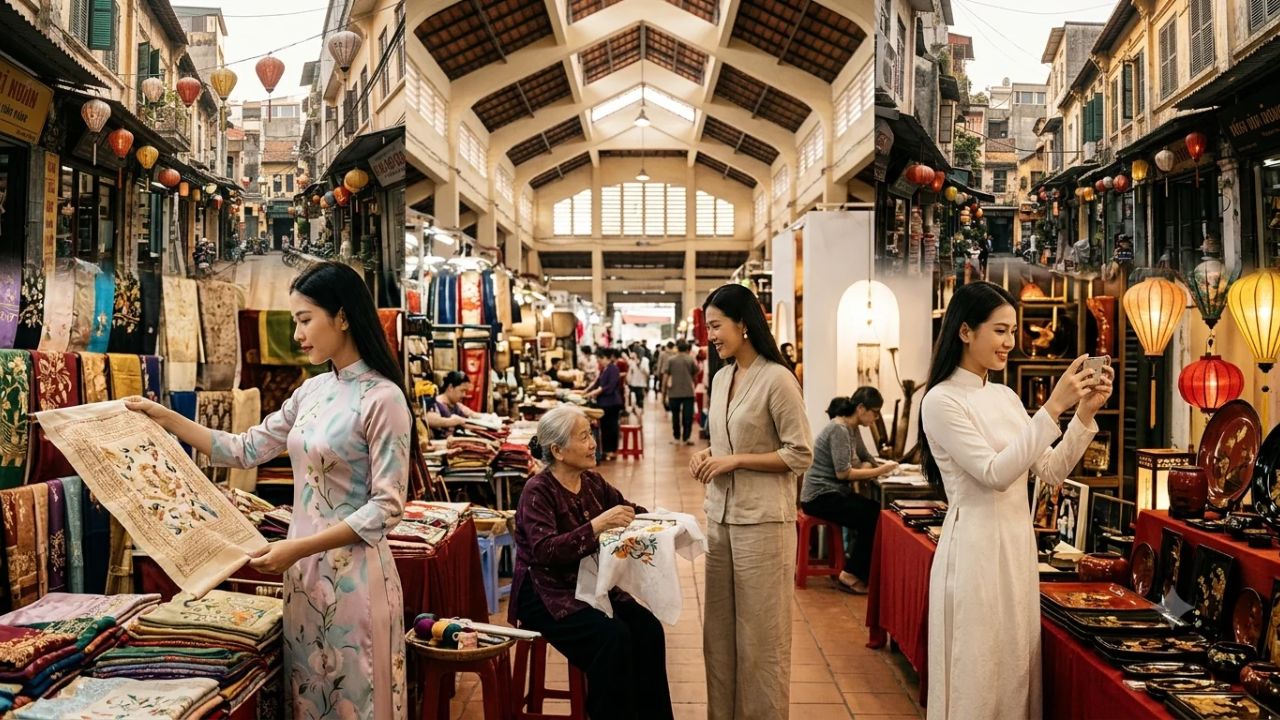
HANOI, Vietnam — In an ambitious fusion of living guild heritage, contemporary public art, and nighttime urban revitalization, Vietnam’s capital is unlocking twelve historic Old Quarter communal houses and assembly halls to headline the 2026 Hanoi Creative Design Festival.
Scheduled to open their heavy wooden gates to international travelers and local residents on 14 November, these centuries-old architectural sanctuaries will serve as the centerpiece of a citywide cultural showcase designed to extend visitor stays, celebrate indigenous master crafts, and cement Hanoi's standing as one of Asia's most compelling urban break destinations.
The cultural initiative follows Hanoi’s recognition as "Asia's Leading City Break Destination" at the 2026 World Travel Awards held in the Maldives in September. Building upon that global accolade, the municipal government and the Hanoi Department of Culture and Sports have assembled a multi-week calendar comprising approximately 150 curated activities distributed across five major urban districts.
From experimental art interventions inside the commercial aisles of the iconic Đồng Xuân Market to twilight architectural projections across the royal doctoral stelae of the Temple of Literature, the November program represents a deliberate transition from superficial sightseeing to high-yield experiential tourism.
With official municipal data recording 30.36 million total tourist visits and tourism receipts reaching VND 125.24 trillion in the first ten months of 2026, the capital is capitalizing on newly inaugurated direct flight links from western India and southern Taiwan to drive extended weekend stays and bolster its nocturnal creative economy.
HANOI CREATIVE DESIGN FESTIVAL & URBAN TOURISM SCORECARD (2026)
| Category / Entity | Details / Impact |
|---|---|
| Core Festival Name | Hanoi Creative Design Festival (Lễ hội Thiết kế Sáng tạo Hà Nội) |
| Official Opening Ceremony | Friday, 13 November 2026 (7:00 PM; Square East of Hoàn Kiếm Lake) |
| Old Quarter Heritage Access | 12 Communal Houses (Đình) & Guild Halls Opened From 14 November |
| Flagship Market Exhibition | "Chạm Đồng Xuân" (Touch Đồng Xuân; 14–28 November; 25 Artists) |
| Citywide Festival Footprint | ~150 Curated Activities Across 5 Primary Urban Zones |
| Night Performing Arts Series | "Hà Nội Sáng Đèn" (17 Programmes; 11 Venues; Nearly 180 Artists) |
| Park Architectural Pavilions | Thống Nhất Park ("Cloud" & "Cocoon" Pavilions; Outdoor Screenings) |
| Academic Heritage Highlight | Temple of Literature Night Programme (6 PM–10 PM Wed, Sat, Sun) |
| Global Tourism Recognition | "Asia's Leading City Break Destination" (World Travel Awards 2026) |
| Municipal Visitor Volume (10M) | 30.36 Million Visits (Jan–Oct 2026; +6.8% YoY; 7.57M International) |
| Overnight International Volume | 5.34 Million Overnight Stays (~70.5% of International Arrivals) |
| Municipal Tourism Receipts | VND 125.24 Trillion (Jan–Oct 2026; +13.0% YoY Revenue Expansion) |
| National Tourism Benchmark | 19.54 Million International Arrivals Nationwide (+13.8% YoY) |
| Newly Inaugurated Air Links | Vietnam Airlines (Ahmedabad–HAN; 4x Wk); Vietjet (Tainan–HAN; 4x) |
The Twelve Guild Temples: Reconnecting Old Quarter Streets to Ancestral Master Crafts
The architectural anchor of the November festival is the public unlocking of twelve historic communal houses (đình) and clan assembly halls (hội quán) scattered throughout the labyrinthine street grid of Hanoi’s ancient 36 Guild Streets (36 Phố Phường). Historically, these communal houses served as the spiritual and civic sanctums of the merchant guilds that migrated from rural artisan villages across the Red River Delta into the royal capital centuries ago. Each temple was dedicated to the veneration of a guild’s patron deity or founding craft master (tổ nghề), functioning simultaneously as a center for trade arbitration, quality standardization, and communal welfare.
Over decades of rapid urbanization, commercial retail expansion, and residential partitioning, many of these architectural treasures remained closed behind barred timber doors or obscured by storefront merchandise. Starting Saturday, 14 November, these twelve venues will open their ceremonial courtyards to visitors, transforming the physical geography of the Old Quarter into a living craft trail.
The names of Hanoi's historic streets still reflect the ancestral trades established by these medieval guilds. Hàng Bạc translates directly as "Silver Street," where royal silversmiths from Định Công village established casting workshops and bullion exchanges during the Lê and Nguyễn dynasties. Hàng Quạt, or "Fan Street," preserves the lineage of feather, silk, and pleated paper fan makers who once supplied royal courts and ceremonial troupes.
Other guild thoroughfares along the trail commemorate master woodblock carvers, gold leaf beaters, mother-of-pearl inlayers, silk weavers, and lacquer artisans. The opening of the twelve communal houses enables visitors to trace an unbroken narrative link between the physical street signage, the founding deities enshrined inside the temples, and the contemporary artisans who continue to practice their ancestral trades in back-alley studios.
Curators have designed the guild heritage trail to encourage visitors to follow single raw materials—such as raw silk threads, unworked copper ingots, block timber, or sheet silver—as they pass through the hands of master carvers, embroiders, and lacquerers before reaching the storefront display cabinets. By staging design workshops, live masterclass demonstrations, and interactive exhibitions inside the sacred courtyards of the đình, the festival provides visitors with rare access to the human stories and specialized skills that established Hanoi’s craft identity.
THE OLD QUARTER GUILD CRAFT VALUE CHAIN (HANOI TRAIL)
| Column 1 |
|---|
| [ Rural Craft Village Genesis ] |
| Delta master artisans migrate to the royal citadel; establish regional clan guilds. |
| v |
| [ The Communal House (Đình) ] |
| Guild constructs spiritual headquarters; worships founding trade patron (Tổ Nghề); |
| regulates craft apprenticeship standards, product weights, and commercial ethics. |
| v |
| [ The Guild Street (Phố) ] |
| Workshops cluster along specialized thoroughfares (Hàng Bạc, Hàng Quạt, Hàng Gai); |
| craft families live in narrow "tube houses" with workshops behind retail storefronts. |
| v |
| [ The Creative Design Intervention ] |
| Festival opens 12 locked đình; pairs contemporary designers with hereditary masters; |
| transforms spiritual courtyards into live demonstration and exhibition galleries. |
| v |
| [ Modern Sustainable Retail ] |
| Visitors purchase high-value contemporary crafts directly from source workshops; |
| economic receipts retained within local Old Quarter artisan households. |
Chạm Đồng Xuân: Converting a Working Wholesale Market into an Immersive Gallery
While the guild temples preserve sacred traditions, the festival's most daring experimental installation takes place within the cavernous halls of Đồng Xuân Market, the capital’s largest and oldest covered trading bazaar. Titled Chạm Đồng Xuân ("Touch Đồng Xuân"), the multi-disciplinary exhibition runs from 14 to 28 November 2026, officially concluding with a celebratory evening gathering at 7:30 PM on 28 November.
Originally constructed by the French colonial administration in 1889, Đồng Xuân remains an active commercial engine rather than a sterile historical monument. Across three sprawling floors, hundreds of independent merchants transact millions of dollars in textiles, dry goods, household appliances, packaged foods, and fashion accessories every week.
Rather than cordoning off space or clearing away trade stalls, Chạm Đồng Xuân embeds contemporary art directly into the daily rhythms of the functioning marketplace. Twenty-five prominent Vietnamese and international visual artists, sculptors, and multimedia installation creators were selected to participate. Importantly, the creative process was built upon deep collaborative partnerships between the artists and the market's long-standing stallholders.
Over months of preparatory dialogue, vendors shared personal oral histories, architectural memories of the market’s reconstruction following a devastating fire in 1994, and physical trading materials—from bolt-cloth cardboard spools and bamboo shipping baskets to vintage balance scales and hand-carved ledger stamps. The resulting installations sit alongside active wholesale counters, inviting visitors to experience art amidst the authentic sensory landscape of commercial life: the rhythmic calling of wholesale prices, the clatter of handcarts maneuvering through narrow tiled corridors, the fragrance of roasted coffee and star anise from adjacent food stalls, and the steady hum of negotiations.
This deliberate juxtaposition challenges conventional expectations of art consumption. Visitors to Hanoi do not step into a hushed, climate-controlled museum; they encounter site-specific contemporary sculpture, sound design, and archival photography while browsing alongside domestic retailers stocking winter inventory. By turning the market’s ordinary commercial life into an integral component of the aesthetic experience, Chạm Đồng Xuân demonstrates how historic civic infrastructure can be creatively activated without displacing working communities.
Hoàn Kiếm to Thống Nhất: Five City Zones and Public Spatial Pavilions
The 2026 Hanoi Creative Design Festival extends far beyond the perimeter of the Old Quarter, deploying a sophisticated urban spatial strategy across five designated festival zones. The grand opening ceremony is scheduled for 7:00 PM on Friday, 13 November, at the public square east of Hoàn Kiếm Lake, positioned against the historic backdrop of the Ly Thai To Monument and the French-era municipal promenade.
Throughout the opening weekend, spanning 13 to 15 November, the lakeside perimeter will host two monumental architectural design pavilions alongside a pair of curated creative design fairs. Municipal organizers anticipate that more than 200 creative enterprises, design studios, handicraft cooperatives, and academic design faculties will participate in the weekend trade fairs, showcasing experimental furniture, sustainable textiles, ceramic housewares, graphic publishing, and eco-conscious architectural concepts.
For international travelers planning an itinerary, understanding the temporal calendar is essential. While the lakeside design fairs and opening weekend festivities conclude on Sunday evening, 15 November, the Old Quarter communal houses and the Chạm Đồng Xuân market exhibition remain fully accessible through 28 November. This staggered schedule allows short-break weekenders to target the opening fairs for direct interaction with emerging designers, while mid-month travelers can enjoy quieter, in-depth explorations of the architectural heritage sites.
To balance high-density urban sightseeing with family-friendly leisure, festival planners have transformed Thống Nhất Park—the capital’s premier central green space in Hai Bà Trưng district—into a major creative playground. The park serves as one of the festival’s five anchor zones, highlighted by two large-scale pavilions poetically named the "Cloud" and the "Cocoon."
These temporary architectural pavilions, constructed utilizing sustainable bamboo lattices, recycled wood, and translucent textiles, house interactive design laboratories, public lectures, community workshops, and open-air design cinema screenings. For traveling families with young children, the park offers an open, relaxed environment where design concepts can be engaged through tactile play, allowing younger visitors to climb, explore, and question the physical structures before discovering the creative exhibitions installed within them.
The November festival builds directly upon Hanoi’s strategic commitment to cultural governance. In 2019, Hanoi achieved formal designation as a member of the UNESCO Creative Cities Network in the Design category, becoming the first city in Vietnam to secure this prestigious status.
The precedent for using temporary events to unlock closed civic spaces was established during the 2024 festival edition, when seven historic landmarks—including the Children’s Palace, the State Guest House, and the Hanoi Opera House—opened their restricted interiors to the public, drawing more than 300,000 direct visitors over a nine-day span. The momentum gathered during a two-day preparatory summit in January 2026, which convened nearly 200 creative organizations around Hoàn Kiếm Lake, has culminated in this year's ambitious five-district footprint.
HANOI CREATIVE DESIGN FESTIVAL: 5 URBAN SPATIAL HUBS
| Column 1 |
|---|
| [ ZONE 1: Hoàn Kiếm Lake Promenade & Civic Square ] |
| - Grand Opening Ceremony (13 Nov, 7 PM); 2 Flagship Lakeside Pavilions. |
| - Creative Design Fairs (13–15 Nov) featuring 200+ design studios & handicraft firms. |
| [ ZONE 2: Old Quarter Guild Sanctuaries (36 Phố Phường) ] |
| - 12 Historic Communal Houses (Đình) unlocked for the craft heritage trail (14–28 Nov). |
| - Live demonstrations: Silver casting (Hàng Bạc), fans (Hàng Quạt), silk, lacquer. |
| [ ZONE 3: Đồng Xuân Commercial Market Corridor ] |
| - "Chạm Đồng Xuân" exhibition (14–28 Nov); 25 contemporary artists collaborating with |
| working stallholders across active textile and dry goods trading aisles. |
| [ ZONE 4: Thống Nhất Central Public Park ] |
| - "Cloud" and "Cocoon" architectural pavilions; open-air design cinema; family labs. |
| [ ZONE 5: Văn Miếu (Temple of Literature) Academic Zone ] |
| - Nocturnal illumination experience; 82 UNESCO doctor stelae; dó paper printing. |
Hà Nội Sáng Đèn and Evening Heritage: The Temple of Literature Experience
To ensure that the festival energizes the city long after daylight hours, municipal planners have established a major night-economy performing arts initiative titled Hà Nội Sáng Đèn ("Hanoi Lights Up"). The program features seventeen distinct evening artistic productions staged across eleven venues throughout the city, mobilizing nearly 180 performing artists. The curated performances bridge experimental electronic music, traditional folk opera (chèo and tuồng), contemporary dance, and chamber music, providing weekend travelers with rich evening entertainment options within walking distance of their hotels.
The premier nocturnal destination during the festival is Văn Miếu - Quốc Tử Giám (the Temple of Literature), Vietnam’s first national university, founded in 1070 during the Lý Dynasty. Within its walled stone courtyards stand 82 surviving stone doctor stelae (bia tiến sĩ), resting upon carved stone turtles, which commemorate the names, birthplaces, and scholarly achievements of candidates who passed royal court examinations between 1442 and 1779. Inscribed on UNESCO’s Memory of the World International Register, these stelae represent one of East Asia’s most valuable stone epigraphic archives.
The Temple of Literature’s dedicated evening heritage program transforms this scholastic sanctum through state-of-the-art 3D architectural projection mapping, atmospheric lighting, and interactive artisan workshops. Visitors learn that candidates traveling from distant provinces to sit for the imperial examinations had to carry their own personal tents, cooking pots, and drafting brushes into the examination compounds. The evening experience allows guests to engage with traditional calligraphers, try their hand at woodblock printing on handmade dó paper (produced from the inner bark of the wild Rhamnoneuron balansae tree), and watch projections that animate ancient confucian educational philosophy across the temple's timber pavilions.
For short-break travelers managing tight itineraries, the operational details of the Temple of Literature evening experience require precise advance planning:
- Evening Operational Hours: The nocturnal program operates strictly from 6:00 PM to 10:00 PM on Wednesday, Saturday, and Sunday evenings.
- Standard Daytime Admission: Regular daytime entry to the historical complex is priced at VND 70,000 for adults.
- Evening Show Ticket Packages: The night program utilizes separate ticketing tiers: VND 299,000 for an adult one-show admission package, and VND 399,000 for a comprehensive two-show package including the full architectural mapping presentation.
- Family Ticketing: Ticket counters enforce height-based pricing bands for children, requiring traveling families to verify child admissions at the gate.
A traveler departing Hanoi on Sunday morning has only Saturday evening to experience the full night spectacle, whereas an arrival on Monday requires waiting until Wednesday evening or settling for daytime historical touring. Aligning evening bookings with afternoon guild trail visits allows visitors to maximize their cultural immersion within a compact two- or three-night stay.
TEMPLE OF LITERATURE (VĂN MIẾU) EVENING HERITAGE LOGISTICS
| Category / Entity | Details / Impact |
|---|---|
| Operational Schedule | Wednesdays, Saturdays, and Sundays Only (6:00 PM–10:00 PM) |
| Standard Daytime Ticket | VND 70,000 per adult (Daytime historical garden access) |
| Evening One-Show Package | VND 299,000 (Evening courtyard access + 1 core performance) |
| Evening Two-Show Package | VND 399,000 (Full 3D projection mapping + dual showcase) |
| UNESCO Epigraphic Asset | 82 Preserved Doctor Stelae (Memory of the World Register) |
| Core Interactive Elements | Traditional Dó Paper Woodblock Printing, Live Calligraphy |
| Practical Recommendation | Book Saturday evening slot; advance online ticket reserve |
Macro Tourism Economics: Overnight Stays, Domestic Weight, and VND 125.24 Trillion Receipts
The creative design festival is a central pillar of Hanoi's broader economic strategy to boost visitor spending, extend hotel dwell times, and foster a sustainable nighttime urban economy. Official performance indicators released by the Hanoi Tourism Department for the first ten months of 2026 (January through October) reveal substantial expansion across all primary tourism sectors.
During the ten-month period, Hanoi recorded 30.36 million total tourist visits, representing a 6.8 percent increase compared to the corresponding period in 2025. International visitor arrivals accounted for 7.57 million of that total, achieving a remarkable 21.4 percent year-on-year surge.
Significantly for the hospitality and hotel investment sectors, 5.34 million of those international visits included overnight accommodations. This indicates that approximately 70.5 percent—more than seven out of every ten foreign visitors—stayed overnight in the capital, rather than treating Hanoi as a fleeting day-trip transit hub en route to Hạ Long Bay or Sa Pa.
At the same time, the macroeconomic data underscores the overwhelming importance of the domestic travel audience. Domestic travelers accounted for 22.78 million visits in the first ten months, reflecting a steady 2.7 percent growth and representing roughly three out of every four visitors in the city.
Industry analysts emphasize that cultural festivals that cater exclusively to international luxury tourists risk commercial failure by alienating the massive domestic base. The Hanoi Creative Design Festival’s dual-track programming—offering free public access to Old Quarter guild temples, community park installations, and affordable local market exhibitions alongside premium ticketed theatrical performances—strikes an equitable balance that engages local citizens while driving foreign tourism yield.
From a macroeconomic perspective, the financial figures demonstrate impressive spending depth. Total tourism receipts in Hanoi reached an estimated VND 125.24 trillion (approximately USD 4.93 billion) between January and October 2026, marking a robust 13.0 percent expansion over 2025.
Significantly, tourism revenue grew at nearly double the rate of total visitor volume (+13.0% revenue vs. +6.8% volume). This data indicates that visitors are spending more per capita on dining, boutique accommodations, cultural performances, and artisan crafts—a direct validation of the city’s high-yield city-break strategy.
When evaluated against national benchmarks, Hanoi’s strategic role becomes even more prominent. The Vietnam National Authority of Tourism (VNAT) reported an estimated 19.54 million international visitor arrivals nationwide across the same ten-month span, representing a 13.8 percent increase year-on-year.
Because municipal figures count total arrivals within the capital (combining both domestic and international trips), while national figures measure unique international border entries across all ports of entry, the data demonstrates that Hanoi continues to welcome nearly 40 percent of all foreign travelers who step foot in Vietnam.
HANOI TOURISM PERFORMANCE: JANUARY–OCTOBER 2026
| Metric | 10-Month 2026 Total | Year-on-Year Growth Rate |
|---|---|---|
| Total Tourist Visits (Hanoi) | 30.36 Million Visits | +6.8% Increase YoY |
| International Visits (Hanoi) | 7.57 Million Visits | +21.4% Increase YoY |
| Overnight International Stays | 5.34 Million Stays (~70.5%) | Sustained High Occupancy |
| Domestic Visits (Hanoi) | 22.78 Million Visits (~75%) | +2.7% Increase YoY |
| Total Tourism Revenue (Hanoi) | VND 125.24 Trillion (~$4.93B) | +13.0% Revenue Expansion |
| National Foreign Arrivals | 19.54 Million Arrivals (VNAT) | +13.8% Increase YoY |
Aviation Bridges: Ahmedabad and Tainan Open Direct Flight Corridors
To sustain this upward momentum and supply a steady stream of weekend break travelers, Vietnam’s aviation sector has aggressively expanded regional non-stop route networks directly into Hanoi’s Nội Bài International Airport (HAN). Two recently inaugurated direct routes highlight the capital’s strategic push into western India and southern Taiwan.
On 3 November 2026, national flag carrier Vietnam Airlines formally launched non-stop service connecting Sardar Vallabhbhai Patel International Airport in Ahmedabad (AMD) with Hanoi. Confirmed by the Civil Aviation Authority of Vietnam, the carrier operates four return frequencies per week, scheduled on Tuesdays, Thursdays, Saturdays, and Sundays.
The inaugural flight from Ahmedabad touched down at Nội Bài at 4:35 AM on 4 November, carrying 195 passengers on an Airbus A321 aircraft. This direct link bypasses previously required transfers in Bangkok, Singapore, or Kuala Lumpur, reducing total travel time from over ten hours to just five.
However, the 4:35 AM early-morning arrival presents a distinct operational reality for travelers. Arriving at an urban hotel before 6:30 AM requires advance coordination, as standard international check-in times rarely commence before 2:00 PM. High-end boutique properties in the Old Quarter and the French Quarter are adapting by offering guaranteed early check-in packages, luggage storage services, and sunrise rooftop breakfast itineraries, enabling Indian travelers to rest before exploring the lakeside opening ceremonies and guild exhibitions.
Simultaneously, low-cost carrier Vietjet expanded connectivity across the East Asian short-haul market by launching direct flights linking Tainan Airport (TNN) in southern Taiwan with Hanoi on 25 October 2026. Operating four return services weekly, the route offers a convenient flight duration of only two to three hours.
For travelers based in southern Taiwan’s cultural capital of Tainan—itself globally renowned for temple architecture and traditional night markets—the short-haul flight provides an ideal conduit for weekend city breaks structured around Hanoi’s design exhibitions, craft guild trails, and culinary districts.
NEW NON-STOP REGIONAL AIR CORRIDORS TO HANOI (NỘI BÀI - HAN)
| Entity / Route | Metrics | Operational Status |
|---|---|---|
| Route Details | Ahmedabad (AMD) to Hanoi (HAN) | Tainan (TNN) to Hanoi (HAN) |
| Operating Airline | Vietnam Airlines (Flag Carrier) | Vietjet Air (Low-Cost Leader) |
| Inaugural Service Date | 3 November 2026 | 25 October 2026 |
| Flight Frequency | 4 Weekly (Tue, Thu, Sat, Sun) | 4 Weekly Roundtrips |
| Inaugural Load Factor | 195 Passengers (First Service) | High Short-Break Demand |
| Scheduled Arrival Time | 4:35 AM Local Time (Red-Eye) | Convenient Midday Routing |
| Flight Duration | ~5 Hours Non-Stop | 2 to 3 Hours Short-Haul |
| Primary Traveler Segment | Cultural Travelers, Families | Weekend Break Design Lovers |
Extended Excursions & Textile Synergies: Bát Tràng Pottery and the Áo Dài Festival
For travelers extending their stay beyond a two-night weekend, Hanoi provides seamless geographical connections to surrounding artisanal craft sanctuaries and specialized cultural festivals.
Just fourteen kilometers southeast of the city center, situated along the fertile banks of the Red River in Gia Lâm district, lies the ancient village of Bát Tràng. Documented in imperial chronicles since the 14th century, Bát Tràng represents the historic center of northern Vietnamese porcelain and stoneware production.
A day excursion to the village allows travelers to follow ceramic design from raw kaolin clay preparation to kiln firing. Visitors can tour the Bát Tràng Ceramic Community Museum—an architectural marvel inspired by traditional stepped pottery kilns—try their hand at shaping bowls on manual potter’s wheels under the instruction of village masters, and browse the village market where thousands of ceramic glazes, from classic crackle celadon to modern minimalist dinnerware, are traded directly by workshop families.
Meanwhile, travelers visiting during the latter half of the month can take advantage of a compelling cultural synergy between the Design Festival and the Hanoi Áo Dài Tourism Festival (Lễ hội Du lịch Áo dài Hà Nội), scheduled to take place from 21 to 24 November 2026 at the Hanoi Museum on Phạm Hùng Street.
The áo dài—the iconic, flowing silk tunic worn over trousers that represents Vietnam’s national dress—serves as the centerpiece for runway shows, historical textile exhibitions, and masterclass tailoring demonstrations. Visitors can spend an initial day exploring the silk merchant guild houses along Hàng Gai ("Silk Street") in the Old Quarter, observing how raw mulberry silk is hand-woven on historic wooden looms, and subsequently visit the Hanoi Museum to witness how Vietnam’s leading contemporary fashion designers are modernizing the silhouette for international fashion runways. Combining these two festivals within a single four-night itinerary provides an unparalleled deep dive into Vietnam’s living textile traditions.
RECOMMENDED 4-DAY HANOI CREATIVE CITY BREAK ITINERARY
| Column 1 |
|---|
| DAY 1: FRIDAY — LAKESIDE DESIGN FAIRS & GRAND OPENING |
| - Midday: Check into boutique tube-house hotel in the Old Quarter or Hoàn Kiếm district. |
| - 15:00: Stroll east of Hoàn Kiếm Lake; browse the 2 Design Pavilions and artisan fairs. |
| - 17:30: Traditional egg coffee (cà phê trứng) at a historic cafe overlooking the lake. |
| - 19:00: Attend the official Grand Opening Ceremony of the Creative Design Festival. |
| - 21:00: Sample late-night street gastronomy: phở bò on Bát Đàn or grilled skewers. |
| DAY 2: SATURDAY — GUILD SANCTUARIES, ĐỒNG XUÂN & NIGHT TEMPLE |
| - 09:00: Follow the Old Quarter Craft Trail; explore unlocked đình on Hàng Bạc & Hàng Quạt |
| - 11:30: Enter Đồng Xuân Market; explore "Chạm Đồng Xuân" contemporary art installations. |
| - 13:00: Traditional lunch of bún chả or turmeric fish (chả cá Lã Vọng). |
| - 15:00: Explore back-alley silver filigree and woodblock carving workshops. |
| - 18:30: Evening heritage tour at the Temple of Literature (Văn Miếu); dó paper prints. |
| - 21:00: Catch a "Hà Nội Sáng Đèn" contemporary music performance in the Old Quarter. |
| DAY 3: SUNDAY — THỐNG NHẤT PARK PAVILIONS & EXPERIMENTAL ARTS |
| - 09:30: Morning visit to Thống Nhất Park; explore the "Cloud" and "Cocoon" pavilions. |
| - 12:00: Casual lunch in Hai Bà Trưng district; sample northern artisanal dishes. |
| - 14:30: Visit the Vietnam Fine Arts Museum or tour the French Quarter architectural hub. |
| - 18:00: Final evening lakeside walk; take in light installations along Hoàn Kiếm Lake. |
| DAY 4: MONDAY — CRAFT EXCURSION & DEPARTURE |
| - 08:30: Private taxi or bus ride 14 km southeast to Bát Tràng Ceramic Village. |
| - 10:00: Hands-on pottery wheel workshop; browse the Ceramic Community Museum. |
| - 13:00: Riverside seafood lunch along the Red River. |
| - 15:30: Return to city center for last-minute silk purchases along Hàng Gai. |
| - 18:00: Transfer to Nội Bài International Airport (HAN) for onward departure flights. |
Urban Management: Balancing Night Tourism with Residential Quality of Life
As Hanoi actively expands its nighttime creative economy, municipal authorities are confronting the practical challenge of managing noise, traffic congestion, and residential quality of life within high-density historic neighborhoods. The Old Quarter is not merely an entertainment zone; it remains a densely populated residential district where multi-generational families live directly above ground-floor commercial shops.
To address these tensions, the Hanoi People's Committee has implemented several synchronized urban management regulations throughout the festival period:
- Extended Public Transit Timetables: To facilitate safe, seamless dispersal after late-night theatrical performances and market exhibitions, municipal authorities have extended operating hours on the Cát Linh - Hà Đông metro line and the newly opened Nhổn - Hanoi Station metro segment during weekend and public holiday evenings. Dedicated electric shuttle buses connect central entertainment corridors around Hoàn Kiếm Lake and Đồng Xuân with outer park-and-ride facilities.
- Neighborhood Noise Restrictions: Strict sound limits are enforced around residential tube-house clusters in the Đồng Xuân and Bắc Qua market wards. Amplified outdoor musical performances must conclude promptly by 10:00 PM, directing later entertainment indoors to soundproofed theaters, heritage cellars, and acoustic performance clubs participating in the Hà Nội Sáng Đèn program.
- Pedestrian Safety & Sanitation: The existing weekend pedestrianized zone around Hoàn Kiếm Lake operates with expanded environmental sanitation squads and monitored security patrols, ensuring pedestrian mobility while maintaining clear corridors for emergency service vehicles.
For travelers, these municipal arrangements guarantee that late-evening exploration remains accessible and organized. Visitors can enjoy evening cultural events with the assurance that reliable public transport or licensed taxis are readily available, while local merchants can prepare their market stalls in the early morning without disruption.
By pairing historic architectural preservation with innovative contemporary art, expanding aviation pipelines, and maintaining disciplined urban stewardship, Hanoi demonstrates how an ancient Asian capital can celebrate its living cultural heritage while constructing a sophisticated, sustainable model for 21st-century city breaks.
Related Travel Guides
- Hanoi Travel Masterclass: Exploring the Old Quarter, French Quarter, and Culinary Heritage
- Vietnam Craft Villages: Exploring Traditional Pottery, Silk Weaving, and Woodblock Printing
- Asia City Break Guide: Short-Haul Cultural Itineraries, Night Markets, and Architecture
- UNESCO Creative Cities of Design: How Historic Capitals Reinvent Urban Tourism
This article is for informational purposes. Flight routes, passenger regulations, visa rules, and transit advisories are subject to change by airlines and aviation authorities. Readers are advised to verify schedules and travel documentation with relevant carriers and border agencies before departure.
Related Stories
Thessaloniki Wins Best City Break at Greek Travel Awards 2026 in London as Northern Greece Expands Year-Round Urban Tourism
Albania’s Historic Castle Town of Krujë Pivots to Slow Travel as Overnight Stays Replace Day-Trip Crowds