Canada Budget 2026 Unveils Nearly $30 Billion Ten-Year Plan to Tackle Homelessness and Revitalize Urban Destination Hubs

VANCOUVER, Canada — The Government of Canada has unveiled an unprecedented federal strategy to eliminate chronic homelessness within a decade, proposing nearly $30 billion in targeted housing, rental subsidies, and integrated healthcare infrastructure in Budget 2026.
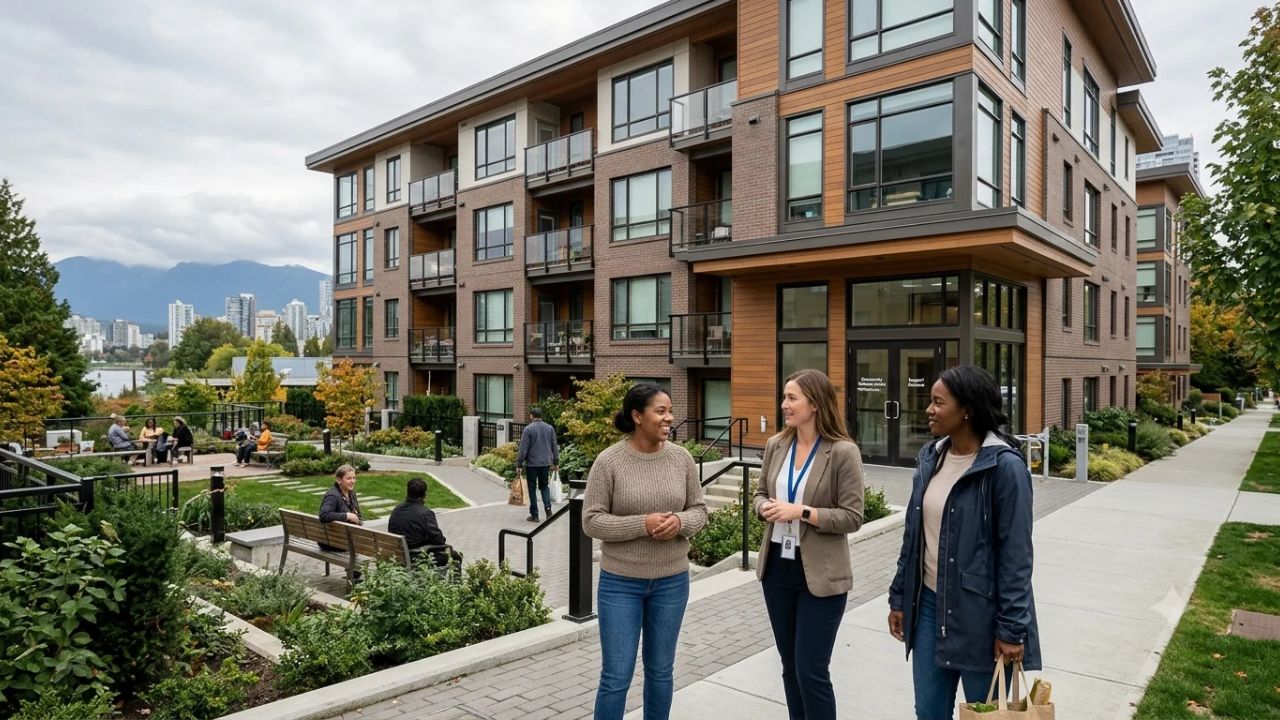
Announced by Gregor Robertson, Canada’s Minister of Housing and Infrastructure and Minister responsible for Pacific Economic Development Canada, during a site visit to the newly completed Soroptimist House in Vancouver, the comprehensive initiative marks the most substantial national commitment to housing stability in modern Canadian history.
By linking capital construction directly with provincial mental health treatments and municipal emergency interventions, the federal blueprint acknowledges that homelessness cannot be solved through physical shelters alone.
The ten-year framework distributes approximately $29 billion across five coordinated funding pillars, including $10 billion to build approximately 25,000 supportive and transitional homes, $6.5 billion to expand the community-led Reaching Home initiative, $5.5 billion for direct monthly rental supplements under the Canada Housing Benefit, $5 billion for an Integrated Supports Fund combining lodging with addiction treatment, and $2 billion for community mental health infrastructure.
For Canada's premier metropolitan tourist gateways—most visibly Vancouver, Toronto, and Montreal—the federal investment addresses the root causes of urban poverty while laying the groundwork for safe, socially sustainable, and resilient destination communities.
+----------------------------------------------------------------------------------------------------+ | CANADA BUDGET 2026: NATIONAL HOUSING & HOMELESSNESS SCORECARD | +----------------------------------------------------------------------------------------------------+ | Legislative Instrument | Canada Federal Budget 2026 (Ten-Year National Strategy) | | Headline Commitment | Nearly $30 Billion ($29 Billion Detailed in Core Appropriations) | | Primary Stated Objective | Ending Chronic Homelessness Across Canada Within 10 Years | | Announcing Official | Gregor Robertson (Minister of Housing and Infrastructure) | | Flagship Site Showcase | Soroptimist House, Vancouver (135 Affordable Homes for Women) | | Federal Co-Investment Share | $9.94 Million via National Housing Co-Investment Fund (Soroptimist) | | Supportive Housing Target | Approximately 25,000 Supportive & Transitional Units ($10 Billion) | | Homelessness Prevention Pool | $6.5 Billion Allocated to Strengthen the Reaching Home Initiative | | Direct Rent Assistance | $5.5 Billion Renewing the Canada Housing Benefit Monthly Subsidies | | Healthcare-Housing Link | $5 Billion Integrated Supports Fund + $2 Billion Health Infra Fund | | Key Impacted Urban Gateways | Vancouver, Toronto, Montreal, Calgary, Edmonton, Ottawa | +----------------------------------------------------------------------------------------------------+
The Decade-Long Mandate: A Holistic Structural Shift in Canadian Social Policy
The homelessness crisis in Canada has reached historic proportions over the past five years, exacerbated by sharp post-pandemic inflation, nationwide housing supply shortages, rising private market rents, and a toxic unregulated drug supply.
In metropolitan centers from coast to coast, visible street homelessness, encampments in public parks, and overburdened municipal emergency shelters have placed unprecedented pressure on civic infrastructure.
THE CANADIAN HOMELESSNESS EVOLUTION: FROM SHELTERS TO SUPPORTIVE HOMES
=============================================================================================
HISTORIC EMERGENCY SHELTER PARADIGM             BUDGET 2026 INTEGRATED TEN-YEAR STRATEGY
* Reactive, Night-by-Night Mat Placement        * Permanent, Stable Supportive Housing Units
* Siloed Healthcare & Municipal Services        * Onsite Medical, Psychiatric & Addiction Care
* Tenants Evicted into Insecure Rental Markets  * Direct Monthly Cash Supplements (Housing Benefit)
* High Police, Paramedic & ER Recidivism Costs  * Evidence-Based "Housing First" Operational Model
* Focus on Short-Term Temporary Management      * Binding 10-Year Plan to End Chronic Encampments
=============================================================================================
Historically, federal and provincial responses focused on emergency shelters—temporary facilities designed to offer unhoused individuals a warm bed for the night. However, social policy experts have long recognized that temporary shelters fail to address the underlying drivers of chronic homelessness, including severe psychiatric trauma, substance use disorders, brain injuries, and systemic poverty.
Budget 2026 fundamentally reorients federal policy by adopting the evidence-based Housing First model on a national scale. Under this approach, individuals are provided with secure, permanent, non-conditional housing as an immediate baseline, after which multidisciplinary teams provide wraparound psychiatric, physical, and vocational care.
The Soroptimist House Benchmark
The symbolic launch of the strategy at Soroptimist House in Vancouver provided a tangible demonstration of this partnership model.
Located in central Vancouver, the development delivers 135 secure, affordable rental homes specifically designed for senior women, single mothers, and women-led families. The project was made possible through an integrated funding partnership:
- Federal Contribution: The Government of Canada invested $9.94 million through the National Housing Co-Investment Fund.
- Provincial & Municipal Co-Investment: BC Housing provided substantial capital financing and long-term rental assistance, while the City of Vancouver contributed municipal land-use exemptions, expedited permitting, and development fee waivers.
Speaking at the facility, Minister Gregor Robertson emphasized that Soroptimist House demonstrates how coordinated public investment across all three tiers of government can build dignified, permanent homes in dense urban environments confronting intense real estate pressure.
Financial Architecture: Breaking Down the Five Core Pillars of the $29 Billion Allocation
The federal blueprint avoids broad, unallocated general funds, distributing its capital across five specialized statutory programs designed to tackle distinct phases of housing vulnerability:
THE FIVE FINANCIAL PILLARS OF CANADA BUDGET 2026
| Column 1 |
|---|
| PILLAR 1: BUILD CANADA HOMES ($10.0 BILLION) |
| - Capital construction financing for approximately 25,000 supportive & transitional homes |
| - Targets unhoused individuals requiring long-term daily medical and social assistance. |
| - Federal government funds construction; provinces fund daily operating and staffing. |
| PILLAR 2: REACHING HOME PROGRAM RENEWAL ($6.5 BILLION) |
| - Direct federal funding to community-led municipal homelessness response networks. |
| - Enhanced prevention tools to stop evictions before people lose their shelter. |
| - Dedicated funding streams targeted specifically at ending veteran homelessness. |
| - Mandatory standardized data reporting (By-Name Lists) to track progress in real time. |
| PILLAR 3: CANADA HOUSING BENEFIT RENEWAL ($5.5 BILLION) |
| - Direct-to-tenant monthly cash subsidies paid directly to low-income households. |
| - Bridges the gap between social assistance rates and soaring private market rents. |
| - Prioritizes vulnerable populations, including survivors of gender-based violence. |
| PILLAR 4: INTEGRATED SUPPORTS FUND ($5.0 BILLION) |
| - Administered through Build Canada Homes; integrates healthcare directly into housing. |
| - Funds onsite clinical offices, psychiatric nursing teams, and addiction recovery beds. |
| - Replicates successful supportive models like Toronto’s Dunn House. |
| PILLAR 5: BUILD COMMUNITIES STRONG HEALTH INFRASTRUCTURE ($2.0 BILLION) |
| - Capital investments to build and modernize community mental health and detox clinics. |
| - Expands outpatient crisis stabilization centers to divert individuals away from ERs. |
1. Build Canada Homes ($10 Billion for 25,000 Supportive Units)
The cornerstone of the capital expenditure plan is a $10 billion commitment administered through Build Canada Homes. This capital is earmarked specifically to finance the design, pre-fabrication, and construction of approximately 25,000 supportive and transitional homes nationwide.
Supportive housing differs sharply from standard social housing. These purpose-built residential buildings incorporate dedicated ground-floor offices for social workers, round-the-clock security desks, communal dining kitchens, and private clinical examination rooms.
Under the bilateral agreements negotiated with the provinces, the federal government finances the upfront capital construction costs, while provincial and territorial ministries of health and social development commit legally binding operational funding to pay for daily on-site staffing, psychiatric nurses, and peer support workers for a minimum of 20 years.
2. Reaching Home Program Renewal ($6.5 Billion)
The established Reaching Home: Canada’s Homelessness Strategy receives a monumental $6.5 billion renewal and expansion.
Operating across dozens of designated urban and rural communities, Reaching Home provides flexible grant funding directly to municipal entities and non-profit coalitions. Key program expansions include:
- Veteran Homelessness Stream: Dedicated funding to locate, house, and support unhoused military veterans across Canada.
- Standardized By-Name Lists: Requiring participating cities to implement real-time, digitized "By-Name Lists." These secure databases track every unhoused individual by name, health needs, and housing history, eliminating bureaucratic duplication and allowing caseworkers to match individuals to suitable vacant supportive homes within days rather than months.
3. Canada Housing Benefit ($5.5 Billion)
Recognizing that preventing someone from falling into homelessness costs a fraction of rescuing them after they lose their home, Budget 2026 allocates $5.5 billion to renew the Canada Housing Benefit.
Co-funded with the provinces, this program delivers direct, portable monthly cash payments to low-income renters. Unlike traditional project-based rent subsidies tied to a specific public housing unit, the Canada Housing Benefit is tied to the individual. If an apartment rent rises beyond affordability, the benefit absorbs the inflationary difference, keeping families securely housed in the private rental market. A dedicated funding track is reserved for survivors of gender-based violence fleeing domestic abuse.
4. Integrated Supports Fund ($5 Billion) and Health Infrastructure ($2 Billion)
A critical bottleneck in existing supportive housing has been the lack of sustained medical care. Budget 2026 addresses this by investing $5 billion into a new Integrated Supports Fund, complemented by $2 billion through the Health Infrastructure Fund.
These resources ensure that housing operators do not function merely as landlords, but as integrated health delivery networks. Funding covers the capital retrofitting of apartment complexes to include addiction treatment suites, safe medical dispensing rooms, and therapeutic counseling salons, ensuring residents receive regular psychiatric stabilization right where they sleep.
Urban Destination Economics: The Nexus of Housing, Street Safety, and Tourism
While Budget 2026 is fundamentally an exercise in social justice and public health, its successful execution carries profound implications for the economic health of Canada's visitor economy.
International tourism is a primary economic driver for Canada, generating more than $100 billion in annual economic activity and employing one in every ten Canadian workers. However, Canada’s tourism appeal is concentrated heavily in its major metropolitan gateways:
URBAN TOURISM EXPOSURE TO HOUSING AND SOCIAL STRESS
=============================================================================================
METROPOLITAN GATEWAY          SIGNATURE TOURISM PRECINCTS       CIVIC PRESSURE POINTS
---------------------------------------------------------------------------------------------
Vancouver, British Columbia   Gastown, Granville Island,        Downtown Eastside encampments;
                              Coal Harbour, Waterfront Station  retail corridor disorder.
Toronto, Ontario              Downtown Yonge, Queen West,       Subway station encampments;
                              St. Lawrence Market, Financial    shelter system capacity alerts.
Montreal, Quebec              Old Montreal, Ville-Marie,        Park encampments along Notre-Dame;
                              Quartier des Spectacles           underground city shelter seeking.
Calgary, Alberta              Stephen Avenue Walk, Downtown     Light rail transit (CTrain) safety;
                              Commercial Core, Saddledome       sub-zero winter shelter crunches.
=============================================================================================
The Tourism-Hospitality Workforce Housing Crisis
A severe, unaddressed barrier facing the Canadian tourism industry is the inability of frontline hospitality staff to find affordable accommodation within commuting distance of their workplaces:
- Urban Center Labor Shortages: In Vancouver and Toronto, average one-bedroom market rents exceed $2,500 to $2,800 per month. Entry- and mid-level tourism workers—including hotel room attendants, line cooks, museum docents, and municipal transit operators—are priced completely out of downtown areas.
- Commuter Exhaustion and High Turnover: When workers are forced to commute two hours each way from distant outer suburbs, hotels experience high staff turnover, flight cancellations due to transit bottlenecks, and reduced service capacity during peak tourist seasons.
By investing $5.5 billion in rental assistance and funding 25,000 supportive and transitional homes, Budget 2026 takes essential pressure off the low-end private rental market. This stabilization helps low-wage service and hospitality workers maintain housing security within the urban centers where their employment is anchored.
Public Perception and Urban Livability
Tourism flourishes in clean, secure, and welcoming urban spaces. In recent years, international travel forums and corporate event planners have expressed growing hesitation regarding street disorder in certain Canadian downtown cores.
Encampments in public parks and visible mental health crises on public transit corridors—such as Vancouver's Granville entertainment district or Toronto’s subway platforms—can create negative perceptions that deter international conventions, business events (MICE), and leisure visitors.
By transitioning thousands of vulnerable individuals off streets and park benches into professionally staffed, medically supported apartments, Budget 2026 addresses this civic crisis at its root. Rather than displacing unhoused residents through punitive police sweeps, the policy provides a permanent, humane path indoors, restoring civic vitality and public confidence to Canada’s historic downtown tourist quarters.
Supportive Housing Innovation: From Toronto's Dunn House to National Scale
The operational design of Budget 2026’s Integrated Supports Fund draws inspiration from proven, high-performing municipal pilot programs, most notably Dunn House in Toronto.
Developed as an innovative partnership between the City of Toronto, the University Health Network (UHN), and local supportive housing providers, Dunn House was constructed specifically to house chronically ill, unhoused individuals who were frequent users of hospital emergency rooms.
THE INTEGRATED SUPPORTIVE HOUSING VALUE PROPOSITION (DUNN HOUSE MODEL)
=============================================================================================
CONVENTIONAL LIVING ON THE STREET:
[Unhoused Individual with Chronic Illness & Addiction]
                   |
                   v
[Frequent Acute Overdoses & Exposure Illnesses]
                   |
                   v
[Constant Paramedic Calls, Police Interventions & Emergency Room Admissions]
* Annual Public System Cost: $85,000 to $120,000 per person per year
* Zero Lasting Health Improvement; High Mortality Risk

INTEGRATED HOUSING AT DUNN HOUSE:
[Individual Enters Permanent Private Apartment with Onsite Clinical Team]
                   |
                   v
[Daily Medication Management, Regular Nutrition & Psychiatric Stabilization]
                   |
                   v
[DRAMATIC 50% REDUCTION IN HOSPITAL EMERGENCY ROOM VISITS]
* Annual Public System Cost: Reduced by 45% (Net Public Savings)
* Restored Human Dignity, Community Reconnection & Long-Term Stability
=============================================================================================
Quantifiable Health Outcomes
Official provincial health data tracking residents at Dunn House documented astonishing operational results:
- 50 Percent Cut in Emergency Department Visits: Because residents have 24/7 access to onsite nurses, wound-care specialists, and psychiatric support workers, minor medical issues are treated immediately in outpatient clinics on the ground floor, cutting emergency room visits in half.
- Massive Public Cost Reductions: In Canada’s publicly funded healthcare system, an acute care hospital bed costs between $1,200 and $1,800 per night, whereas a fully supported supportive housing suite costs approximately $150 to $200 per day. By stabilizing residents in housing, the model delivers profound net financial savings to provincial taxpayers while freeing up critical hospital beds for the wider community.
Budget 2026’s $5 billion Integrated Supports Fund is specifically designed to replicate the Dunn House framework across every major Canadian urban center, scaling medical-housing integration into a permanent national institution.
Federal, Provincial, and Municipal Tripartite Governance: Overcoming Jurisdiction Hurdles
Executing a $30 billion social infrastructure plan over ten years requires navigating the complex, constitutional architecture of Canadian federalism. In Canada, jurisdiction over social policy is divided among three levels of government:
CANADIAN CONSTITUTIONAL HOUSING JURISDICTIONS
=============================================================================================
GOVERNMENT LEVEL        CONSTITUTIONAL RESPONSIBILITY          BUDGET 2026 ACTION MANDATE
---------------------------------------------------------------------------------------------
Federal Government      National Taxing Power, CMHC Mortgage   Provides $29 Billion Capital,
(Ottawa)                Underwriting, Infrastructure Grants    Sets Binding National Standards.
Provincial Governments  Healthcare Delivery, Mental Health,    Provides 20-Year Operational Staffing
(BC, Ontario, Quebec)   Addiction Facilities, Tenancy Acts     Guarantees for New Housing Units.
Municipal Governments   Local Zoning Bylaws, Building Permits, Legalizes Supportive Housing;
(Vancouver, Toronto)    Property Taxes, Local Infrastructure   Waives Development Levies & Fees.
=============================================================================================
Historically, these jurisdictional divides created bureaucratic gridlock. Municipalities frequently complained that the federal government was slow to release infrastructure capital, while provincial health ministries argued they lacked the budget to fund on-site staff for federally constructed facilities.
To overcome this friction, Budget 2026 introduces strict bilateral conditionality:
- Zoning Reform as a Prerequisite: Municipalities seeking access to the $10 billion Build Canada Homes fund must implement zoning reforms that legally permit supportive and multi-family transitional housing "as-of-right" near transit stations, effectively preventing wealthy neighborhood associations from using local zoning boards to block supportive developments (NIMBYism).
- Binding Operational Guarantees: Federal capital for supportive housing construction is unlocked only after the relevant provincial government signs a binding 20-year commitment guaranteeing continuous funding for psychiatric nurses, counselors, and daily building operations.
The Five Investment Pillars of Canada Budget 2026 Housing Strategy
The following matrix provides a detailed breakdown of the five funding allocations comprising Canada's Budget 2026 homelessness and housing package:
| Fund / Program Name | Proposed Budget Allocation | Administering Agency | Core Operational Objective | Key Performance Benchmark |
|---|---|---|---|---|
| Build Canada Homes (Supportive Stream) | $10.0 Billion | Build Canada Homes / CMHC | Finance upfront capital construction of supportive and transitional residences | Build ~25,000 units with 20-year provincial operational care agreements |
| Reaching Home Initiative | $6.5 Billion | Infrastructure Canada | Direct grants to municipal coalitions for emergency diversion and veteran housing | Universal adoption of standardized By-Name Lists and real-time data tracking |
| Canada Housing Benefit | $5.5 Billion | CMHC & Provincial Housing Agencies | Portable, direct-to-household monthly rental subsidies for low-income tenants | Prevent housing loss for low-income families and gender-based violence survivors |
| Integrated Supports Fund | $5.0 Billion | Build Canada Homes & Health Canada | Co-locate physical healthcare, psychiatric care, and addiction treatment in housing | Reduce resident hospital emergency department visits by up to 50% |
| Build Communities Strong Fund (Health) | $2.0 Billion | Health Infrastructure Fund | Capital construction and expansion of community mental health and detox clinics | Expand community-based addiction stabilization beds across urban regions |
Measurable Accountability: Data Standardization and the 10-Year Timeline
A distinctive feature separating Budget 2026 from past policy announcements is its emphasis on standardized data collection, transparency, and independent auditing.
In past decades, homelessness statistics across Canada were notoriously inconsistent. Many municipalities conducted physical "Point-in-Time" (PiT) counts only once every two or three years—a manual method that involves volunteers walking street corridors over a single 24-hour period. Experts widely criticized these counts for missing hidden homeless populations (such as individuals couch-surfing, living in vehicles, or staying in temporary motels).
Under the modernized Reaching Home guidelines:
- Mandatory Real-Time By-Name Lists: Every participating municipality must transition to an audited, real-time By-Name List by late 2027 to remain eligible for federal funding. This provides public officials with an accurate, anonymized dashboard showing exactly how many individuals are entering homelessness, how many are being placed into permanent housing, and where specific service bottlenecks exist.
- Annual Parliamentary Scorecards: The Minister of Housing and Infrastructure will be legally required to table an annual accountability report in Parliament, tracking net reductions in chronic homelessness across all designated communities against the ten-year national target.
Actionable Takeaways: What Travelers, Hospitality Operators, and Urban Planners Must Know
As Canada embarks on this multi-billion-dollar transformation, travelers, business leaders, and civic organizations should consider these practical insights:
STRATEGIC TAKEAWAYS FOR URBAN TRAVELERS & CIVIC OPERATORS
| Column 1 |
|---|
| 1. REALISTIC TIMELINES: INFRASTRUCTURE REQUIRES 2 TO 4 YEARS |
| - Capital allocations take time to produce physical buildings. While rental subsidies |
| provide immediate relief, the construction of 25,000 supportive units will roll out |
| gradually between 2027 and 2030. Visitors should expect visible street challenges to |
| remain during this transitional construction phase. |
| 2. SUPPORTING SOCIAL ENTERPRISES IN HISTORIC QUARTERS |
| - Travelers visiting Vancouver's Gastown or Toronto's Downtown East can support inclusive |
| regeneration by dining at community-based social enterprise cafes and bakeries that |
| hire and train individuals transitioning out of homelessness. |
| 3. ADVOCATING FOR HOSPITALITY WORKFORCE HOUSING INTEGRATION |
| - Hotel associations and regional destination marketing organizations should actively |
| partner with municipal housing authorities to ensure that mid-market rental units |
| funded through the Canada Housing Benefit are allocated to frontline tourism staff. |
| 4. APPRECIATING THE "HOUSING FIRST" PHILOSOPHY |
| - International visitors should understand that Canada’s approach prioritizes human |
| dignity, harm reduction, and healthcare integration over punitive criminalization, |
| fostering a compassionate, progressive civic society that defines Canadian culture. |
By confronting homelessness not as an isolated policing problem, but as an urgent failure of housing supply and healthcare integration, Canada Budget 2026 charts a visionary course for national renewal. By ensuring that vulnerable citizens receive the stability, medical treatment, and dignity of a permanent home, Canada is safeguarding the social cohesion, economic resilience, and global reputation of its greatest cities for generations to come.
Related Travel Guides
- Vancouver Urban Exploration: Navigating Waterfront Living, Culture, and Neighborhoods
- Toronto City Break Masterclass: Downtown Districts, Arts Corridors, and Food Markets
- Sustainable Tourism and Urban Livability: How Global Cities Balance Residents and Visitors
- Cross-Canada Rail Journeys: Exploring Montreal to the Pacific Coast by Train
This article is for informational purposes. Flight routes, passenger regulations, visa rules, and transit advisories are subject to change by airlines and aviation authorities. Readers are advised to verify schedules and travel documentation with relevant carriers and border agencies before departure.
Related Stories

Dubai and Abu Dhabi Dominate Global Family Travel Rankings as UAE Leads the World in Child-Friendly Safety and Hotel Value

Manila to the Islands: Inside the Battle Over Regional Turboprop Flights at NAIA