
JR East Confirms Narita Express N'EX Continuity for Tokyo and Yokohama Airport Access in 2026
JR East maintains the Narita Express (N'EX) as a primary rail link between Narita International Airport and central Tokyo hubs, ensuring direct access to Shinjuku and Yokohama.

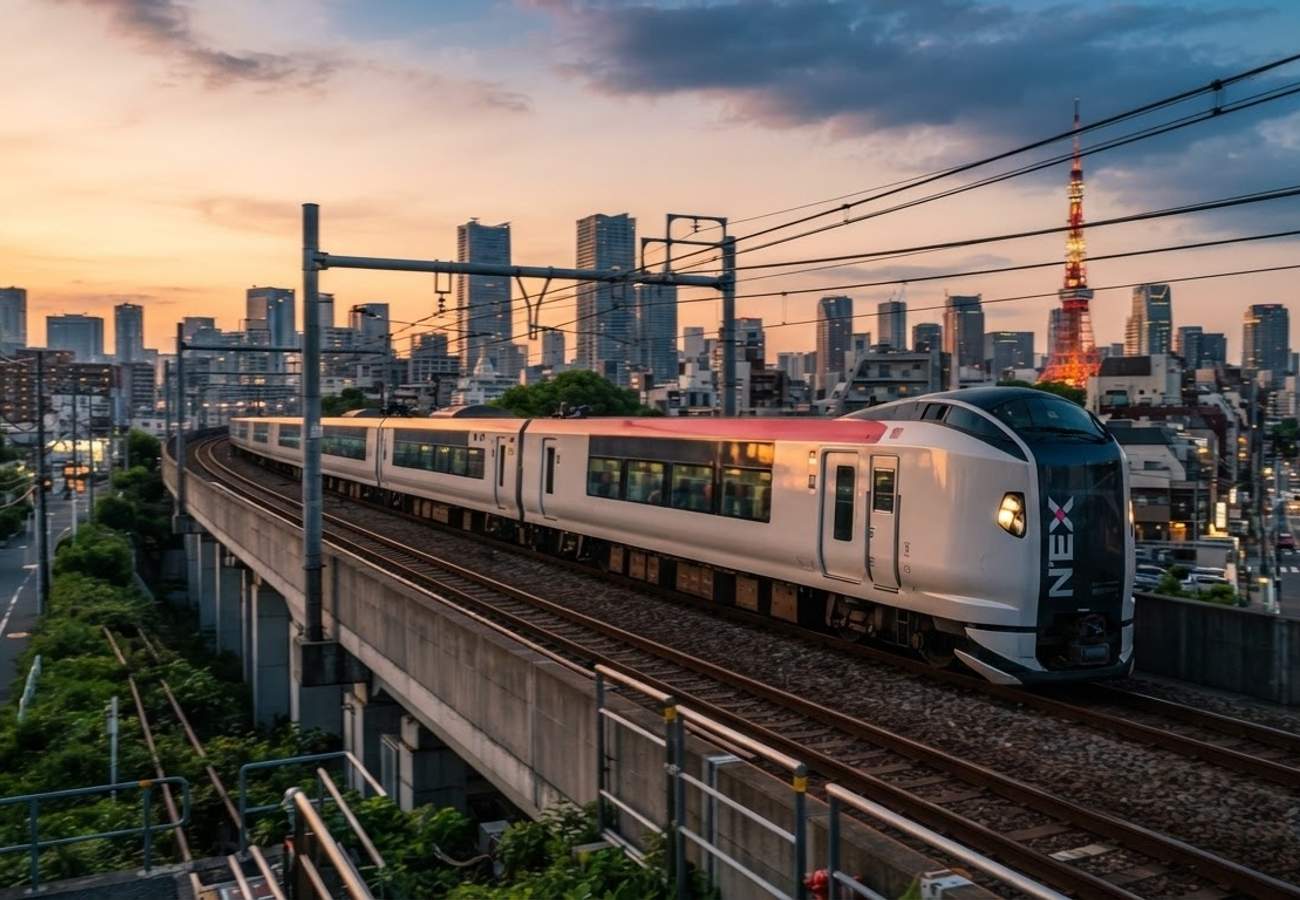
Image generated by AI
The Narita Express (N'EX) remains the primary direct rail artery between Narita International Airport and the Greater Tokyo Area, providing guaranteed reserved seating to Shinjuku, Tokyo Station, and Yokohama.
Narita Express Operational Status and Routing
Analysis of current East Japan Railway Company (JR East) data confirms that the Narita Express (N'EX) continues to operate as a limited express service. The system serves as a critical link for international arrivals, connecting Narita Airport terminals directly to major urban hubs.
The service utilizes the E259 series trainsets, which have been the standard for this route since 2009. These aircraft-inspired rail cars are specifically engineered for airport transit, featuring dedicated luggage racks and a 100% reserved seating configuration to eliminate boarding uncertainty for long-haul passengers.
Primary Service Hubs
Flight tracking and rail schedules indicate the N'EX maintains direct "one-seat" connectivity to the following key destinations:
- Tokyo Station: The central hub for Shinkansen transfers.
- Shinagawa: A primary business district and gateway to southern Tokyo.
- Shibuya & Shinjuku: Major hotel and commercial districts in western Tokyo.
- Yokohama & Ofuna: Essential links for passengers traveling to the Kanagawa Prefecture.
Timetable Revisions and Network Adjustments
While the core service remains intact, JR East has implemented strategic timetable shifts to optimize capacity. A significant adjustment occurred in March 2024, where direct N'EX services via the Chuo Line corridor were withdrawn. This move was driven by lower demand patterns and the need to reduce congestion on high-density commuter lines.
Despite these specific corridor removals, the fundamental airport-to-city pipeline remains stable. Following the volatility of the pandemic era, JR East has restored the majority of its pre-pandemic frequency to align with the recovery of international arrival volumes.
Passenger Rights & Transit Advisory
For the affected passenger, navigating the transition from the tarmac to the city center requires an understanding of the ticketing ecosystem. Our analysis of JR East policy suggests that the N'EX is positioned as a premium, predictable alternative to the more fragmented local rail networks.
Actionable Guidance for Travelers
- Ticketing Strategy: For foreign nationals, the "N’EX Tokyo Round Trip Ticket" provides a cost-effective bundle. This allows for a discounted return journey, though passengers should note that the return leg can be departed from a different station (e.g., arriving via Shinjuku but returning via Tokyo Station).
- Integration with IC Cards: Passengers should combine their limited express tickets with Suica or Pasmo IC cards. This allows for seamless transitions from the N'EX to local JR lines without purchasing separate short-trip tickets.
- Reservation Requirements: Because the N'EX is a fully reserved service, passengers cannot board with a standard local ticket. Reservations must be secured via JR East Travel Service Centers or automated vending machines located within the airport terminals.
Industry Analyst View: The Competitive Landscape
The Narita Express operates within a highly competitive airport-access ecosystem. Its primary competitor, the Keisei Skyliner, offers faster transit times to Ueno and Nippori. However, the N'EX maintains a strategic advantage for travelers whose onward journey involves the JR network or those staying in the western districts of Tokyo.
The continued investment in the N'EX, alongside Keisei's plans for new limited express services later this decade, indicates a broader trend of "premiumization" in Japanese airport transit. For the traveler, this means more choices but a higher reliance on pre-booked, reserved services rather than "turn-up-and-go" local commuting.
Reliable airport transit remains the first and last impression of a journey in Japan.
Related Travel Guides
Disclaimer
This article is for informational and educational purposes only. It does not constitute legal, financial, or professional advice. While we strive to provide accurate and up-to-date information, travel policies, regulations, and conditions change rapidly. Always verify information with official sources before making travel decisions. Nomad Lawyer makes no representations about the accuracy, reliability, completeness, or suitability of the information provided. Readers should consult qualified professionals for advice specific to their circumstances. The views expressed in this article are those of the author and do not necessarily reflect the views of Nomad Lawyer.
Preeti Gunjan
Contributor & Community Manager
A passionate traveller and community builder. Preeti helps grow the Nomad Lawyer community, fostering engagement and bringing the reader experience to life.
Learn more about our team →