
Dassault Rafale Stacks Against F-16 Fighting Falcon in 2026 Aerial Combat
The Dassault Rafale and F-16 Fighting Falcon remain operationally critical in 2026 despite fifth-generation aircraft emergence. Legacy fourth-generation fighters continue shaping modern aerial warfare strategy.

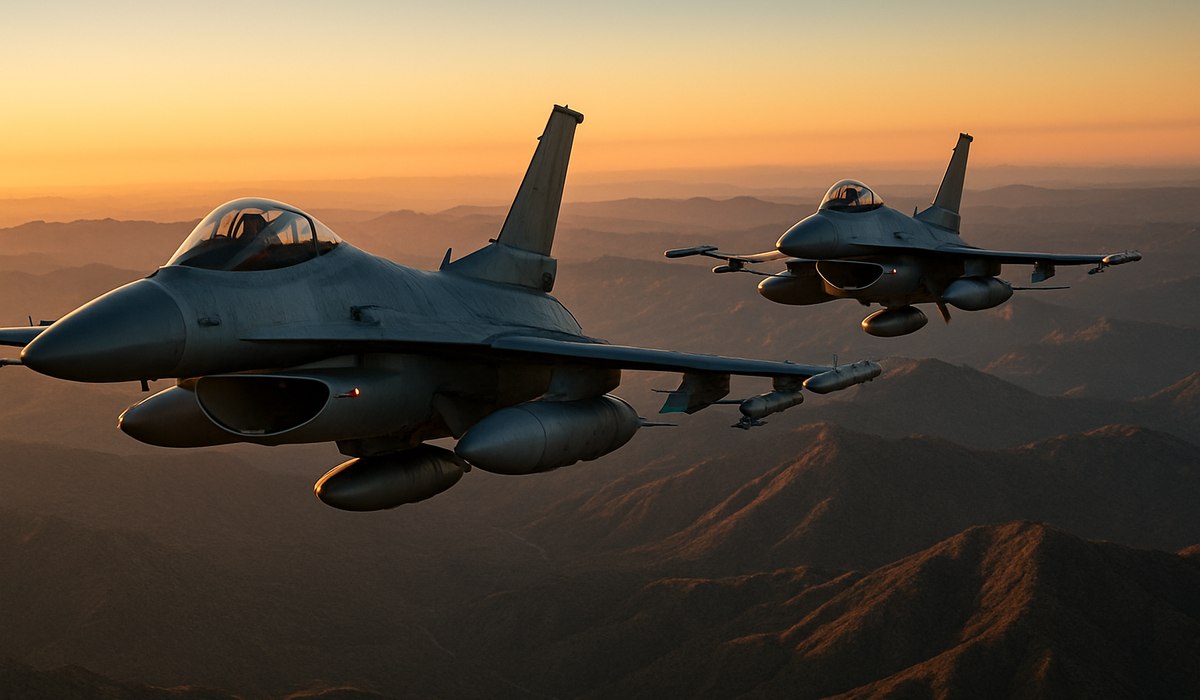
Image generated by AI
Dassault Rafale Stacks Against F-16 Fighting Falcon as Legacy Fighters Remain Strategically Vital
The Dassault Rafale and F-16 Fighting Falcon continue commanding frontline operations in 2026, despite the proliferation of fifth-generation stealth aircraft. These fourth-generation fighters represent decades of evolutionary combat design and have adapted to modern warfare demands. International military analysts confirm both platforms remain tactically indispensable across NATO and allied air forces worldwide.
Military aviation experts acknowledge that how the Dassault Rafale stacks against the F-16 Fighting Falcon reveals critical insights about sustained air superiority strategies. Neither aircraft achieved pure stealth capabilities, yet both platforms evolved advanced sensor fusion, network-centric warfare integration, and multi-role operational flexibility that keeps them operationally relevant through 2026 and beyond.
Design Philosophy and Evolution
The Dassault Rafale emerged from French military specifications demanding an omnirole combat aircraft requiring minimal external infrastructure support. Designed by Dassault Aviation, the Rafale prioritizes pilot authority, aerodynamic agility, and integrated avionics across its twin-engine configuration. The fighter's unstable airframe design demands continuous fly-by-wire stability management, enabling superior turning radius and sustained combat maneuverability.
The F-16 Fighting Falcon introduced a revolutionary lightweight, single-engine architecture when Lockheed Martin delivered initial variants in 1978. The fighter's success stemmed from relaxed stability design principles and exceptional power-to-weight ratios. Over four decades, continuous Block upgrades expanded avionics, engine performance, and weapons integration capabilities. The Dassault Rafale stacks considerable advantages in French industrial autonomy and complete sensor suite integration, while F-16 variants benefit from unprecedented worldwide operational experience.
Both platforms underwent extensive modernization through 2026, incorporating open-architecture flight management systems and enhanced data-link protocols supporting collaborative air operations.
Combat Capabilities Comparison
Examining how the Dassault Rafale stacks against the F-16 Fighting Falcon requires comprehensive performance analysis across multiple combat scenarios. The Rafale achieves maximum supersonic speeds exceeding Mach 1.8 with superior sustained turn rates in medium-to-high altitude engagements. Integrated Thales avionics provide unified sensor fusion from forward-looking infrared, active electronically scanned array radar, and electro-optical targeting systems.
The F-16 Fighting Falcon demonstrates exceptional low-altitude terrain-following capabilities and unmatched global maintenance infrastructure. F-16 variants optimized through Block 70/72 specifications incorporate modern wide-angle head-mounted displays and advanced threat-warning systems. Operational range extends through comprehensive aerial refueling procedures proven across six continents.
The Dassault Rafale emphasizes shorter takeoff distances and reduced infrastructure requirements, enabling deployment from austere forward operating bases. Integrated defensive systems suppress sophisticated surface-to-air threats across contested electromagnetic environments. Pilot interfaces feature intuitive stick-and-throttle control authority, reducing cognitive workload during sustained air combat operations.
| Performance Parameter | Dassault Rafale | F-16 Fighting Falcon |
|---|---|---|
| Maximum Speed | Mach 1.8+ (supersonic) | Mach 2.0+ (sustained) |
| Combat Radius | 1,850 km (unrefueled) | 2,100 km (unrefueled) |
| Crew Configuration | Single or dual-seat variants | Single-seat primary |
| Service Ceiling | 16,500 meters | 15,240 meters |
| Weapons Hardpoints | 14 external stations | 11 external stations |
| Operational Countries | France, Egypt, India, Greece, Indonesia, Qatar, UAE | 32+ nations globally |
| Year Introduced | 2000 (first squadron operational) | 1978 (IOC) |
| Primary Engine | Two Snecma M88 turbofans | Single General Electric F110 turbofan |
Modern Warfare Integration
How the Dassault Rafale stacks against contemporary F-16 implementations reflects fundamental shifts in network-centric warfare doctrine. Both platforms evolved beyond organic air-to-air combat toward integrated multi-domain operations incorporating ground commanders, naval assets, and space-based surveillance networks.
The Dassault Rafale incorporates Thales Spectra countermeasures management systems providing automated threat response against integrated air defense systems. Real-time data-link connectivity enables flight formations to share targeting information across entire battlespace domains. Advanced electronic warfare receivers detect hostile emissions beyond visual range engagement envelopes.
F-16 Fighting Falcon integration benefits from seamless interoperability with NATO Link-16 communications architecture and advanced GPS-denial resistant navigation systems. Continuously updated threat libraries protect against emerging air defense technologies deployed across contested regions. Distributed aperture sensing from multiple aircraft provides collective tactical awareness superior to individual platform sensor suites.
Both aircraft support precision-guided munitions, stand-off cruise missiles, and advanced air-to-air weapons designed for beyond-visual-range engagements. Training standardization across allied air forces multiplies operational effectiveness when combined arms coordination requirements emerge during multi-nation contingency operations.
Strategic Deployment Advantage
Military planners recognize that the Dassault Rafale stacks distinct advantages for nations requiring rapid force projection without permanent overseas infrastructure commitments. French air force doctrine emphasizes carrier aviation integration, enabling sustained operations aboard Charles de Gaulle aircraft carriers. Shorter field length requirements accommodate austere airfields throughout African and Indo-Pacific theaters.
The F-16 Fighting Falcon maintains unmatched global sustainment networks with spare parts availability across military supply chains spanning decades. Personnel training programs standardized across allied nations ensure pilot interchangeability and rapid force augmentation during coalition operations. Economic considerations favor F-16 selection for developing nations maximizing operational capability within constrained defense budgets.
Both platforms demonstrate remarkable adaptation to emerging threats through software updates, sensor upgrades, and weapons integration expansions. Operational costs remain significantly lower than fifth-generation alternatives, permitting sustained training operations and peacetime deterrence missions without excessive expenditures. Strategic planners expect both aircraft remaining operationally viable through 2035 across multiple global theaters.
What This Means for Travelers
Understanding military aviation modernization trends provides valuable context for international travelers navigating airspace security procedures and flight routing changes. Here's your practical action checklist:
-
Monitor Flight Routing Changes: Military exercises involving legacy fighters may redirect civilian traffic patterns. Check FlightAware for real-time flight tracking and potential delays in European, Middle Eastern, and Indo-Pacific regions.
-
Understand Airspace Restrictions: Nations conducting Rafale or F-16 operational tests may establish Temporary Flight Restrictions affecting civil aviation. Consult FAA notices regarding US airspace, or equivalent aviation authorities for international destinations.
-
Review Airline Communications: Major carriers publish schedule adjustments when military operations expand beyond planned boundaries. Subscribe to airline notifications for affected routes, particularly across France, Middle East, and Asia-Pacific service areas.
-
Document Your Rights: US DOT Consumer Protection regulations guarantee compensation eligibility for delays exceeding three hours caused by airline operations, regardless of military factors.
-
Plan Connection Buffers: Military activity zones may extend flight durations by 30-90 minutes. Schedule connections allowing minimum two-hour international layover buffers when transiting potentially affected airports.
6. Verify Alternative Routes: Airlines typically offer rero
Disclaimer
This article is for informational and educational purposes only. It does not constitute legal, financial, or professional advice. While we strive to provide accurate and up-to-date information, travel policies, regulations, and conditions change rapidly. Always verify information with official sources before making travel decisions. Nomad Lawyer makes no representations about the accuracy, reliability, completeness, or suitability of the information provided. Readers should consult qualified professionals for advice specific to their circumstances. The views expressed in this article are those of the author and do not necessarily reflect the views of Nomad Lawyer.
Kunal K Choudhary
Co-Founder & Contributor
A passionate traveller and tech enthusiast. Kunal contributes to the vision and growth of Nomad Lawyer, bringing fresh perspectives and driving the community forward.
Learn more about our team →