
Asia Pacific Flight Chaos: 56 Cancellations, 275 Delays Hit Air China, ANA, AirAsia, Shanghai Airlines, Tibet Airlines
Major Asia Pacific travel disruption: 56 flight cancellations and 275 delays across five airlines affect Beijing, Tokyo, Shanghai, Kuala Lumpur hubs. Real-time updates and passenger guidance.

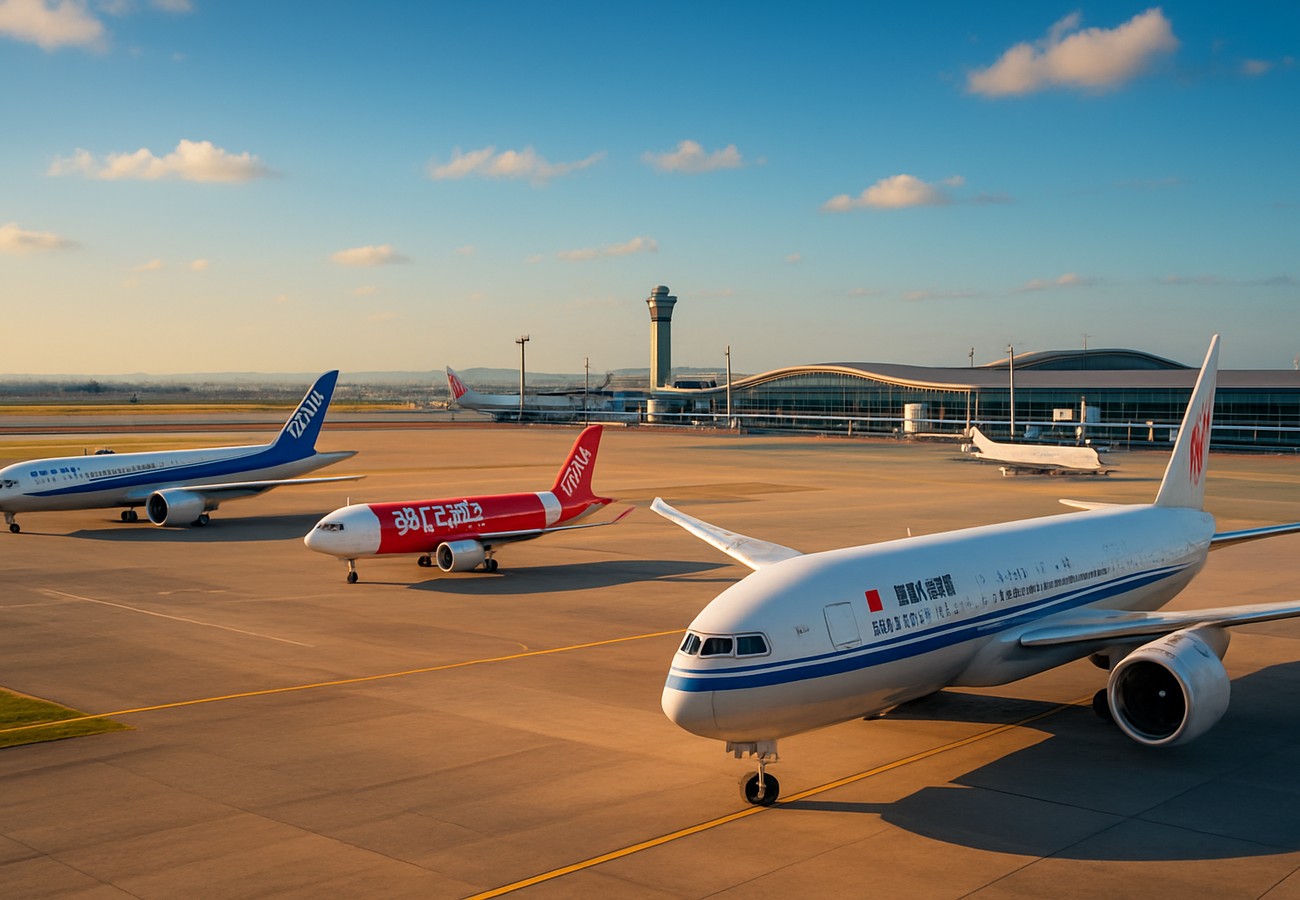
Image generated by AI
Asia Pacific Aviation Crisis: 56 Flight Cancellations and 275 Delays Cripple Major Carriers—Air China, ANA, AirAsia, Shanghai Airlines, and Tibet Airlines Face Massive Operational Breakdown
Widespread Travel Chaos Strands Thousands at Beijing, Tokyo, Shanghai, Kuala Lumpur, and Lhasa Airports
Air travelers across the Asia Pacific region are confronting unprecedented travel disruption as five of the region's most prominent airlines simultaneously grapple with catastrophic operational failures. Latest aviation tracking data reveals 56 total flight cancellations and 275 delayed departures affecting Air China (CCA), Shanghai Airlines (CSH), AirAsia (AXM), All Nippon Airways (ANA), and Tibet Airlines (TBA)—leaving tens of thousands of passengers stranded at key international aviation hubs spanning from China's bustling Beijing and Shanghai terminals to Japan's Tokyo Haneda, Southeast Asia's Kuala Lumpur International, and Tibet's remote Lhasa Gonggar Airport.
This coordinated operational breakdown marks one of the most significant regional travel disruptions in recent Asia Pacific aviation history, drawing urgent attention from aviation authorities, airport operators, and consumer advocacy groups concerned about passenger welfare and cascading economic impacts across the tourism and business travel sectors.
Scale of the Crisis: Understanding the Numbers
The sheer magnitude of this disruption cannot be overstated. With 56 cancellations eliminating entire flights from schedules and 275 additional delays pushing departure times backward—often by hours—the collective impact ripples through one of the world's most densely connected aviation networks. These aren't isolated incidents confined to single airports or carriers; they represent a systemic breakdown affecting simultaneous operations across multiple major hubs during peak international travel periods.
Beijing Capital International Airport (PEK), Shanghai Pudong International Airport (PVG), Tokyo Haneda Airport (HND), Kuala Lumpur International Airport (KUL), and Lhasa Gonggar Airport (LXA) typically operate at extremely high capacity utilization rates. When multiple carriers experience simultaneous cancellations and delays, the cascading effect overwhelms ground services, check-in facilities, customer service desks, and air traffic management systems. Passengers are left navigating overcrowded terminals with limited rebooking capacity as aircraft sit grounded and departure slots vanish.
Air China (CCA) Operations Severely Disrupted
As China's flag carrier and dominant operator at Beijing and Shanghai hubs, Air China's operational failures have massive ripple effects across the entire region's connectivity. The airline is reporting multiple cancellations and delays that disrupt both critical domestic trunk routes and strategic international services.
| Flight No | Route Origin | Route Destination | Status |
|---|---|---|---|
| CCA101 | Beijing Capital Intl (PEK) | Shanghai Pudong (PVG) | Cancelled |
| CCA203 | Shanghai Pudong (PVG) | Kuala Lumpur Intl (KUL) | Cancelled |
| CCA312 | Chengdu Shuangliu (CTU) | Singapore Changi (SIN) | Delayed |
| CCA415 | Beijing Capital Intl (PEK) | Tokyo Narita (NRT) | Cancelled |
Air China's flight CCA101 (Beijing-Shanghai) cancellation is particularly significant, as this route handles some of Asia's highest daily passenger volumes. The Shanghai-Kuala Lumpur service (CCA203) elimination disrupts critical Southeast Asia connectivity. Thousands of connecting passengers face compound delays as feeder flights back up against cancelled international departures.
Shanghai Airlines (CSH) International Network Hit Hard
Shanghai Airlines, a key player in both China's domestic market and Asia-wide international services, has reported substantial service cancellations affecting its primary operational bases at Shanghai Pudong and Shanghai Hongqiao airports.
| Flight No | Route Origin | Route Destination | Status |
|---|---|---|---|
| CSH112 | Shanghai Pudong (PVG) | Hong Kong Intl (HKG) | Cancelled |
| CSH256 | Shanghai Hongqiao (SHA) | Osaka Kansai (KIX) | Delayed |
| CSH334 | Shanghai Pudong (PVG) | Jakarta Soekarno (CGK) | Cancelled |
| CSH455 | Shanghai Hongqiao (SHA) | Bangkok Suvarnabhumi (BKK) | Cancelled |
The Shanghai-Hong Kong route cancellation (CSH112) is noteworthy given Hong Kong's importance as a regional financial hub. The Bangkok service elimination (CSH455) disrupts critical tourism traffic during what typically represents peak travel season in Southeast Asia. Shanghai's dual-airport infrastructure—normally an advantage—becomes a liability when coordinated disruptions affect both facilities simultaneously.
AirAsia (AXM) Southeast Asia Operations Crippled
AirAsia, the region's dominant low-cost carrier, has reported significant cancellations and delays across its Kuala Lumpur hub operations, affecting the network of point-to-point flights that have made the carrier a transportation backbone for Southeast Asian regional travel.
| Flight No | Route Origin | Route Destination | Status |
|---|---|---|---|
| AXM001 | Kuala Lumpur Intl (KUL) | Bali Denpasar (DPS) | Cancelled |
| AXM089 | Kuala Lumpur Intl (KUL) | Jakarta Soekarno (CGK) | Delayed |
| AXM124 | Kuala Lumpur Intl (KUL) | Singapore Changi (SIN) | Delayed |
| AXM223 | Kuala Lumpur Intl (KUL) | Bangkok Don Mueang (DMK) | Cancelled |
AirAsia's Kuala Lumpur base—the carrier's primary Asian hub—faces operational gridlock. The Bali cancellation (AXM001) eliminates service to one of Southeast Asia's most visited tourism destinations during peak season. Singapore and Bangkok delays disrupt time-sensitive business and leisure travel. Passengers report extended wait times at AirAsia's Kuala Lumpur operations and difficulty securing rebooking on alternative flights as network capacity becomes exhausted.
All Nippon Airways (ANA) Japan Network Disrupted
Japan's flagship international carrier, All Nippon Airways, has experienced significant schedule disruptions affecting both domestic connectivity within Japan and critical international services throughout Asia. The airline's Tokyo Haneda hub—one of Asia's premier aviation centers—bears particular impact.
| Flight No | Route Origin | Route Destination | Status |
|---|---|---|---|
| ANA090 | Tokyo Haneda (HND) | Osaka Itami (ITM) | Cancelled |
| ANA251 | Osaka Kansai (KIX) | Seoul Incheon (ICN) | Delayed |
| ANA403 | Tokyo Haneda (HND) | Taipei Taoyuan (TPE) | Cancelled |
| ANA565 | Tokyo Haneda (HND) | Beijing Capital Intl (PEK) | Delayed |
The Tokyo-Osaka domestic cancellation (ANA090) disrupts Japan's critical domestic trunk route. The Beijing service delay (ANA565) affects high-value business travel between two of Asia's largest financial centers. Osaka-Seoul disruption (ANA251) impacts critical Northeast Asia connectivity. Tokyo Haneda's role as a global aviation gateway means these disruptions generate immediate consequences for passengers originating from or transiting through Japan.
Tibet Airlines (TBA) Western China Operations Affected
Though smaller than the major carriers on this list, Tibet Airlines has reported meaningful cancellations affecting connectivity from its primary bases in Lhasa and Chengdu, impacting travel to and from western China during peak tourism and business seasons.
| Flight No | Route Origin | Route Destination | Status |
|---|---|---|---|
| TBA100 | Lhasa Gonggar (LXA) | Chengdu (CTU) | Cancelled |
| TBA212 | Chengdu (CTU) | Guangzhou (CAN) | Delayed |
| TBA304 | Lhasa Gonggar (LXA) | Beijing Capital Intl (PEK) | Cancelled |
| TBA410 | Chengdu (CTU) | Shanghai Pudong (PVG) | Cancelled |
Lhasa's remote geography makes Tibet Airlines' cancellations (TBA100, TBA304) particularly consequential—limited airline options mean disrupted passengers face severely constrained rebooking possibilities. The Beijing and Shanghai cancellations eliminate connections from western China's tourism and business centers to major international hubs.
Passenger Impact: Thousands Stranded, Rebooking Capacity Exhausted
The human cost of this disruption extends far beyond flight statistics. Tens of thousands of passengers face cascading consequences: missed business meetings, cancelled family events, lost tourism reservations, and significant financial exposure as passengers scramble for accommodation and alternative transportation.
At Beijing Capital International, Shanghai Pudong, Tokyo Haneda, Kuala Lumpur International, and Lhasa Gonggar airports, passenger assistance desks are overwhelmed. Airlines' rebooking capabilities are stretched to breaking points—alternative flight availability evaporates as thousands of passengers compete for limited seats across reduced schedules. Passengers with tight connection windows face the prospect of missing onward flights and compounding delays. Families report being separated across different rebooking flights.
Most carriers are providing meal vouchers, accommodation assistance, and communication support in compliance with aviation consumer protection regulations. However, the sheer volume of affected passengers means response times extend into many hours, leaving travelers in extended uncertainty about their travel prospects.
Operational Causes: Capacity Constraints and Systemic Pressures
While aviation regulatory authorities have not released formal consolidated statements explaining the coordinated disruption, aviation data correlates these failures with severe operational pressures. The Asia Pacific region's major hub airports—Beijing, Shanghai, Tokyo, Kuala Lumpur, and Lhasa—operate at or near maximum capacity during peak periods. These facilities frequently experience:
- Air traffic control restrictions during peak hours that limit runway utilization
- Weather-related cascading delays affecting departures and arrivals across multiple hours
- Tight aircraft utilization schedules where single delays propagate across multiple subsequent flights as aircraft redeployment becomes impossible
- Gate availability constraints at congested terminals limiting turnaround efficiency
- Ground service bottlenecks including refueling, catering, and cleaning operations unable to accelerate
When multiple carriers experience simultaneous operational issues—whether mechanical failures, crew scheduling problems, or air traffic management constraints—the system's interconnected nature means localized disruptions rapidly cascade into regional failures. Hub airports lack sufficient flexibility to absorb major simultaneous disruptions from multiple carriers, resulting in the cancellation spiral now affecting passengers region-wide.
Airports Under Extraordinary Stress
Beijing Capital International Airport's status as China's premier international hub means its operational difficulties have continental implications. Shanghai Pudong handles extraordinary passenger volumes across both domestic and international operations. Tokyo Haneda operates as a critical global aviation nexus. Kuala Lumpur International serves as Malaysia's primary international gateway and AirAsia's regional hub. Lhasa Gonggar, serving western China and international tourism, operates with more limited flexibility than coastal hubs.
These airports' ground service teams, air traffic controllers, and administrative staff are working under extraordinary pressure to manage passenger flows, coordinate with airlines on rebooking, maintain runway safety, and process the administrative requirements of massive disruption events. Extended queue times at check-in, customer service, and security are inevitable consequences of simultaneous multi-airline disruptions at capacity-constrained facilities.
Passenger Guidance and Recovery Resources
Affected travelers should immediately take the following actions:
- Monitor flight status continuously through official airline apps, airport websites, and verified aviation tracking platforms
- Contact airline customer service directly via hotlines and airport service desks to understand rebooking options and compensation eligibility
- Document all expenses related to disruption (accommodation, meals, ground transportation) for potential compensation claims
- Check travel insurance policies for coverage of airline disruption events
- Arrive at airports three hours early for international flights given current operational uncertainty
- Maintain communication with fellow passengers and airline representatives regarding schedule changes
Airlines typically provide compensation under aviation consumer protection regulations for cancellations within their operational control, though weather and air traffic control restrictions may limit liability.
Industry Analysis: System Resilience Questions Emerge
This disruption event raises serious questions about the Asia Pacific region's aviation system resilience. As the world's fastest-growing aviation market, with passenger volumes projected to double over the next decade, these simultaneous multi-carrier failures suggest that hub airport capacity and airline operational systems may be approaching critical saturation points.
The cascading failure pattern—where one carrier's disruptions trigger compensation rebooking burdens on competing carriers, ultimately exhausting network capacity—indicates insufficient redundancy in the system. Airlines and airports designed for 85-90% optimal capacity utilization lack flexibility to absorb major simultaneous disruptions from multiple operators.
Recovery Outlook and Path Forward
Recovery from disruptions of this magnitude typically requires 24-48 hours as airlines gradually restore normal scheduling, aircraft repositioning normalizes, and the cascade of upstream delays bleeds out
Disclaimer
This article is for informational and educational purposes only. It does not constitute legal, financial, or professional advice. While we strive to provide accurate and up-to-date information, travel policies, regulations, and conditions change rapidly. Always verify information with official sources before making travel decisions. Nomad Lawyer makes no representations about the accuracy, reliability, completeness, or suitability of the information provided. Readers should consult qualified professionals for advice specific to their circumstances. The views expressed in this article are those of the author and do not necessarily reflect the views of Nomad Lawyer.
Kunal K Choudhary
Co-Founder & Contributor
A passionate traveller and tech enthusiast. Kunal contributes to the vision and growth of Nomad Lawyer, bringing fresh perspectives and driving the community forward.
Learn more about our team →