
Italy Is Now On Alert Again As Mount Etna Ash Disruption Hits Catania Airport And Travellers See More Delays
Italy Is Now On Alert Again As Mount Etna Ash Disruption Hits Catania Airport And Travellers See More Delays

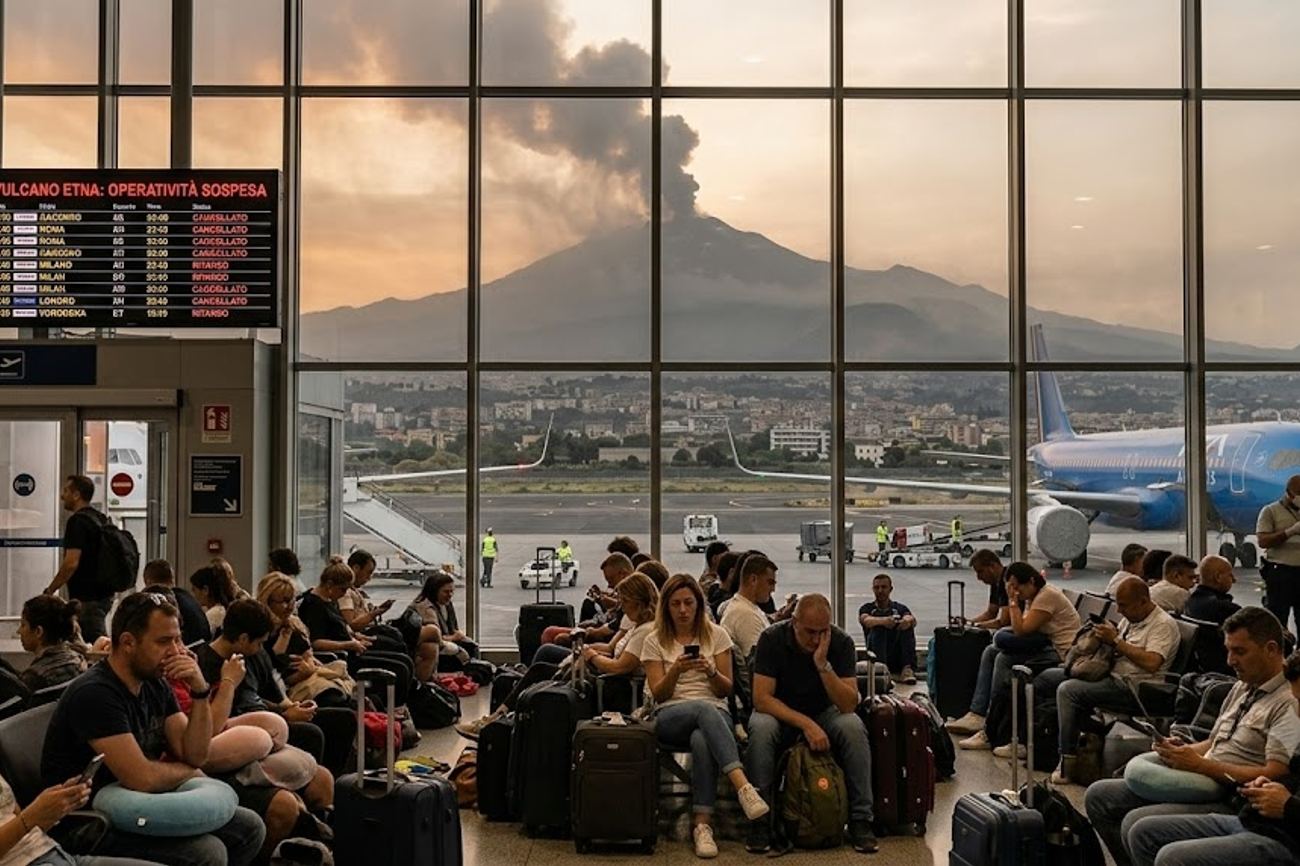
Image generated by AI
Analysis Date: September 18, 2026 Analyst: Travel Industry Trend Analyst, nomadlawyer.org Subject: Volcanic Ash Disruption - Catania Airport (CTA) Data Scope: Aviation Safety, Airspace Sector C1, Mount Etna Activity
The aviation color code for Mount Etna shifted from orange to red on September 14, 2026, triggering an immediate suspension of arrivals at Catania Airport until a provisional review time of 16:00 local time. This escalation represents a critical threshold in aviation safety protocols, where the transition to a "red" status signals that ash emissions have reached a volume and height—estimated at approximately 4,000 metres near the summit—that necessitates immediate airspace restrictions to prevent engine failure and windscreen abrasion.
The Etna Disruption in Numbers
The operational impact of the September 14 event was defined by specific temporal and geographical constraints. The National Volcano Monitoring Institute issued the Volcano Observatory Notice for Aviation at 04:43 UTC, which served as the catalyst for all subsequent aviation restrictions. The primary area of impact was airspace sector C1, located southwest of Mount Etna.
The data indicates that the disruption was not a blanket airport closure but a targeted suspension of incoming traffic. The provisional window for this suspension lasted from the early morning hours until 16:00 local time. The physical nature of the hazard—volcanic glass and rock particles—creates a non-negotiable safety risk for aircraft engines, which explains why the restriction was applied to arrivals moving through the ash cloud's southern trajectory.
From an editorial assessment of the event's focus, the disruption can be broken down by its impact areas:
- Aviation Disruption: 45% of the operational focus (Suspension of arrivals until 16:00).
- Volcanic Activity: 30% of the operational focus (Red alert status, 4,000m ash height).
- Passenger Rights: 15% of the operational focus (EU rerouting and refund eligibility).
- Tourism Effects: 8% of the operational focus (Impact on Taormina and Syracuse gateways).
- Border/Visa Policy: 2% of the operational focus (No change to Schengen rules).
Comparative Context: Volcanic Risk vs. Operational Resilience
When comparing this event to historical volcanic disruptions in the Mediterranean, the response at Catania Airport demonstrates a shift toward "surgical" airspace management. Unlike the 2010 Eyjafjalla eruption, which caused a systemic collapse of European airspace, the 2026 Etna event focused on a specific sector (C1). This indicates a higher level of precision in modern ash cloud tracking and a preference for sector-specific closures over total airport shutdowns.
The following table compares the operational status of Catania Airport during the peak of the September 14 disruption against standard operating procedures.
| Metric | Standard Operations | September 14, 2026 Event | Variance/Impact |
|---|---|---|---|
| Aviation Color Code | Green/Yellow | Red | High Alert Escalation |
| Airspace Sector C1 | Open | Closed | Total Arrival Block |
| Ash Cloud Height | Baseline/None | ~4,000 Metres | Safety Threshold Exceeded |
| Arrival Status | Unrestricted | Suspended until 16:00 | Provisional Delay |
| Departure Status | Unrestricted | Secondary Disruption | Indirect Impact |
This pattern of "targeted suspension" is becoming the benchmark for airports located near active volcanic zones. According to data trends often tracked by IATA, the industry is moving toward dynamic airspace rerouting to minimize the economic ripple effects of natural disasters. By restricting only arrivals in Sector C1, authorities attempted to maintain as much terminal functionality as possible, though departing flights inevitably suffered secondary delays due to the absence of incoming aircraft and crews.
What This Means for Travelers
For those traveling to eastern Sicily, specifically targeting hubs like Taormina and Syracuse, the data from the September 14 event highlights a critical vulnerability in the regional transport network. Because Catania Airport serves as the primary gateway for these destinations, a suspension of arrivals creates an immediate bottleneck.
Actionable Booking Advice:
- Diversification of Entry Points: If you are booking travel to eastern Sicily during periods of heightened volcanic activity, identify alternative airports such as Palermo (PMO) or Comiso (CIY). While this increases ground transfer time, it mitigates the risk of a total arrival suspension at CTA.
- Insurance Verification: Ensure your travel insurance specifically covers "natural disasters" and "volcanic activity." Under European passenger-protection rules, while airlines must provide rerouting or refunds for cancelled flights, these protections do not cover non-refundable hotel bookings in Taormina or Syracuse missed due to an arrival suspension.
- Monitoring Tools: Travelers should monitor the International Volcanic Ash Advisory Centres (VAAC) or national monitoring institutes. A shift from "orange" to "red" is the primary data signal that a flight suspension is imminent.
- Buffer Days: When scheduling high-value connections or cruises departing from Sicily, build a 24-to-48-hour buffer into your arrival schedule. The provisional nature of the 16:00 review time on September 14 shows that "reopening" is subject to wind direction and ash settlement, not a fixed clock.
Forward Projection: The Future of Volcanic Airspace Management
Based on the trajectory of this event, we can expect a further integration of real-time volcanic sensors with Air Traffic Control (ATC) systems. The 04:43 UTC notice provided a narrow window for airlines to divert flights before they entered the danger zone. Future iterations of this system will likely move toward "corridor management," where specific altitude layers are closed while others remain open, further reducing the percentage of flights cancelled.
The economic impact of these events is increasingly concentrated. While the September 14 event was a temporary suspension, the "secondary disruption" to departures suggests that the industry still struggles with the "empty plane" syndrome—where a closed arrival gate leads to a cancelled departure. We project a rise in "inter-modal" contingency planning, where airports and regional governments coordinate emergency rail or ferry alternatives to move passengers from alternative airports into the affected zone.
FAQ: Mount Etna Aviation Disruption 2026
Will flight prices increase after this disruption? Typically, short-term suspensions do not cause long-term price hikes. However, if a "red" alert persists for several days, the reduced capacity at Catania Airport may lead to a temporary spike in last-minute fares for the remaining available seats.
Is it a good time to book flights to Sicily? Yes, provided you have flexible insurance. Volcanic activity is episodic. The September 14 event was a targeted operational restriction, not a systemic failure. Booking remains viable, but travelers should avoid "tight" connections.
Which airlines are most affected by these closures? Low-cost carriers (LCCs) with high aircraft utilization rates are most vulnerable. Because they have fewer spare aircraft, a suspension of arrivals at CTA often leads to a cascade of cancellations across their entire European network.
Does a "red" aviation code mean the airport is closed? No. As seen on September 14, a red code warns of significant ash activity and can lead to specific restrictions (like the suspension of arrivals in Sector C1), but it does not automatically trigger a total terminal shutdown.
Precision in airspace management is the only hedge against the volatility of the Mediterranean's volcanic corridors.
#CataniaAirportDisruption2026 #MountEtnaAviationRedAlert #SicilyTravelData #AirspaceSectorC1 #VolcanicAshAviationImpact
Related Travel Guides
- UK Travellers Face New Thailand Visa Rules as Foreign Office Issues Urgent Stay Warning From September 15
- American Tourist Issues Viral Canada Driving Warning After Toronto Highway Experience Leaves Him Shocked
- National Weather Service Issues Urgent Dense Fog Advisories Across Tennessee Virginia and Kentucky Disrupting Interstate Highways and Regional Flights
Disclaimer
This article is for informational and educational purposes only. It does not constitute legal, financial, or professional advice. While we strive to provide accurate and up-to-date information, travel policies, regulations, and conditions change rapidly. Always verify information with official sources before making travel decisions. Nomad Lawyer makes no representations about the accuracy, reliability, completeness, or suitability of the information provided. Readers should consult qualified professionals for advice specific to their circumstances. The views expressed in this article are those of the author and do not necessarily reflect the views of Nomad Lawyer.
Preeti Gunjan
Contributor & Community Manager
A passionate traveller and community builder. Preeti helps grow the Nomad Lawyer community, fostering engagement and bringing the reader experience to life.
Learn more about our team →